


Turn the right market idea into better-timed execution.
Compare plans to use liquidity and order flow for more precise trade timing.
Interviews
September 28, 2026
From the Right Call to the Right Timing: How Likai Turned Macro Conviction Into a 75% Win Rate with Bookmap

2 years trading · ES & NQ futures + options · Bookmap Academy & Trader Lab
“I could be right on direction but still lose on the trade because of poor timing or stop placement.”
– Likai (Bookmap Trader)
Getting the direction right is only half the job. Anyone who trades intraday long enough learns this the hard way: a correct thesis can still lose money if the entry is early, the stop is arbitrary, or the exit is guesswork. That gap between having the right idea and executing it well is where a lot of otherwise solid traders leave money on the table.
Likai, a Bookmap user who trades ES and NQ futures and options, spent about two years running into exactly that problem. His market read was rarely the issue. His execution was.
A Macro Trend Trader Looking for an Execution Edge
Likai describes himself as a macro trend-focused intraday trader. He prefers trading with the broader trend rather than picking counter-trend setups, and while he trades intraday, he’s not a short-term scalper. When a setup is strong, he’s comfortable holding a position longer than a typical quick trade.
Options positioning and flow are a central part of how he builds his view of the market. Before adding Bookmap, his stack was TradingView for charting and SpotGamma for options positioning, and those two tools shaped most of his directional thesis.
“Options positioning and flow are a major part of my process and heavily influence how I form expectations and look for confluence.”
– Likai
That combination gave him a strong read on where the market was likely headed. What it didn’t give him was a reliable way to time the entry once price actually got there.
Right on Direction, Wrong on Timing
Likai’s core problem wasn’t forming a thesis. It was entry timing. He could usually identify the correct market direction, but his entries weren’t refined enough to capitalize on it cleanly.
That imprecision showed up in a few consistent ways:
- Stop losses were often poorly placed and got taken out before the move played out
- He had to repeatedly re-enter the same idea, which complicated execution
- It was hard to tell whether buyers or sellers were truly becoming aggressive around key levels
The hardest part to read was volume and how participation was actually developing around important price levels. He could form a directional thesis without much trouble, but telling whether liquidity was holding, or whether a move had real participation behind it, was a different problem entirely.
“These challenges created a lot of frustration because I could be right on direction but still lose on the trade because of poor timing or stop placement. Having to repeatedly re-enter trades also hurt my overall win rate and made me less confident in my execution, even when my broader market read was correct.”
– Likai
That’s the frustrating middle ground a lot of traders get stuck in: not a strategy problem, but an execution one, where correct analysis keeps getting undone by imprecise timing.
Finding Bookmap
Likai first heard about Bookmap through other professional traders who were already using it as part of their process. What drew him in initially was the visual side of it: being able to see liquidity levels, order flow, and iceberg activity directly on the chart looked like a natural fit for improving his intraday execution.
His expectations were straightforward going in. He hoped it would sharpen his entry timing, his execution, and his read of important price levels.
Like most new users, his first weeks came with a real learning curve. There was a lot of information on screen, and it took time to learn how to interpret the heatmap, liquidity, and different order flow signals without overreacting to every change.
“What initially attracted me to Bookmap was the visual side of it, seeing liquidity, order flow, and iceberg activity directly on the chart.”
– Likai
When Bookmap Clicked
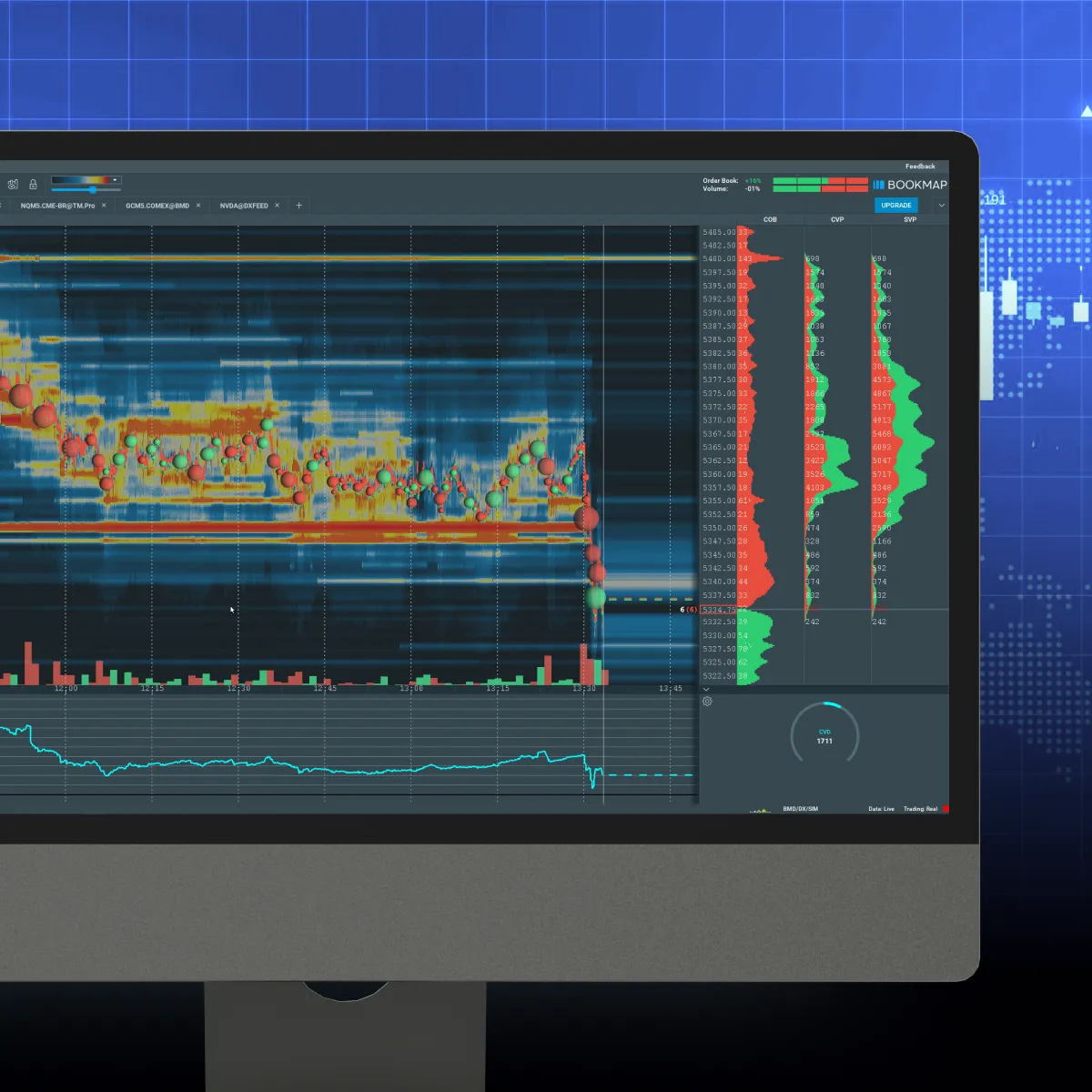
The volume dots were the first feature that really landed for him. Being able to visually compare the size of the bubbles made it intuitive to immediately spot where meaningful trading activity was actually taking place, rather than guessing from a candle’s shape alone.
That same clarity carried directly into stop management. Once he was in a trade, seeing where meaningful liquidity sat above or below price let him trail stops based on real market information instead of an arbitrary technical level, which helped him avoid getting stopped out unnecessarily while still managing risk properly.
“Bookmap has become my primary tool for execution, highly customizable, intuitive, and extremely responsive, with no noticeable lag.”
– Likai
A Misconception, Corrected
Like many traders, Likai used to treat visible liquidity as automatic support or resistance. A large offer above the market meant resistance. A large bid below meant support. Bookmap corrected that assumption.
Liquidity, he learned, is dynamic. It can be added, pulled, or traded through. What matters isn’t that the liquidity is there, but how price and market participants actually react once it’s tested.
“One misconception I had was that visible liquidity should automatically be treated as support or resistance. Bookmap helped me understand that liquidity is dynamic, it can be added, pulled, or traded through. What matters is not just that liquidity is there, but how price and market participants actually react when price approaches it.”
– Likai
That single shift in interpretation runs through nearly everything else he does on the platform now.
From Static Levels to a Layered Read of the Market
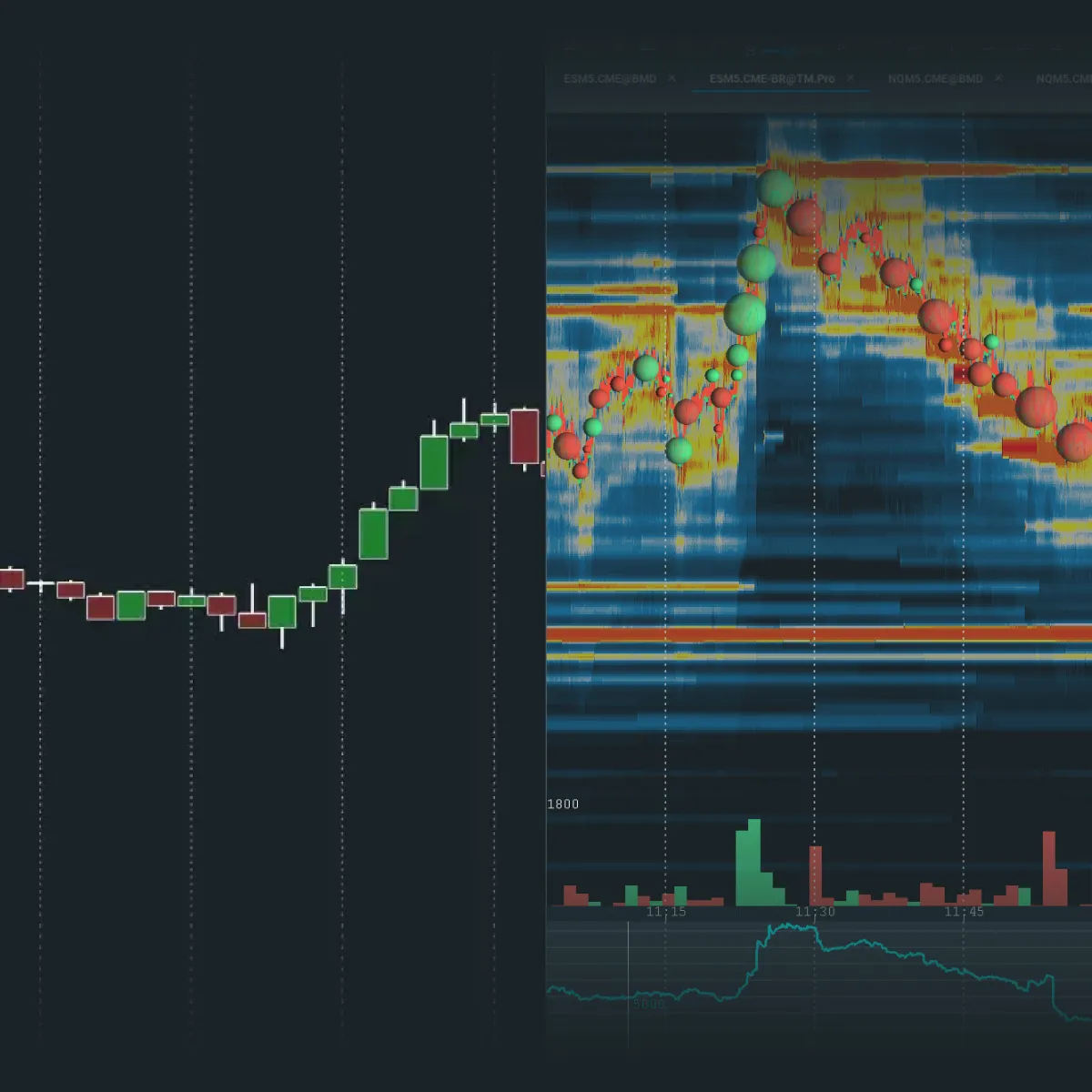
As his use of Bookmap matured, liquidity stopped being the only thing he was watching. The heatmap became the feature with the biggest impact on his decision making overall, giving him a much clearer sense of how much participation and liquidity sit around a given area, and whether price actually has room to move freely.
He also found a useful layer of confluence between Bookmap and his existing options-based process. Liquidity frequently overlaps with important GEX levels from SpotGamma, and when it does, it adds another layer of confirmation to the areas he’s already watching. If significant liquidity or absorption builds near one of those levels, it changes how aggressively he’s willing to enter, or whether he wants to keep holding a position at all.
Iceberg orders became part of that same read. They help him identify hidden buying or selling interest that wouldn’t otherwise show up on the surface. One detail he singles out as particularly useful is the ability to filter and sort icebergs by size, which makes it much easier to compare meaningful buy-side and sell-side activity instead of getting distracted by smaller orders that don’t carry real weight.
“The heatmap has probably had the biggest impact on my decision-making. It gives me a much better sense of how much participation and liquidity are present around certain areas and whether price has room to move freely.”
– Likai
Trade Breakdown: An Impulse Move Into a Low-Volume Pullback
One trade captures how these pieces come together in practice. It developed as an impulse move formed, followed by a low-volume pullback, with price channeling in the direction of the broader move and lining up with the options flow Likai was already watching.
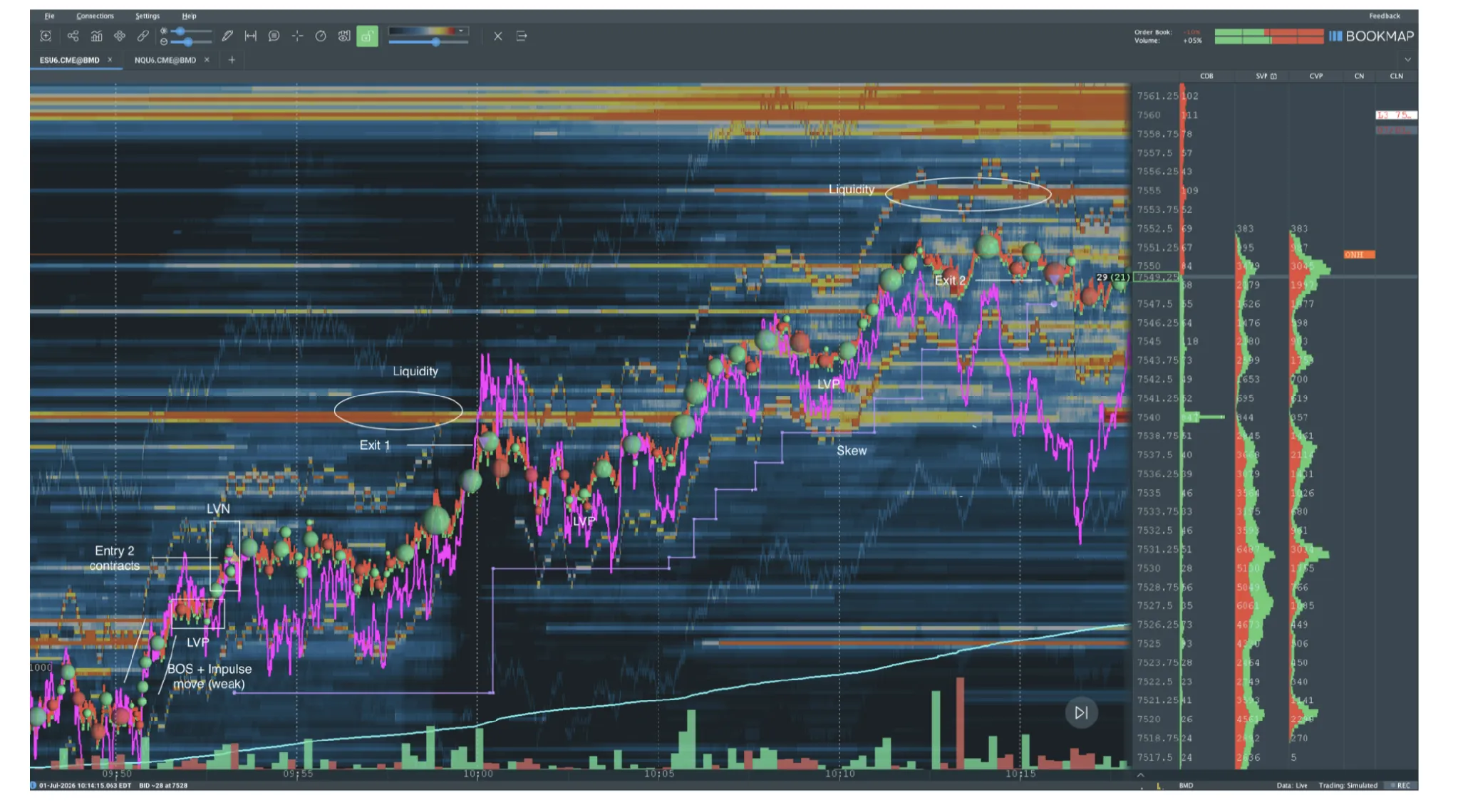
The Bookmap heatmap view from Likai’s trade, marked with entries, exits, and the liquidity zones that shaped the decision.
What He Saw
An impulse move was developing, followed by a low-volume pullback. Price was channeling in the direction of the broader move, and that lined up with the options flow he was already tracking going into the session. On the chart, that’s visible as a break of structure with a weak initial impulse move, followed by a pullback into a low-volume node, exactly the kind of setup his broader thesis had already flagged as worth watching.
Action Taken
With order flow, volume, and liquidity all confirming the same read, he entered at the low-volume pullback setup rather than on direction alone. He scaled in with two contracts as the setup confirmed, and managed the position in stages from there. As the trade developed and pressed into the liquidity resting overhead, he began scaling out, first around one resistance pocket, then again as price pushed further into a second area of overhead liquidity, trailing his risk as the market’s own behavior, not a fixed target, dictated the exit.
The trade worked well. More importantly, it’s a clean example of the sequence Likai now follows on every setup: a macro and options-driven thesis first, then Bookmap used to confirm, refine, and manage the trade rather than to generate the idea in the first place.
Thesis First, Then Timing
Bookmap didn’t replace Likai’s process. It became the missing layer inside it. His routine now follows four consistent steps:
Step 1: Establish the Thesis
He uses macro trend, market structure, and options positioning via SpotGamma to form the broader directional view.
Step 2: Mark Key Levels
He flags the important price levels and zones where a trade might realistically develop.
Step 3: Wait for Confirmation
He waits for Bookmap to show the actual setup, volume, liquidity, and order flow response, before acting.
Step 4: Execute and Manage
He refines entry timing and manages stops and exits off real-time liquidity and participation.
SpotGamma covers the macro landscape and options positioning; Bookmap is the micro execution layer that confirms and times the trade.
Now, the broader thesis still comes from macro trend, market structure, and options positioning, but Bookmap gives him an additional execution layer. He can wait for order flow and liquidity to confirm the setup, refine his entry, and place his stop more intelligently. Overall, his trading feels far more structured, consistent, and controlled than it did before.
Less FOMO, More Patience
One of the biggest changes to his routine has been how much less FOMO he trades with. He’s more comfortable waiting for a setup to actually develop instead of entering just because he has a directional view. Bookmap gives him something more concrete to wait for, so he can be more patient and let the market come to him.
Learning With the Community, Not Just Alone
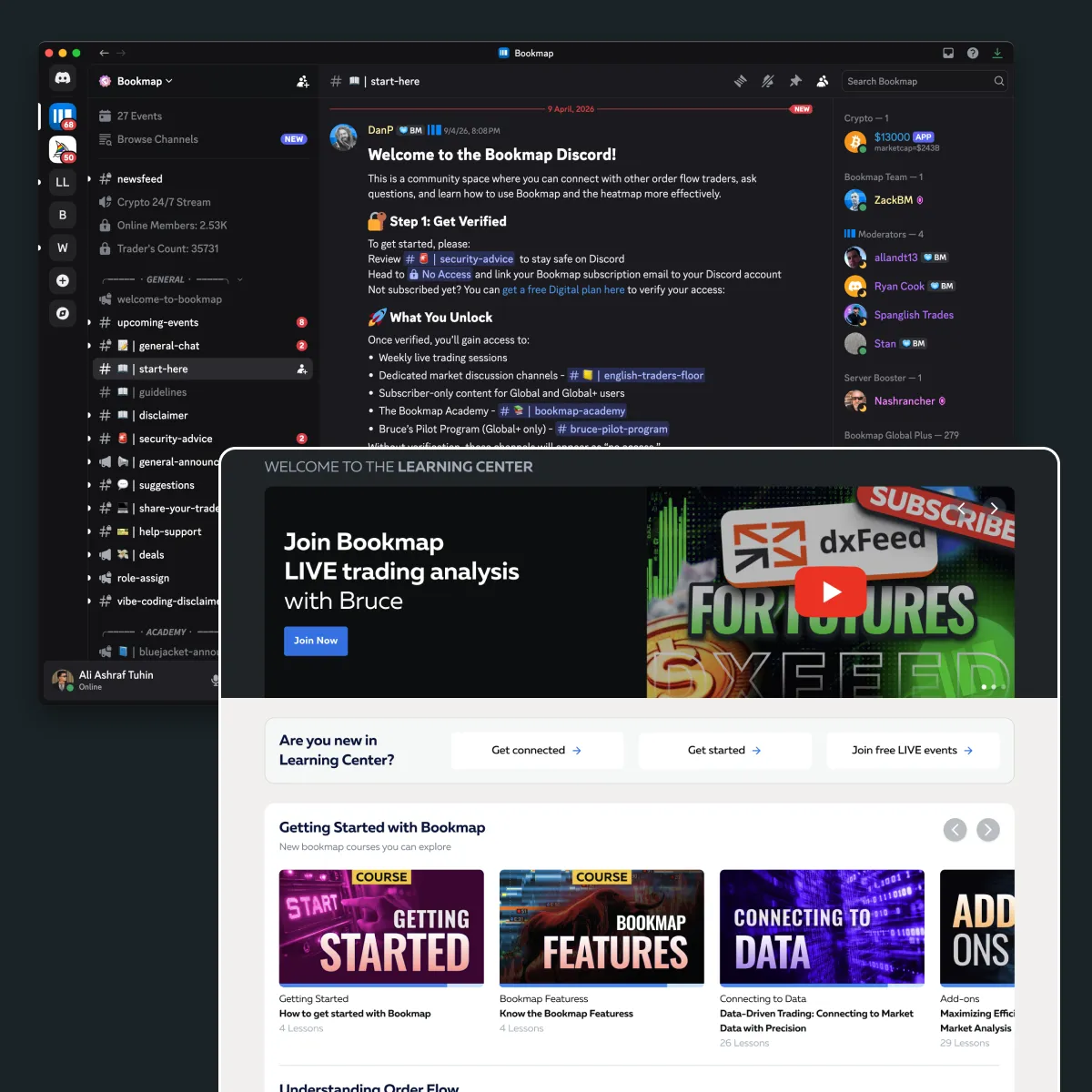
Likai didn’t work through this shift by himself. The Bookmap community and its educators have been a significant part of his learning process. Program coaches such as Laura helped him understand the nuances of different setups and how to interpret what he was seeing on Bookmap in more detail. Feedback on his trading journals pushed him to build more concrete, tangible improvement plans and to focus on progress one small step at a time. Academy sessions added another layer, watching experienced traders reason through order flow, liquidity, and execution in real time, which he counts among the most valuable sessions he’s attended.
“These different perspectives have helped me become much more structured and intentional in how I develop as a trader.”
– Likai
A Measurable Shift in Execution
Since integrating Bookmap into his execution, Likai’s overall win rate has improved to around 75%, with a typical risk-to-reward around 1:2, and multiple trades reaching 1:3. But he’s clear that the number isn’t really the headline.
“The biggest change has been confidence in my execution. My entries are much more refined now, and I’m better at placing stops based on what the market is actually showing me rather than using arbitrary levels.”
– Likai
Before Bookmap, his read was often right and his execution wasn’t. After, entries are refined with liquidity, volume, and order flow, stops are set from what the market shows rather than arbitrary levels, and the overall process feels structured, consistent, and controlled.
Advice for Traders Learning Order Flow
Asked what he’d tell someone just starting out with Bookmap, Likai’s advice is to slow down rather than try to absorb everything at once.
“Focus on one setup first and really learn the nuances of it instead of trying to trade everything at once. There’s a learning curve, so don’t give up too quickly.”
– Likai
- Master one setup: more screen time on a single setup makes it far easier to recognize what matters versus what’s just noise.
- Backtest in Replay Mode: spend real time backtesting and reviewing trades in Replay before moving into forward testing.
- Fold it into your plan: treat order flow as an execution layer on top of an existing plan, not as a completely separate strategy.
He also recommends watching the All Markets webinars and Trader Lab, and joining Academy meetings when possible, taking time to learn the core order flow concepts rather than trying to understand everything at once.
“For me, combining order flow with options flow has been very powerful. They help me understand different aspects of the market and, more importantly, see when those different inputs are aligning. Having information coming from multiple independent sources gives me more context, stronger confirmation, and ultimately helps me make better trading decisions.”
– Likai
Conclusion: From the Right Call to the Right Timing
Likai’s story isn’t about discovering a new strategy. His macro and options-driven thesis was already sound before he ever opened Bookmap. What changed was the layer between having that idea and acting on it.
SpotGamma and market structure still generate the hypothesis. Bookmap now answers a separate question: is the market actually behaving in a way that confirms it right now? That distinction, between forming a thesis and timing its execution, is what took a trader who was already right on direction and made him right on timing too.
Thank you, Likai, for sharing your journey, the process, the confluence, and the trades behind it.
Sign Up Now
Latest Articles