
See book flip more clearly in real time.
Compare plans to access deeper market visibility for book flip.
Trading Basics
September 24, 2025
SHARE
Book Flip vs. Liquidity Flip: How to Tell the Difference and Why It Matters

For a novice trader, the order book is just numbers! But for veterans, it’s the market’s body language. Yes, by only analyzing the order book, these veterans can easily tell what’s misleading.
How? They can easily spot what’s a book flip and what’s a liquidity flip. Both of them are highly important, as the latter signals manipulation while the other shows a natural shift in market structure.
In this article, you will learn what each flip really means and how to spot them in real time. Next, you will see what regulators look for, and, most importantly, how you can use our advanced real-time market analysis tool, Bookmap, to gain a trading edge.
What Is a Book Flip?
A book flip happens when a trader quickly changes their side in the order book.
Here’s how it usually plays out:
- Let’s say a trader places a big order on one side (say, to buy).
- They make it look like there’s strong demand.
- But then, almost instantly, they cancel that order.
- Now, they place a new, aggressive order on the opposite side (to sell).
- This is usually done at a similar price.
The result? This sudden move changes how the order book looks to everyone else. It changes perception or common interpretations! Due to this, the market can get pushed in the opposite direction for a short time.
How Is Book Flipping Practised?
In regulated markets like CME, a book flip may sometimes be used as a market manipulation trick. Let’s see how:
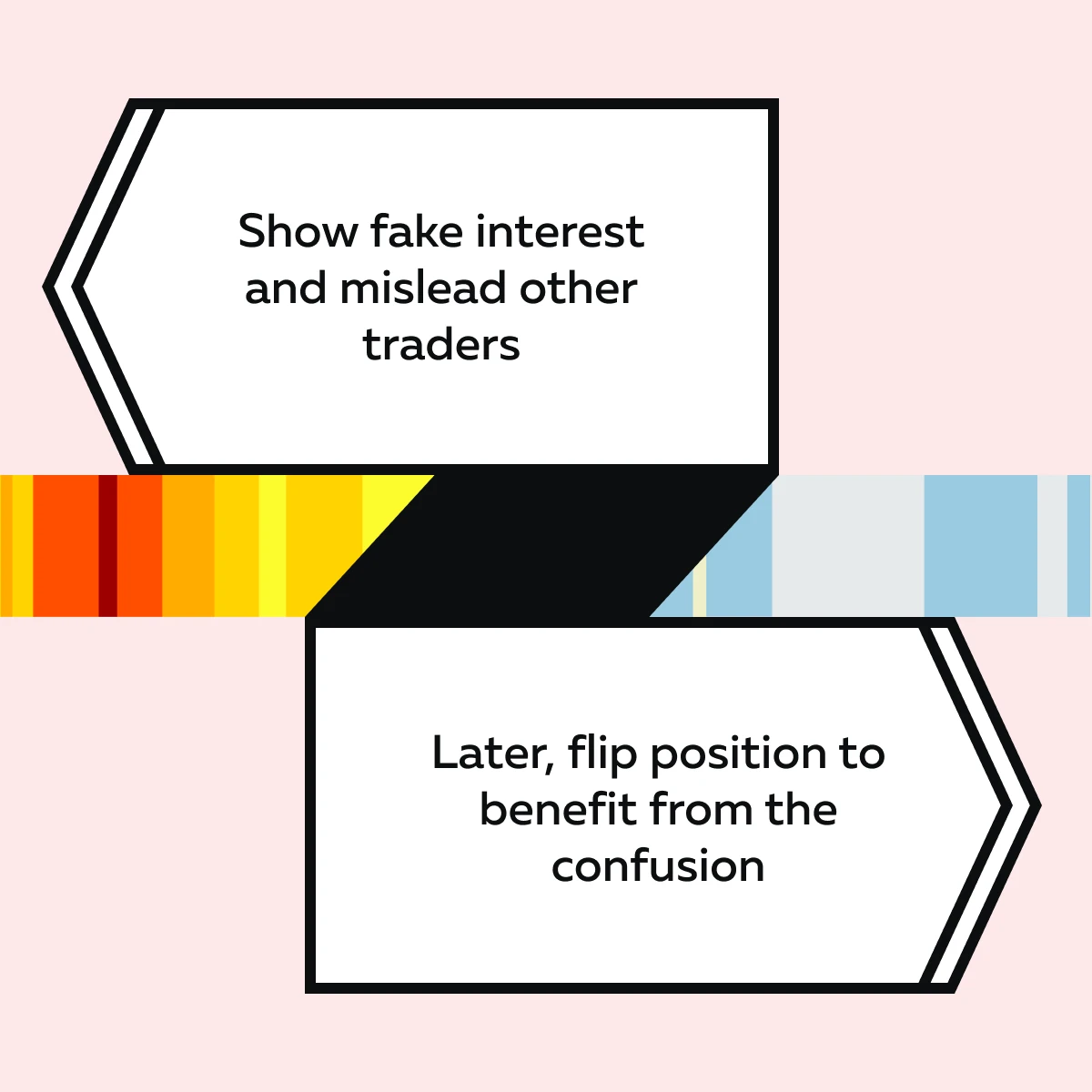
However, you must realize that not every flip is intentional! Sometimes, traders change their minds or strategy quickly. But when the pattern is frequent + involves large order sizes, it catches the eye of regulators. Why? That’s because book flipping is a part of unfair trading practices.
Regulatory Context of a Book Flip
A book flip doesn’t just affect traders! It also sits under strict regulatory rules. At the CME, it’s covered under Rule 575, which bans disruptive trading practices. This rule says you cannot place or cancel orders just to trick the market, and:
- Cause unnecessary price swings
or
- Create instability.
Regulators look very closely at why a flip happened. They check the following:
| Regulatory Checks | What is Specifically Analyzed |
| The size of the order | Was it unusually large? |
| The frequency | Does the trader keep flipping repeatedly? |
| The timing | Was the order pulled at the exact moment others were about to react? |
| The impact on price | Did it cause a sudden move or volatility? |
Even if intent can’t be fully proven, repeated book flip patterns often trigger surveillance. Why so? That’s because they can distort the fair view of market demand and supply. For more clarity, let’s study an example scenario:
-
- Say the ES futures are trading at 4500.
- Suddenly, a big 500-lot bid appears on the order book.
- Now, other traders see this and think there’s strong buying interest.
- As a result, the price starts moving upward.
- But just before any trades hit that bid, the order is canceled.
- Right after, the same trader aggressively sells 300 lots into the bid side.
- This book flipping move makes the price fall instead of rise.
This kind of sudden switch is a textbook book flip! It changes the balance of the book in a split second. In effect, other traders get misled about where the market is heading. See how Bookmap reveals both book flips and liquidity flips before the crowd notices.
What Is a Liquidity Flip?
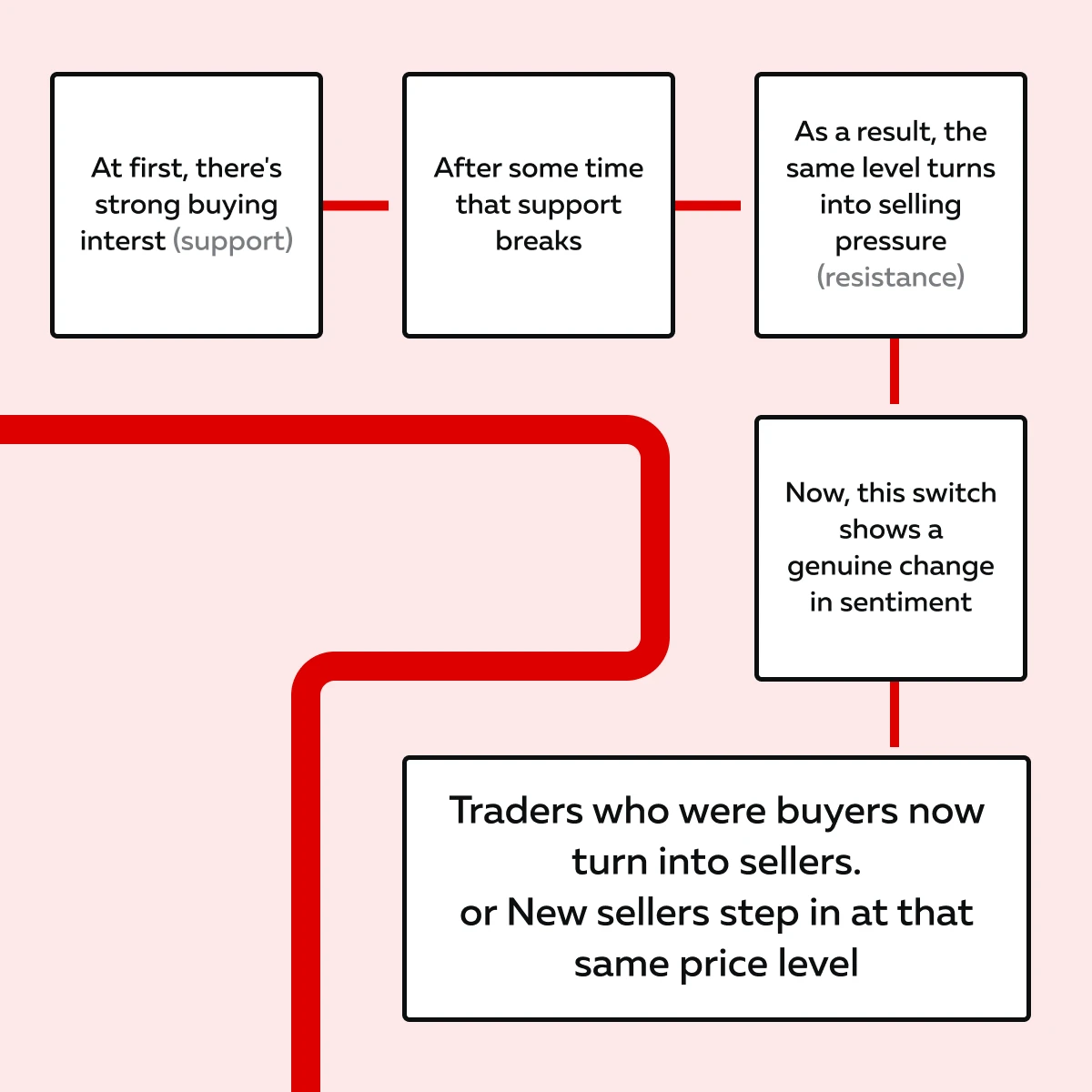
A liquidity flip is very different from a book flip! Instead of being a manipulation trick, it’s a natural shift in the market. It happens when liquidity that was once on one side of the market moves to the other side. This shift is not due to any trader’s tactic; rather, it is a part of normal trading behavior.
Let’s learn better below:
The Role of Market Behavior
A liquidity flip often happens after a breakout or breakdown in the following manner:
- Before the move, big buy orders (bids) hold up the market.
- Once the price falls through that level, those bids vanish.
- Instead, large sell orders (offers) appear at or near the same level.
- This creates resistance.
- Now, it’s not illegal.
- It simply reflects traders adjusting their positioning.
- They are shifting from providing passive liquidity to taking an active role on the opposite side.
Let’s Study an Example Scenario
Let’s assume that NQ futures are at 15000. Buyers hold the level for half an hour with strong bids. Eventually, heavy selling pressure pushes the price below 15000. After that, the same price level flips.
Now, instead of buyers, you see big sell orders at 15000. This level acts as resistance because the price has retested from below. Compare Bookmap packages to see how you can visualize order book changes in real time.
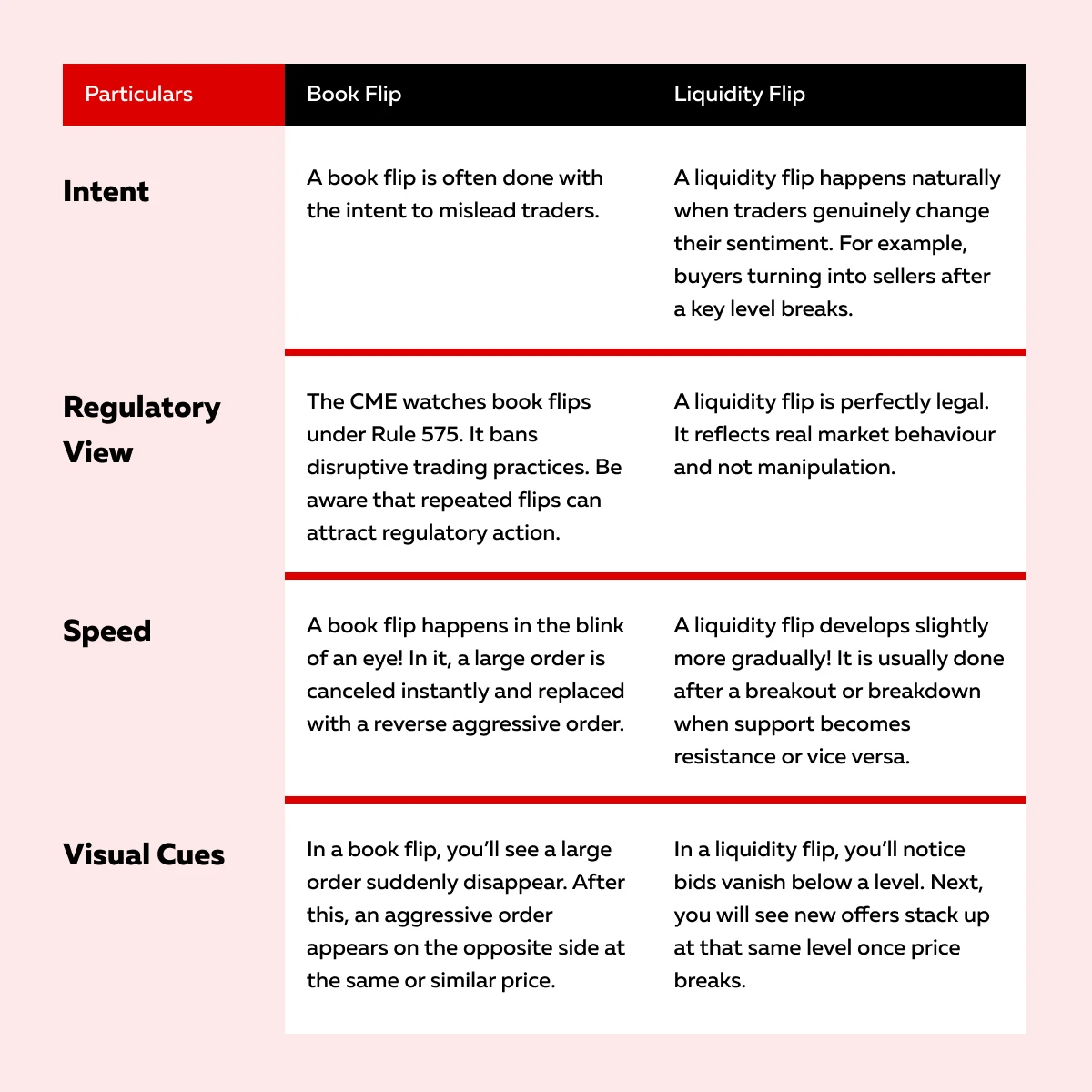
Book Flip vs. Liquidity Flip: The Key Differences
For most traders, a book flip and a liquidity flip look similar on the surface. Do you feel the same? You must understand that both involve a sudden shift in the order book, but they are completely different in purpose and effect. Also, even regulators treat them differently.
Let’s understand in detail:
Learn which tools are included in each Bookmap package for tracking order flow events.
How to Use it in Trading?
A book flip is generally a warning sign! As a smart trader, you should see it as a signal of manipulation. A liquidity flip, however, is a useful signal of changing supply and demand. It often forms the basis of support and resistance strategies.

Why Traders Should Care
Do you think understanding the difference between a book flip and a liquidity flip is just theory? Nope! It is more than that. It directly impacts compliance + strategy, + risk management techniques. Let’s understand this in detail:
For Compliance Awareness
A liquidity flip is a natural event. It happens when traders genuinely change their positions. This is part of normal market structure, and doesn’t violate any rules, since there’s no intent to mislead.
In this kind of flip, liquidity simply migrates from one side of the book to the other. By analyzing these flips, you can find signals related to a change in sentiment and use them to make informed decisions.
On the other hand, book flips, particularly repeated ones, raise regulatory red flags. By knowing the difference, you can avoid accidental violations in tightly monitored futures markets like the CME.
For Strategy
Spotting a book flip can alert you that large players may be trying to force quick reversals. If you recognize it, you can avoid getting trapped in sudden whipsaws.
Meanwhile, a liquidity flip is a powerful confirmation tool. Let’s say a breakout occurs and you see liquidity shift sides – buyers turning into sellers, or vice versa. This is a strong signal that the market’s “line in the sand” has moved. This can support your breakout or reversal trade ideas confidently.
For Risk Management
Misreading the two flips can be costly! Yes, if you mistake a book flip for a liquidity flip, you might fade the wrong move. Even worse, you might step into strong momentum and get stopped out quickly.
That’s why properly identifying “which-is-which” allows you to make trading moves as per the true flow of the market, instead of fighting against it.
Spotting Them in Real Time
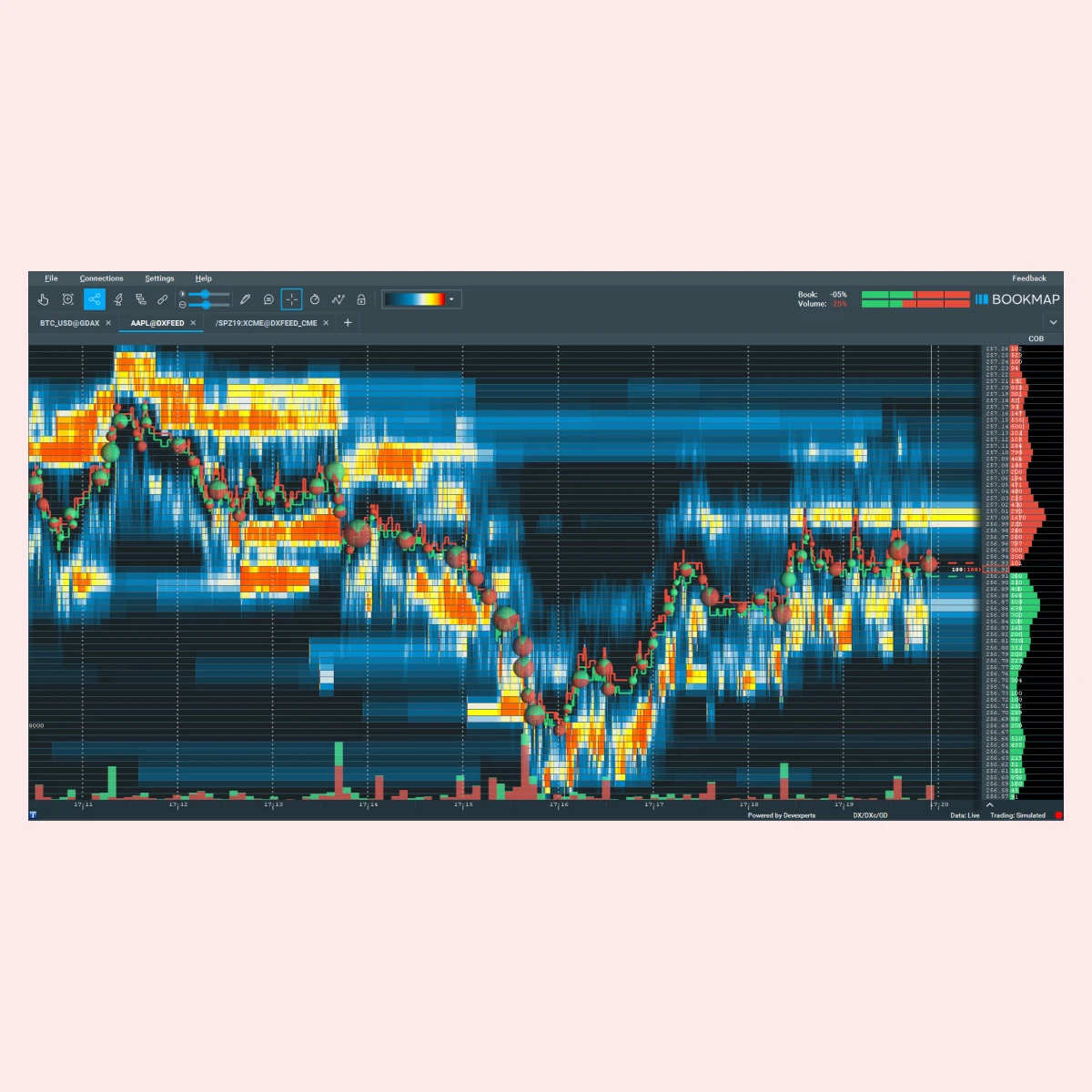
The First Challenge – As a trader, you may not know the difference between a book flip and a liquidity flip!
The Second Challenge – Even if you know, spotting them as they happen can be difficult!
Want to learn how to identify both in real time? Here’s how:
| Particulars | Book Flips | Liquidity Flips |
| How to Spot? |
|
|
| How does it appear on our market analysis tool, Bookmap? |
|
|
A Pro Tip for Bookmap Users
You can use Bookmap’s heatmap alongside volume dots. This makes it easier to spot whether the shift is:
- Organic (a liquidity flip)
or
- Abrupt/manipulative (a book flip)
To go deeper, you can even pair this with a volume profile. This lets you confirm whether you’re seeing real sentiment change or just a short-term trick.
Conclusion
For most traders, a book flip and a liquidity flip appear similar on the DOM. However, they tell very different stories! A book flip often signals possible manipulation and requires caution. On the other hand, a liquidity flip reflects a genuine shift in market sentiment (say, support turning into resistance).
If you can spot the difference between the two, you can stay compliant and even determine profitable setups. Want your trading edge? Start using our advanced market analysis tool, Bookmap, to get a 100% clear and real-time view of liquidity and order flow. See how Bookmap visualizes both book flips and liquidity flips across futures, stocks, and crypto — compare packages here.
FAQ
1. Is every book flip illegal?
No! Not all book flips are against the rules. Sometimes, traders just change their minds quickly.
However, if someone keeps placing big fake orders frequently to mislead others and then flips sides, regulators usually see that as manipulation.
2. Can liquidity flips be used for trading?
Yes! By spotting and analyzing liquidity flips, you can confirm a breakout or breakdown. For example,
- Say support breaks and then turns into resistance.
- Now, you, as a trader, can use that shift as an entry or exit signal.
3. How can I spot them without advanced tools?
To spot disappearing or shifting orders, you can watch the DOM (Depth of Market) closely. However, it is really hard with just numbers!
Instead, you can use our advanced tool, Bookmap’s heatmap. It makes DOM analysis much easier because you can actually see liquidity moving in real time.
4. Does Bookmap differentiate them automatically?
You must understand that no tool can tell intent. However, through our tool, Bookmap, you can visualize the timing and speed of liquidity changes. This allows you to decide if it’s a natural liquidity flip or a suspiciously fast book flip.
Sign Up Now