


See market activity more clearly in real time.
Compare plans to access deeper market visibility for market activity.
Education
November 28, 2025
Why Order Flow Traders Prep in December, Not January
 Most traders wait until January to reset. Professional order flow traders do not. They start their preparation in December, long before the new year begins. This gives them a cleaner start, better context, and a clearer view of how market structure is shifting as liquidity dries up toward year end.
December is not a dead month. It is one of the most important periods for reviewing behavior, studying liquidity, and preparing for the next volatility cycle. If you trade order flow, your preparation window begins now, not after the calendar flips.
Here is why.
December Reveals How Markets Behave When Liquidity Thins Out
Late December trading has a unique rhythm. Liquidity becomes fragmented and thinner across most futures and equities markets. Order books behave differently. Large orders become more visible. Sweeps and icebergs stand out more clearly. Smaller size can move the market more than usual.
This environment teaches lessons that traders miss in more active months:
- How price behaves when passive liquidity steps back
- How spreads widen or tighten before the holiday break
- How large players manage positions at year end
- How clean or messy breakouts become when volume drops
- Which instruments remain active and which become stagnant
Traders who stay engaged in December learn to read the tape under more sensitive conditions. This improves their ability to interpret liquidity shifts when markets get volatile again in January.
December Shows Your Real Behavior Because Pressure Is Lower

With fewer big events on the calendar, traders have room to observe their own habits without the usual noise of fast markets. Professionals use December to study themselves.
Common insights include:
- Whether you force trades when conditions are slow
- Whether you hesitate when liquidity thins
- Whether your timing improves when markets slow down
- Whether you rely too much on volatility to generate opportunity
Self evaluation is clearer when the market is quieter. By January, the environment often changes with new flows, new rotations and new institutional positioning. If you wait until January to evaluate yourself, you are already reacting instead of preparing.
Pros Use December to Review the Entire Year of Order Flow Behavior
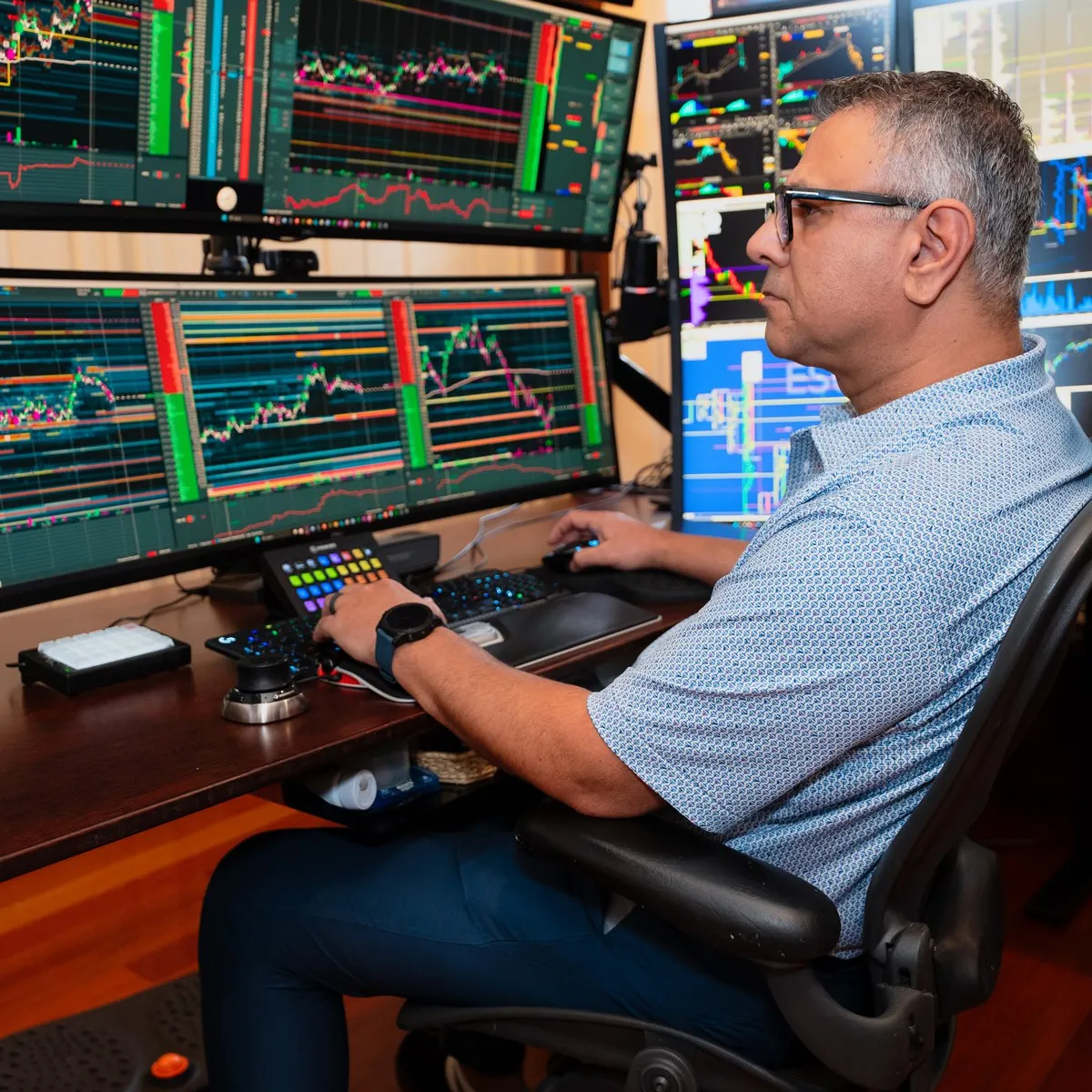
Order flow traders rely heavily on historical context. December is the ideal time to review the year because it lets you finish the cycle cleanly.
A proper review should include:
- How liquidity behaved in different volatility periods
- How your setups performed across slow and fast environments
- Which parts of the curve became more important
- How stop runs behaved during major events
- Whether traps and absorption patterns became more or less reliable
- Whether the open became more directional or more rotational
This type of analysis is easier to complete when markets slow down and you have uninterrupted time. January does not offer this. The first two weeks are already full of repositioning and new flows.
January Is a Reaction Month. December Is a Preparation Month
January usually brings:
- New fund flows
- Institutional rebalancing
- New macro themes
- Higher volatility
- Unpredictable open drives
This is not the time to start building your plan. Pros want to enter January ready to trade, not still evaluating their strategy.
By completing the review in December, they can approach January with:
- A refined playbook
- A clear set of focus areas
- Defined volatility expectations
- Updated risk parameters
- A clean workspace and alert system
- Confidence in their timing
They treat January as the execution phase, not the planning phase.
December Is the Best Time To Update Tools and Market Data
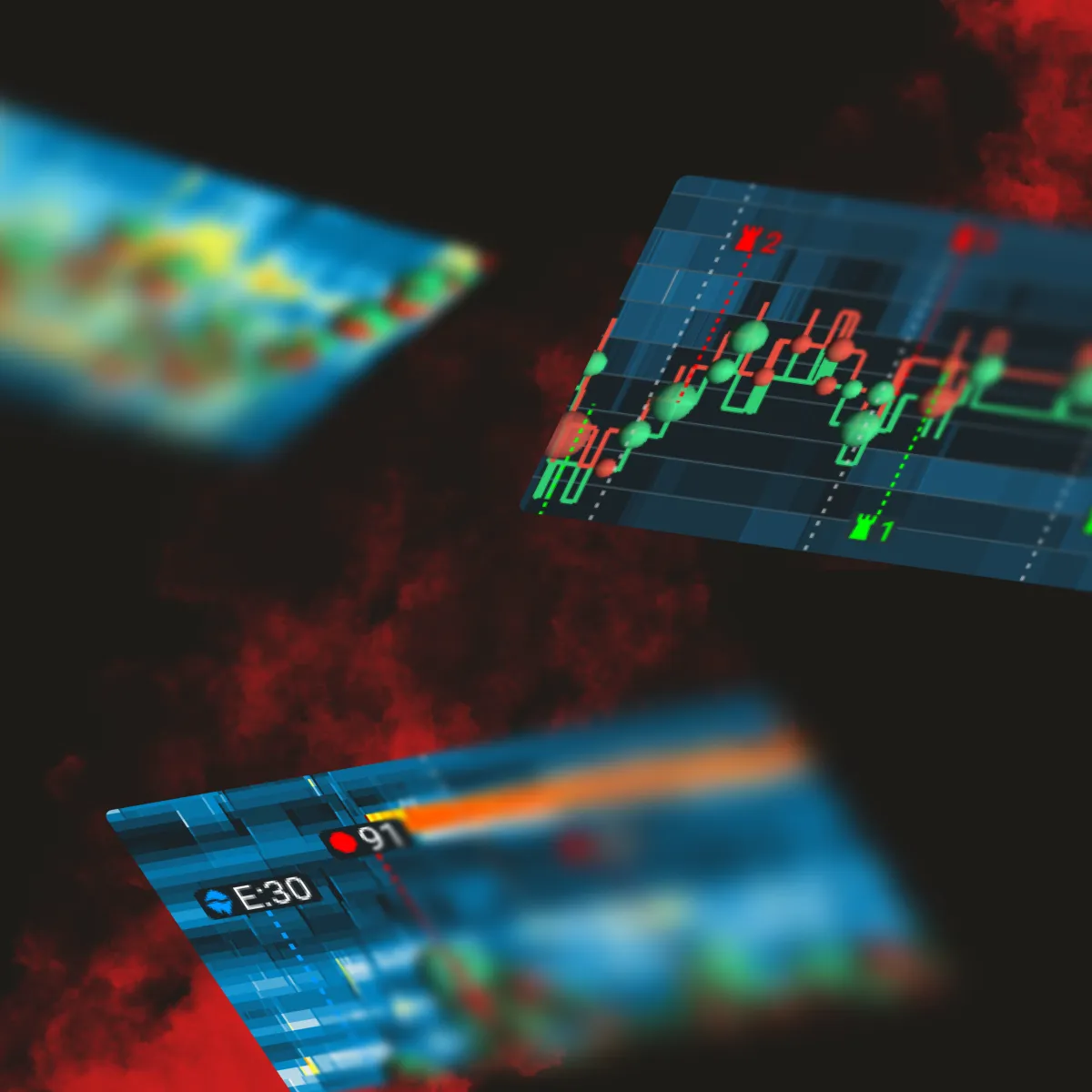
Order flow trading relies on fast, clean data. Many traders only evaluate their tools when something breaks. Pros use December to get ahead of problems.
This includes:
- Reviewing their data feeds and depth-of-market behavior
- Updating software versions
- Cleaning chart layouts
- Revising alerts for liquidity shifts
- Ensuring their data provider matches the way they trade
- Checking whether they need more context, such as deeper history or clearer volume data
Having this done before January avoids friction on the first high volatility sessions of the new year.
December Prepares Traders for January Volatility Cycles
January volatility often looks very different from December’s structure. New capital enters the market. Institutions reposition for the year. Sectors rotate. The first week alone can produce outsized moves that shape the entire quarter.
If a trader is still in “review mode” during this period, they miss some of the cleanest opportunities of the year. This is why preparation in December is not optional for serious traders. It ensures they are ready to act when liquidity and volatility expand again.
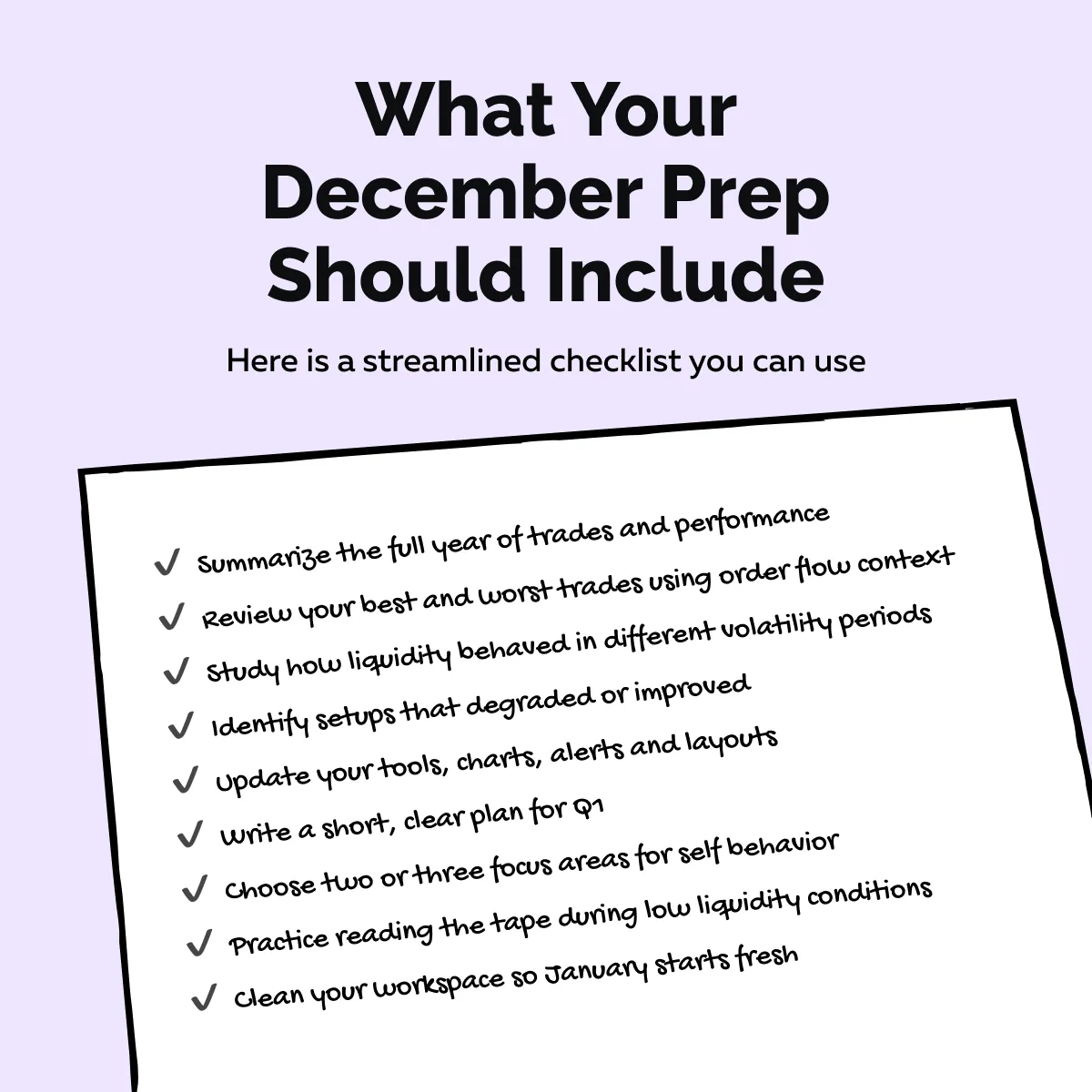
This process gives you structure and confidence going into the next quarter.
Conclusion
December is the reset point for professional order flow traders. By the time January arrives, they already know their strengths, their weaknesses, their best setups and the exact conditions they are prepared to trade.
Waiting until January means you start behind. Preparing in December means you begin the year with clarity and momentum.

Start your prep with full depth data, historical context, and all the tools you need for order flow trading.
Sign Up Now
Latest Articles