


See order flow more clearly in real time.
Compare plans to access deeper market visibility for order flow.
Trading Basics
December 29, 2025
Why Patience Pays in Order Flow Trading

What is the hardest thing to do in trading? It’s to do “nothing,” waiting patiently for the right setups. Most modern traders don’t fail due to a lack of knowledge, but rather because of their impatience. They see every little move on the chart and feel the urge to jump in.
What prompts them? It’s the fear of missing out (FOMO).
The result? Those quick reactions usually lead to early entries, emotional trades, and losses.
What’s the remedy? It is “patience”. In order flow trading, patience means waiting for real proof in the data, such as waiting for liquidity to shift, for strong buyers or sellers to show up, or for a trap to reveal itself.
Read this article to learn why patience in trading can become one of your biggest advantages and how it ties into reading order flow. Also, read on to see what patience actually looks like when applied in real trades.
The Cost of Impatience in Trading
Want to know one of the fastest ways to lose both money and confidence? In trading, it’s being impatient. It shows up in three common ways:
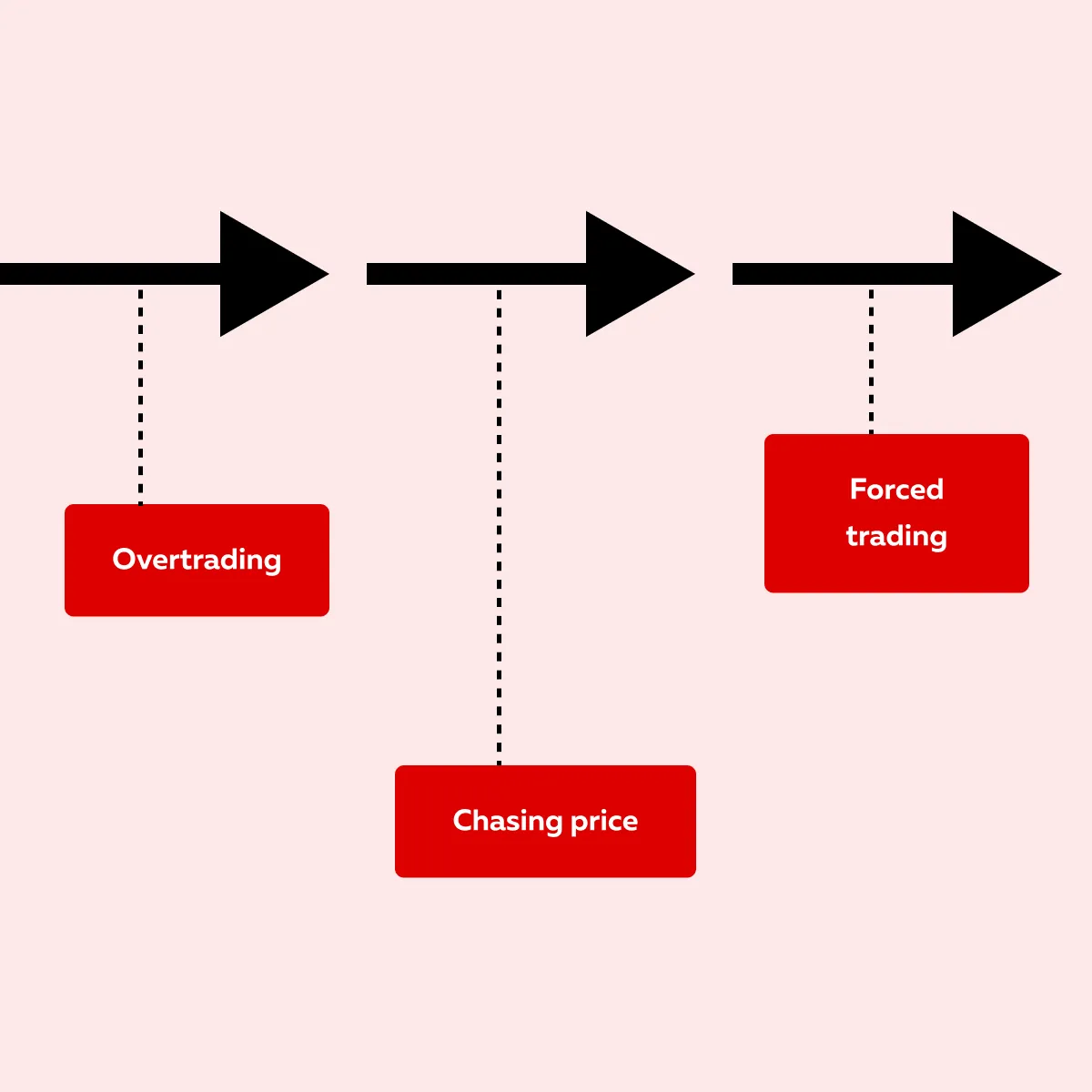
Let’s understand each in detail:
| Overtrading | Chasing Price | Forced Trading |
|
|
|
As a trader, you must observe that every impatient action comes from emotion—not logic. It’s the opposite of what Tom B. discussed in the Trader Lab stream, where patience in trading means waiting for statistical edges and proper trade locations. For more clarity, let’s study an example:
- Let’s say price spikes into a liquidity zone.
- An impatient trader buys instantly, expecting a breakout.
- But there’s no absorption or order flow confirmation.
- Thus, the price quickly reverses, and the trader gets stopped out.
- Do you think the loss was from a bad analysis? Nope!
- The trader acted before the market provided real evidence.
So, what do you learn? Patience in trading protects your capital and mindset.
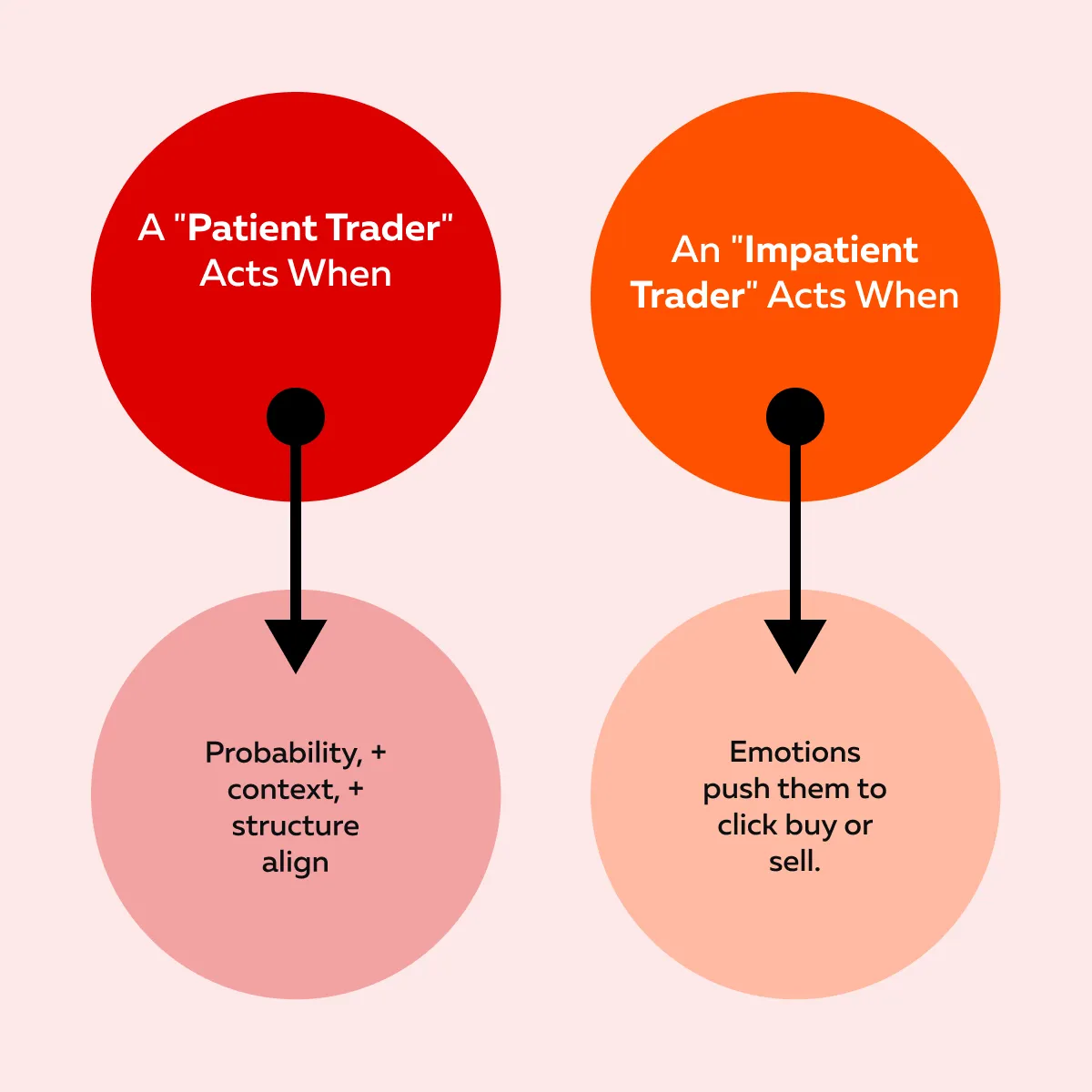
Patience means waiting for the full story to appear in the order flow → Compare Packages.
Why Patience Is an Edge in Order Flow Trading
In order flow trading, “being patient” is a strategic trading style. Why? That’s because the market constantly reveals new information. Your job isn’t to predict what will happen next but to observe how buyers and sellers behave. Let’s see how patience gives traders an edge:
| It Filters Noise | It Aligns You With Larger Players | It Improves Risk Placement |
or
|
or
|
|
Tom B explained this perfectly in this Trader Lab session. He stated that a real opportunity appears only when liquidity behavior confirms intent. For example,
-
- Let’s assume that you see large players absorbing sell orders.
- As a result, the price begins to rise with volume.
- Now, that’s the moment patience pays off.
- You’re no longer guessing!
- Instead, you’re acting on market evidence.
So, patience in trading is what separates reaction from reasoning. Wait for confirmation, not emotion — see patience in action with real-time order flow → Compare Packages.
How to Practice Patience in Live Markets
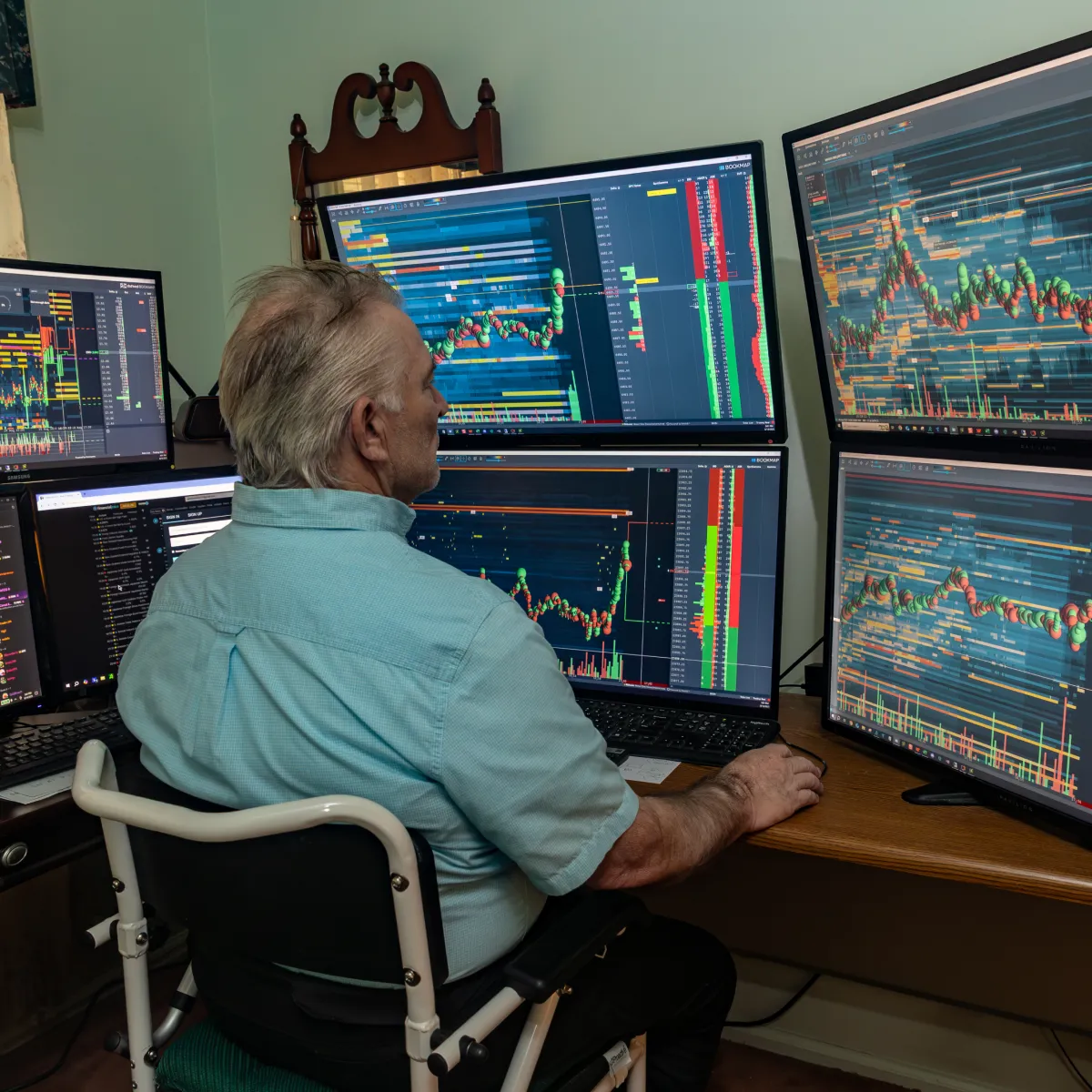
Some new traders may misconstrue patience in trading as being passive. On the contrary, patience is about staying focused and executing deliberate trades. In live markets, patience is a skill you build through structure and discipline. Let’s see how you can practice it step by step:
Step I: Define Your Criteria.
Before entering any trade, write down the exact signs that must appear, such as:
- Absorption,
- A delta shift, or
- Liquidity rebuild.
You must trade only if all the conditions are met. This keeps your decisions objective and in line with your trading plan.
Step II: Use Alerts
By using real-time market analysis tools, such as Bookmap, you can set alerts for specific liquidity or volume events. The benefit? You need not be glued to the screen! You can avoid impulsive clicks just because the price is moving.
Step III: Trade Fewer Setups
Most successful traders usually execute on one or two patterns they understand deeply. Examples include a liquidity sweep or mean reversion rotation. You should also try to develop mastery of fewer setups. This approach strengthens confidence, which in turn reduces the urge to overtrade.
Step IV: Reframe Waiting
Don’t see it as “doing nothing.” Instead, think of it as gathering context and watching how buyers and sellers interact until the market reveals intent. Consider this scenario:
- Let’s say you’re watching NQ.
- You observed that liquidity keeps fluctuating before any real absorption appears.
- Do you think this observation is a waste of time? Nope! It’s preparation.
- That’s because the market is still setting up, and it’s not the right time to trade.
Patience in trading is about controlling your “attention” as much as your “capital”. It’s what allows you to wait for high-probability setups instead of chasing random motion. Develop timing and discipline through visualization, not guesswork → Compare Packages.
The Psychology Behind Waiting
In trading, learning to wait is as important as knowing when to act. Many traders believe being active means being productive. But in reality, profits come from being selective (not busy).
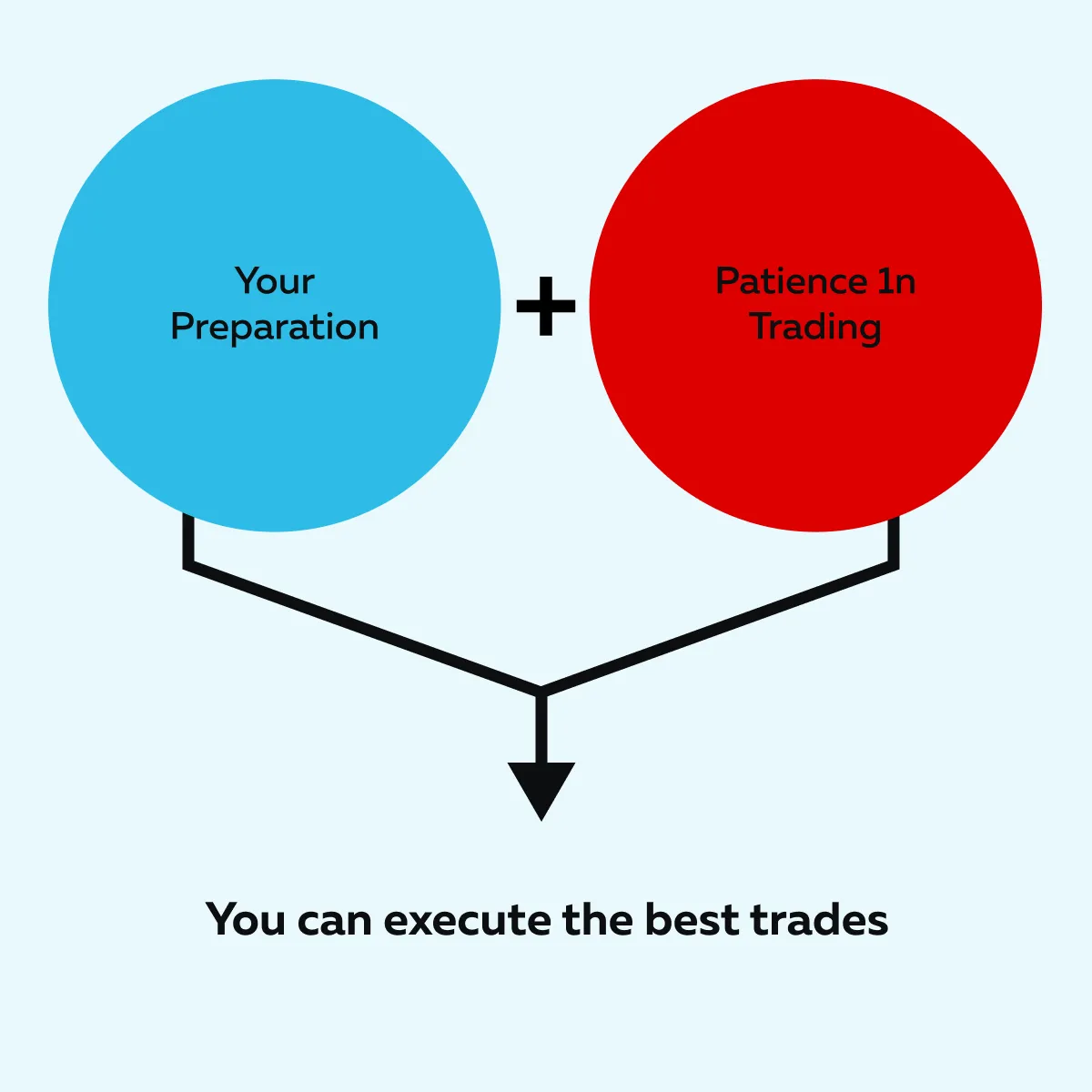
Now, to value patience, you need a mindset change that can be built on these three elements:
Element I: Emotional Control
- You must let go of the need for instant results.
- Remember that the market doesn’t reward impatience.
- Instead, it rewards observation.
- Thus, try to detach yourself from the urge to “do something”.
- This allows you to follow your trading plan instead of your emotions.
Element II: Trust in Your Process
- You missed a trade that didn’t meet your criteria. Now, is it a failure? No! It’s discipline.
- As a smart trader, you should wait for confirmation through order flow or liquidity behavior.
- This often separates consistent traders from impulsive ones.
Element III: Data Over Impulse
-
- Your trades should trigger from evidence, not feelings.
- Ideally, you should wait for clear signs, such as trapped traders or absorbed liquidity.
- By doing so, you’re acting on structure and probability, not hope.
So, as a trader, you must understand that every moment you don’t trade is still valuable. That’s because you are spending that time as follows:

Trade less, observe more — Bookmap helps you see when the setup is actually ready → Compare Plans.
Case Study: The Power of Waiting for Confirmation
Patience in trading turns noisy setups into high-probability trades. To understand how, check out this case study.
The Market Setup – ES (E-mini S&P).
Let’s assume that the market is experiencing a strong and rapid downward push. Many traders want to “fade” the move and buy the dip.
What The Impatient Trader Does
-
- An impatient trader hopes for a quick bounce.
- They see the sharp drop and jump in to buy immediately.
- There is no order-flow evidence (no absorption and no delta shift).
- Price drifts lower or spikes through stops.
- The trader’s stop is hit.
- The result is a clear loss!
What the Patient Trader Does (Step-by-Step)
They observe and don’t predict. The patient trader watches Bookmap and volume profile. They don’t act on price alone. Instead, they:
- Look for Order-Flow Evidence
-
-
- They gain major confirmations, such as:
- Large buy absorption near the low, which is visible as “persistent resting buy interest” that prevents the price from continuing down.
- A clear delta shift, where buyers started to dominate executed volume
- These confirmations show that the market is revealing intent.
- They gain major confirmations, such as:
-
- Wait for a Clean Signal
-
- Rather than guessing that the low will hold, a patient trader:
- Waits until absorption is sustained
- Rather than guessing that the low will hold, a patient trader:
+
- The delta turns positive.
- That tells them at least some larger players are defending the level.
-
- Enter with Clear Invalidation
- They enter long after the absorption and delta shift instead of reacting to the first touch.
- Their stop sits below the recently proven absorption zone, which is a logical invalidation point.
- This keeps the risk tightly defined.
- Enter with Clear Invalidation
- Manage Size and Exits.
-
- Besides, they scale in as order flow confirms continuation.
- Next, they take profits at logical volume nodes or high volume nodes (HVNs).
- They never widen stops because they waited for a better entry.
So, what’s the outcome?
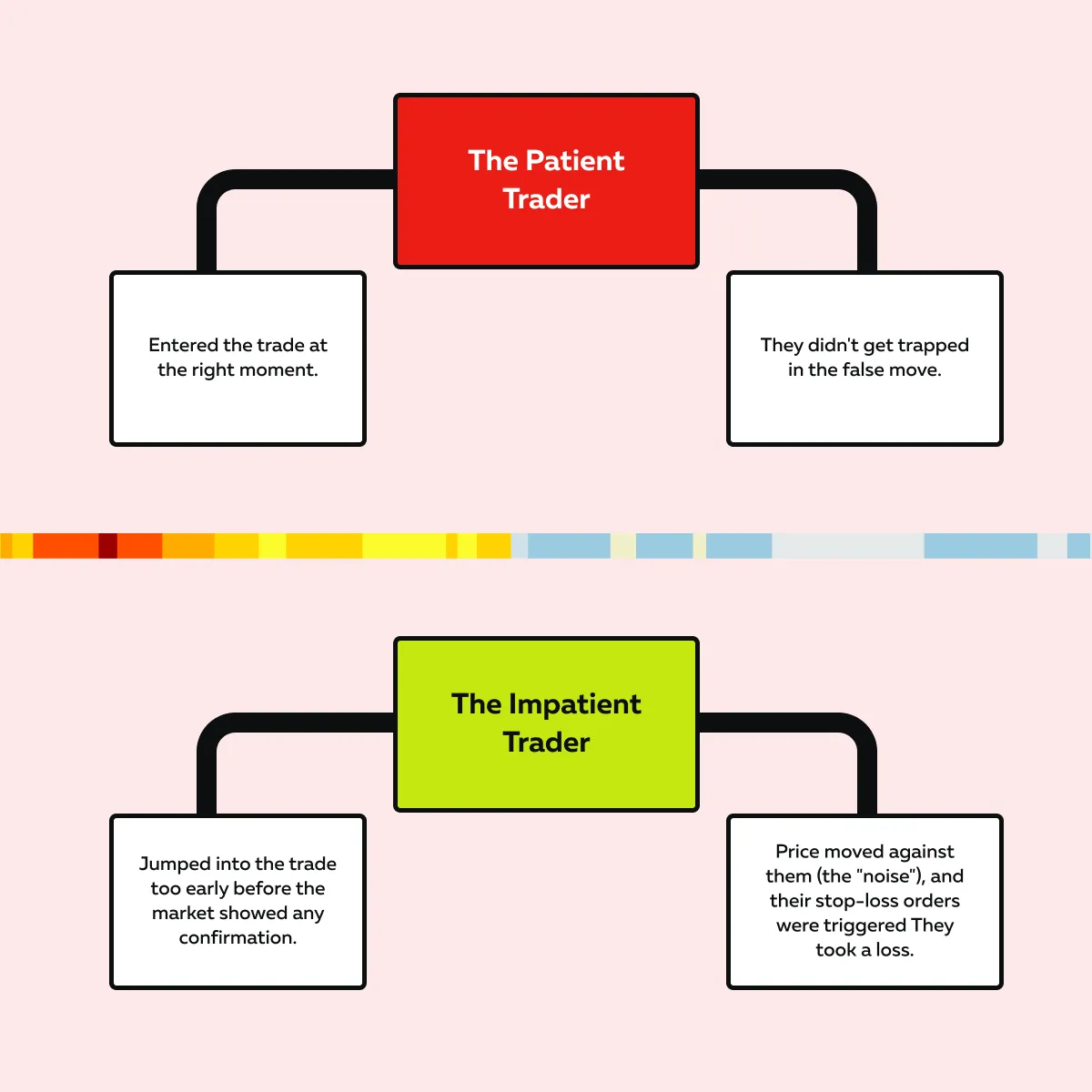
What’s your key takeaway? Before entering, you should require at least one clear order-flow confirmation (absorption or delta shift). If it doesn’t appear, treat the situation as information gathering and not a missed opportunity.
Conclusion
By now, you should feel more confident knowing that patience in trading isn’t about doing nothing—it’s about acting with intention. As a patient trader, strive to act with purpose rather than impulse. Always remember that the market constantly moves, but not every move deserves your attention.
So what should be your ideal approach? Continue to monitor price, liquidity, and volume. The insight gained from this observation allows you to trade with 100% clarity instead of emotion. Through such order flow analysis, you can see in real time who’s absorbing, who’s chasing, and where intent truly lies.
Furthermore, you stop reacting to noise and start waiting for high-probability setups backed by structure and evidence (not impulse). If you want to develop this level of insight, explore Bookmap. It’s one of the best tools for visualizing liquidity and finding real opportunity in every market. Start seeing the difference between waiting and guessing with real-time order flow visualization → Compare Packages.
FAQs
1. Why is patience important in trading?
Through patience in trading, you can avoid emotional and rushed decisions. When you wait for the market to show clear intent (through structure, volume, or liquidity), you make choices based on facts and not feelings.
The many advantages? Such an approach:
- Reduces overtrading
- Filters out noise
- Let you take higher-quality trades that are backed by real context instead of impulse.
2. How can I learn to be more patient during trading?
Begin by creating a clear checklist of conditions for every setup. For example, you should try to gain confirmation through absorption or a delta shift. If those signs aren’t present, don’t trade!
Additionally, you can also use “alerts”. By setting them, you are not glued to the screen and tempted to act out of boredom. Always remind yourself – missing a trade is cheaper than taking a bad one.
3. What role does order flow play in developing patience?
Order flow gives you live insight into how buyers and sellers interact. While observing order flow, you watch:
- Liquidity,
- Volume, and
- Absorption patterns.
All three show you when the market is shifting from indecision to direction. This knowledge lets you understand when it’s worth waiting and when it’s time to act. Note that real opportunities appear only when participation confirms intent.
4. Is waiting the same as missing opportunities?
Not at all. Most successful traders skip dozens of setups before taking one good trade. Always remember that waiting doesn’t mean inactivity. Instead, it means gathering information until the odds are in your favor.
When you show patience in trading, you only take trades that meet your edge. Also, you focus more on quality instead of chasing random market noise.
Sign Up Now
Latest Articles