


See true order flow with full MBO transparency
Compare plans to track individual orders and liquidity in CME futures.
Futures
March 24, 2026
CME Futures MBO Data: A Complete Guide to Market-By-Order Transparency
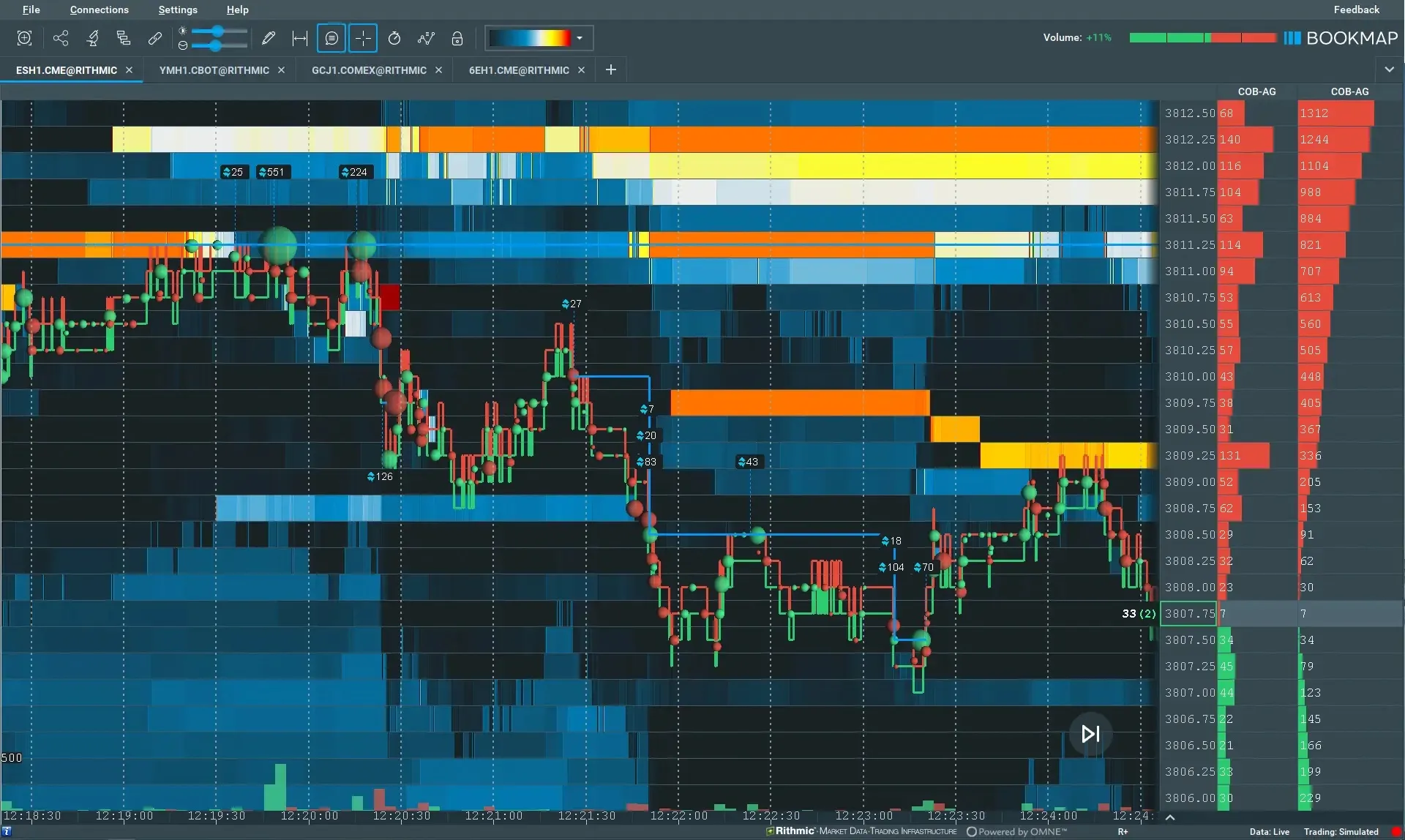
Understanding how orders interact inside the market is one of the biggest advantages a trader can develop. While most traders rely on aggregated data, CME futures MBO data provides a much deeper level of visibility.
Instead of showing only price and volume, it reveals how individual orders are placed, modified, and executed — giving a clearer picture of how liquidity actually behaves.
This guide breaks down what CME Market-By-Order (MBO) data is, how it differs from traditional feeds, and how traders use it to analyze order flow, detect hidden activity, and improve execution.
Table of Contents
- CME Market-By-Order Stream
- MBP vs MBO Latency
- Data Structure and Microstructure Insights
- Identifying Liquidity Behavior and Icebergs
- Technical Infrastructure and Connectivity
- Practical Use Cases for Traders
- FAQ
Watch: Understanding MBO Data in Futures Markets
This video provides a visual overview of how Market-By-Order data works and how traders interpret order-level activity in real time.
CME Market-By-Order Stream
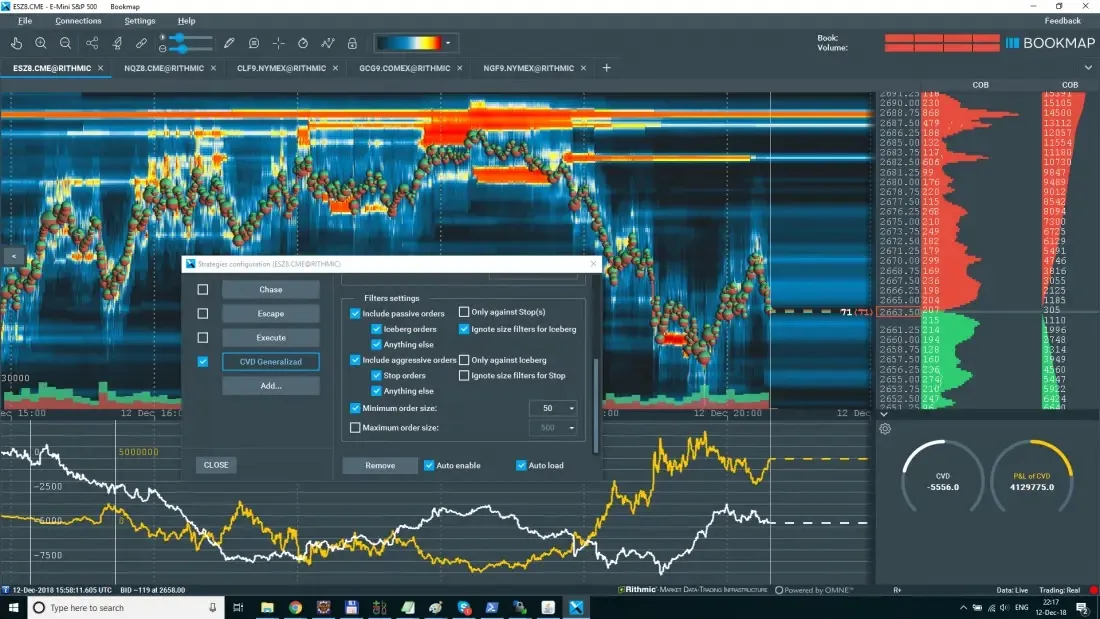
CME Market-By-Order (MBO) data is a Level 3 data feed that provides visibility into individual orders within the order book.
Unlike traditional Level 2 feeds, which aggregate orders at each price level, MBO data shows:
- Individual order placement
- Order size and modification
- Order cancellations
- Execution events
This allows traders to track how liquidity evolves, not just where it exists.
With CME’s Globex platform, this data is distributed in real time, giving participants a detailed view of how the market is forming at each moment.
Globex Level 3 Records
Globex Level 3 records represent the most granular form of exchange data available to most traders.
Each record contains:
- Unique order identifiers
- Price and size updates
- Timestamps for each event
- Changes in queue position
This level of detail allows traders to reconstruct the full lifecycle of orders — from placement to execution or cancellation.
Instead of seeing a static snapshot, traders see the process of price formation.
Detecting Native Icebergs
One of the most valuable uses of MBO data is detecting native iceberg orders.
Icebergs are large orders that are intentionally hidden by displaying only a portion of their size. As the visible portion is filled, additional size is revealed.
With MBO data, traders can:
- Identify repeated replenishment at the same price
- Track execution patterns that suggest hidden size
- Distinguish between genuine liquidity and passive layering
This provides insight into institutional activity that is invisible in aggregated feeds.
MBP vs MBO Latency
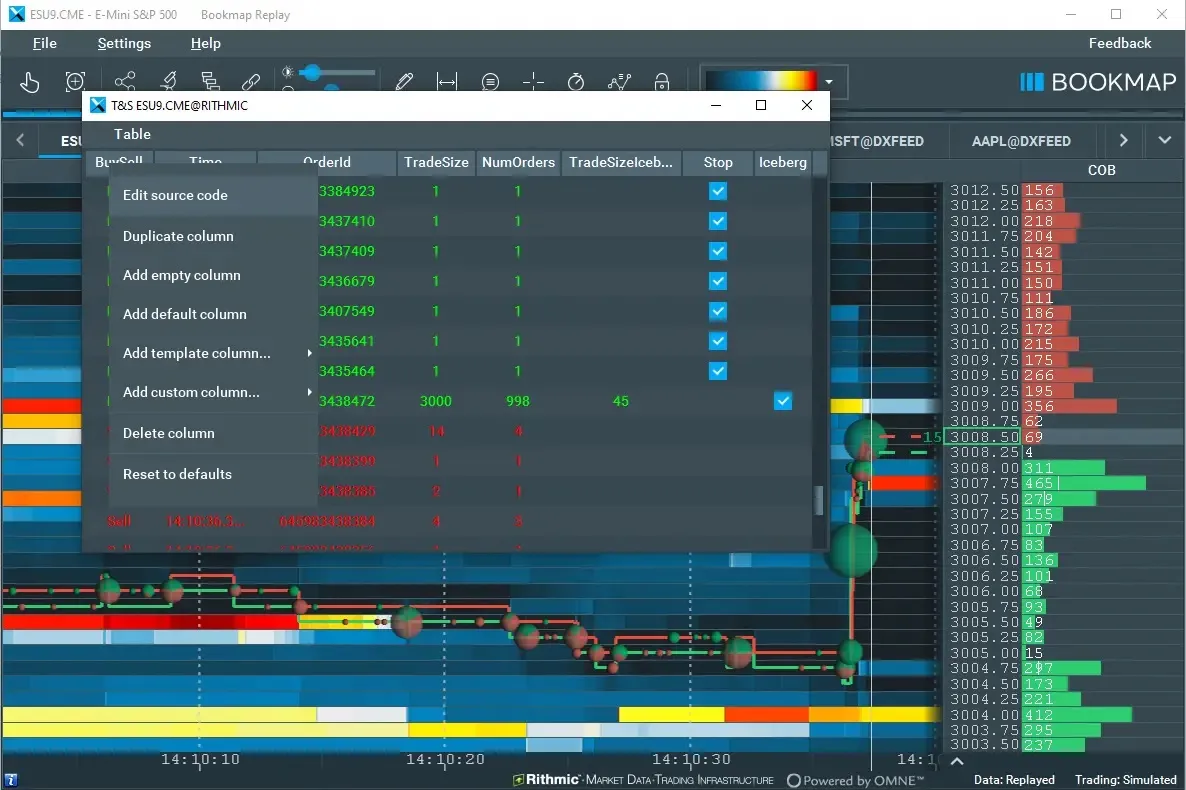
Market-By-Price (MBP) and Market-By-Order (MBO) feeds differ not only in structure but also in how data is processed and delivered.
MBP data aggregates all orders at a price level, while MBO preserves each individual order.
From a latency perspective:
- MBP may appear simpler and lighter due to aggregation
- MBO provides more granular updates, which can increase data load
However, the key distinction is not just speed — it is information density.
With MBO, traders receive:
- More frequent updates
- More precise sequencing of events
- Better visibility into order book changes
In fast-moving futures markets, this additional detail can help traders understand whether price is moving due to:
- Aggressive execution
- Liquidity withdrawal
- Structural imbalance
Derivatives Microstructure Info
MBO data is essential for understanding derivatives market microstructure.
It allows traders to analyze:
- Queue positioning and priority
- Order matching behavior
- Liquidity provision vs consumption
This type of information is especially important in futures markets, where price movement is often driven by how orders interact rather than just directional sentiment.
Exchange Liquidity Statistics
With access to MBO data, traders can derive more advanced liquidity statistics, such as:
- Order book turnover rates
- Liquidity persistence at key levels
- Frequency of order cancellations
- Execution clustering
These metrics help traders evaluate whether liquidity is stable, fleeting, or being actively managed.
Data Structure and Technical Format
MDP 3.0 SBE Format
CME distributes MBO data through its Market Data Platform (MDP) 3.0 using Simple Binary Encoding (SBE).
This format is designed for:
- High performance
- Low latency
- Efficient parsing
SBE allows large volumes of data to be transmitted and processed quickly, which is critical given the number of updates generated in active futures markets.
For traders and developers, this means:
- Faster data decoding
- Reduced bandwidth overhead
- More efficient real-time processing
Rithmic API Connectivity
Accessing MBO data typically requires specialized infrastructure.
One common approach is through Rithmic API connectivity, which provides:
- Direct access to exchange data
- Low-latency streaming
- Integration with trading platforms
This type of connectivity is often used by:
- Professional traders
- Algorithmic systems
- Platforms focused on order flow visualization
Historical or Real-Time?

Traders often choose between historical and real-time MBO data depending on their needs.
- Real-time data is essential for execution and live decision-making
- Historical data is used for analysis, replay, and strategy development
Historical MBO data is particularly valuable because it allows traders to:
- Replay market conditions
- Study order flow patterns
- Test hypotheses about liquidity behavior
Backtesting or Live Execution?
MBO data can be used for both backtesting and live trading, but each use case has different requirements.
Backtesting focuses on:
- Pattern recognition
- Strategy validation
- Understanding historical behavior
Live execution focuses on:
- Timing entries and exits
- Reacting to liquidity changes
- Managing risk in real time
The ability to use the same data type for both purposes creates consistency between analysis and execution.
Practical Use Cases for Traders
MBO data is not just a technical upgrade — it changes how traders interpret the market.
Some of the most common applications include:
Identifying Liquidity Shifts
Traders can see when large orders:
- Appear and disappear
- Move closer to price
- Get executed or pulled
This helps distinguish between strong and weak levels.
Understanding Market Intent
By analyzing how orders behave, traders can infer:
- Whether participants are defending a level
- Whether liquidity is being used to facilitate execution
- Whether a move is likely to continue or fail
Improving Trade Timing
Because MBO data shows the sequence of events, traders can:
- Enter trades closer to key levels
- Avoid chasing late moves
- React to real-time changes in order flow
Bringing It Together with Visualization Tools
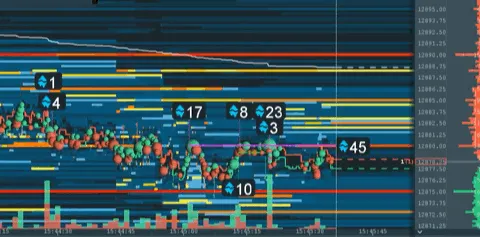
Raw MBO data is powerful, but it can be difficult to interpret without proper visualization.
Platforms like Bookmap transform this data into:
- Heatmaps of liquidity
- Volume bubbles for executed trades
- Real-time order flow visualization
This makes it easier to identify patterns such as:
- Absorption
- Exhaustion
- Iceberg activity
- Liquidity shifts
If you want to explore how MBO data can be used in practice, including tools designed specifically for this purpose, you can learn more here:
https://bookmap.com/mbo-bundle/
Why MBO Data Matters in Modern Futures Trading
Futures markets have become increasingly competitive and data-driven.
Simple price charts and aggregated data are often not enough to fully understand what is happening.
MBO data provides:
- Transparency into order-level behavior
- Insight into liquidity dynamics
- A clearer view of how price is formed
For traders focused on execution, timing, and market structure, this level of detail can make a significant difference.
FAQ
What is CME MBO data?
CME MBO data is a Level 3 data feed that shows individual orders in the order book, including placement, modification, and execution events.
How is MBO different from Level 2 data?
Level 2 (MBP) data aggregates orders at each price level, while MBO shows each individual order separately.
Can MBO data help detect hidden orders?
Yes. MBO data allows traders to identify patterns consistent with iceberg orders by tracking repeated execution and replenishment at the same level.
Is MBO data necessary for all traders?
Not necessarily. It is most useful for traders who focus on order flow, execution timing, and market microstructure.
Can I use MBO data for backtesting?
Yes. Historical MBO data can be used to replay market conditions and analyze order flow behavior over time.
Sign Up Now
Latest Articles