
See trading plan more clearly in real time.
Compare plans to access deeper market visibility for trading plan.
Education
December 26, 2025
SHARE
Think Before You Trade: How Pre-Planning Every Click Improves Execution

Most traders don’t lose because they can’t read the market. Instead, they lose because they act too fast. What does this mean? They spot the price movement, feel the rush, and click ‘buy’ or ‘sell’ without thinking it through.
Now, only after the trade is live do the real questions hit – Where’s my stop? What’s my target? How much am I risking? But by then, it’s too late!
Okay, so what do professional traders do? They slow down. Their every decision, from entry to exit, is planned before the mouse moves, and nothing is left to chance. They also develop 100% clear trading plans before entering a trade.
Want to imitate? Read this article to learn how to “pre-plan your trades” and act with confidence. It will also help you understand how order flow tools like Bookmap bring your pre-trading plan to life by displaying real-time liquidity and participation before you even click.
Why Most Traders Fail Before They Click
Do you think most traders fail because they lack market knowledge? That’s only part of the story. The truth is that a majority fail before they even enter a trade. The core issue lies in poor preparation and emotional execution.
When you don’t have a trading plan before entering a trade, you’re merely reacting, not thinking ahead.
For example,
- Imagine you spot a strong breakout candle.
- You feel confident and enter the trade.
- But you don’t check:
- Liquidity structure,
- Order flow, and
- Key price levels.
- The impact? You’re blind to what’s happening beneath the surface.
- The breakout may be fake and can be reversed.
What Solution Is Offered for This Problem?
Tom B. explained in the Trader Lab session that markets don’t move because of random price patterns or chart shapes. Instead, they move because of what traders are actually doing behind those prices. As a smart trader, you must note that every candle on the chart is just a visual summary of that activity.
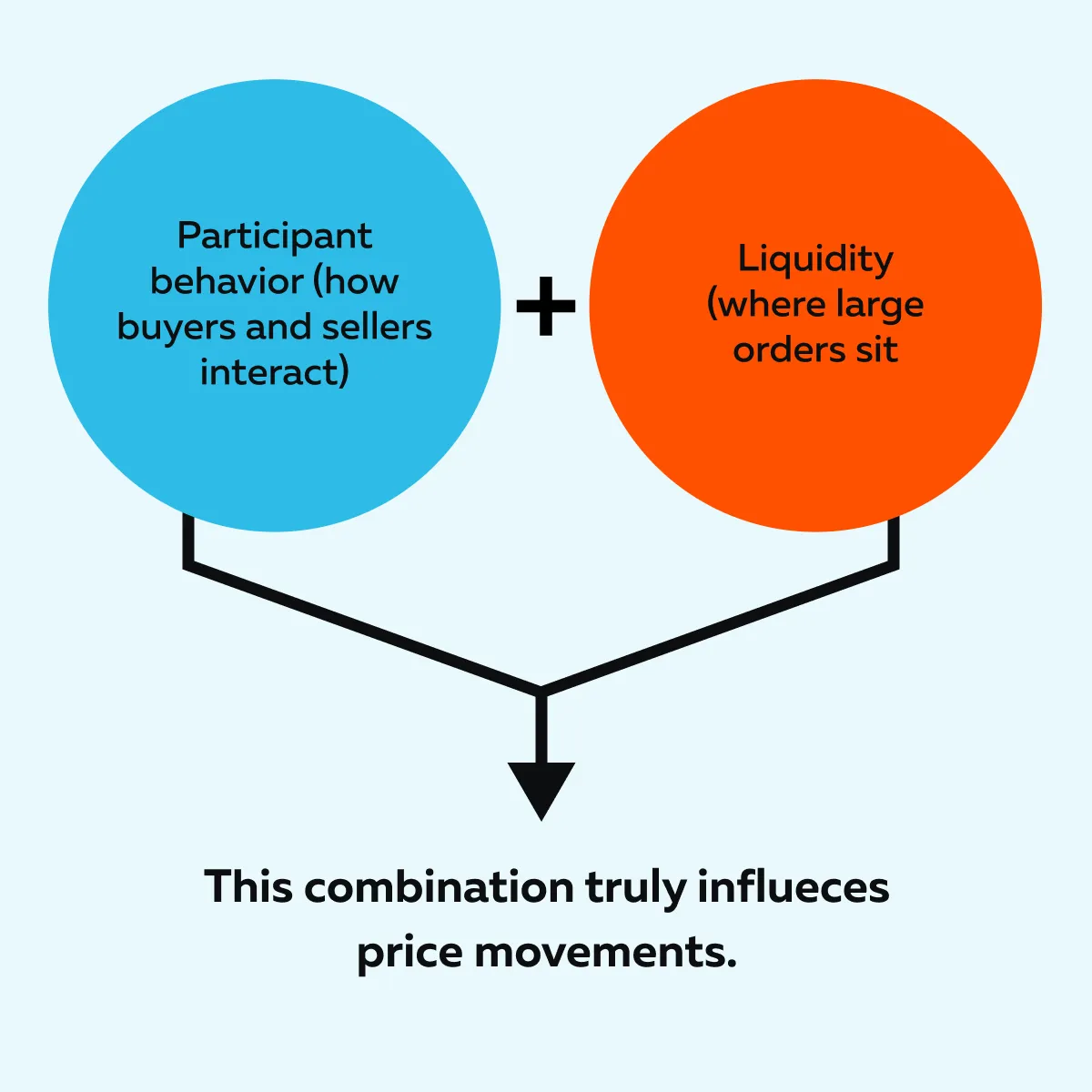
Let’s understand better through an example:
- Assume that big buyers are absorbing sell orders at a certain level.
- Now, price may stop falling, not because of a “support line,” but because real money is defending that zone.
- Similarly, if liquidity disappears above, the price can increase since there’s nothing left to absorb new buying.
So, what can you learn? You must understand who is trading, where, and why. This insight goes far beyond simply reading random candles or relying on indicators—it reveals the real forces shaping the market.
To Further Your Understanding, Read Another Example:
Assume that the Nasdaq (NQ) is moving up fast and breaks above its recent high. Now, a trader sees that and buys immediately, thinking, “It’s breaking out. I’ll catch the move early!” But what the trader doesn’t realize is this –
- Just above that breakout level, large sell orders (liquidity) are waiting.
- These orders belong to big players who planned to sell once the price reached that zone.
- So, when the trader buys, their order offers those big sellers the perfect chance to sell into that buying pressure.
- The impact?
- The price then stops going up and quickly reverses.
- The trader is trapped in a losing position.
So, what was the problem here? Was the setup wrong? Nope! The timing and planning were. The trader entered without checking the liquidity and the positions of large participants.
If they had a trading plan before entering the trade, they would’ve looked at the order flow (for example, on Bookmap) and seen that heavy sell liquidity was stacked above. It is a warning sign to wait or skip the trade. How do successful traders handle such situations?
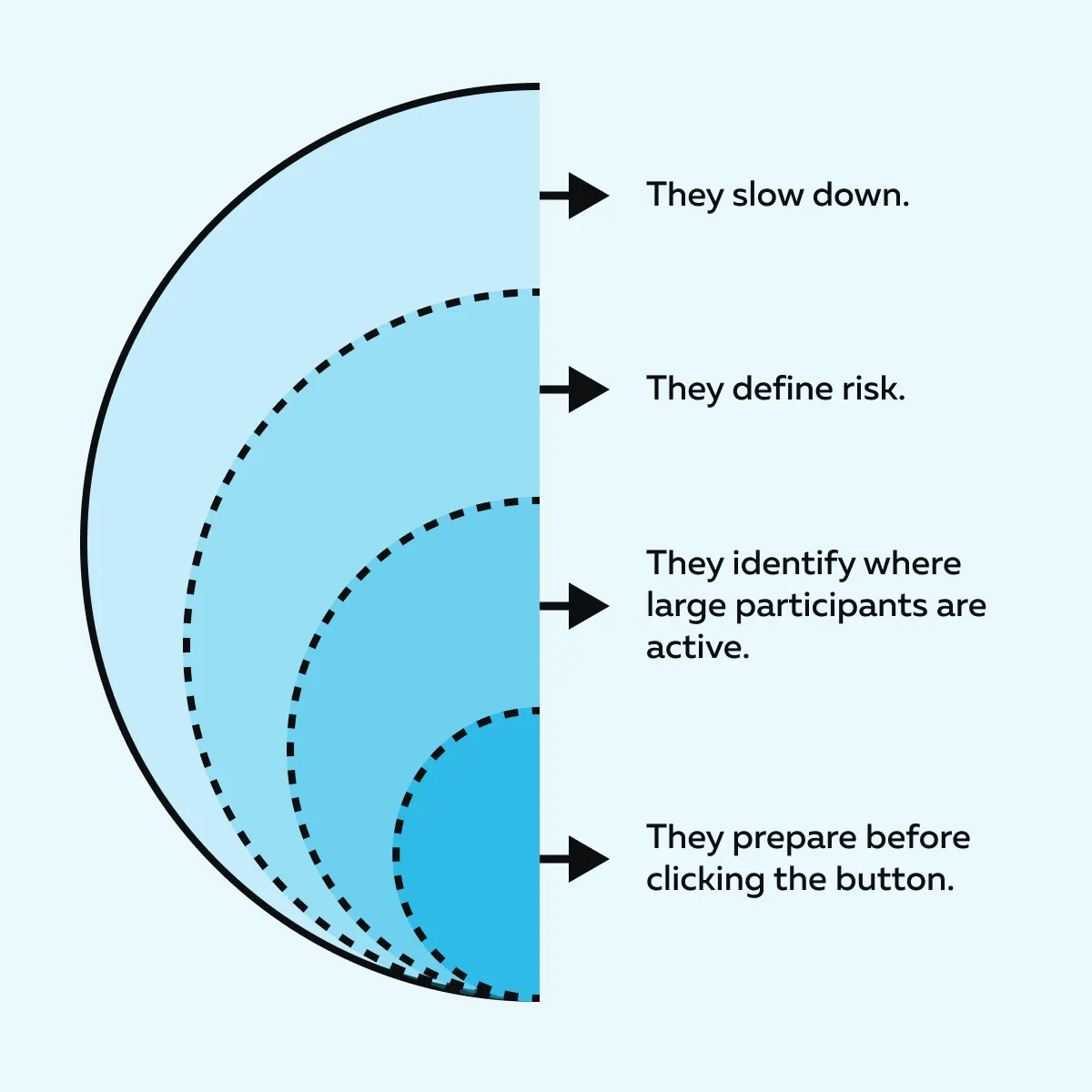
As a smart trader, always keep in mind that impatience and emotional decisions kill performance far faster than a bad trade idea ever will. Avoid impulsive trades by mapping liquidity and risk zones before every click → Compare Packages.
The Power of a Defined Trading Plan
A defined trading plan is what separates a professional from a guesser. Is it about predicting the market? No! It’s about being prepared for whatever the market throws at you. A trading plan, before entering a trade, provides structure to your decisions, enabling you to act with logic rather than emotion.
Now, note that a good trading plan includes these six clear parts:
| Part | What It Means |
| 1. Context |
|
| 2. Setup |
|
| 3. Execution Zone |
|
| 4. Risk |
|
| 5. Target |
|
| 6. Contingency |
|
Let’s understand what a good trading plan looks like through an example,
-
- You see absorption forming on Bookmap.
- Buyers are absorbing sell orders at the support level.
- You plan to go long if it holds.
- You mark the previous swing low as invalidation.
- You set a 4-tick stop just below that low.
- You target the next liquidity band above for profit.
- Now, if absorption fails, you will cancel the trade immediately.
Planning converts “emotional impulses” into “structured probabilities”. It ensures that your every trade is aligned with the market context (and not just hope).
Turn impulse into intention with real-time market structure → Compare Plans.
How Order Flow Reinforces Planning
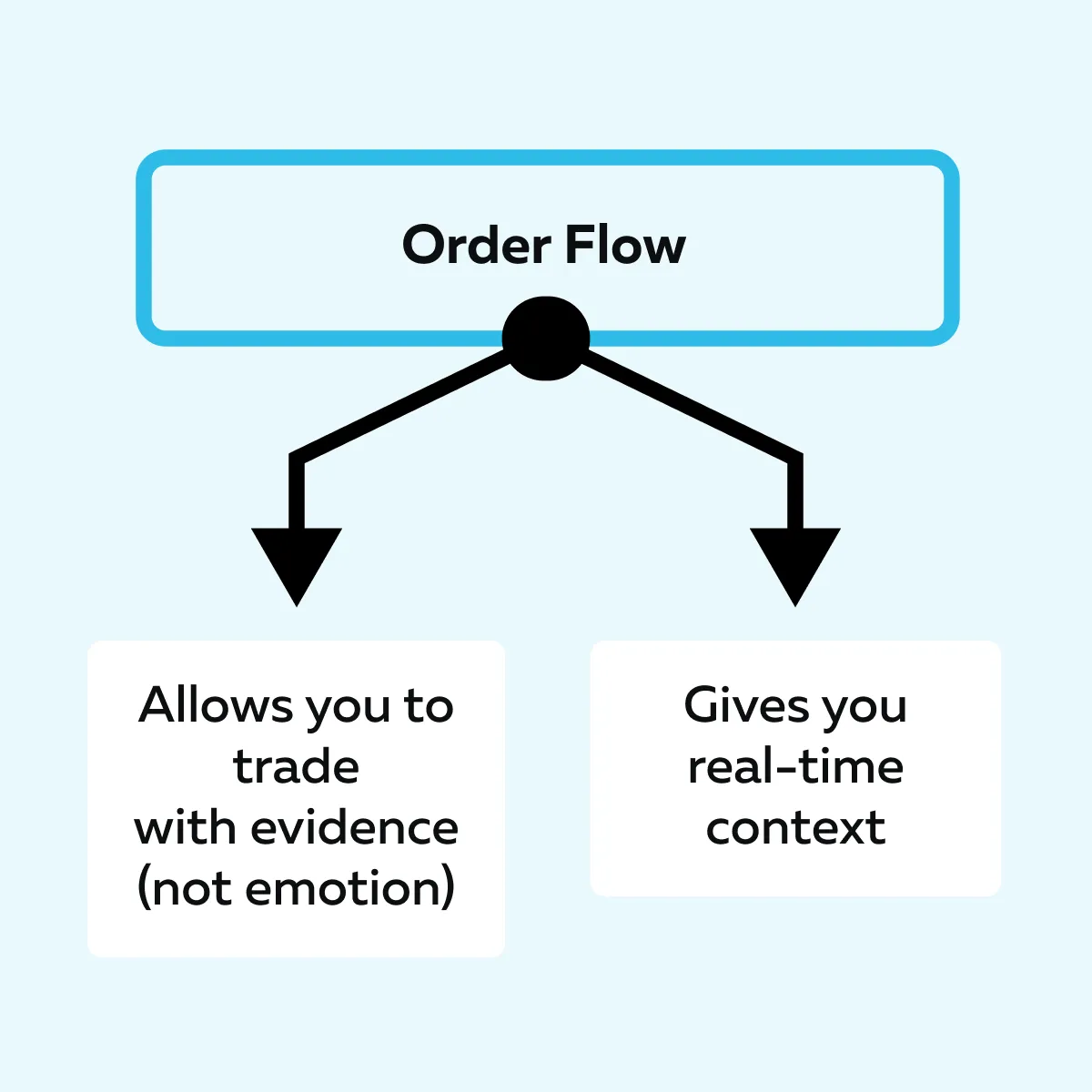
Order flow is the bridge between your trading plan and what’s actually happening in the market. Using Bookmap, you can see liquidity, volume, and trader behavior in real time. This knowledge enables you to gain confirmation before risking even a single dollar.
When you have a trading plan before entering a trade, you can use order flow to validate or reject your assumptions. Let’s see what all you can notice:
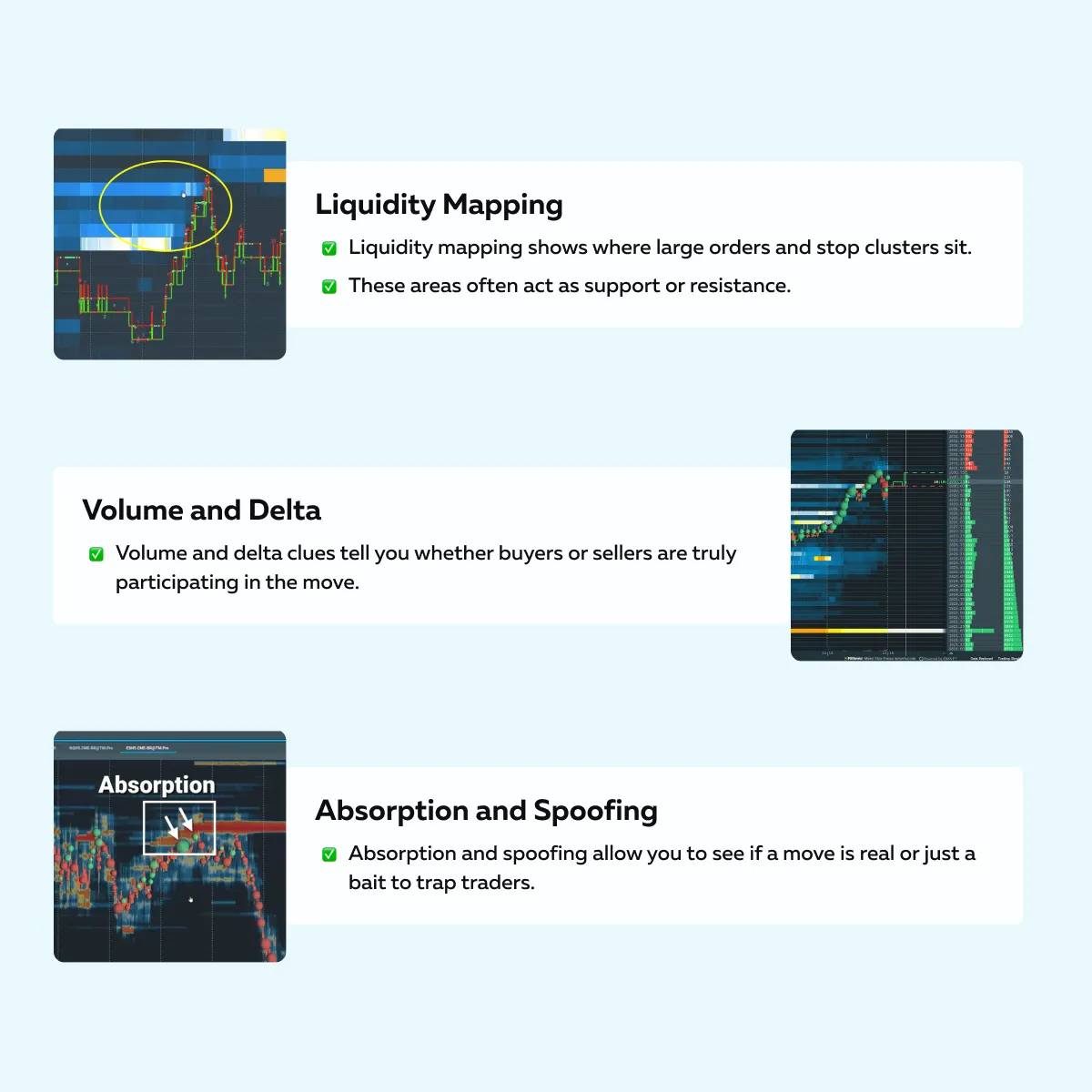
For example,
- Let’s say you are planning to short if the price sells into the 5450 liquidity zone.
- But as the price approaches, Bookmap shows heavy absorption.
- You found that buyers are absorbing sell orders.
- Now, your trading plan keeps you disciplined.
- It stops you from entering blindly.
Tom B. also explained in the Trader Lab session that order flow doesn’t replace your plan. It just reinforces it. Let’s see how:
Build confidence through preparation, not prediction → Compare Packages.
From Idea to Execution: A Step-by-Step Example
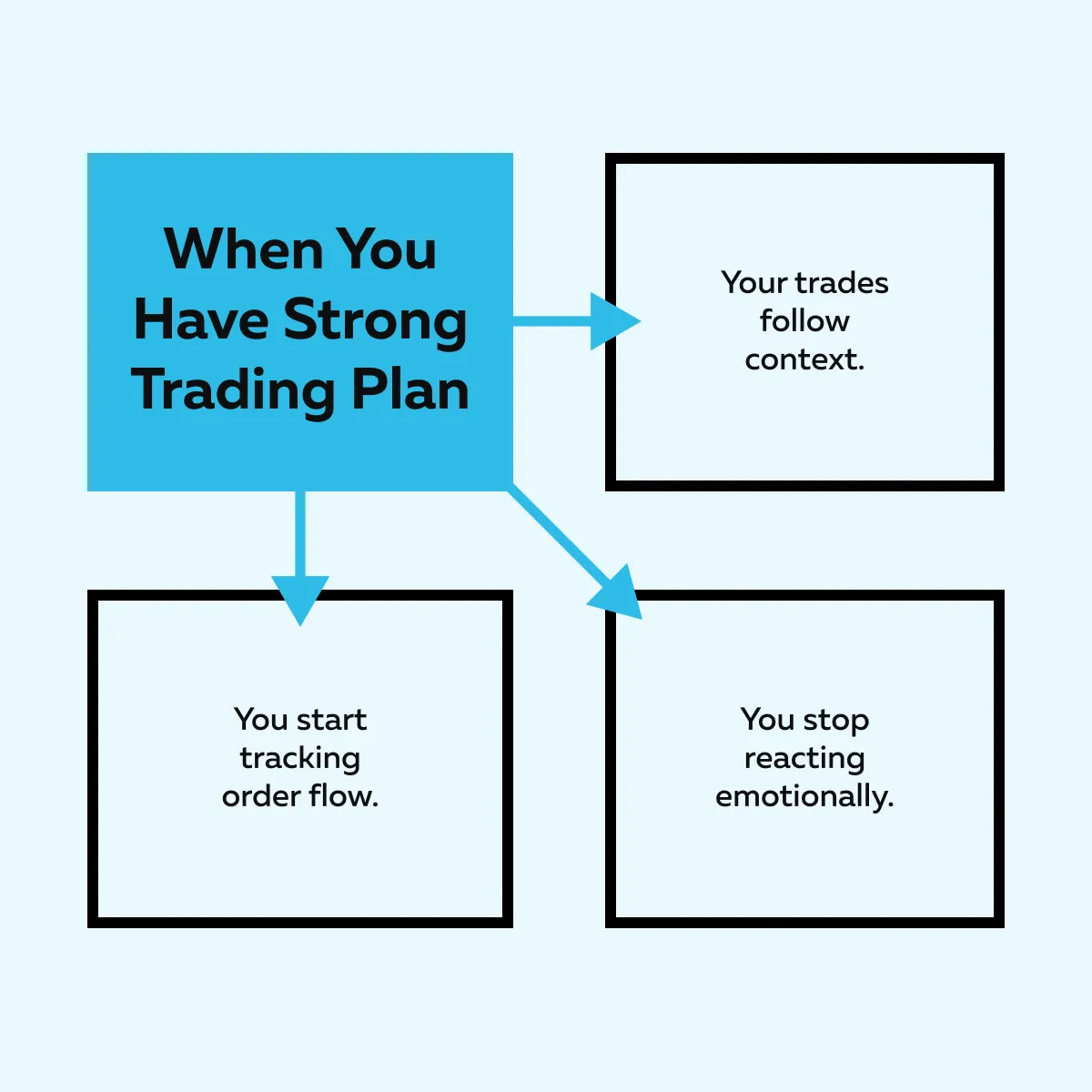
Do you know where most traders lose discipline? It occurs when they attempt to convert a trade idea into execution. The solution to this problem is to have a trading plan in place before entering a trade. It saves you from reacting to every candle as you follow a structured trading process.
Let’s see how that looks step by step:
- Step I: Observation: You notice the ES (S&P 500 futures) consolidating just below a major liquidity band on Bookmap.
- Step II: Bias: You expect a breakout to continue higher if sellers can’t push the price lower.
- Step III: Pre-plan: You’ll only go long if price reclaims 4300 with strong delta and visible liquidity support.
- Step IV: Risk: You define a 4-point stop below the absorption zone, where buyers previously defended the price
- Step V: Execution: You don’t click impulsively! You wait for confirmation that your conditions are met before entering.
- Step VI: Post-trade review: After the trade, you check whether your execution followed your plan or drifted from it.
This process turns trading from a “guessing game” into a “methodical decision-making” routine.
Plan every trade before you click — visualize setups with Bookmap’s order flow tools → Compare Packages.
The Discipline to Wait for Your Plan
Do you know what’s the hardest part of a good idea? It is doing nothing until the market gives you permission. Remember that a trading plan before entering a trade is only useful if you have the discipline to follow it. Without that discipline, the plan is a mere paper!
Why Waiting is Important
Waiting preserves capital. Every time you skip a low-probability impulse, you keep money for the setups that match your plan and trading edge. Let’s see some benefits you can realize through waiting:
| You Avoid Getting Trapped | Keeps Your Edge Intact | Reduces Emotional Wear. |
|
|
|
Trade decisions are not made in the heat of the moment but at the planning stage, when you identify:
- VPOC,
- Liquidity bands,
- Absorption, and
- Session bias.
Always remember that waiting through false setups isn’t a missed opportunity. Instead, it’s preserving the capital and mental bandwidth for the right opportunity.
How to Build the Discipline to Wait?
Firstly, before every click, confirm the following:
- Context,
- Setup,
- Execution zone,
- Risk defined,
- Profit target, and
- Order flow confirmations.
Next, you should do the following:
- Automate Rules where possible:
-
-
- Try to use limit/stop orders or OCO (one-cancels-other) orders.
- This way, you don’t have to make split-second decisions.
-
- Fix Risk Per Trade:
-
-
- Percentage-of-equity or fixed-tick risk removes emotional resizing after entry.
- Decide this in your plan before you trade.
-
- Time-box Decision-Making:
-
- You may give yourself a rule, such as: If confirmation doesn’t occur within X minutes, cancel the plan and reset.
Lastly, you can follow the “immediate cooling-off” rule. If you break the plan, stop trading for the remainder of the session. This prevents one mistake from turning into several losses. Trade your plan, not your impulses — visualize confirmation before committing → Compare Packages.
Conclusion
By now, you should understand that every trade must begin with a strong trading plan. It provides structure to your decisions and protects you from reacting impulsively to price movement. Additionally, as a trader, you should define context, risk, and objectives before entering a trade. This makes execution easier and lets you avoid emotional decision-making.
Want to further sharpen your trading edge? You can start utilizing order flow tools, such as Bookmap, which show real-time liquidity, absorption, and volume changes. Such a visualization allows you to confirm when the market supports your idea or when to stay out of the market.
So, plan with precision and trade with confidence. Use Bookmap to visualize the market’s hidden layers so your plan is backed by real data, not guesswork. Compare Bookmap Packages to see how real-time order flow supports disciplined execution.
FAQs
1. What does “planning before you click” mean in trading?
It means preparing everything before entering a trade, such as your:
- Entry point,
- Stop loss, and
- Profit target.
In this plan, you decide what will make you enter or exit. This clarity saves you from emotional trading once the trade is live. Remember that your every click should simply execute a pre-defined plan.
2. How can I create an effective trade plan?
You can begin with the bigger picture and find an answer to this question: What’s the Market Doing? After this:
- Define your setup,
- Mark clear risk and profit targets, and
- Only trade when all the parts align.
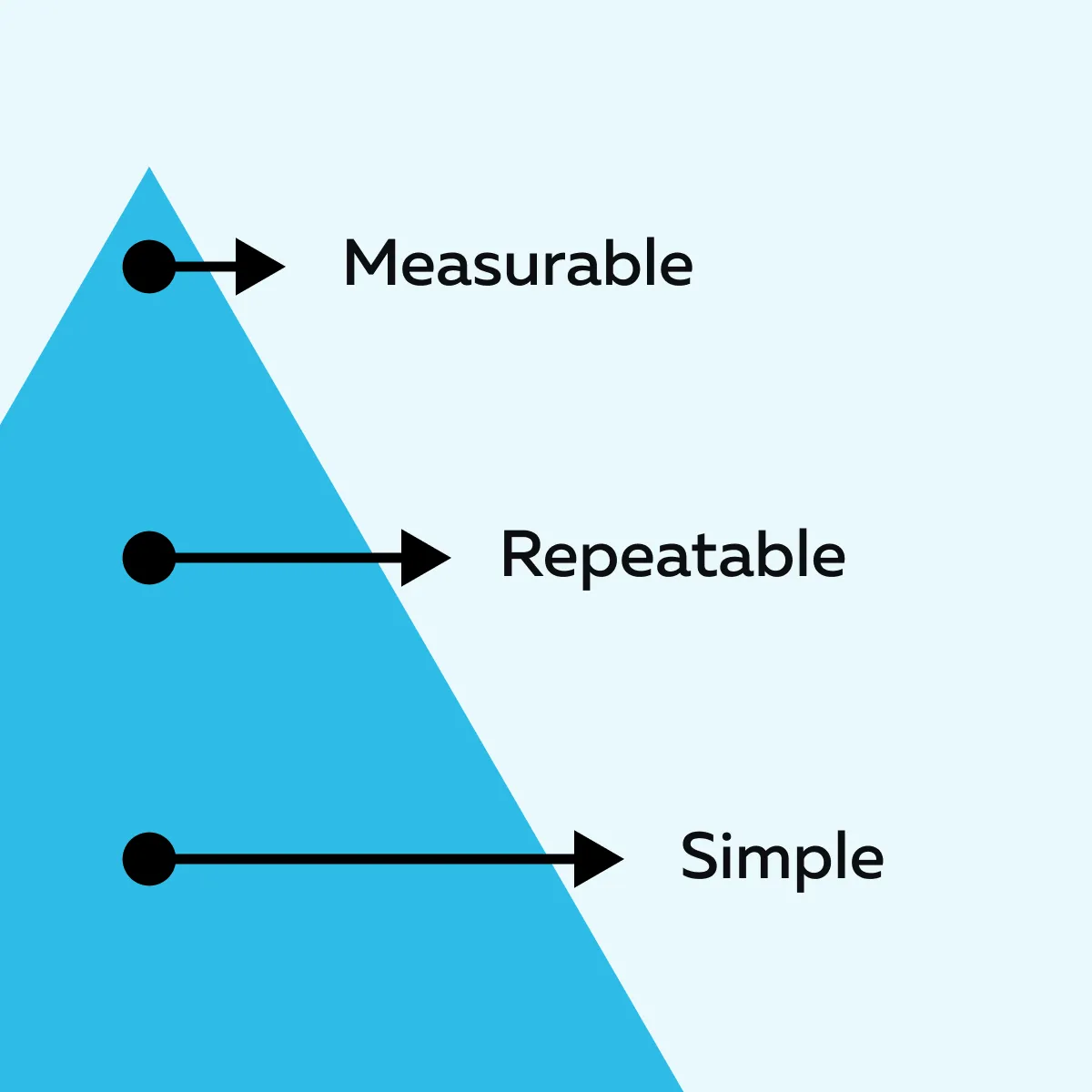
Keep it simple, repeatable, and measurable. Note that a good trading plan before entering a trade removes guesswork and builds consistency.
3. Why do most traders skip the planning step?
That’s largely due to emotions like impatience and fear. These emotions push them to act quickly and ignore the need to prepare a trading plan first. On top of it, many traders also believe that reacting fast is a skilful approach.
However, they are unaware that fast reactions without a trading plan usually lead to poor entries and losses. Be aware that real consistency comes from:
- Slowing down,
- Planning clearly, and
- Trading only when the setup meets your rules.
4. How does order flow improve trade planning?
Advanced order flow tools, such as Bookmap, show how real buyers and sellers behave. Using Bookmap, you can watch a real-time view of:
- Liquidity,
- Absorption, and
- Volume.
This knowledge confirms whether your trade idea has real support or warns you to stay out. The advantage? You can easily turn your planning into confident execution.
Sign Up Now