


See trading more clearly in real time.
Compare plans to access deeper market visibility for trading.
Trading Basics
December 26, 2025
Gambling vs Process-Based Trading: Why Most Traders Lose Before They Even Start
Most traders believe they’re trading, but in reality, they’re just gambling with leverage. They jump into trades because the market “looks strong” and chase the price. The worst part? They even celebrate wins as proof because they are skilled and never see them as random outcomes.
Do you sometimes find yourself trading on instinct, much like a gambler in a casino? Are your decisions influenced more by luck and emotion than by structure and probability?
Note this truth: Without a clear plan, edge, or risk management, you are not doing trading. You are just guessing. And guessing doesn’t last long in the markets!
Okay, so what do professional traders do? They treat trading like a business. They use data, defined setups, and a repeatable process. All this allows them to make consistent decisions, even when emotions run high.
Want to follow their lead? Read on to understand what separates gambling from process-based trading and why so many traders fall into the gambling trap. The article will also show how shifting to a process-based approach can completely change your long-term results.
What Makes Trading Feel Like Gambling
Do you sometimes feel your trading account behaves more like a casino balance? Well, you’re not alone! The line between gambling and trading usually blurs when traders influence their trading decisions with:
- Emotions,
- Randomness, and
- Lack of structure.
Due to such ignorance of logic, many traders unknowingly slip into gambling habits. For example:
- Let’s say you miss a big market move.
- Now, you might jump into the next trade out of fear of missing out (called “FOMO trading”).
- Or, you might “revenge trade” after a loss.
- They try to win back money instead of following a plan.
Both such trading styles are emotionally driven and do not represent structured trading decisions.
Another Major Sign of Gambling-Like Behaviour
Several traders also engage in “outcome-based thinking”. They judge their success only by wins or losses, instead of asking:
-
- Did I follow my process?
- Did I trade my edge?
- Did I deviate from my original trading plan?
Always remember that when the fight is between trading and gambling:
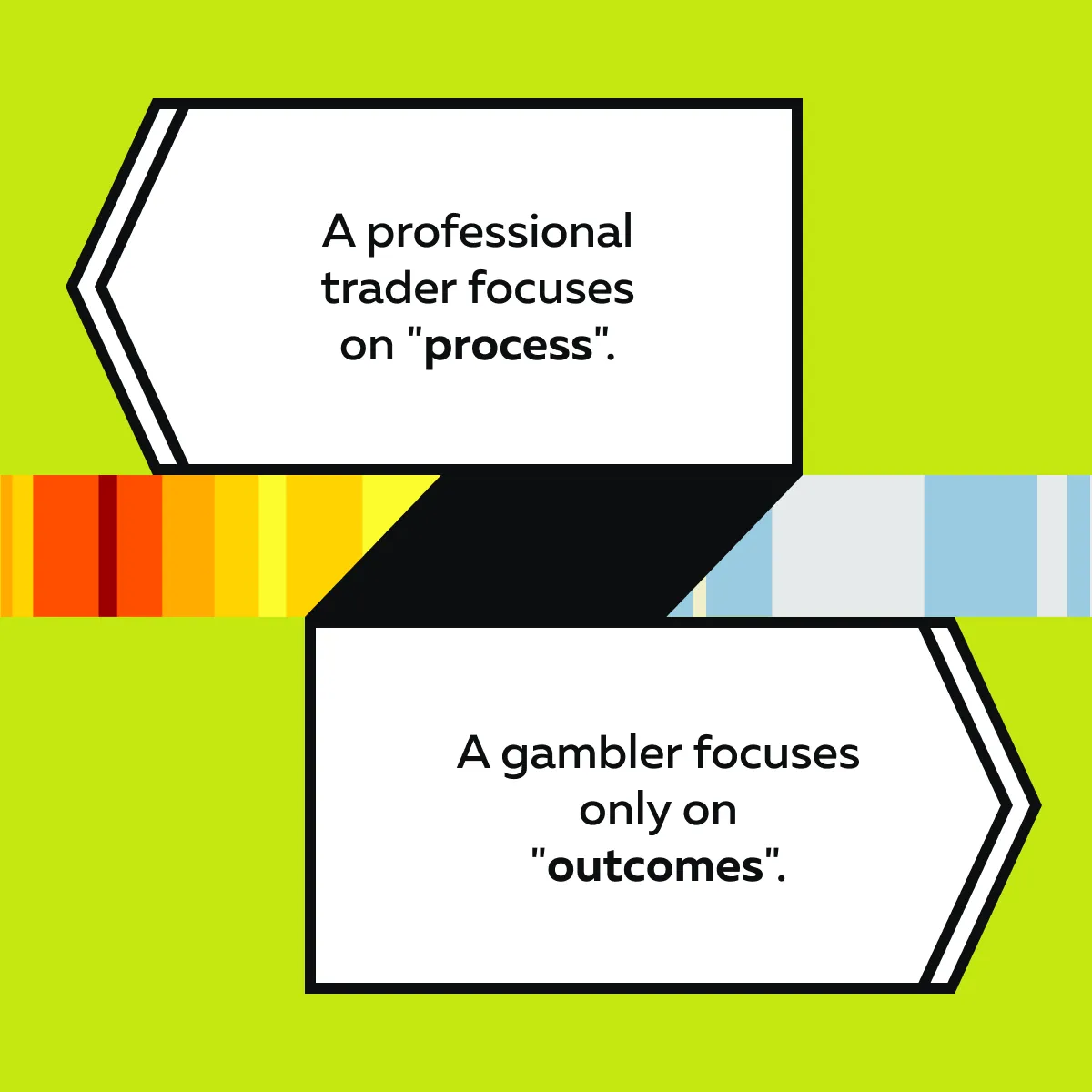
Finally, Trading Without an Edge or a Plan is the Biggest Red Flag
When you take trades just because the market “looks strong,” that’s pure chance. Such trades usually lack:
- Entry criteria,
- Stop-loss, and
- Profit target.
Usually, when the market reverses, such traders panic, and losses follow. As Tom B. from Trader Lab explains in his session, trading is a statistical business and not blind betting. It’s about:
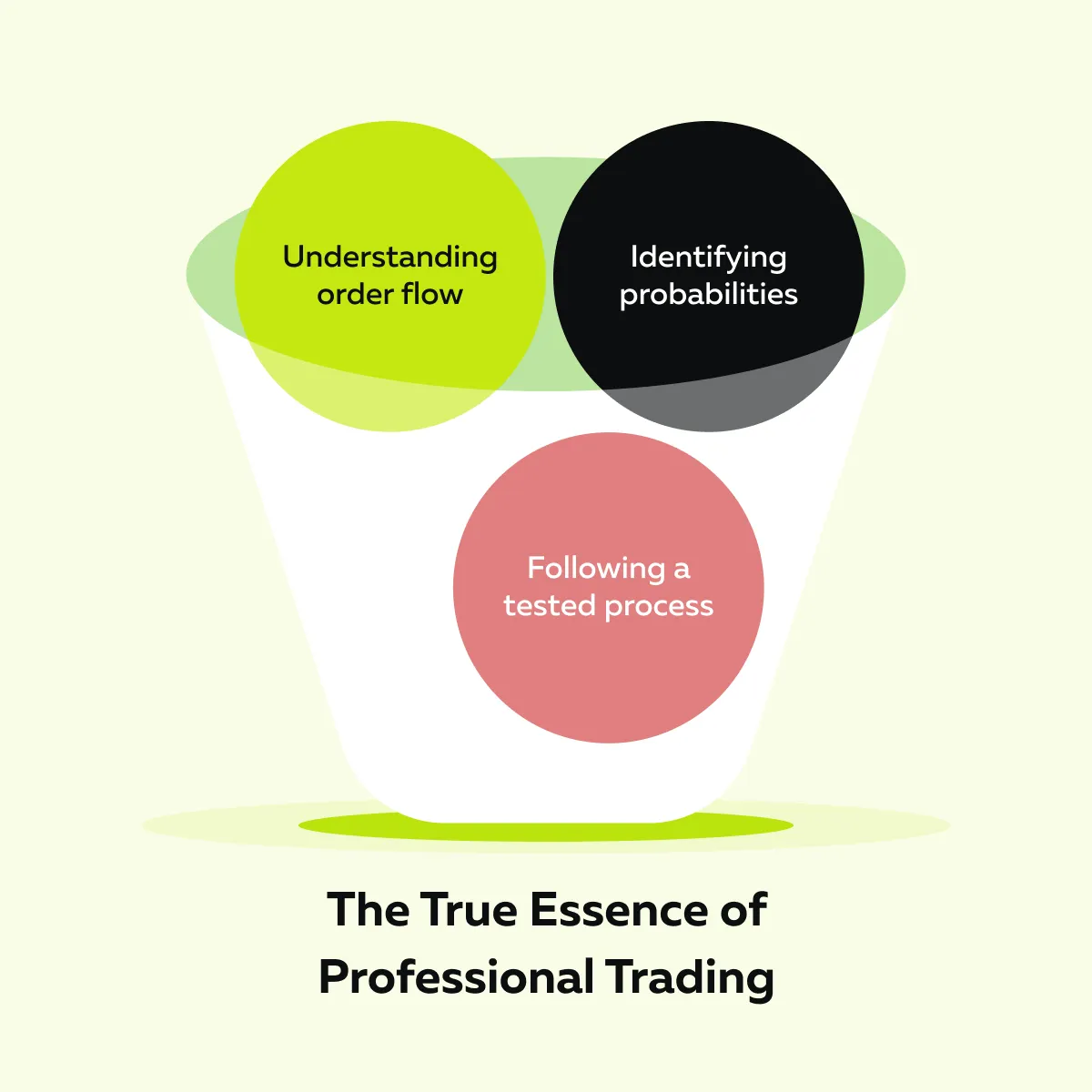
In trading, you do not bet blindly like a casino player, hoping for luck. So, recognizing these gambling-like behaviors is the first step toward becoming a disciplined trader with a real edge.
Real traders don’t focus on luck — they focus on execution within a repeatable process. → Sign up today!
What Process-Based Trading Looks Like
If gambling is about luck, trading is about process. The difference lies in having a structured, repeatable approach. Such an approach removes randomness and replaces it with discipline and data.
A Process-Based Trader Doesn’t Trade On Gut Feeling
Every trade starts with a clear setup and specific conditions that must be met. Let’s check out some example conditions shown below:
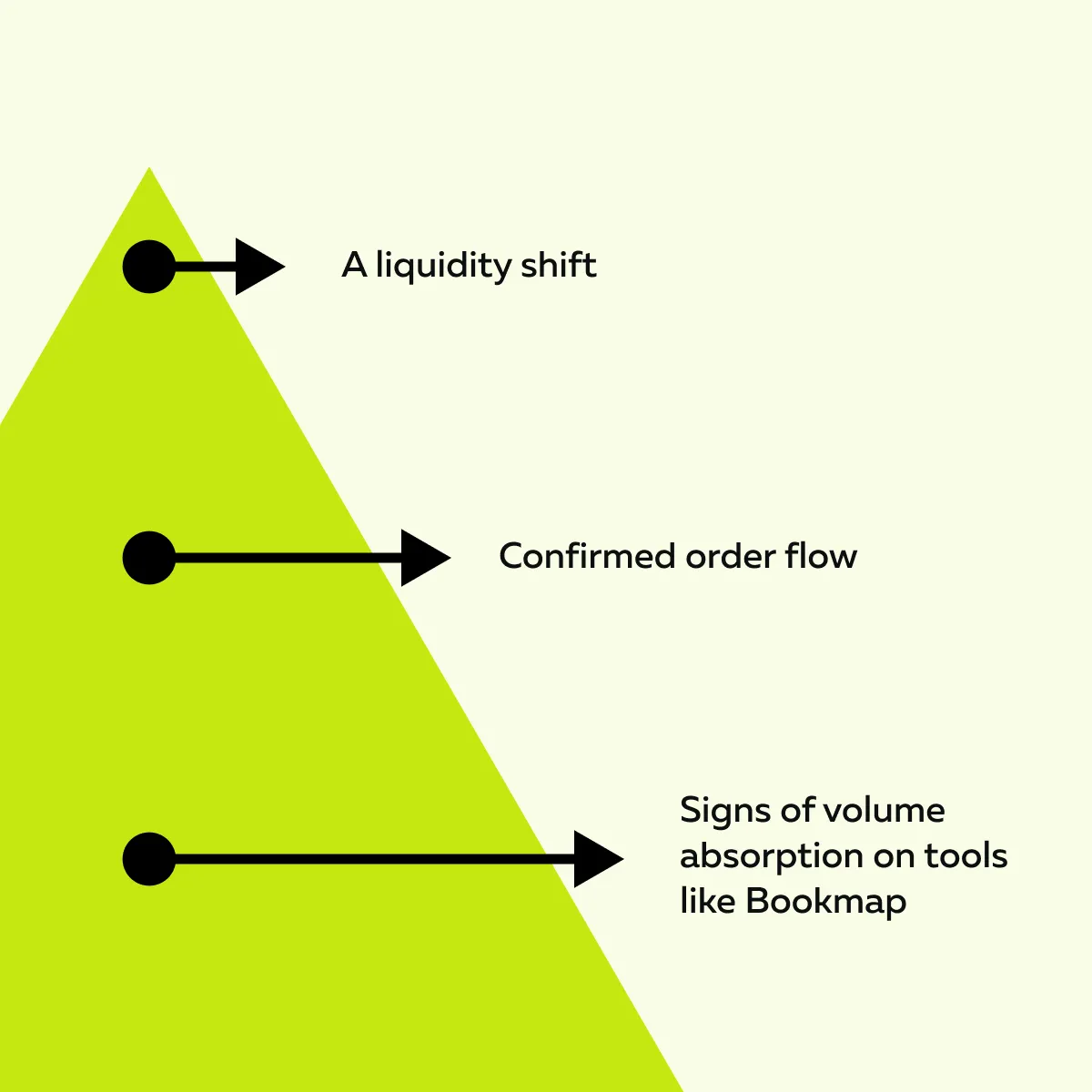
All these conditions ensure trade entries are based on logic and not emotion.
Before Placing a Trade, Risk is Already Defined.
The trader knows:
- Where to place a stop-loss,
- Where to take profit, and
- How much capital to use?
This planning limits emotional reactions and keeps losses manageable. Furthermore, after each session, trades are logged and reviewed. Always remember that the goal isn’t just to count wins. Instead, it is to understand why a trade succeeded or failed.
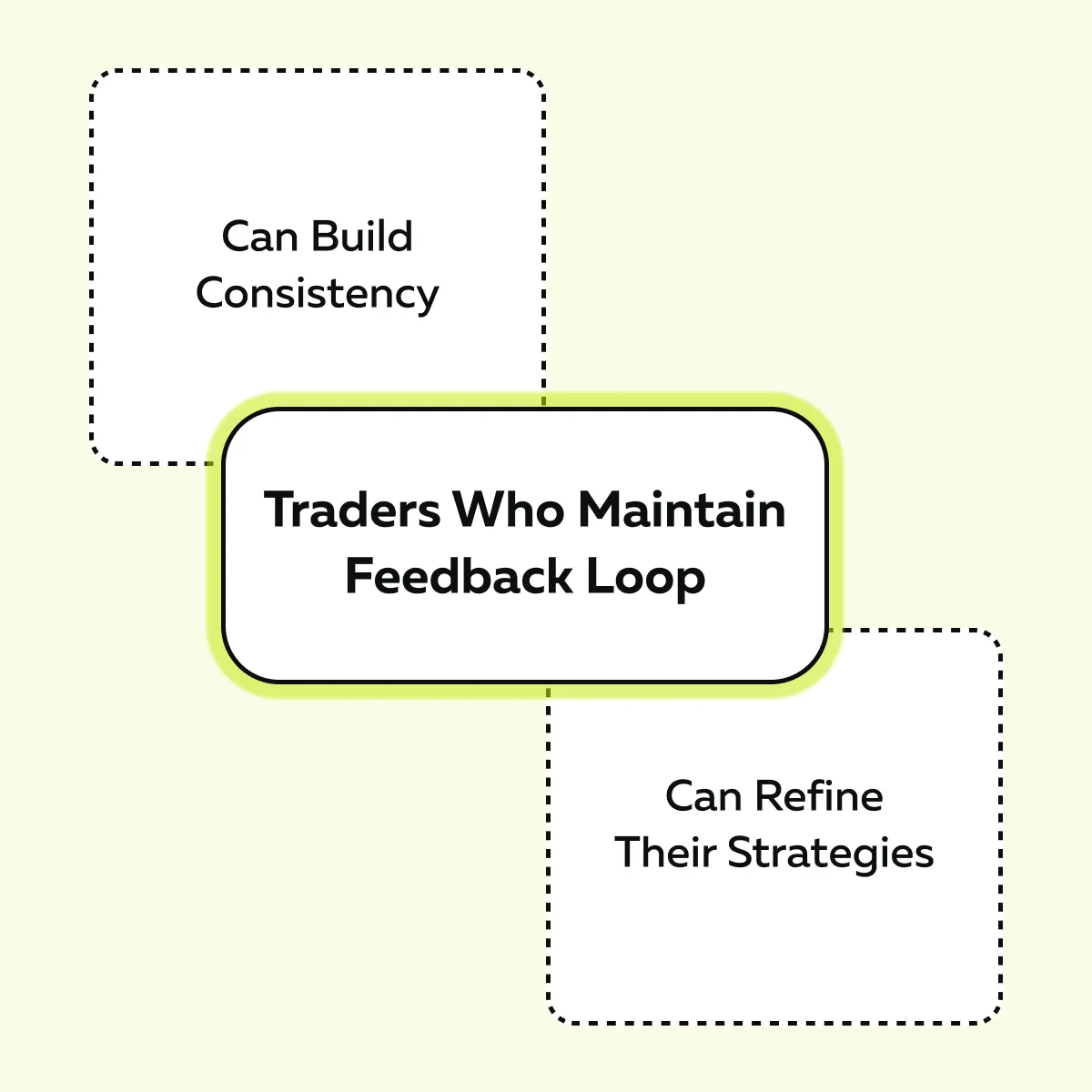
Let’s consider this example:
- A trader spots iceberg absorption at a key level.
- They plan a long entry.
- They place a stop below that zone and a target near the previous liquidity.
- Now, it does not matter whether that trade wins or loses, as the trader followed their process.
- That’s what separates trading from gambling.
See how Bookmap helps traders think in probabilities, not emotions → Compare Packages.
How Emotions Sabotage Discipline
Did you know? Even the best trading plan can collapse when emotions take over. This is where many traders unknowingly slide from trading into gambling. They start reacting to feelings instead of following a structured process.
Tom B. from Trader Lab calls this the “loop of destruction”. It is a cycle where traders make choices based on fear, hope, or ego rather than their trading plan.
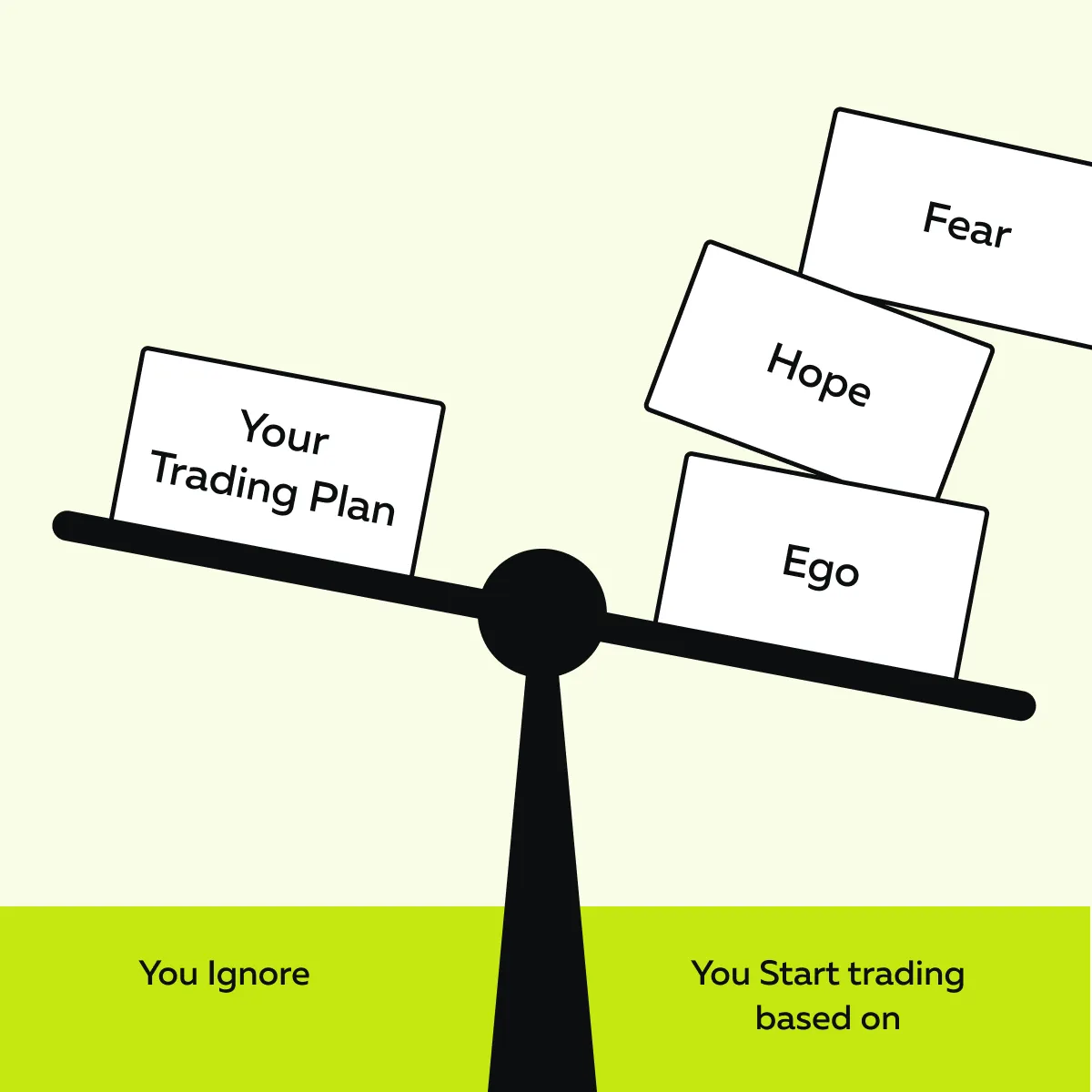
The two common traps in such a trading style or approach are tabulated below:
| Trap I: Loss aversion | Trap II: Ego and Overconfidence |
|
|
Build a structured trading process with real-time order flow → Compare Plans.
How to Break This Emotional Loop?
You must treat trading as a process and not a prediction game. Additionally,
- Journal your emotions during trades (not just results).
- Revisit your stats regularly.
- Trade smaller when you feel emotional.
All these tips reduce pressure and allow you to think clearly. Track your execution and emotional reactions with precision using real-time order flow → Compare Packages.
From Luck to Logic: Building a Repeatable Trading Process
Want to know about the real turning point in every trader’s journey? It is about moving from luck to logic.
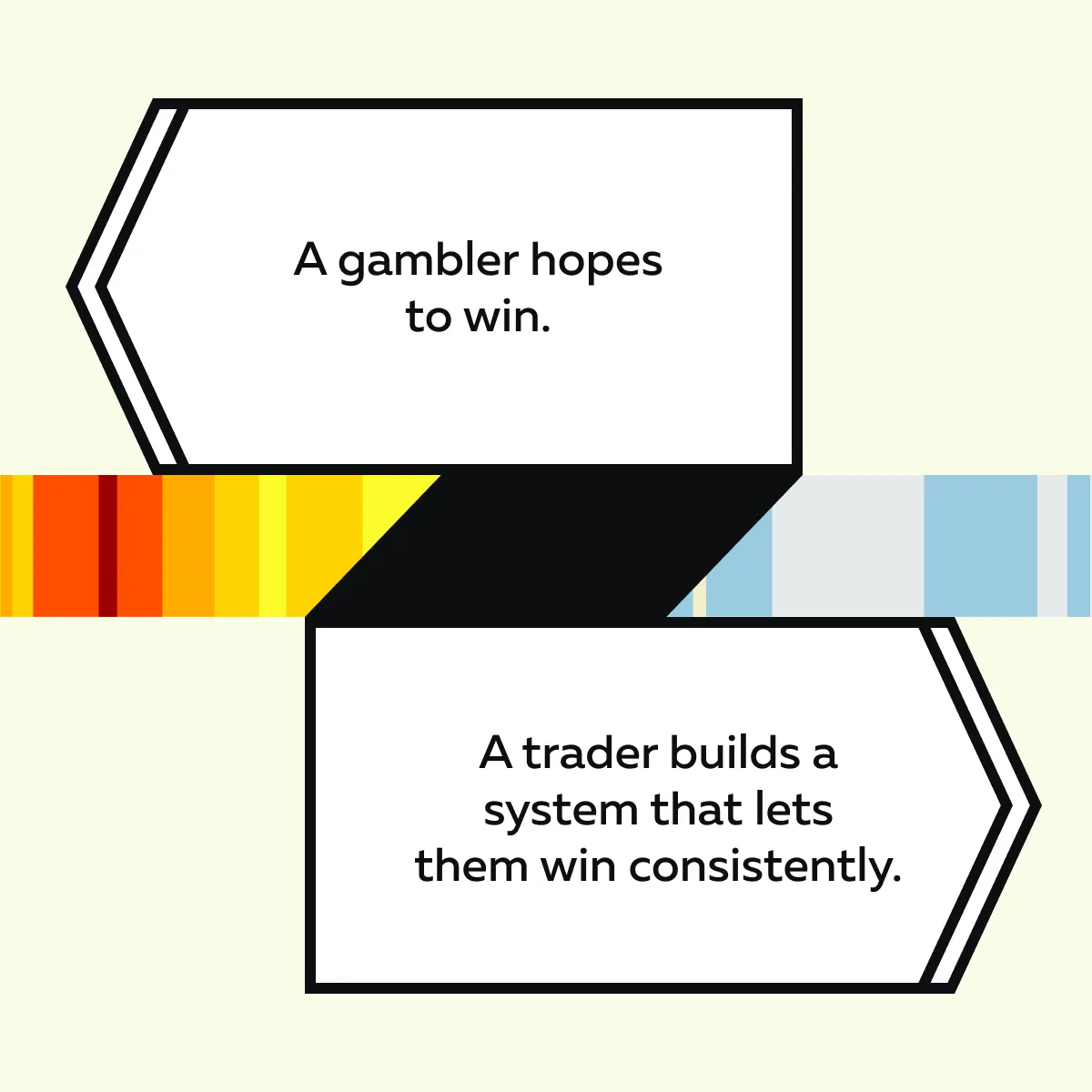
If you, too, want to make that shift, you need to build a process that’s logical and repeatable. Let’s see how you can do it:
Define Your Edge
Identify what specific behavior or pattern gives you an advantage, such as:
- Stop runs,
- Absorption, and
- Liquidity shifts.
Always remember that your trading edge (the reason your strategy works) should come from something you can actually see and measure in the market, and not from your feelings or guesses.
Document Your Setup
Write down exactly what must happen before you take a trade. This includes:
- Your entry,
- Stop-loss, and
- Profit target.
This written clarity eliminates impulsive trades that feel good in the moment but lack structure.
Set Clear Risk Limits
Decide how much of your capital you’ll risk per trade. Stick to it. There should be no random position sizing or “doubling down.” Be aware that consistency in risk management keeps your account and your emotions stable.
Review Your Performance
Analyze your trades weekly. You should find:
- What setups work best,
- When mistakes happen, and
- How to improve execution.
Detach from Outcomes
You cannot control the market’s result. But you can certainly control your trading process. Win or loss does not matter as long as you keep following your trading plan.
Need a pro tip? If you are a trader who tracks order flow and liquidity, Bookmap’s Stops & Icebergs add-on can let you spot hidden liquidity zones. For those unaware, these are areas where other traders are trapped or liquidated. Using this information, you can refine your edge and make better data-based decisions.
Learn how Bookmap’s visualization tools support disciplined decision-making → Compare Packages.
Case Study: The Same Setup, Two Mindsets

The best way to understand the difference between gambling and trading is to see how two traders handle the same market setup with completely different mindsets. Check out the case study below:
Trader A – The Gambler
- Assume that in the market, the price suddenly spikes.
- Without thinking, Trader A jumps in long because it “looks strong.”
- There’s no plan, no stop-loss, and no target.
- Trader A is acting on just emotions and hope.
Later, when the market reverses, Trader A panics and gets stopped out. Instead of learning, they blame volatility or “bad luck.”
Trader B – The Process-Based Trader
- Trader B sees the same price spike.
- But they don’t react impulsively.
- They wait for order flow or absorption confirmation.
- These are signs that liquidity is being absorbed and buyers are in control.
- Before entering, they:
- Define their risk,
- Plan their stop below that level, and
- Set a clear profit target.
Now, whether the trade wins or loses, Trader B followed a structured process.
So, What’s The Difference?
Both traders looked at a similar market setup. They saw the same:
- Chart,
- Price move, and
- Opportunity.
But what separated them wasn’t what they saw; it was how they acted. One trader treated it like a business, following a defined plan with clear rules and risk limits. The other treated it like a bet and reacted impulsively, merely hoping to win.
Conclusion
By now, you must have understood that trading isn’t about predicting where the market will go next. Instead, it is about “managing probability”. The real difference between gambling and trading comes down to mindset. A gambler hopes to win, and in contrast, a trader follows a structured plan built on data and discipline.
Do you think losses can destroy a process-based trader? Nope! That’s because every decision is backed by logic and not emotion. Gradually, through consistency and risk control, such traders turn trading into a business.
Want to shift from hope to structure? Bookmap offers real-time order flow and liquidity visuals so you see what’s really happening behind price movements. Start building your trading process with the right tools and structure → Compare Bookmap Packages.
FAQs
1. What’s the difference between gambling and trading?
Gambling is driven by luck and emotion. You bet without control or data. Trading, on the other hand, is based on:
- Defined probabilities,
- Controlled risk, and
- Repeatable process.
The key difference? In trading, you work with a measurable edge and 100% clear rules. There are no random guesses!
2. How do I know if I’m trading emotionally?
You’re trading emotionally if you:
- Enter because a chart “looks good,”
- Skip your stop-loss, and
- Change position size based on fear or excitement.
Always remember that emotional trading ignores logic and process. A disciplined trader can always explain the reason behind every trade before taking it.
3. How can I develop a trading process?
Start with one setup you clearly understand, such as:
- A liquidity shift
or
- Absorption zone.
Next, define your entry, stop, and target before trading. Lastly, record each trade and review results weekly. Based on this review, try to refine your approach. Always remember that one well-tested setup is better than ten random ones.
4. Can Bookmap help with process-based trading?
Yes, using Bookmap, you can visualize real-time order flow and liquidity. This allows you to see where traders are entering, exiting, or getting trapped. This insight allows you to plan trades based on objective data, not guesses.
Sign Up Now
Latest Articles