
See market more clearly in real time.
Compare plans to access deeper market visibility for market.
Trading Basics
February 4, 2026
SHARE
Time in the Market vs Timing the Market: What This Really Means for Day Traders

You must have heard the phrase – “Time in the market beats timing the market.” Most investors use it to stress long-term compounding. But for day traders, the phrase means something very different.
In day trading, time in the market isn’t about holding trades longer. In practice, it’s about spending time watching prices, studying liquidity, and preparing for high-probability setups. Likewise, timing the market isn’t about guessing exact tops or bottoms. It’s about entering with precision only when order flow and participation confirm your idea.
So, are you a trader who confuses activity with opportunity? Do you rush your decisions, trying to be perfect? Don’t overtrade! Read this article to learn how day traders should interpret time and timing differently.
The Investor’s Rule, Reinterpreted for Traders
Most people know the old investing line: “It’s not about timing the market, it’s about time in the market.” For investors, that means staying invested for years so money compounds.
But in trading, especially day trading, that’s not the exact interpretation. Here, time in the market doesn’t mean holding positions for decades. Ideally, this is what it should mean:
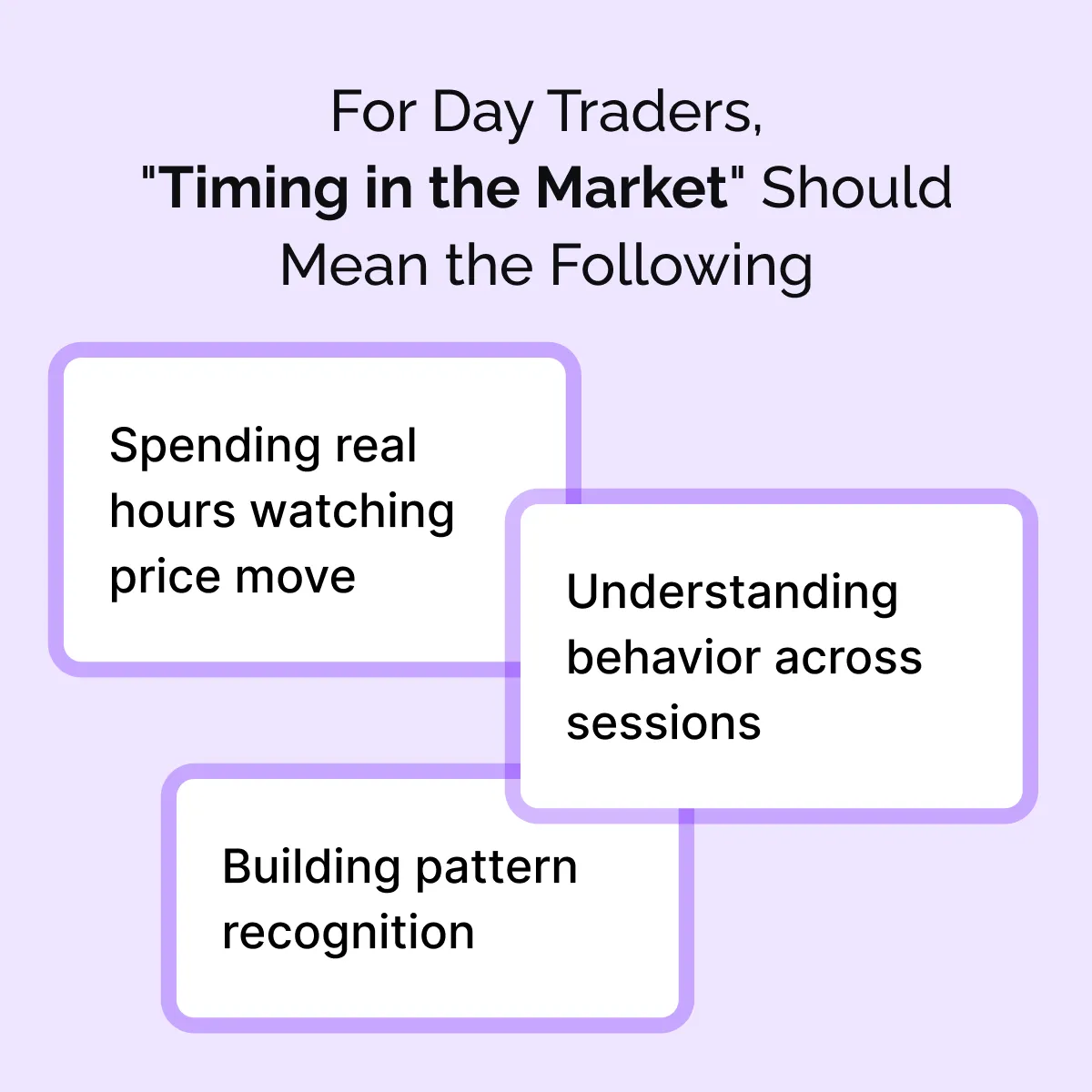
The more screen time you accumulate, the better you understand:
- How markets breathe,
- Where they pause,
- Where they trap traders,
- Where momentum fades, and
- How structure forms.
In the debate around time in the market vs timing the market day trading, always remember that the edge comes from experience and process, not prediction.
But what does happen in reality? Timing the market for day traders often becomes an obsession. Let’s see what they try to do (the non-preferred approach):
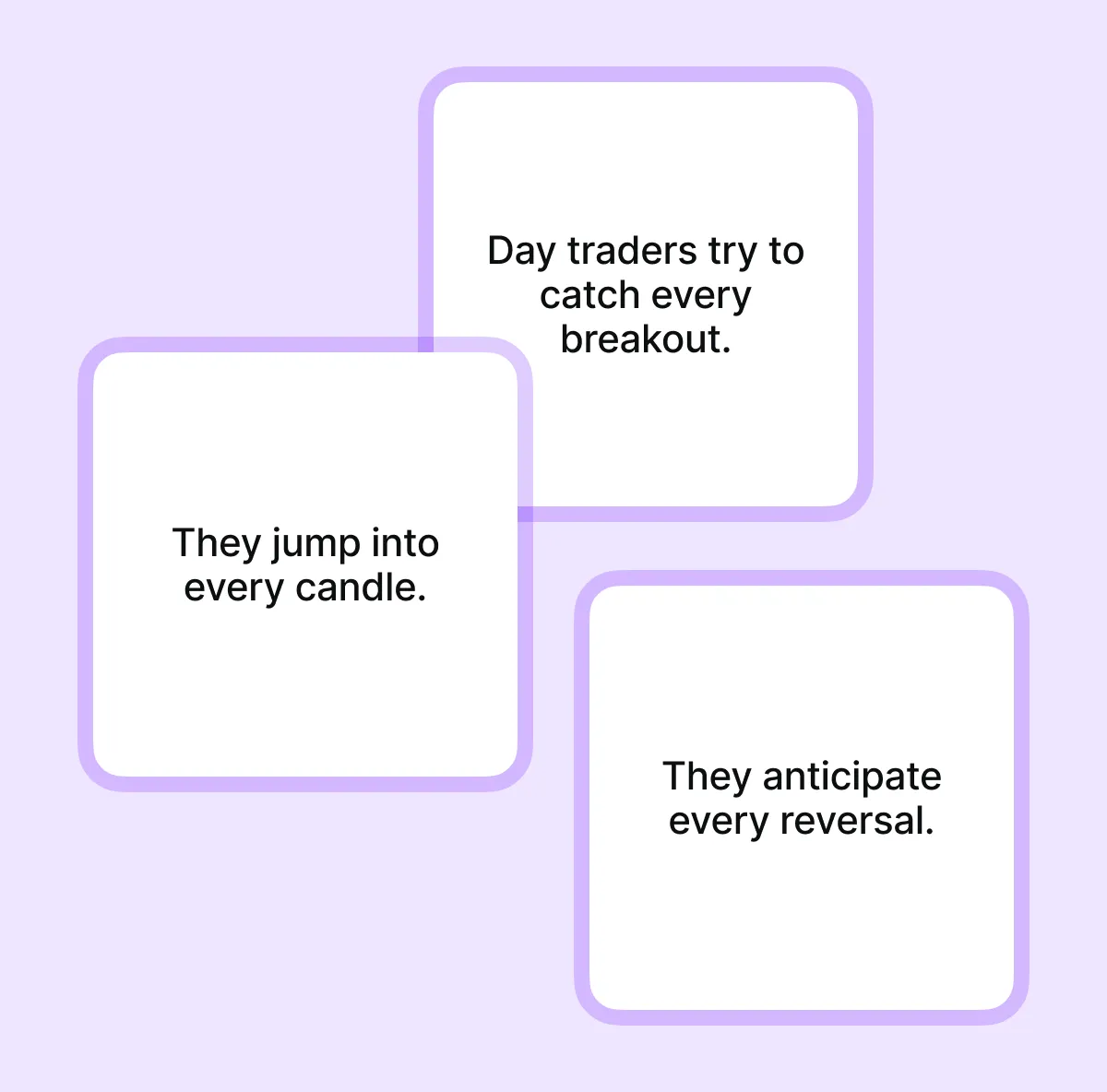
The sorry result? This creates emotional fatigue, overtrading, and inconsistent results. Traders start reacting instead of executing a plan. So, what’s the lesson for day traders?
- Longevity beats perfection.
- Context beats impulse.
- Discipline beats prediction.
Winning traders survive long enough to learn market behavior. They don’t chase every move! Instead, they wait for high-probability setups. Use Bookmap to turn time on the screen into structured learning — not random guessing → Compare Packages.
Why “Time in the Market” Builds Skill and Consistency
Here’s a question for you. In trading, does skill come from reading charts alone? The answer is a clear NO. That’s because trading skills come from watching markets move in real time. In the discussion around time in the market vs timing the market day trading, this is where the real edge is built.
When you spend deliberate hours observing live price and order flow, patterns stop looking random. You begin to see:
- How liquidity behaves at session opens
- Where volume gathers
- How markets create traps before moving in the true direction
What’s the benefit of this repeated exposure? Your brain gets trained to recognize structure faster and react with control rather than emotion. Gradually, this experience builds three critical abilities:
| Ability I: Market Context | Ability II: Confidence | Ability III: Adaptability |
|
|
|
For more clarity, let’s study an example:
- Mr. A is a trader.
- He has spent hundreds of hours watching how liquidity rebuilds after major news events.
- Due to such vast exposure, he has developed “trading patience”.
- No, he doesn’t chase the first spike.
- That’s because he has repeatedly seen false reactions fade before the real move begins.
So, what’s the core lesson? Consistency in day trading grows from exposure + pattern recognition.
The Trap of “Timing the Market” in Day Trading
Do you know what success means for most day traders? They believe success comes from entering at the exact top or bottom. But this obsession with precision is where problems begin. That’s because over-focusing on timing pushes traders toward emotional and low-quality decisions.
Additionally, when timing becomes the priority, traders start reacting instead of thinking. And this leads to three major trading consequences:
- They enter too early because they are afraid the move will run without them.
- They chase trades after momentum has already expanded. As a result, they buy high or sell low.
- They exit the moment price pulls back a few ticks, even when the setup is still valid.
So, why does this behavior happen? It is because every small price movement starts to feel like an opportunity. Instead of filtering noise, traders try to capture every fluctuation.
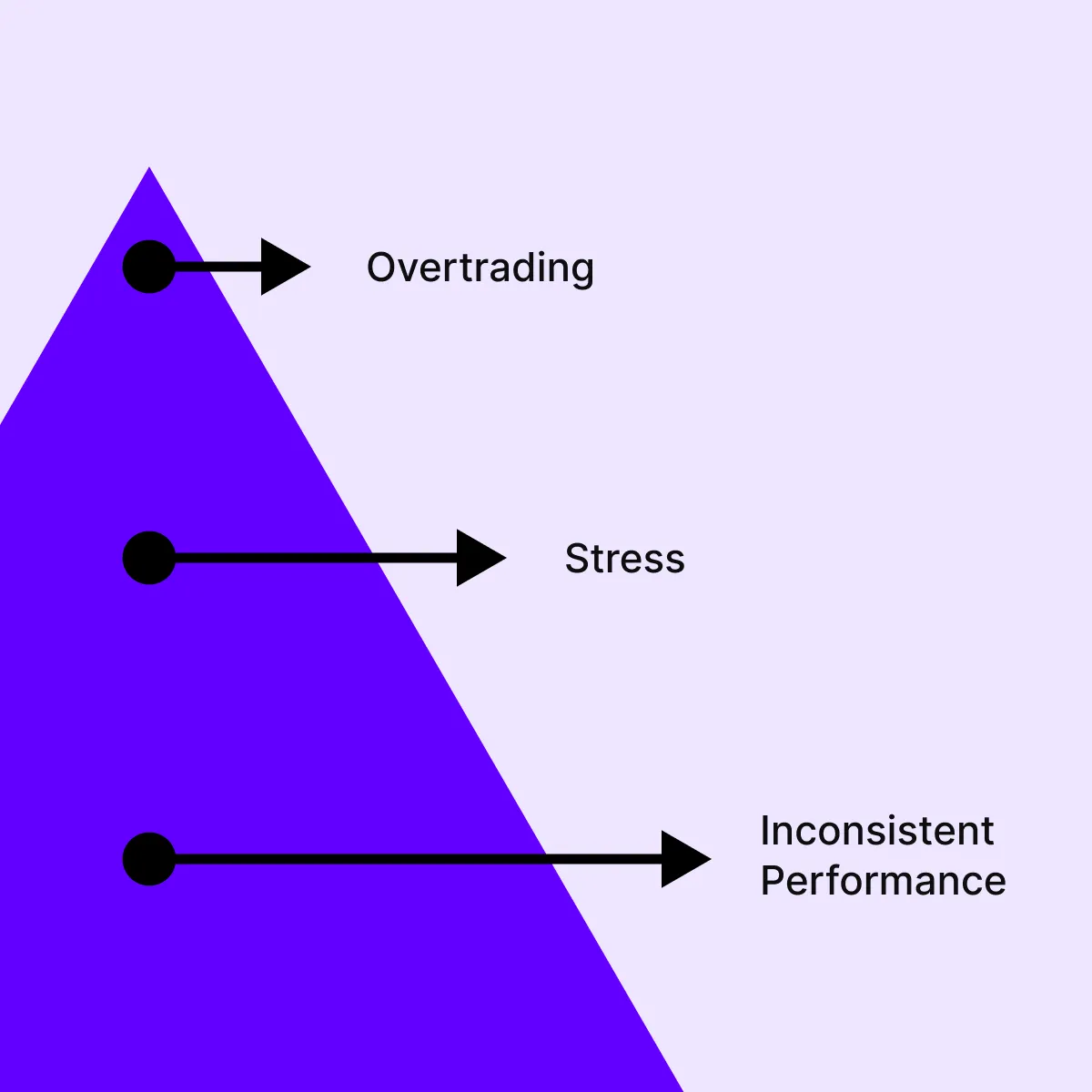
As a day trader, you must realize that “great trades” are not about speed. Rather, they are about preparation. Usually, the best traders wait patiently. They act only when such a strong confluence appears:
- Structure + Liquidity + Volume + Confirmation
Also, they spend enough time observing the market. This leads to understanding when not to trade. Build consistency through structured screen time, not random entries → Compare Plans.
How to Balance Observation and Execution
What does every trader want? Better timing. But what does timing mean? It isn’t about reacting faster. Instead, it’s about knowing when not to act. Let’s understand how to cultivate patience + improve precision (through deliberate observation) in five different ways:
1. Observe First, Act Later
As mentioned before, every trader wants better timing. However, real timing in trading is not about clicking faster. It’s about knowing when not to trade. This is a key idea behind time in the market vs timing the market day trading.
Usually, most traders start their session looking for a trade immediately. In contrast, professionals start by watching. The first 15 to 30 minutes of market open are extremely important because they reveal how the session is likely to behave.
During this observation phase, you’re collecting valuable information:
- Where is liquidity building or getting pulled?
- Are buyers or sellers being aggressive?
- Are price reactions fast and strong, or slow and weak?
Okay, but what do these early clues tell you? They reveal the market nature:
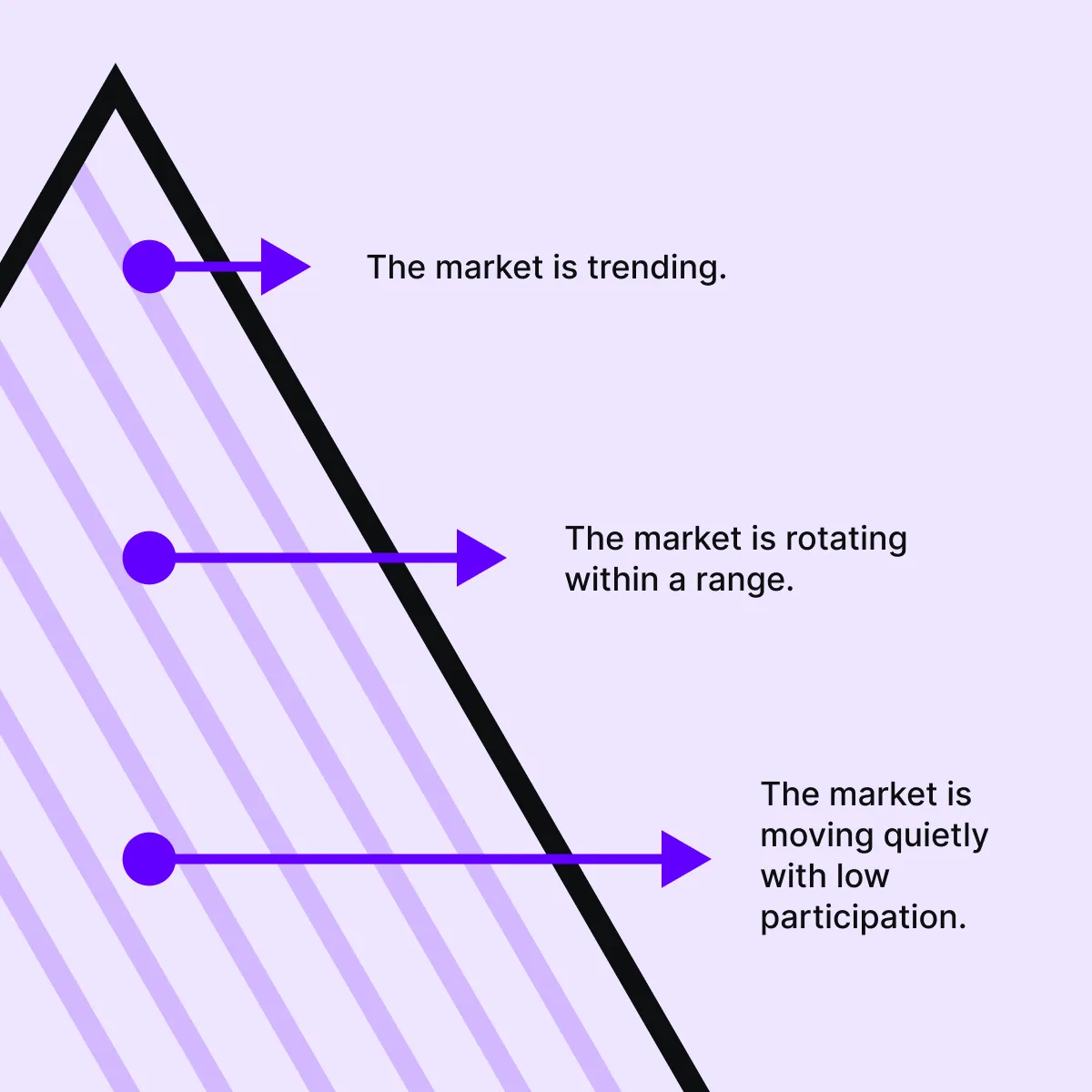
Such a context lets you avoid bad trades and align with the real flow later. This is how you can develop controlled execution instead of emotional entries.
2. Mark Key Zones in Advance
Patience in trading comes from preparation. Before placing any trade, identify and mark the price areas that are likely to attract strong market activity. These include:
- Overnight highs and lows,
- Major liquidity clusters,
- Previous absorption zones, and
- High-volume shelves.
When these zones are clearly mapped, your focus becomes sharp. You stop reacting to random price movements in the middle of the range because your plan already tells you where participation matters most. This is an important part of mastering time in the market vs timing the market day trading. You only care about timing when the price reaches important levels.
For Example:
- Let’s say heavy liquidity is sitting near 5600.
- Now, there’s no need to trade the noise between levels.
- You wait patiently until the price reaches that zone.
- Next, you watch for order flow confirmation before acting.
3. Wait for Confirmation
Good timing is “evidence-based execution”. Instead of jumping into trades at the first sign of movement, you must wait for signals that real market participants are stepping in. Okay, but what are these signals? A strong confirmation framework includes the following three elements (also emphasized by Tom B):
| Signal I: Liquidity Pull | Signal II: Delta Flip | Signal III: Absorption |
|
|
|
When these signals align, you’re no longer predicting direction. Through their confluence, traders avoid emotional timing and start to build consistency. Learn how Bookmap helps day traders stay patient and data-driven → Compare Packages
4. Avoid Over-Participation
Want to know a hard truth in trading? You don’t get paid for being active. Instead, you get paid for being right. Many traders feel pressure to trade every session. Now that mindset hurts timing and drains capital.
So, what should you do as a trader? Be disciplined and refrain from taking trades when conditions are unclear. That’s because markets don’t produce quality setups every day:
- Some sessions are clean and directional.
- Others are slow, choppy, or manipulated.
Thus, if you force trades in poor conditions, it might lead to impulsive entries, emotional exits, and unnecessary losses.
5. Review After the Session
So, how do you improve timing? The best way is to study your trades after the market closes. Always remember that live trading builds exposure, but review builds awareness. To make a professional analysis, you can start using Bookmap’s replay mode. Using it, you can clearly see what actually happened.
During review, you’ll notice:
- How liquidity formed and shifted before strong moves,
- Where you entered too early or hesitated too long, and
- Which confirmations appeared before the best setups.
This creates a powerful feedback loop. Also, each session becomes a lesson. The long-term advantage? Gradually, repeated observation trains your brain to recognize the market’s rhythm.
The Key Takeaway
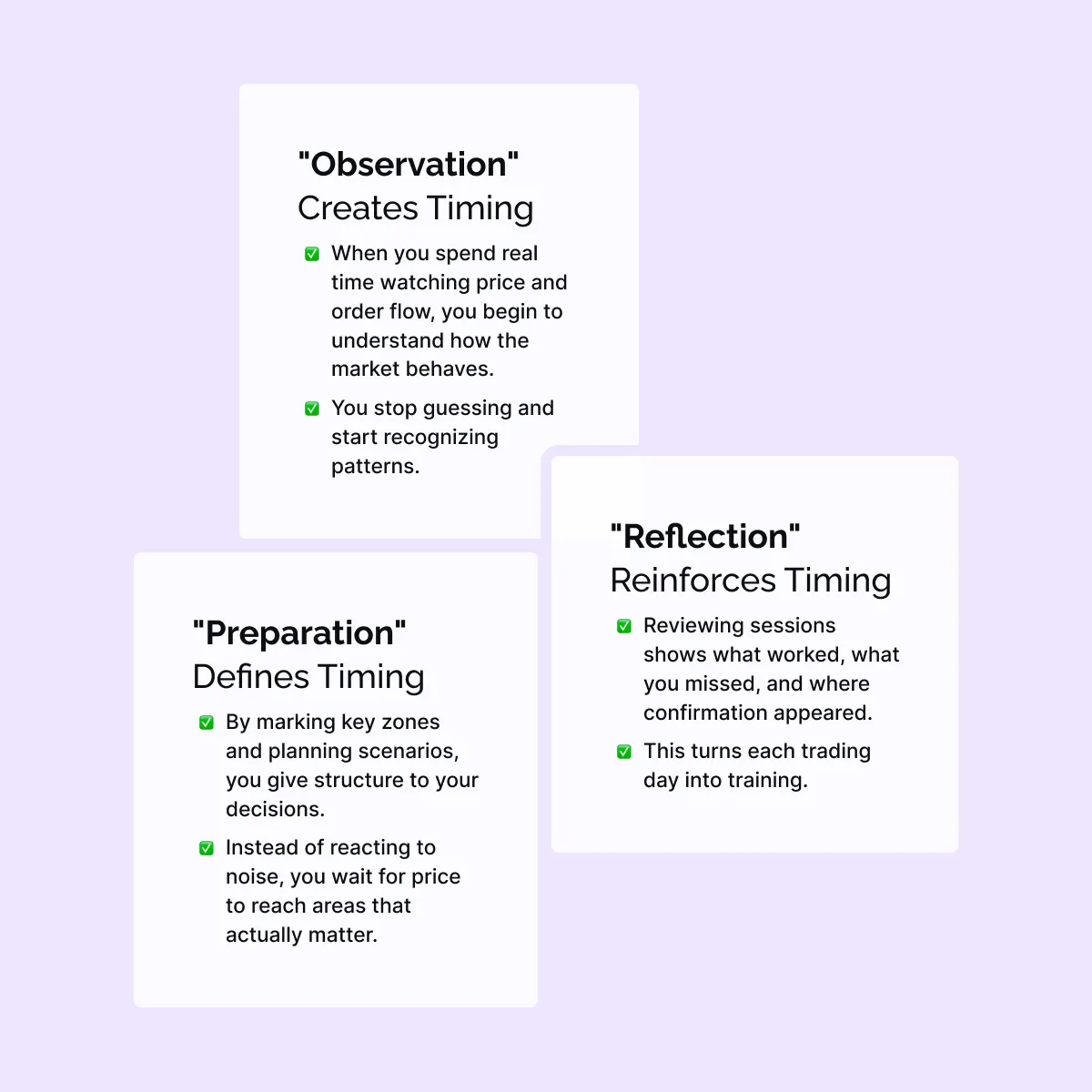
In day trading, timing doesn’t magically appear! Rather, it is built step by step. What you must understand is:
Conclusion
By now, you must have understood that day trading success doesn’t come from trying to predict the perfect entry. Instead, it comes from spending time observing how the market truly behaves. In the debate of time in the market vs timing the market day trading, patience always wins.
Traders who watch prices, study liquidity, and understand participation build stronger judgment than those who chase every move. So, what should you do as a trader?
- Make screen time a habit.
- Mark key levels before trading.
- Learn to read order flow patiently.
The result? You start acting only when conditions align, not when emotions push you. To further enhance this advantage, you can start using Bookmap. Using it, you can watch liquidity in real-time and confirm intent. Trade with context, not impulse — see timing unfold in real time → Compare Packages.
FAQs
1. What does “time in the market” mean for day traders?
For day traders, it means spending hours:
- Watching live price + order flow,
- Studying how the market reacts, and
- Reviewing sessions afterward.
This time in the market allows traders to recognize patterns and understand market behavior. Realize that it’s not about holding trades longer. Instead, it’s about learning from repeated observation.
2. How is this different from “timing the market”?
Timing the market is trying to predict the exact tops and bottoms. In day trading, that usually leads to:
- Rushing entries
and
- Chasing moves.
As a trader, you must understand that real timing develops from patience and confirmation. In the context of time in the market vs timing the market day trading, experience beats prediction every time.
3. Why is patience more profitable than speed?
Do you know how the market reveals intent? It happens gradually through liquidity and participation. Thus, if you, as a trader, act too fast, it might lead to “trading without enough information”.
Patience allows confirmation to appear before entry, which reduces bad trades. Always remember that fast reactions come from emotion. In contrast, patient decisions come from clarity and structure.
4. How does Bookmap help improve timing?
Bookmap is an advanced market analysis tool. It visually shows:
- Liquidity,
- Aggressive buying/ selling.
- Absorption (as they happen)
The advantage? You can see when real participants step in instead of guessing. This allows you to wait for confirmation and trade at meaningful moments rather than reacting blindly.
Sign Up Now