


Track how global events are shaping market behavior in real time.
Compare plans to follow volatility, liquidity shifts, and macro-driven reactions.
Market Analysis
May 12, 2026
What’s Happening in the World Right Now and How It Affects Trading (2026)

Most traders recognize when something important is happening in the world. However, the real challenge lies in judging whether that event actually changes how the market should be traded.
A “headline” matters only when it alters market conditions. Some events reprice inflation expectations, while others change risk appetite, sector leadership, commodity flows, or central bank outlook. As a result, markets do not react to all headlines in the same way. They only respond to events that change positioning and liquidity.
At present, markets are being influenced by several important factors, such as the energy shock linked to the Middle East war, softer yet still relevant growth signals from China, and changes in how markets are accessed and traded. Traders must note that these are not just macro themes. They directly influence volatility, spreads, correlations, and the strength of follow-through in price moves.
Want to understand in detail? Read this article to know about four major market event themes and how you can trade them in 2026.
The Right First Question: What Kind of Event Is This for the Market?
Every major headline feels urgent, but markets do not react to emotion. Instead, they respond to how that event transmits into prices, positions, or trading conditions. That’s why, for most traders, the “right” way to read any event is to ask whether it changes pricing, positioning, or liquidity.
Each category reflects a different type of market impact, and each leads to different price behavior. Let’s understand in detail:
Pricing Events
Some global developments directly change what assets are worth, or what traders believe they should be worth. As a result, these events reshape expectations around various factors.
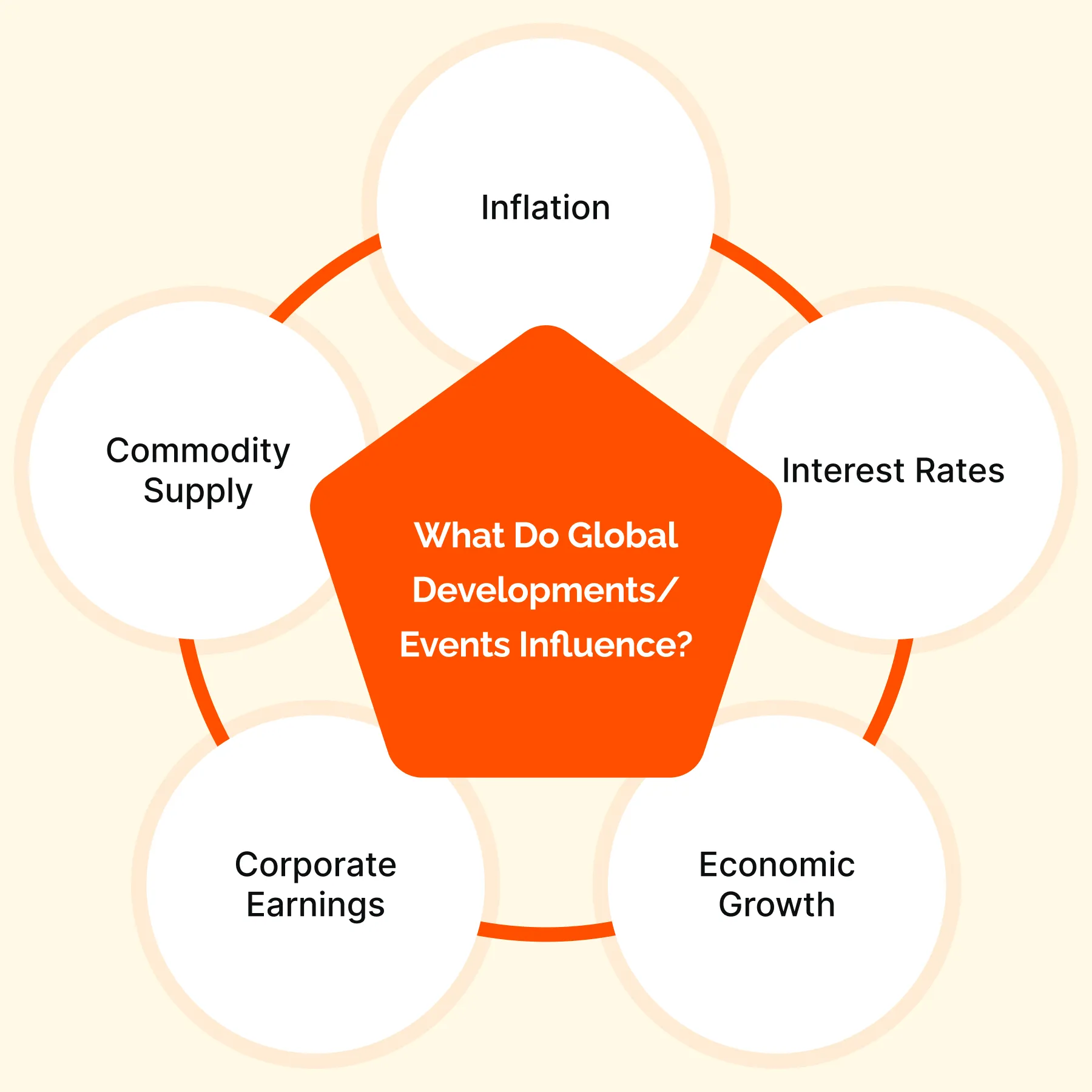
For example:
- A war that disrupts oil supply can push crude prices higher
- An inflation surprise can shift interest rate expectations
- Weak export data can reduce growth forecasts
Now, this is where “how world events affect trading” becomes most visible, as price movements reflect a reassessment of fundamentals rather than short-term reactions.
Positioning Events
In contrast, some events do not immediately change fair value. However, they force market participants to adjust exposure, which creates noticeable price movement. For example:
- Funds may reduce risk after a geopolitical shock
- Institutional desks may add hedges
- Capital may rotate between sectors, such as from consumer stocks to energy
- Traders may cover short positions in bonds after weak data
As a result, flows drive the market even when the underlying value has not changed significantly.
Liquidity Events
Finally, some events primarily affect trading conditions rather than value or positioning. In such cases, the ease of buying and selling changes. Usually, this appears as:
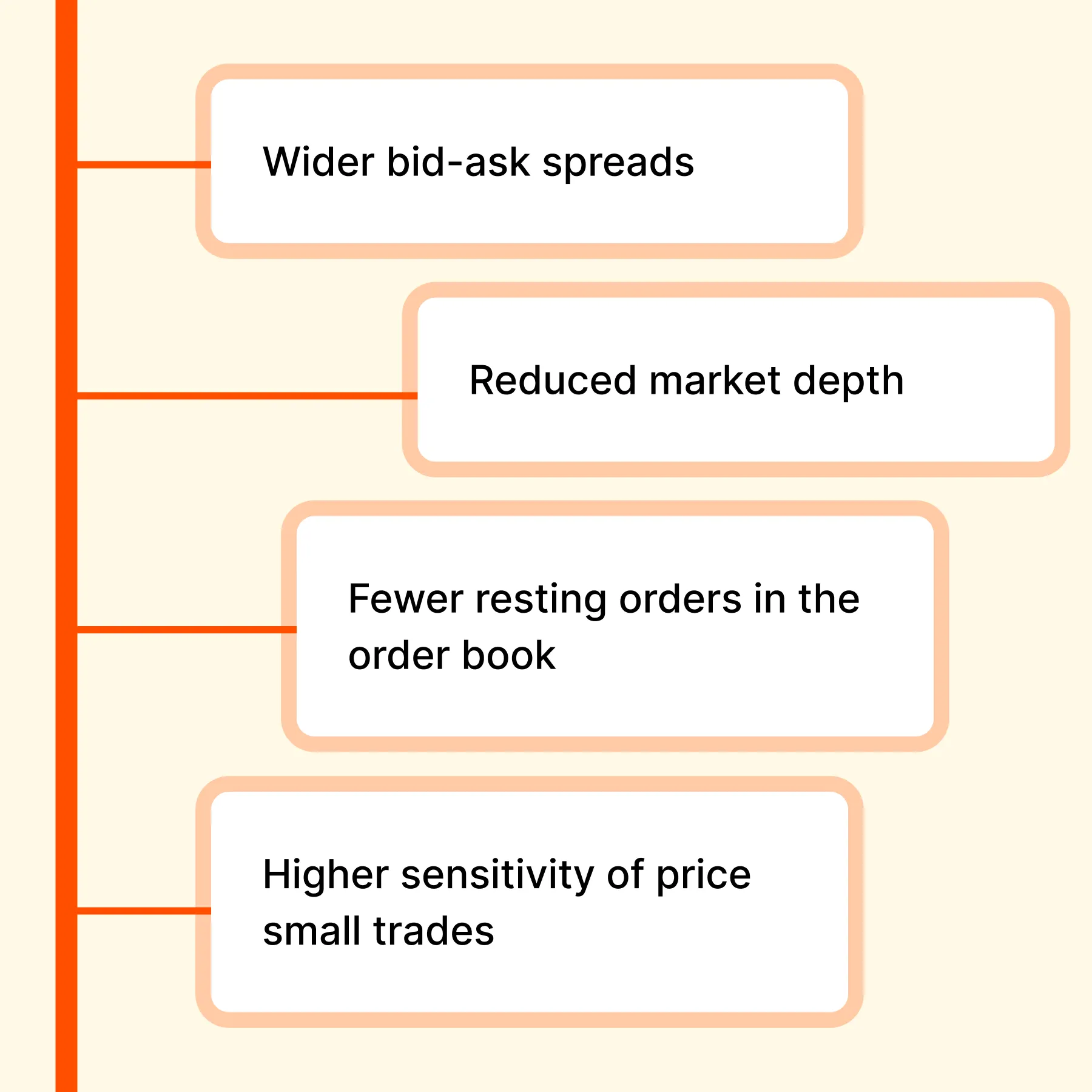
Consequently, even minor orders can move the market sharply. Many headline-driven moves fall into this category, where price swings occur due to thin liquidity rather than strong directional conviction.
Therefore, classifying the event provides context. Markets respond not to the headline itself, but to how that headline alters valuation, behavior, or liquidity. See how news affects trading in real time with Bookmap’s order flow tools.
Theme 1: The Middle East War Has Put Energy Back at the Center of Market Repricing
In the current market, one of the clearest themes is the “return of energy”. It has now become a major macro driver due to reports of:
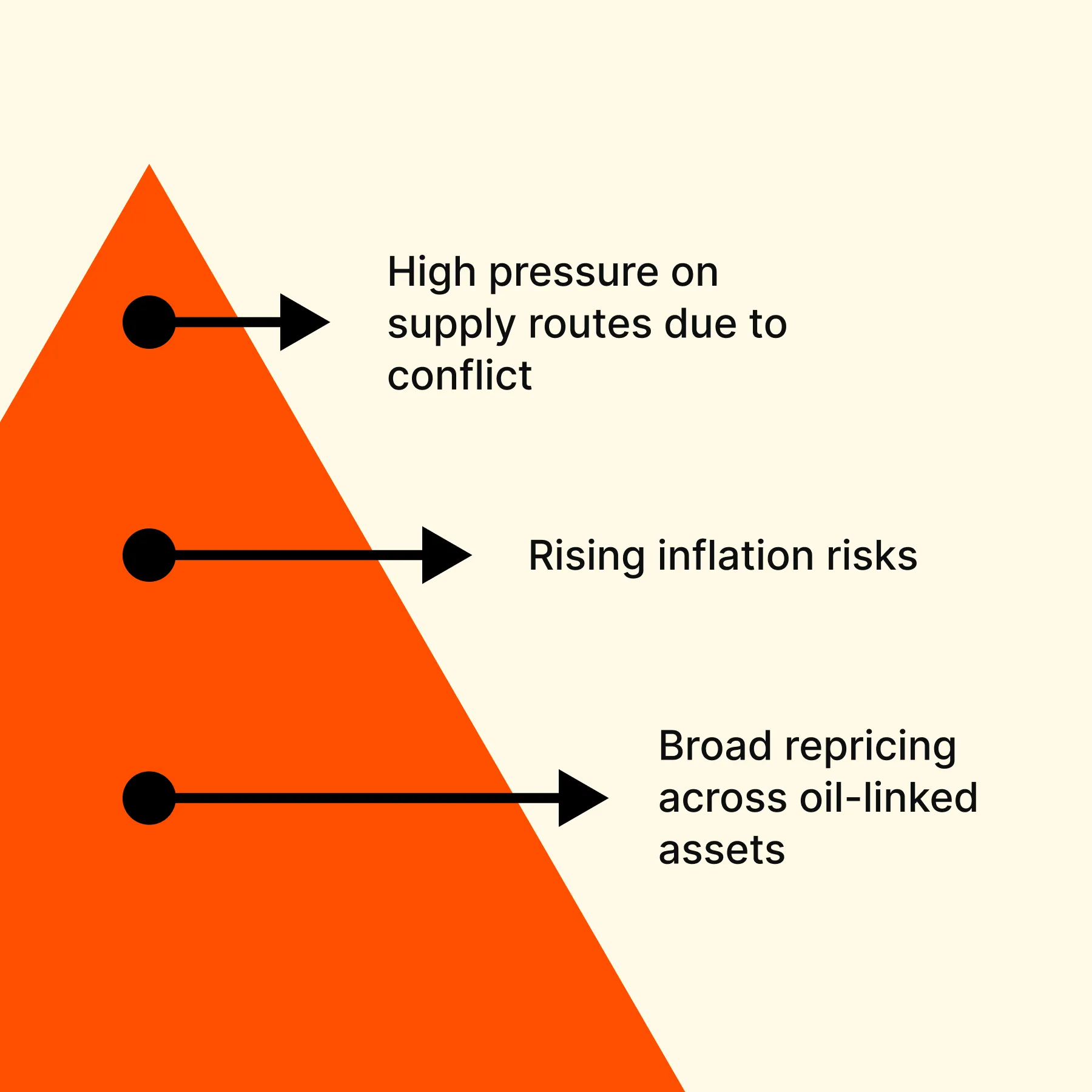
This shows a direct example of how world events affect trading, where a single geopolitical development spreads across multiple markets. Energy, in this context, is not just a sector story. Instead, it acts as a transmission channel that connects global events to inflation, growth, and policy expectations.
When oil prices rise sharply, several effects usually follow:
- Inflation expectations move higher
- Consumers face higher fuel and living costs
- Transportation and manufacturing margins tighten
- Central banks face constraints if inflation stays elevated while growth slows
As a result, traders may realize that one geopolitical event can influence multiple asset classes at the same time:
| Market Area | Likely Reaction |
| Commodities | Oil and energy prices rise |
| Bonds | Yields react to inflation and growth outlook |
| FX | Currency shifts reflect trade and inflation |
| Equities | Index-level volatility increases |
| Sectors | Rotation toward energy, away from consumers |
Therefore, this is a case of how world events affect trading through interconnected market channels rather than isolated reactions. Track geopolitics and markets through actual liquidity and volume shifts on Bookmap.
What This Means for Market Behavior Day to Day
The market response to rising oil prices is not linear. Different segments react in different ways at the same time. For example:
- Energy stocks may gain from higher oil prices
- Transport and consumer-focused sectors may face pressure
- Interest rate markets may reflect uncertainty around inflation and growth
- Defensive or inflation-linked assets may attract demand
As a result, a simple “risk-on” or “risk-off” label does not capture the full picture. Instead, the key observation is how different parts of the market absorb the same shock.
What to Watch on the Tape
Most traders make market interpretation by watching “price behavior” after the news.
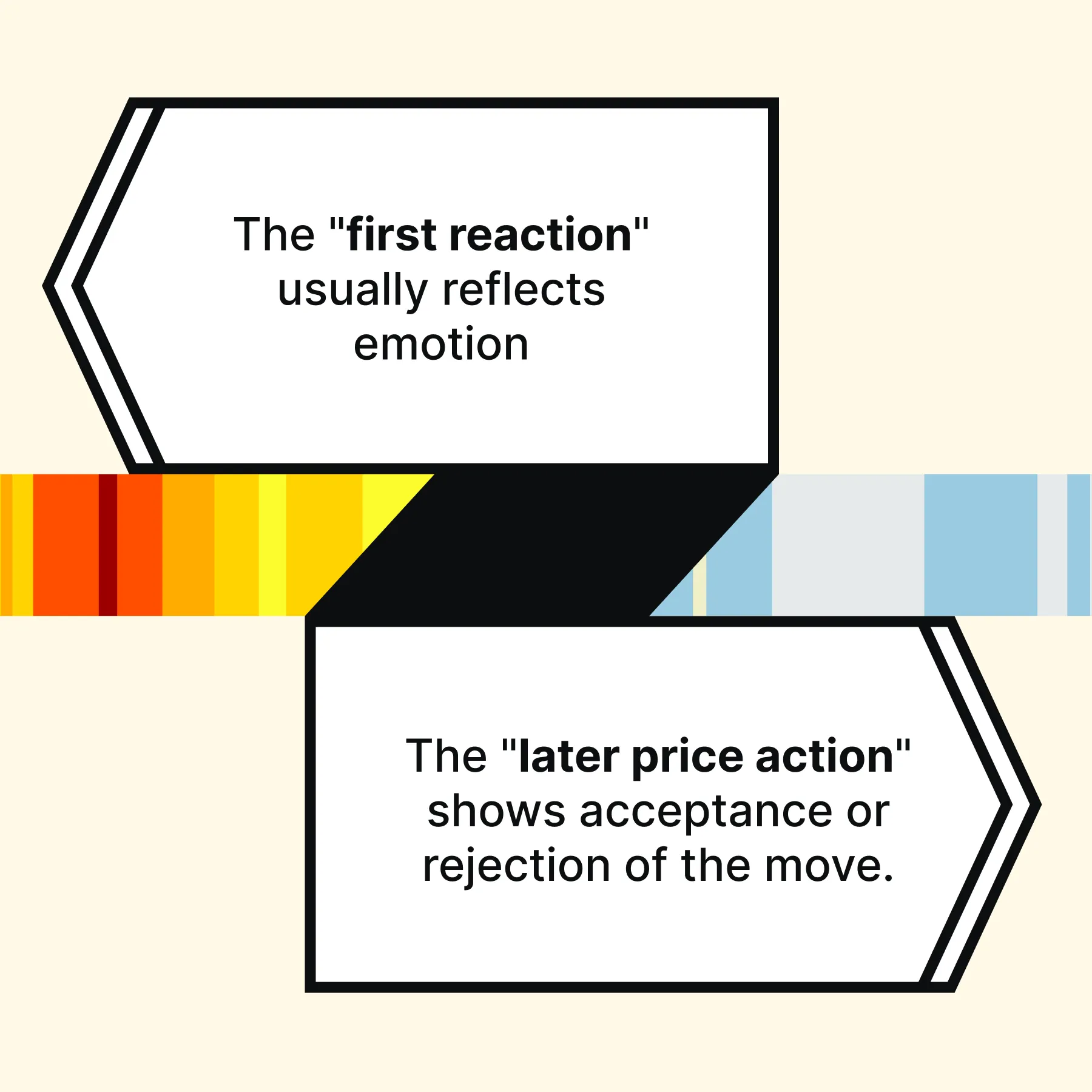
After an energy-driven geopolitical event, price action may reveal:
- Whether oil sustains higher levels or reverses
- Whether equity weakness is broad-based or limited to certain sectors
- Whether bond yields rise due to inflation concerns or fall due to growth fears
- Whether price consolidates at new levels or spikes and retraces
This distinction highlights the difference between the “first move” and the “accepted move”. The first move reflects immediate reaction, whereas the accepted move reflects market agreement on value. Therefore, the real insight into how world events affect trading comes not from the headline itself, but from how markets behave after the initial response.
Theme 2: Central Banks Are Back in an Uncomfortable Position
Another major theme is the “pressure on central banks” as rising energy prices disturb the balance between inflation and economic growth. Recent developments across economies such as Singapore, India, and Ukraine show how higher energy costs are feeding into.
Earlier, markets followed a clearer framework:
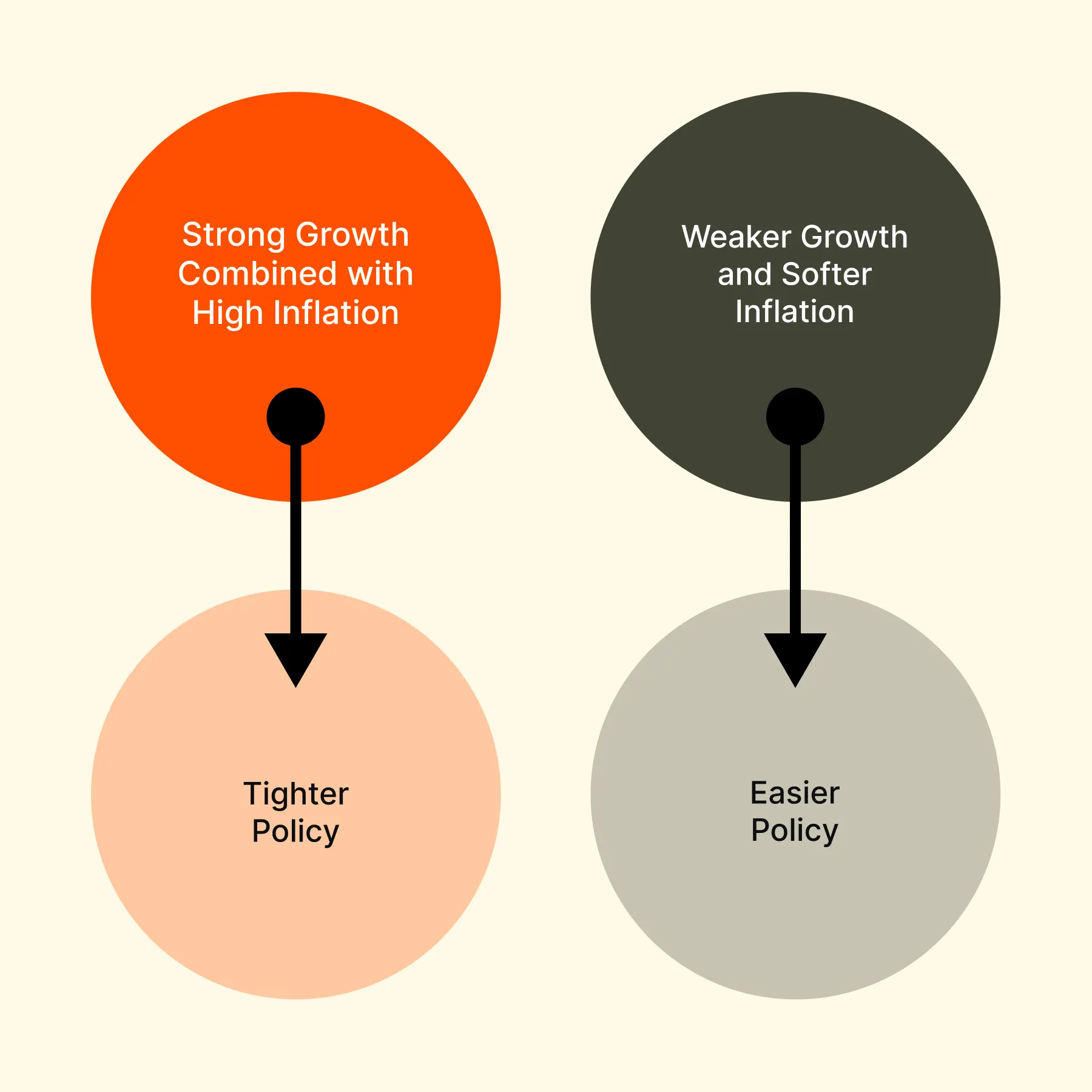
As a result, price reactions were more aligned with a single dominant narrative. However, this framework becomes more complex when growth slows, but inflation rises due to energy shocks. In such situations, central banks face conflicting signals, and markets must weigh both inflation risks and growth concerns at the same time.
Why This Makes Market Event Trading Harder
This complexity is more visible during economic events such as:
- Inflation data releases
- Central bank commentary, or
- Employment reports
During these times, instead of a clear direction, markets often show mixed behavior. For example:
-
- Bond yields may rise initially as inflation appears persistent
- Equities may decline as expectations for rate cuts weaken
- Then, part of the move may reverse as attention shifts toward slowing growth
As a result, price action becomes uneven. Trends lose clarity, and early moves often fail to hold. This reflects a more unstable repricing process, where multiple narratives compete at once.
What Traders Should Actually Focus On
In this environment, market behavior provides more insight than the headline itself. Rather than a single narrative driving price, several signals develop together. Some key observations traders can make are:
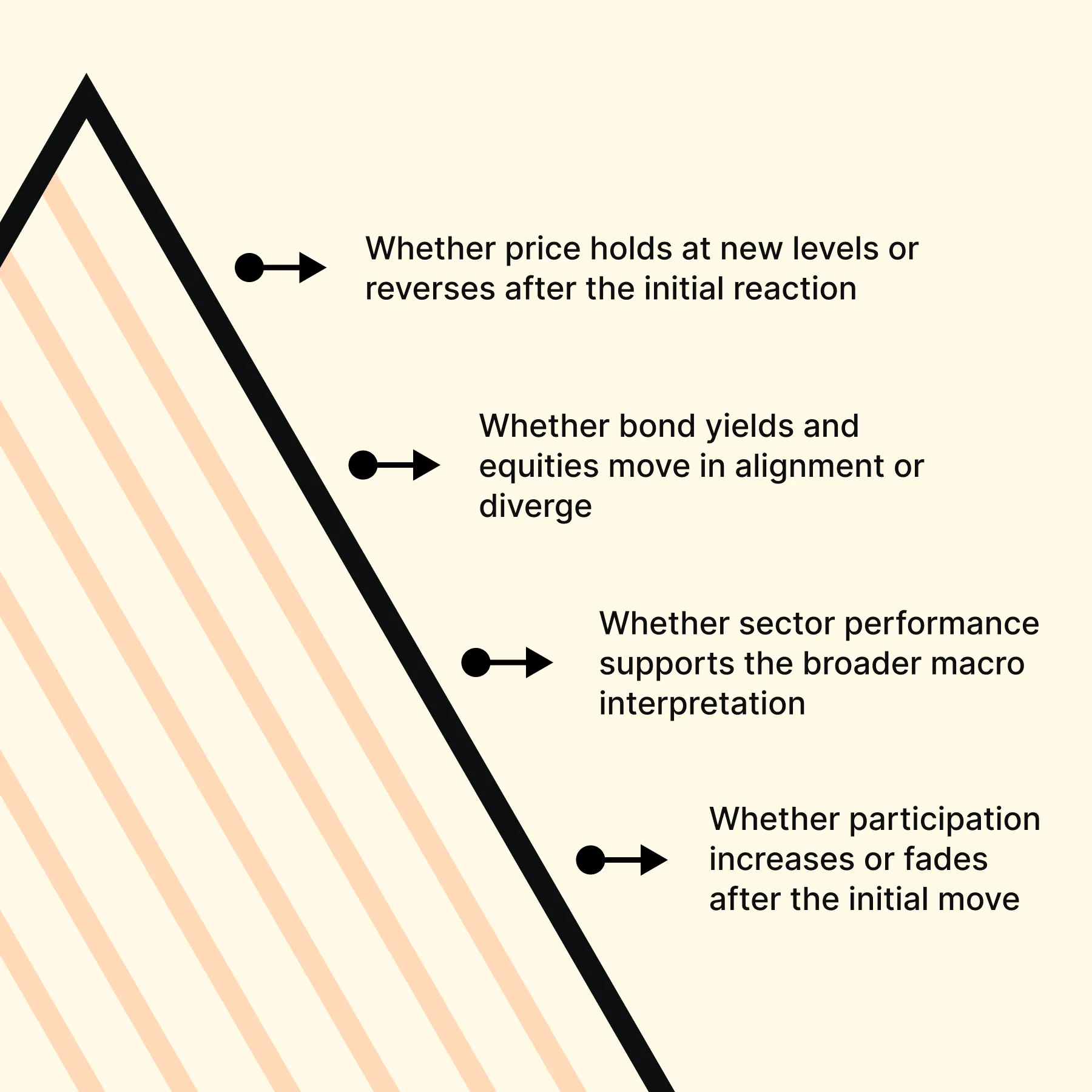
These signals help explain why reactions feel more complex compared to earlier policy cycles. Follow the true global events market reaction beyond headlines using Bookmap.
Theme 3: China Still Shapes the Growth Backdrop, Even When It Is Not the Headline
China continues to play a central role in global economics, even when it is not the main focus of daily news. Recent data has pointed to:
- Softer export growth
- Weaker lending activity, and
- Slower money supply expansion
At the same time, there has been a rising interest in Chinese bonds as a relatively stable option in a lower-inflation environment. Although not always visible in major headlines, China influences several key areas of the global economy:
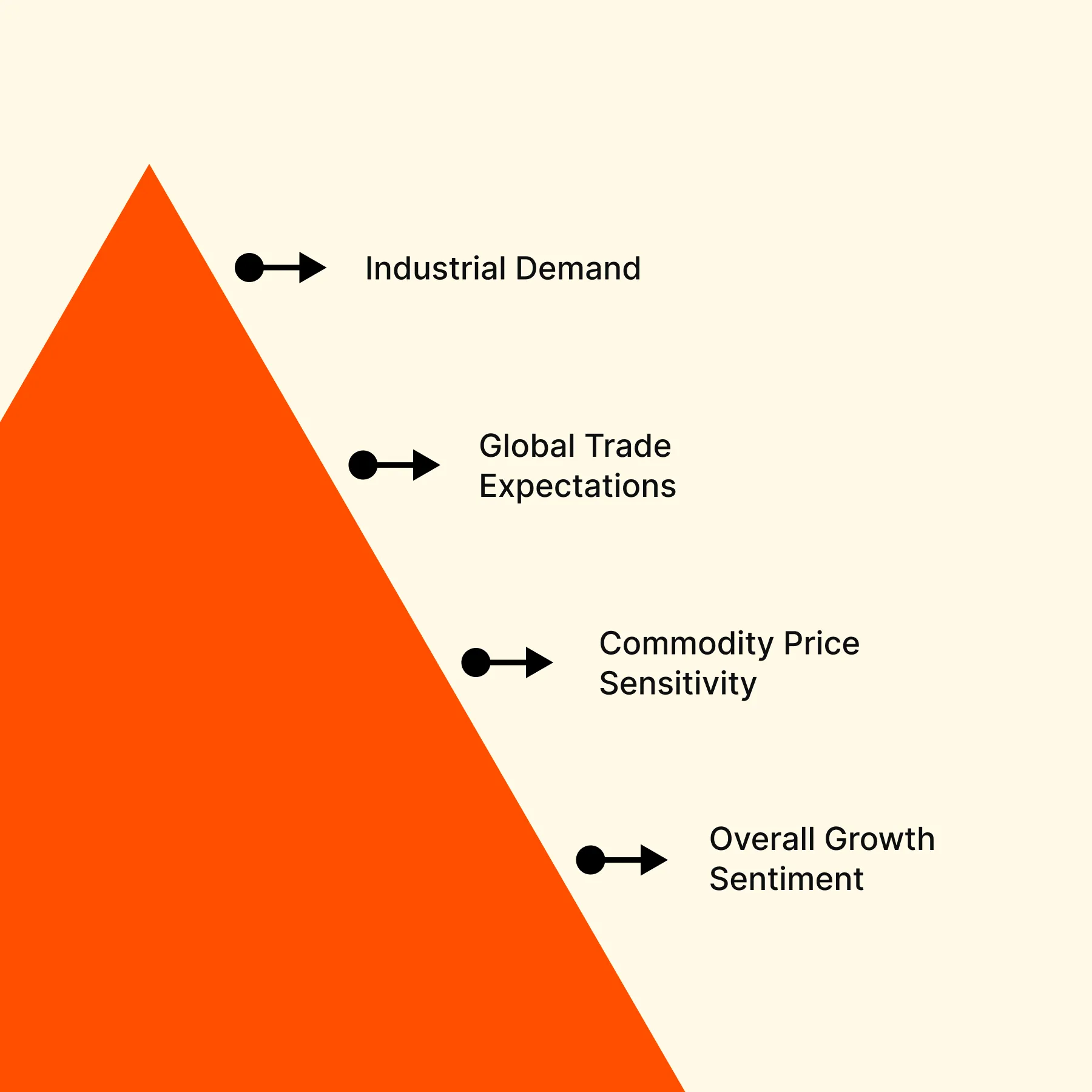
As a result, weaker trade or credit data from China can lead markets to reassess expectations across multiple sectors. For example:
- Industrial and manufacturing-linked sectors may face pressure
- Materials and commodity-related assets may weaken
- Global cyclical stocks may reflect slower growth assumptions
Therefore, even indirect signals from China contribute to how world events affect trading, particularly through their effect on global growth expectations.
What the Bond Angle Suggests
The growing interest in Chinese bonds provides an additional layer of insight. In this case, movement toward Chinese bonds may indicate:
- Lower domestic inflation compared to other regions
- A relatively supportive or accommodative policy environment
- Preference for stability amid global uncertainty
As a result, these flows suggest that investors are seeking alternatives to markets where inflation risks remain elevated.
How Traders Can Use This in Practice
Market behavior may confirm or challenge macro signals. When Chinese data weakens, related assets often provide additional clues about broader sentiment. Some general confirmations include:
- Industrial metals reflecting softer demand
- Global cyclical stocks showing weakness
- Growth-sensitive currency pairs adjusting to lower expectations
- Bond flows indicating a tilt toward relative safety
These signals develop gradually rather than immediately. Therefore, not all impactful themes create sharp or visible reactions. Instead, some trends influence the market environment over extended periods.
Theme 4: The Way Traders Access Markets Is Changing Too
Another important shift is not about macro events, but about how markets are accessed and traded. There are several recent developments that signal changes in market infrastructure, such as:
- X exploring in-app trading
- Broadridge Financial Solutions has agreed to acquire CQG, and
- CME Group is discussing a tokenized “CME Coin” concept
These developments show another dimension of how world events affect trading, where access and execution evolve alongside macro conditions. Modern markets are not shaped only by economic data or geopolitical events. They are also influenced by changes in how participants interact with them. For example,
- Trading access is becoming part of everyday digital platforms
- Institutional systems are becoming more interconnected
- Core processes such as collateral management and execution are moving toward digital formats
As a result, the structure of participation is changing, which in turn affects how price moves develop and sustain.
Why This Matters for Retail Participation
As trading becomes integrated into social and consumer platforms, the link between sentiment and action becomes shorter. This changes how attention translates into market activity.
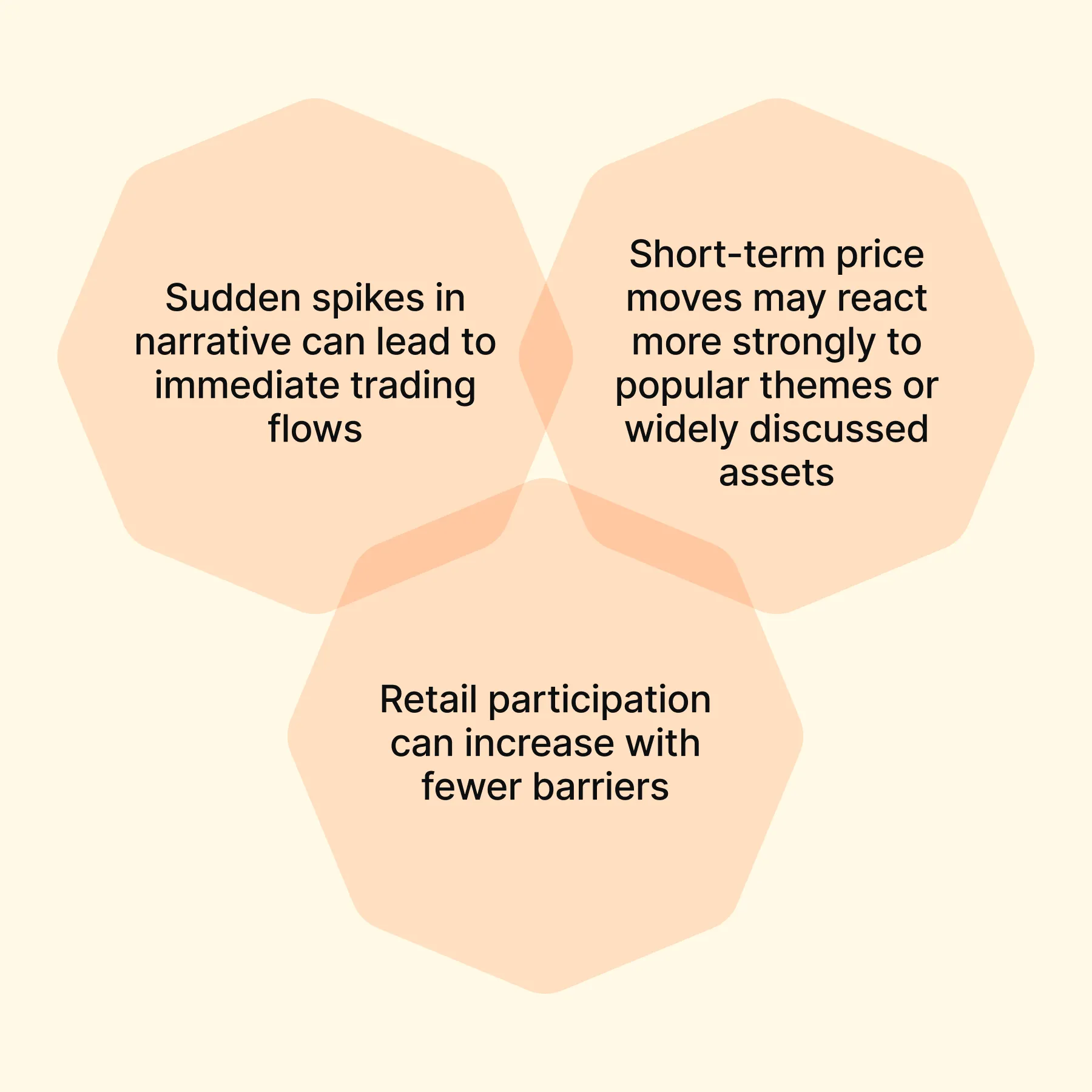
Therefore, sentiment no longer remains passive for long. Instead, it can convert into active positioning more directly. Decode inflation and trading reactions directly from the order book with Bookmap.
Why This Matters for Professional and Institutional Markets
At the same time, changes at the institutional level influence how markets function behind the scenes. Developments such as “acquisitions” and “tokenized collateral” initiatives can change the core trading mechanics. These changes can affect:
- Execution quality across markets
- Connectivity between trading systems
- Margin and collateral processes
- Overall ease of market access
As a result, even if these developments do not create immediate price reactions, they gradually influence how trades are executed and how liquidity is distributed.
The Practical Trading Question Is Not “What Happened?” but “What Changed?”
Market reactions begin with headlines, yet they do not end there. Price action, often called the tape, reflects what participants are actually doing. When price behavior does not align with the narrative, it signals that the headline alone is not enough to explain the move.
In most cases, many events appear similar at the surface level, such as:
- War developments
- Inflation data releases
- Weak economic signals from major economies
- Changes in market structure or access
However, the real impact comes from what changes beneath the surface. Traders may read this by seeking answers to these questions:
| Key Question | What It Reveals |
| Did expectations change? | Repricing of inflation, growth, rates, or supply outlook |
| Did positioning change? | Adjustments such as hedging, de-risking, or rotation |
| Did liquidity change? | Wider spreads, thinner order books, harder execution |
| Did the market accept the move? | Sustained price levels with volume and time, or quick reversal |
Each step builds on the previous one. If none of these changes is visible, the move may lack conviction. Analyze the oil prices trading impact as it unfolds with Bookmap’s visual tools.
A Better Way to Trade World Events
Traders may observe how markets process events rather than reacting to the headline alone. This could be a better approach to interpret how world events affect trading in real time. Below is a step-by-step process traders may follow:
- Step 1: Identify the Transmission Channel
-
-
- Every event affects the market through a specific path, such as:
- An energy shock
- A policy shift
- A growth signal, or
- A change in market structure.
- This defines which assets and sectors are likely to react.
- Every event affects the market through a specific path, such as:
-
- Step 2: Respect the First Move, But Do Not Assume it is Final
-
-
- Initial reactions often reflect shock, thin liquidity, and forced orders.
- As a result, the first price move may not represent the final direction.
-
- Step 3: Watch for Acceptance or Rejection
-
-
- Markets reveal conviction through behavior.
- If price holds at new levels with sustained activity, it signals acceptance.
- If price reverses and fails to hold, it signals rejection.
-
- Step 4: Confirm with Cross-Asset Behavior
-
-
- A single market rarely moves in isolation.
- For example, an energy-driven move may influence bonds, currencies, and sector performance.
- Note that alignment across assets may strengthen the signal.
-
- Step 5: Trade Structure, Not Emotion
-
- Price action over time shows how participation and value are adjusting.
- Moves driven only by emotion usually “fade”, while moves supported by structure may “persist”.
Conclusion
World events influence markets only when they change actual trading conditions (and not just when they dominate headlines). At present, key themes include the:
- Energy and inflation shocks linked to geopolitical tensions
- More complex central bank environment
- China’s role in influencing global growth, and
- Ongoing changes in trading access and infrastructure.
Each of these shows how world events affect trading through different channels such as pricing, positioning, and liquidity. As a result, market reactions nowadays develop in stages. The real advantage does not come from reacting to news first, but from recognizing whether the event has altered expectations or changed liquidity. Read trading reactions to geopolitical events directly from the order book with Bookmap.
FAQs
1. What world events matter most for trading right now?
The most important events are those that change market conditions. At present, key drivers include:
- Energy shocks from geopolitical tensions
- Inflation and central bank uncertainty
- Weaker economic signals from China, and
- Changes in trading access
Nowadays, these factors are influencing prices, flows, and sentiment.
2. Why do some huge headlines fade so quickly in the market?
Many headlines create an immediate reaction driven by emotion, low liquidity, and forced trades. However, that first move does not always reflect true value. If the market does not sustain the price at new levels, the move fades. Lasting trends only develop when participants agree on the new price.
3. Do traders need to follow global news constantly?
Not every headline matters equally. Markets respond only to events that change expectations, positioning, or liquidity. As a result, “selective attention” is more useful than constant monitoring. Traders may focus on events that can influence pricing or shift participation.
4. How should traders use world news without becoming headline chasers?
World news works best as “context”. It may not be seen as a trigger for immediate action. The process begins with identifying how the event affects the market and is usually followed by observing the initial price reaction.
Traders may watch whether the market holds or rejects new levels before forming any conclusion.
Sign Up Now
Latest Articles