
See trade execution more clearly in real time.
Compare plans to access deeper market visibility for trade execution.
Education
January 15, 2026
SHARE
Are You Front-Running Yourself? How Poor Execution Destroys Good Setups

Your trading ideas are great. You have the knack of spotting hidden setups. Yet, most of your trades still end in losses. Why? The truth is simple: your trade execution is poor and needs work! It’s not your market analysis that’s off. The challenge is making sound trading decisions in those critical moments of market entry and exit.
And you are not alone! Many traders front-run themselves, jump in too early, hesitate too long, or let emotions influence their trading decisions. The impact? These trade execution mistakes quietly erode confidence and trading consistency, even when your market read is correct.
Need help? Read this article to know about the most common trading entry mistakes and psychological traps that lead to poor execution in trading. Then, explore some proven trading strategies and learn how to use popular market analysis tools, such as Bookmap, to sharpen your edge and trade with confidence.
What Does It Mean to “Front-Run Yourself”?
Front-running yourself means you act too soon or sometimes too late compared to your own trading plan. It’s not the same as institutional front running in trading, where brokers trade ahead of clients. Here, the problem is that you’re getting ahead of yourself!
For example, you might:
- Spot a solid setup forming, but jump in early because you’re afraid to miss the move.
- Enter near a key price level even though you have planned to wait for confirmation (like a stop run or clear absorption).
- Place an order expecting others to enter there, only to get stopped out before the real move begins.
These are classic trade execution mistakes! They happen due to impulsive decisions and weak trading psychology. Remember this:
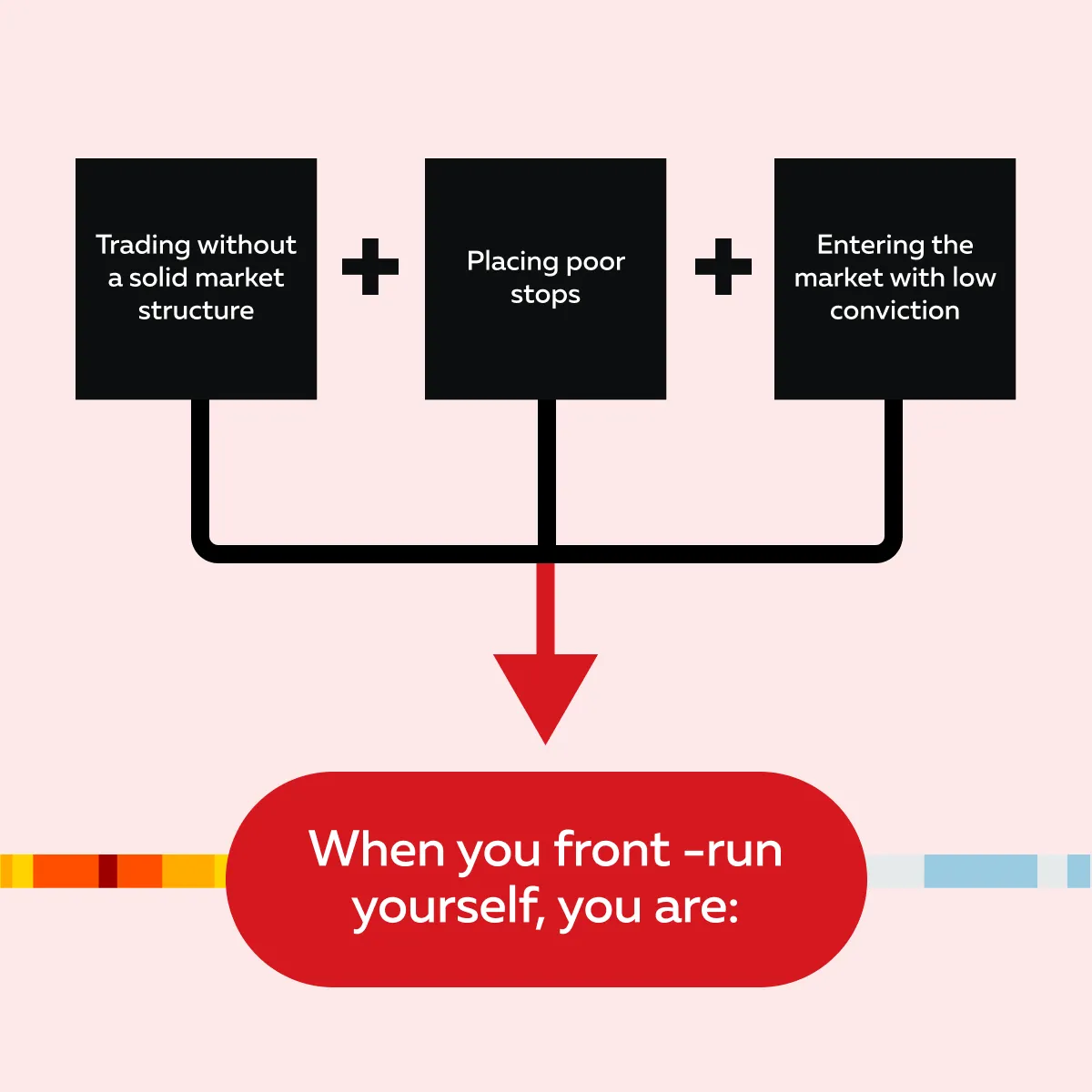
The long-term effect? This kind of poor trading execution gradually eats into your profits and weakens your competitive edge. Okay, so what’s the solution? Slow down and trust your setup! You must try to improve your trade execution through discipline + patience.
Don’t let your entries sabotage your edge. Bookmap helps track execution quality →
3 Common Execution Errors That Kill Great Setups!
Even the best trading ideas can fail if your timing is off. Always remember that:
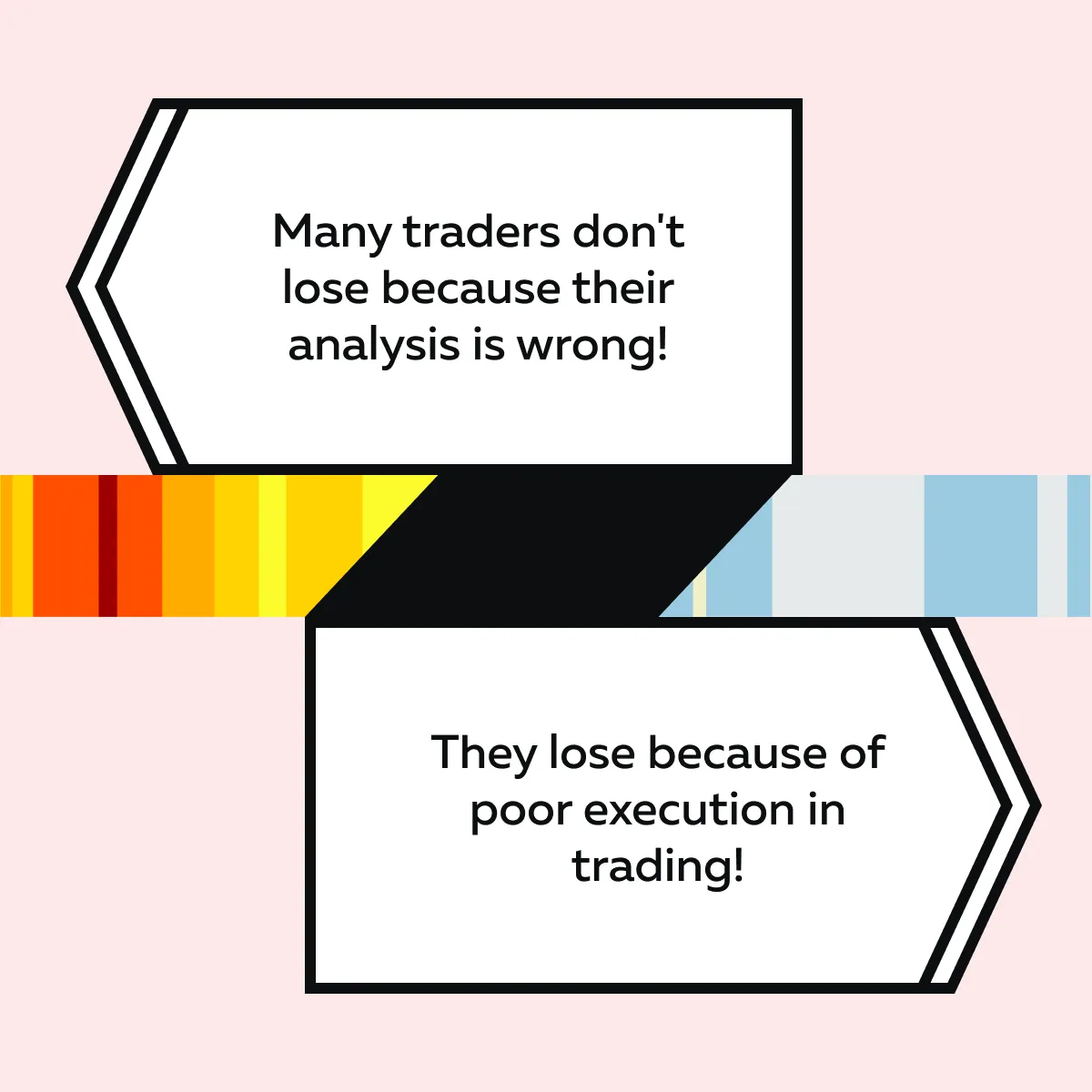
So, how can you improve your timing? You must learn to recognize trade execution mistakes early. By doing so, you can smartly avoid unnecessary losses and steadily enhance your trade execution skills.
For a clearer understanding, check out these three most common execution errors:
#Mistake 1: Pre-Emptive Entries Without Confirmation
One of the most common trading entry mistakes is entering too early! You enter before the setup has actually been confirmed. Traders often do this to get a “better” price, but in reality, they lose valuable confirmation data. When you enter early, you don’t yet know if real buyers or sellers are stepping in.
For example,
- You might enter a breakout early.
- You are expecting trapped sellers to fuel a reversal.
- However, you get stuck in a choppy or fake move instead.
- This is a classic sign of poor trading execution that can lead to losses and missed opportunities.
The solution? Let the setup mature! You should wait for the order flow signals shown below:
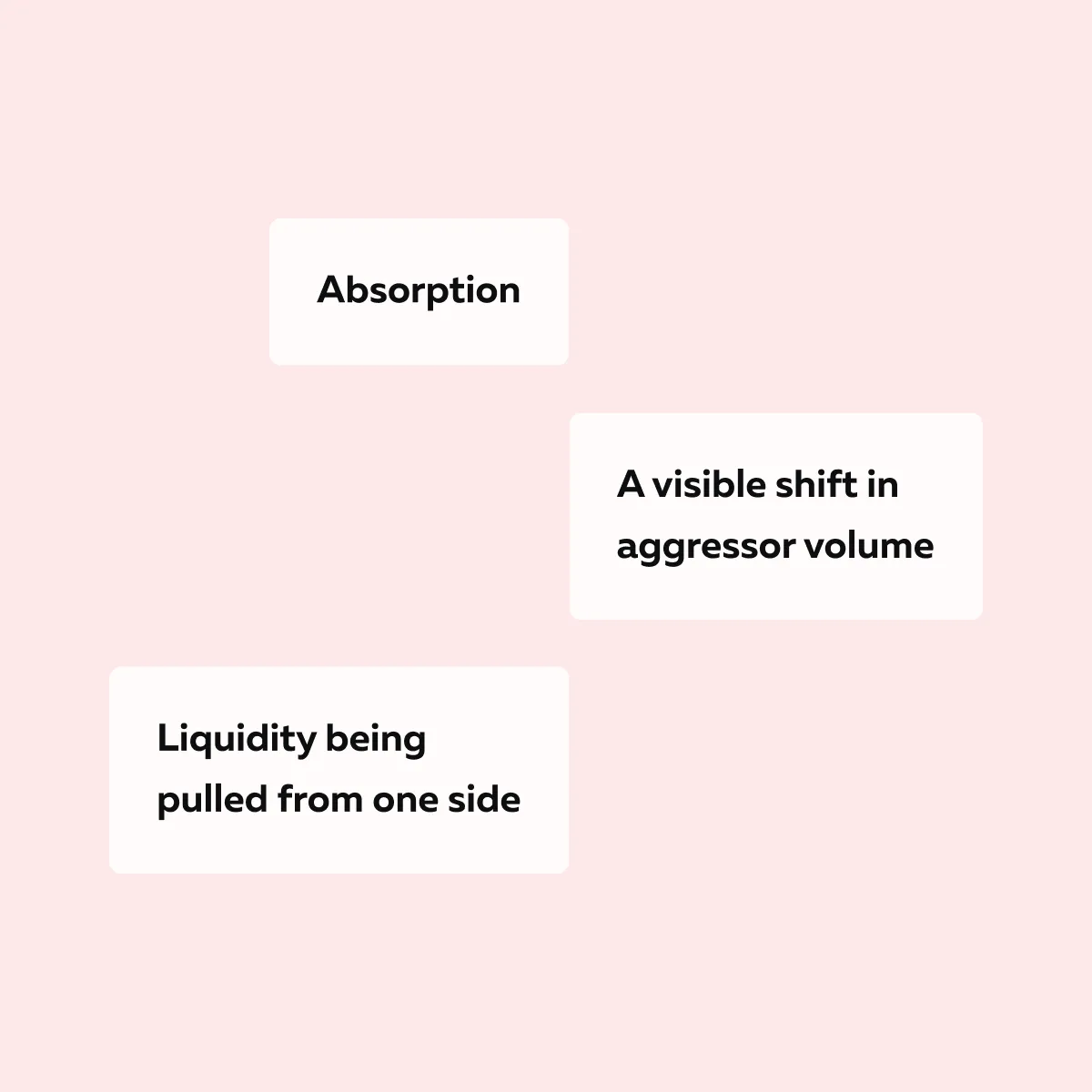
These clues confirm real participation. They also strengthen your trading psychology and execution by teaching patience and discipline. Want to improve your entries? Compare Bookmap packages →
#Mistake 2: Chasing the Move After It Starts
This is one of the most common “emotional” trade execution mistakes, where:
- You enter a trade after the move is already in motion,
- FOMO (fear of missing out) takes over, and
- You hit buy or sell once the price has already run.
The problem? Your risk-reward turns poor. Stops become wider, and you often end up buying near resistance or selling into support.
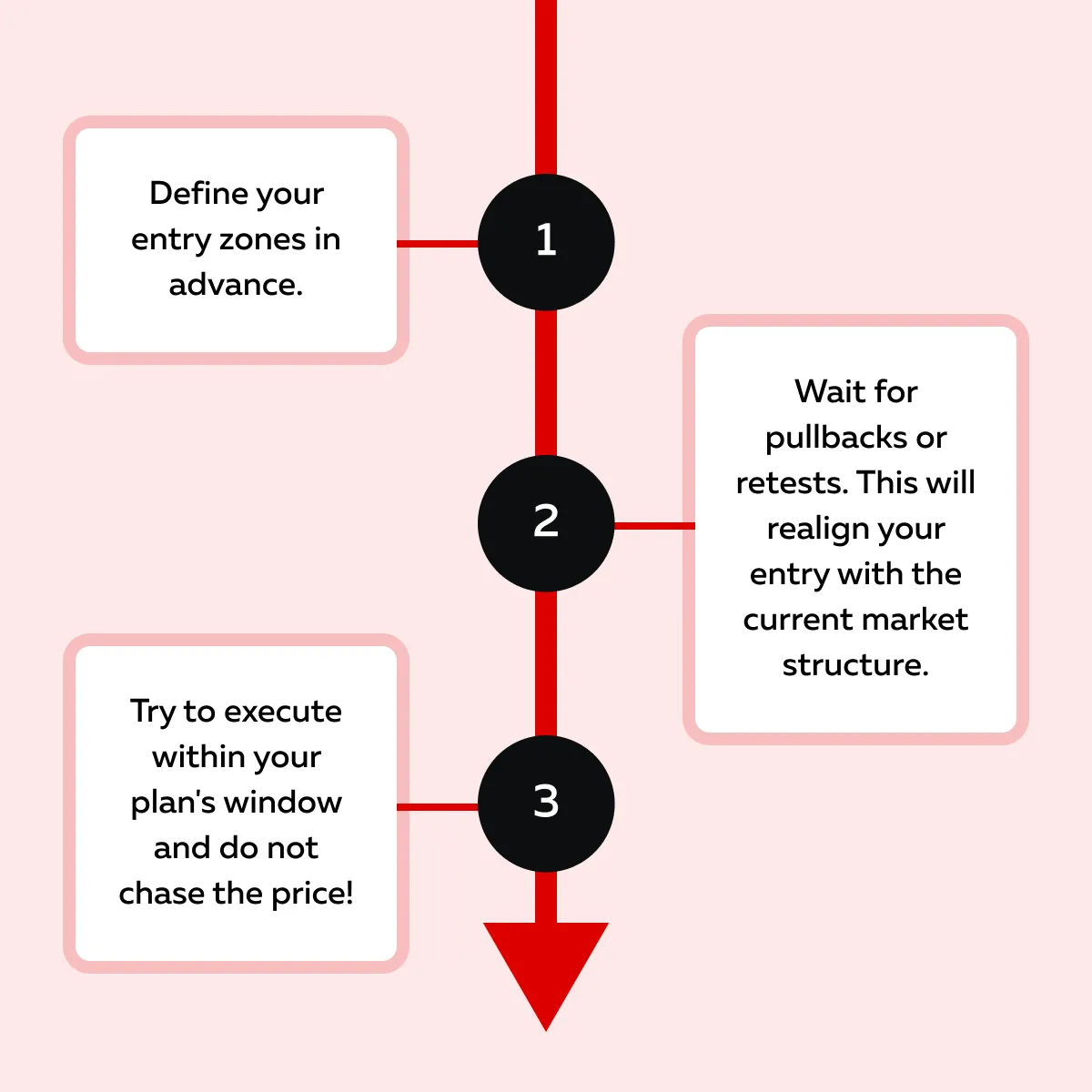
But why did this happen in the first place? Because you missed the first entry by a few seconds and panicked to “get in anyway.” As a solution, you should do the following:
#Mistake 3: Micromanaging the Setup
Another common issue is constantly second-guessing yourself! Such nervous traders usually:
- Move their entry around,
- Cancel their order and re-enter the market, or
- Hesitate to trade only to see the setup slipping away.
By the time they finally commit, the opportunity is either gone or invalid.
Okay, but why does this happen? Traders “overanalyze” small signals, such as minor heatmap changes or short-term volume changes. They do not understand the bigger context.
Solutions? Stick to a structured trade plan. Once you’ve defined your setup, trust it. You can use the “replay modes” offered by market analysis tools like Bookmap. Using it, you can review your decision-making and see if waiting would have worked better.
When you keep replaying your setups, it builds confidence + reduces trading entry mistakes. See how real-time execution plays out with visual clarity →
The Psychological Triggers Behind Execution Errors
Poor execution in trading isn’t always about wrong levels or bad timing! Then? It often starts in your mind! Emotions play a huge role in trading psychology execution, and if you’re not aware of them, they can quietly ruin even the best setups.
Let’s check out some common emotional triggers and how they influence your trading decisions:
| Emotional Triggers | What do These Emotional Triggers Make You Do? |
| Fear of missing out (FOMO) |
|
| Fear of loss |
|
| Impatience |
|
| Lack of confidence |
|
These emotional triggers distort how you see risk and opportunity! The more you act from fear or urgency, the more likely you are to make trade execution mistakes and override your own plan.
Okay, so what’s the solution here? Don’t just review whether your trade made or lost money! Instead, review how you executed it. Ask yourself these two questions:
- Did you enter where you intended?
- Did emotion take over?
A “YES” for the first question and a “NO” for the second one show you are improving!
How Bookmap Helps Traders Improve Execution

Remember, you are not alone in this trading journey! Bookmap is a popular market analysis tool trusted by many veteran traders. You can use it to get “live visual clues” about what real participants are doing. The Bookmap advantage?
- You don’t make the common trade execution mistakes.
- The chances of poor execution in trading are significantly reduced.
For more clarity, let’s understand what to watch on Bookmap and how to act:
5 Primary Bookmap Signals and Their Usage
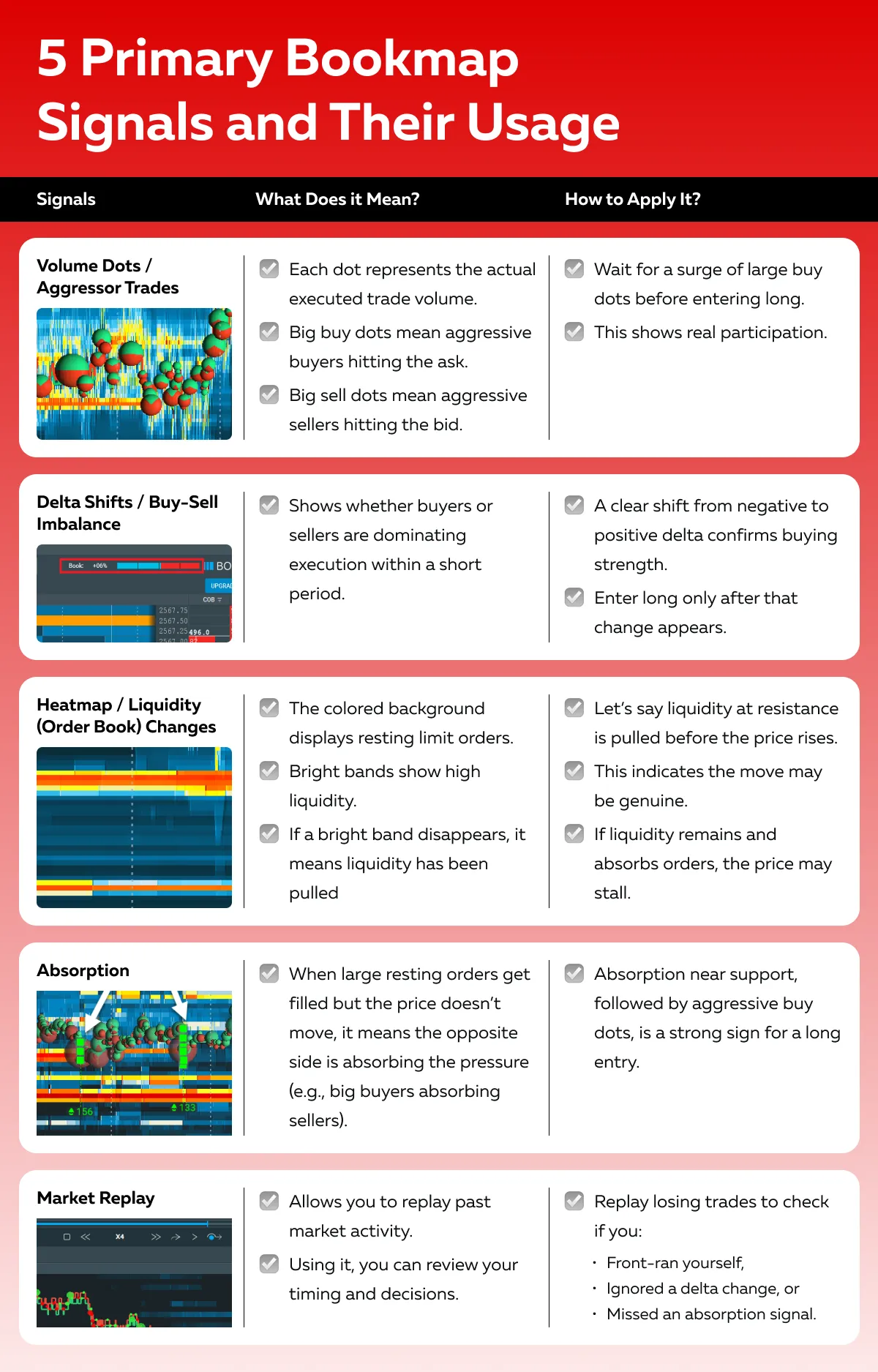
Need a Practical Workflow? Follow this Process Before, During, and After Trade:
- A) Before you trade (Plan + Make Bookmap checks)
- Mark your entry zone, stop, and target on the chart.
- On Bookmap, note nearby liquidity bands and recent behavior at those levels.
- Ask yourself? – Is liquidity likely to be pulled, absorbed, or untouched? If unsure, wait.
- B) During the live move (what you must watch)
- Look for aggressor volume (big dots) arriving where you expect the move.
- Confirm a delta shift toward your side.
- Check the heatmap! Observe – Did liquidity pull (weaker resistance) or was there absorption (support holding)?
- Only enter after at least two confirmations (say, big buy dots + positive delta or absorption + liquidity pull).
- C) If you miss the first move
- Don’t chase price!
- Wait for a pullback or a clean retest that shows the same Bookmap confirmations.
- D) After the trade (review with Market Replay)
- Use Bookmap’s Replay Mode and replay the sequence.
- Find answers to these questions:
- Did I enter before confirmation (a trading entry mistake)?
- Did I ignore absorption or a liquidity pull?
- Mark the better entry you would have taken and practice it in replay.
By using Bookmap this way, you can reduce your trading entry mistakes and avoid poor execution in trading caused by FOMO or impatience. Always remember – Timing the setup is one thing. Executing it right is another →
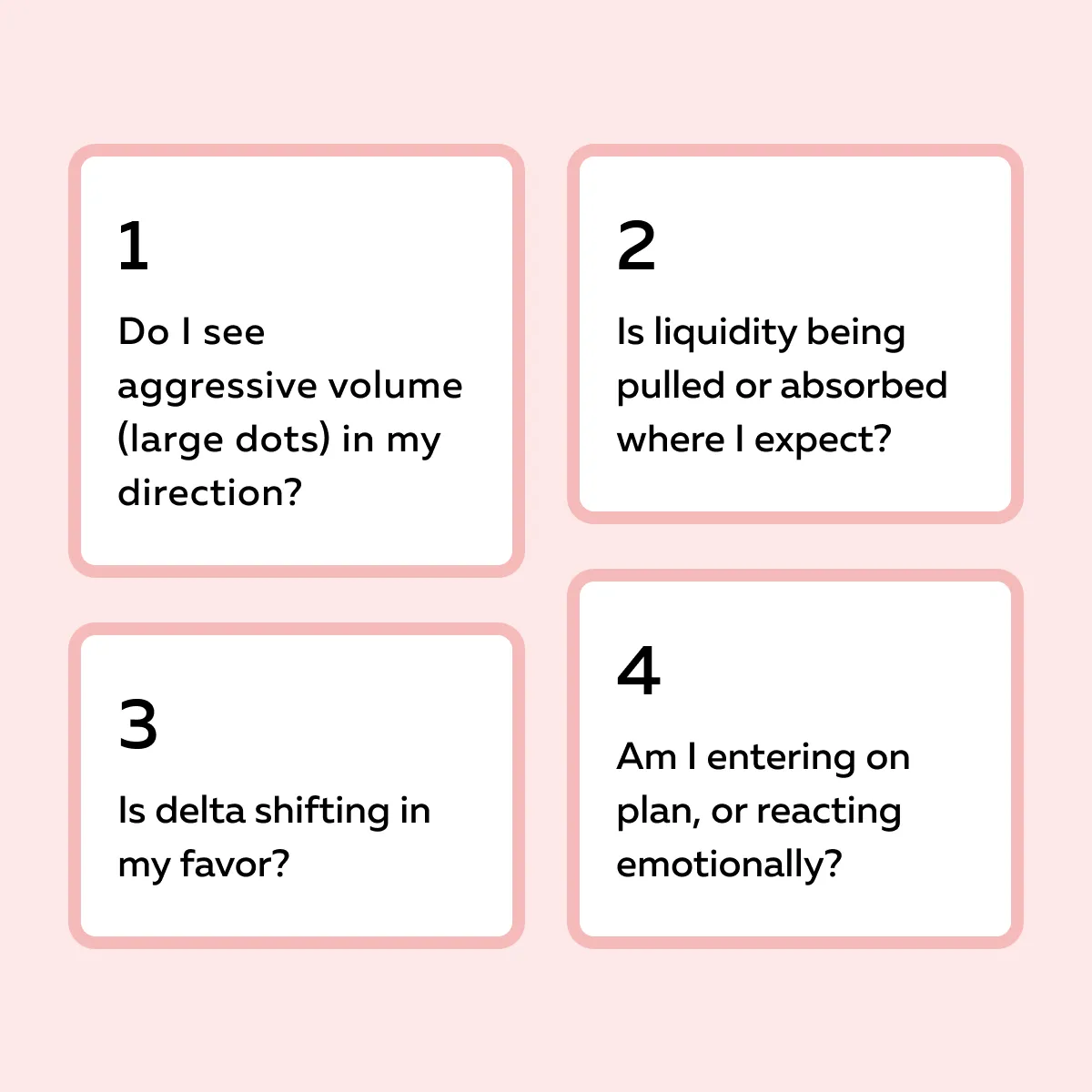
To further better your timing, follow this 4-point “pre-entry checklist”:
Conclusion
So, now you know that a great trading idea can easily fall apart because of poor execution in trading. This mostly happens when traders front-run themselves:
- They enter too early.
- They hesitate for too long.
- They second-guess their own setups.
Need a tough question and its answer? – Do these trade execution mistakes only cost money? Nope! They chip away at your confidence + blur your decision-making.
Remember, the real edge isn’t only in analysis! It lies in accurate, panic-free, and consistent trade completion. Ready to improve your execution? Compare Bookmap packages →
FAQs
1. What does “front-running yourself” mean in trading?
It means entering a trade before your planned signals appear. You act too soon, usually from fear of missing out or impatience. The impact? You end up ruining a valid setup!
It’s one of the most common trade execution mistakes that leads to poor timing and unnecessary losses.
2. How can I stop chasing entries?
Plan your entry zones and confirmation triggers in advance. Next, you should:
- Wait for proof (like strong buying or selling activity) before entering.
- Avoid reacting emotionally to market orders.
- Stay patient and follow structure (this prevents poor execution in trading).
3. Why do good setups still fail?
As a trader, you must realize that even the best analysis fails if execution is off! Entering too early, too late, or without structure can destroy a good trade idea.
To avoid this, you should try to improve trade execution. Always remember that timing, + patience, + risk placement matter as much as analysis.
4. Can Bookmap help with execution timing?
Yes! Bookmap is an advanced real-time market analysis tool. Using it, you can observe real-time order flow. Such an analysis lets you see:
- Where big buyers or sellers step in
- Where liquidity appears or disappears
- When does the market intent change
When you have these clues, you can significantly refine your timing and reduce trading entry mistakes.
5. Should I review losing trades if they followed my plan?
It is highly recommended! You must review every trade. However, while doing so, try to focus on execution quality (not just profit or loss).
- Now, if you followed your plan, it’s a learning outcome
and
- If you didn’t, study where emotion took over and adjust your process
This is how serious traders build confidence and skill.
Sign Up Now