
See choppy markets more clearly in real time.
Compare plans to access deeper market visibility for choppy markets.
Education
March 5, 2026
SHARE
How to Build a Trading Process That Survives Choppy Markets

For several new traders, markets always trend cleanly. If that were true, trading would be simple – Buy the breakout, hold, and count profits. However, in practice, markets don’t behave like that. Most of the time, the price moves sideways and rotates endlessly. This is known as market chop.
An impatient trader entering a chop with wrong expectations will face losses. The problem isn’t a lack of effort or skill. Instead, it’s applying trend-based thinking in a non-trending environment.
This article delineates what choppy markets actually are, why traders lose money in chop, and how trading approaches can be adjusted through selective participation.
What Choppy Markets Actually Are
Most novice traders often perceive a choppy market as a “crazy” or random market. However, a choppy market is where:
- Buyers and sellers are equally active
but NOT
- Confident enough to push prices strongly in one direction.
Due to this imbalance, the price keeps on fluctuating within the same area instead of trending. How does it hurt traders? Trading in choppy markets is considered difficult because there is no clear momentum.
Additionally, every small move looks like the start of a trend, but it usually fades. This is why many traders struggle and lose money in chop. The reason is expectation mismatch. They expect a big move, but the market only rotates within a limited range.
Think of it as “range-bound market trading,” where the price keeps revisiting the same levels repeatedly instead of creating new highs or new lows with strength.
Structural Signs of Chop
Choppy markets can be identified by recurring structural patterns. Below are four signs commonly observed:
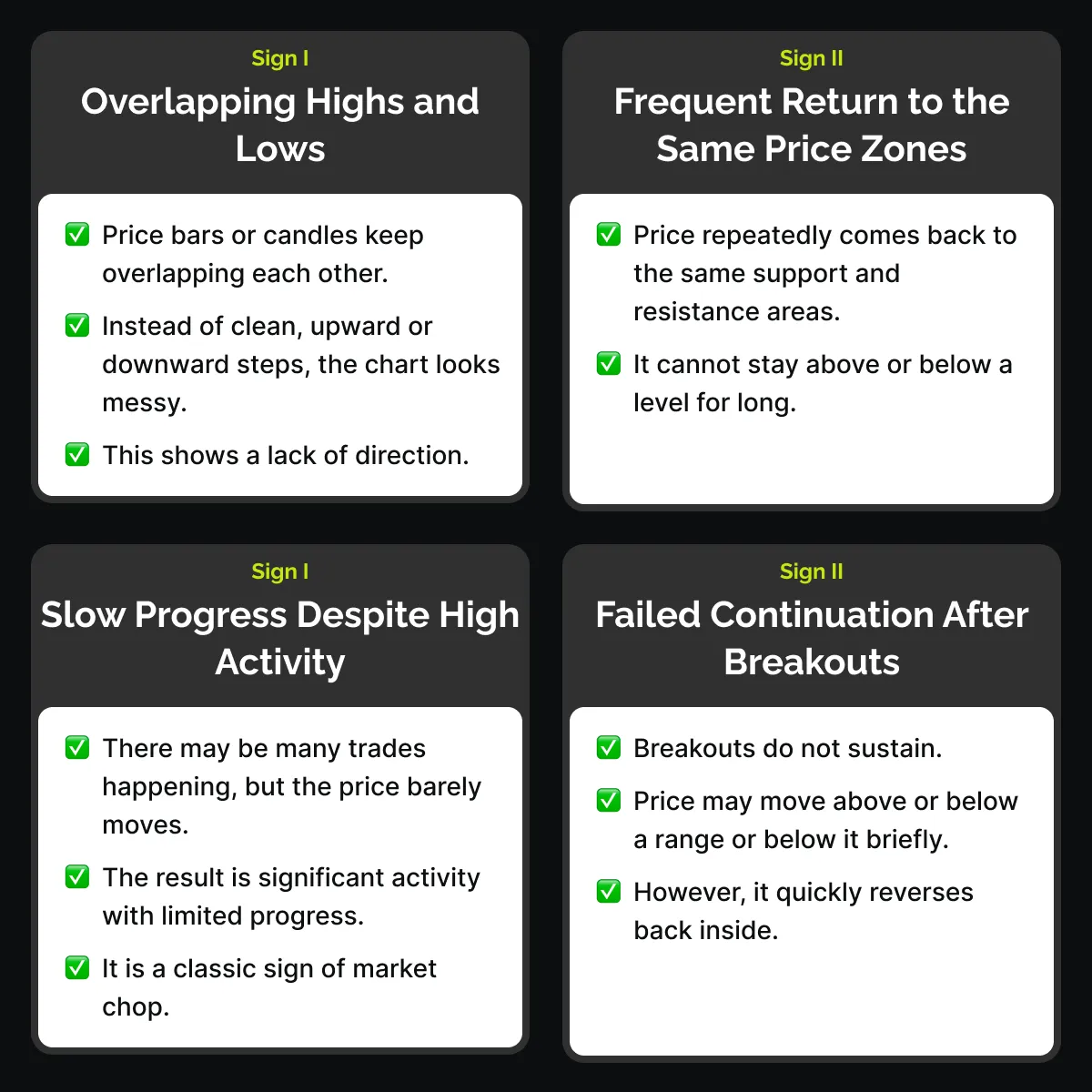
For more clarity, consider the following example:
- Suppose a price breaks above a range high.
- This gives the impression of a strong bullish move.
- Consequently, more traders enter expecting continuation.
- But within minutes or hours, the price falls back into the same range.
- Later, it may break again and fail again.
Why Trend-Based Processes Fail in Chop
Many traders enter the market with a trend-based mindset. They look for the following:
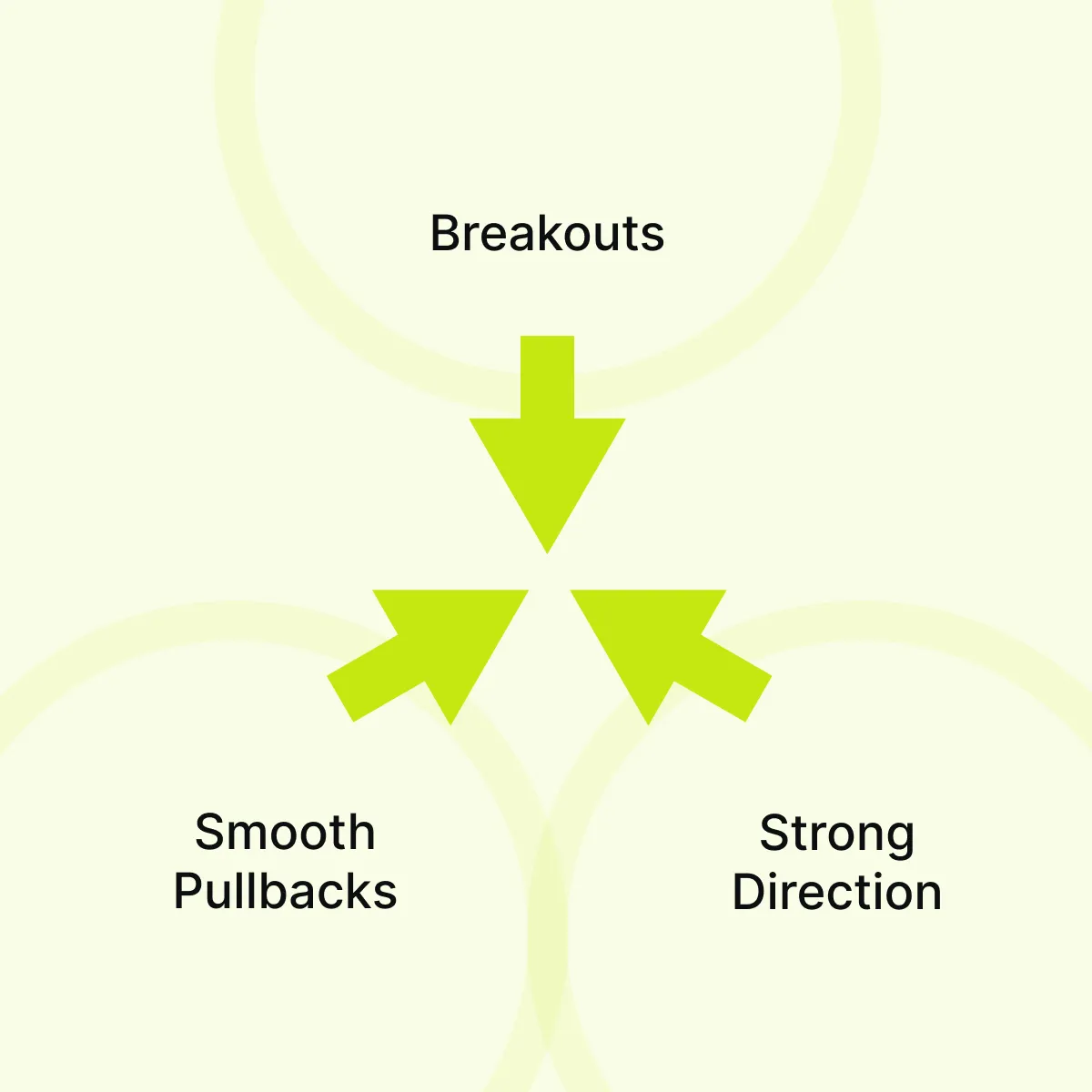
This approach works well in trending markets. But the problem arises when traders apply the same logic while trading in choppy markets. That’s because in a choppy or sideways environment, the market does not respect trend rules. Yet traders still expect prices to behave like a trend. This mismatch is one of the main reasons why traders lose money in chop. Additionally, there is an “expectation mismatch”.
Expectation Mismatch
In range-bound market trading, the price behaves differently from a trend. The following patterns are commonly observed:
- Breakouts Lack Follow-Through
-
-
- Price often breaches a key level.
- But instead of continuing, it stalls or reverses.
- Thus, traders enter late, expecting momentum.
- But that momentum never comes.
-
- Deep Pullback Overshoots
-
-
- In trends, pullbacks are usually shallow and controlled.
- However, pullbacks go too deep in chop.
- They hit stop losses even before the price makes meaningful progress.
-
- Targets Are Rarely Reached
-
- In chop, price keeps rotating within a narrow band.
- Thus, large profit targets remain largely untouched.
The primary challenge in choppy markets is not execution but failure to adapt expectations. Financial losses often stem from applying trend behavior in a non-trending environment. Learn how market behavior changes in low-conviction conditions → Compare Packages.
Step One: Redefine What a Good Trade Looks Like
In trending markets, a good trade is one that travels far in the trader’s favor. However, this doesn’t work in choppy markets. That’s because in choppy conditions, price rarely yields big and clean moves. A resilient process requires shifting the definition of success from how far the price moves to alignment with market behavior.
So, the real measures of good trade in sideways or range-bound conditions can be assessed through these questions:
- Did the trade respect key levels?
and
- Did it follow structure instead of relying on trend continuation?
Additionally, traders can also follow some process-oriented criteria:
Process-Oriented Criteria
Follow this process to define trades in range-bound market trading:
| Step I: Enter at Known Areas, Not Mid-Range | Step II: Risk Must Be Defined Tightly | Step III: Exit Based on Market Response (Not Hope) |
|
|
or
|
For example,
- Suppose there is a small rotation trade that:
- Buys near support
and
- Sells near resistance
- It can be considered a success, even if it only moves a few ticks.
Usually, in choppy and range-bound conditions, it’s better not to chase big trends.
Step Two: Reduce Frequency Without Reducing Engagement
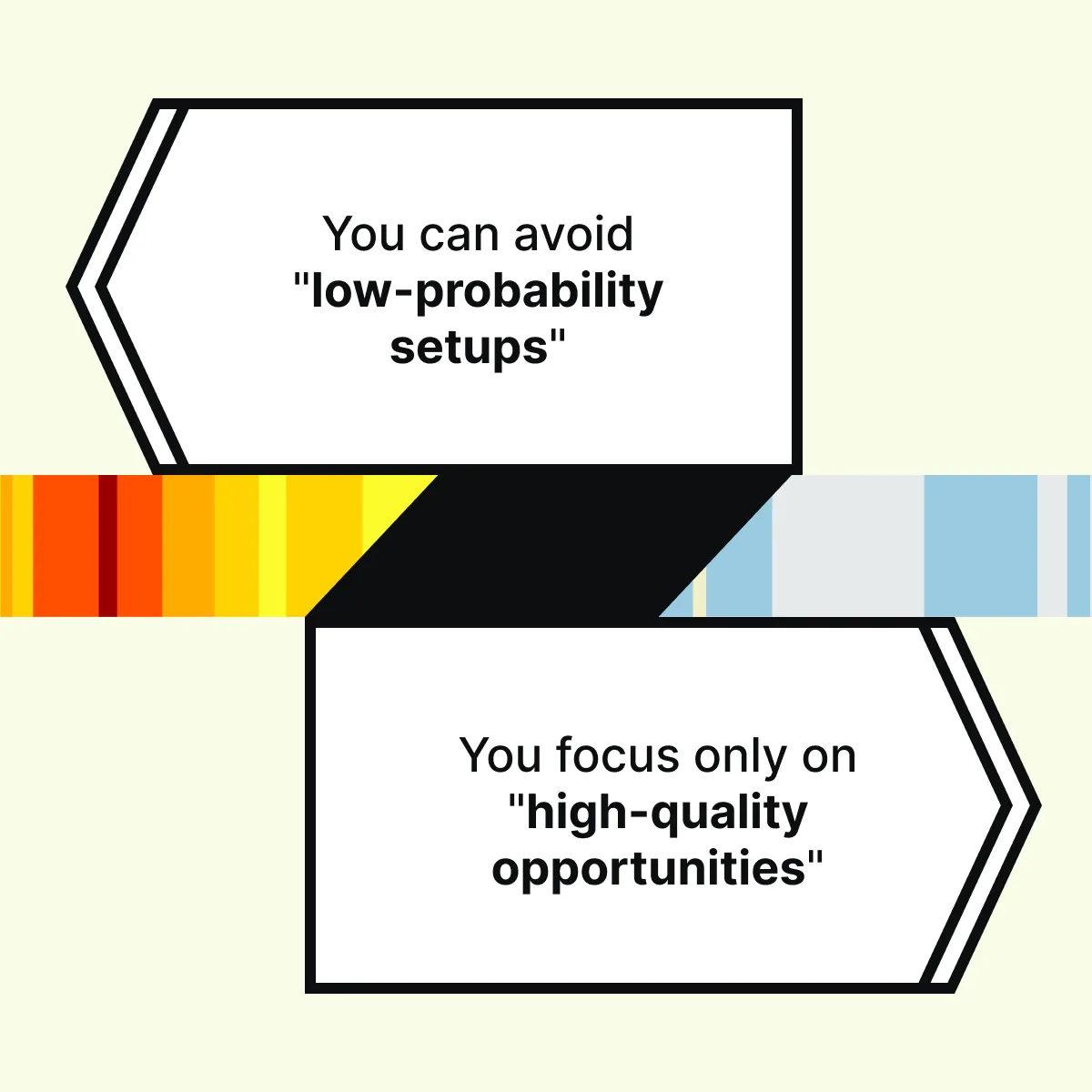
Surviving choppy markets requires recognizing that chop creates significant random price movement. Taking every possible trade can lead to losses. So, instead, focus on fewer trades with a 100% clear purpose. Through “selective participation,” a trader can stay engaged without getting caught in the noise. The following diagram explains this concept in detail:
Selective Participation
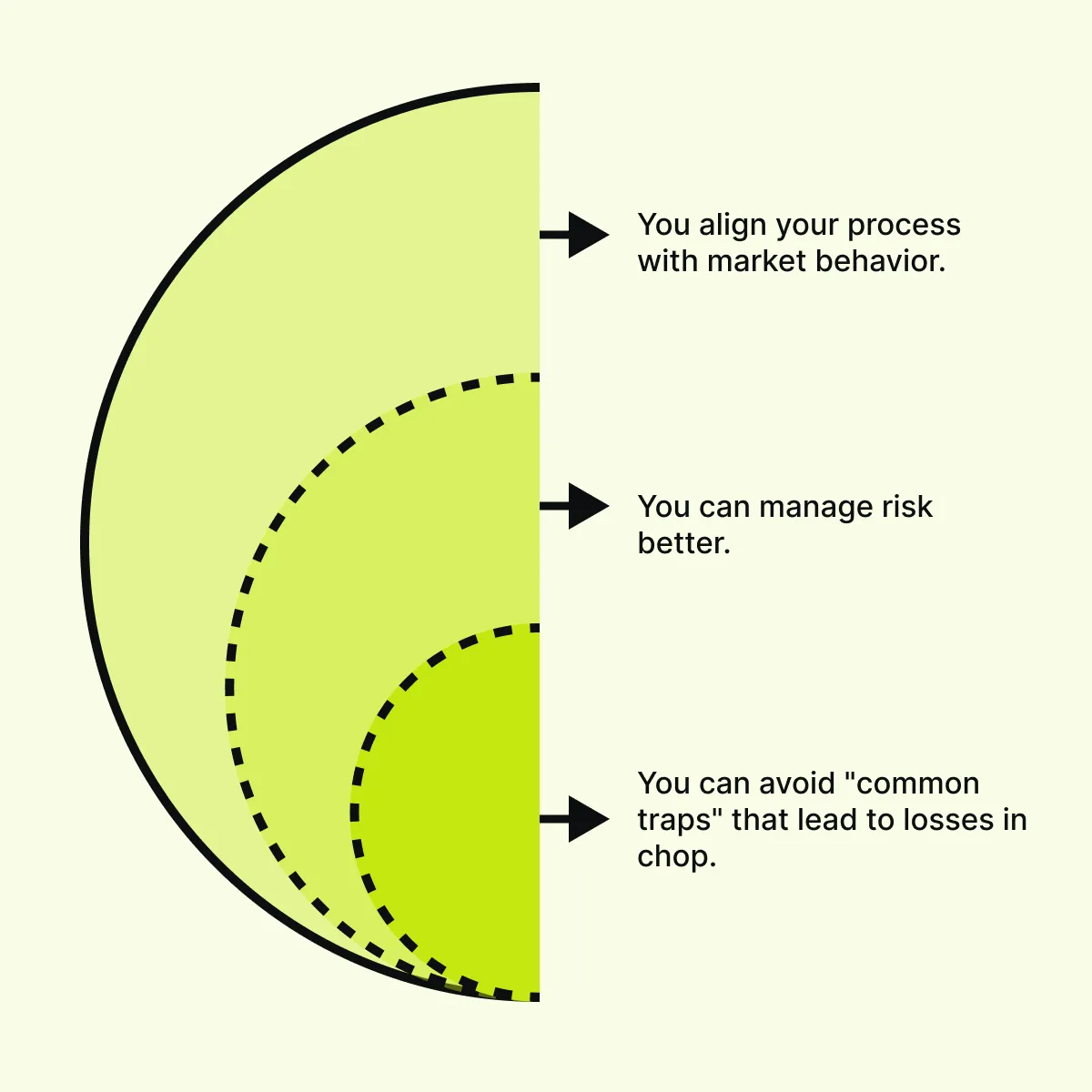
By trading less often, traders can:
- Carefully analyze each opportunity
and
- Make decisions based on market structure rather than emotion.
This approach enables traders to notice patterns and stop reacting to every small swing. Note that over-participation always amplifies noise. When traders attempt to trade every rotation inside a range, it results in entering and exiting trades unnecessarily.
As a result, each minor swing can trigger stops or small losses, which add up. Over-participation also creates mental fatigue! And that’s why patience is highly important. Traders must wait for “high-probability setups” at the extremes of the range. This ensures they only take trades where the odds are more favorable.
For example:
- A trader does not try to trade every back-and-forth move inside a range.
- Instead, they wait for the price to reach the top or bottom of the range.
- Next, they take a small rotation trade.
- This results in fewer mistakes while remaining selectively engaged.
Step Three: Anchor Decisions to Structure, Not Momentum
In choppy markets, momentum cannot be relied on. That’s because price may move for a short time, but those moves usually fade just as fast. This is a common reason why traders lose money in chop. They react to short bursts of strength or weakness that do not continue.
Instead, they should start analyzing market structure. It helps identify where the market has already accepted or rejected prices. In choppy markets, using structure allows decisions to be based on stable reference points rather than emotional price movement.
Structural Anchors to Emphasize
In choppy markets, focus should be on areas the market has repeatedly respected. These areas can be identified through three methods:
| Method I: Prior Highs and Lows Within the Range | Method II: Value Areas Where Price Repeatedly Trades | Method III: Zones Where Participation Previously Stalled |
|
|
|
To further clarify this concept, consider the following example:
-
- Assume that the price briefly moves up in a choppy market.
- Next, wait for the price to return to a previously accepted area.
- Also, observe how price behaves there – Does it slow down, reject, or hold?
In such an approach, traders make decisions based on market structure rather than momentum. The primary advantage is reduced reaction to false signals.
Step Four: Use Time as a Filter
When trading in choppy markets, many traders focus only on price levels or momentum. They make the mistake of ignoring time, which can be a powerful clue.
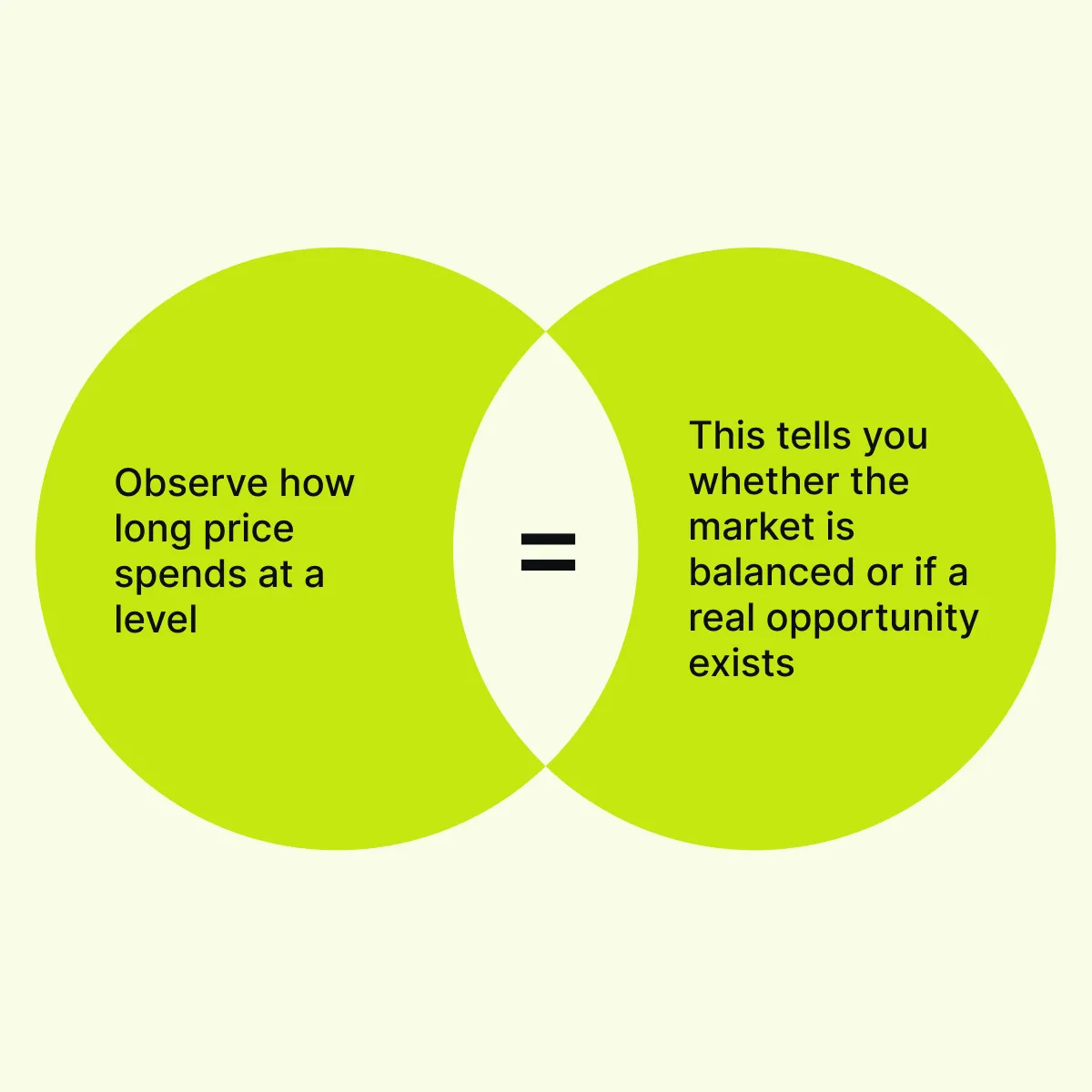
It’s worth noting that in chop, the price can hover in one area for a long time. When this happens, it signals indecision rather than a strong move.
Why Time Matters
The importance of time can be understood through three market scenarios:
| Scenario I: Fast Moves Signal Initiative | Scenario II: Slow Movement Signals Negotiation | Scenario III: Extended Time at a Level Reduces Edge |
|
|
|
For Example:
- Assume that the price takes twenty minutes to move just a few points.
- In this case, the chances of strong continuation are low.
- Instead of chasing it, a trader should recognize that the market is choppy.
- Next, they should adjust expectations and focus on “structure-respecting trades”.
Using time as a filter helps separate real opportunities from noise.
Step Five: Define Clear No-Trade Conditions
A strong trading process isn’t just related to when to enter. Instead, it also defines when not to trade. In choppy markets, this is particularly important because taking trades in the wrong conditions can:
- Eat up capital
and
- Harm decision-making.
Not trading isn’t laziness or fear. Instead, it is an active choice that protects both capital and mental clarity. Read about the benefits and examples of no-trade conditions for better clarity.
Examples of No-Trade Conditions
| I) Price Oscillating Tightly Around a Central Value | II) Repeated Failed Breaks in Both Directions | III) Conflicting Participation Signals |
|
|
|
Common Process Errors in Choppy Markets
One defining characteristic of choppy markets is their ability to expose weaknesses in a trading process much faster than trending markets. That’s because when price lacks direction and keeps rotating, small mistakes become expensive.
Is the problem not due to discipline? The real issue is mismatched expectations and unclear decision rules. This is a major reason why traders lose money in chop. For a better understanding, check out three different process errors traders must avoid in choppy markets:
Overtrading Due to Lack of Structure

In choppy markets, the price moves but does not go far. This constant movement creates the illusion of opportunity. Without structural rules, traders start entering trades simply because the price is active.
Each small up-and-down move feels like a setup, even though the market offers no real edge. For example:
-
- Assume that the price oscillates inside a tight range.
- The trader buys, sells, buys again, and sells again as the price rotates.
- Now, each trade is small, but losses and costs keep adding up.
- The problem is not poor execution.
- Instead, the problem is the absence of rules that define when not to trade.
Overtrading in chop drains mental capital faster than financial capital. Also, it leads to rushed decisions and emotional fatigue.
Forcing Direction Where None Exists
In range-bound market trading, several traders keep predicting the breakout instead of accepting the current condition. As a result,
- They buy strength, expecting continuation.
and
- They sell weakness, expecting a reversal.
Both fail because neither buyers nor sellers are in control. For example:
- Suppose price breaks above a “range high” three times in one session.
- Each breakout fails.
- In response, the trader increases position size each time.
- They are convinced the “real move” is coming.
- But losses grow because expectations are based on hope rather than structure.
This mistake happens when traders treat chop as a “temporary delay” instead of recognizing it as a valid market condition. See why some days are not meant to be traded → Compare Packages.
Using Trend-Based Risk and Targets in Rotational Markets
One of the most damaging mistakes in trading in choppy markets is using trend-style risk and targets in a market that is clearly rotating. Many traders do not adjust their trade plan when conditions change. As a result, even good entries fail.
Most traders fail to understand that in range-bound market trading, the price moves back and forth within a limited zone. Thus, large stops and distant profit targets do not fit this environment. The following points explain what goes wrong:
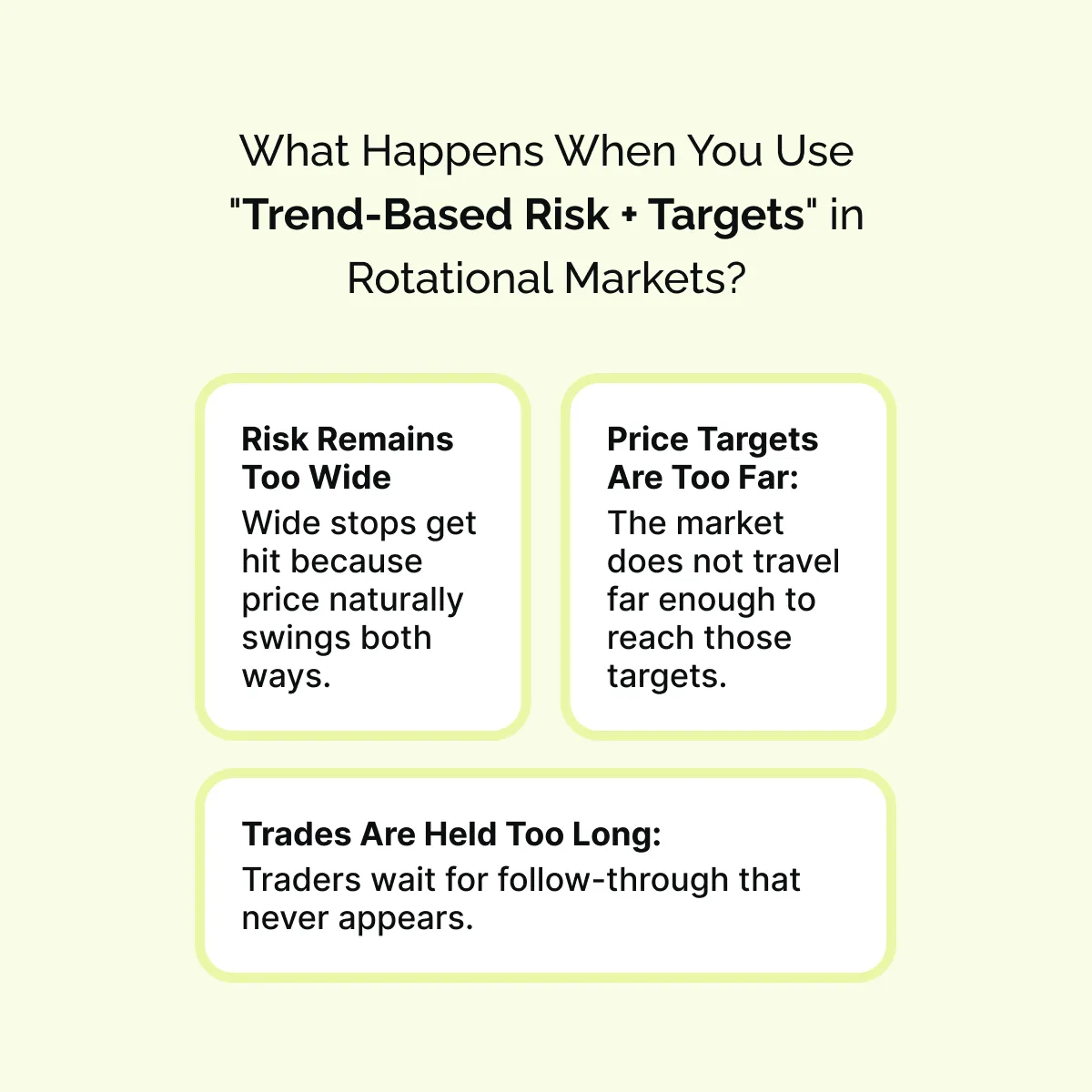
For example:
- Suppose a trader risks ten points in a market that rotates only five points up and down all day.
- Even when the entry is correct, the structure cannot support the trade.
- Losses occur not because of bad timing, but because expectations are wrong.
This explains why traders lose money in chop. The issue is not discipline or execution. It is using a trend-based framework in a non-trending market.
Conclusion
Choppy markets are not meant to be conquered. Instead, they must be managed and survived. In such situations, focus should be on protecting capital and decision quality rather than making big profits. Moreover, instead of chasing momentum, traders must try to spot clear levels, do selective participation, and define no-trade rules.
Also, waiting is part of the job, and small and controlled trades, or no trades at all, are valid outcomes. This approach supports disciplined execution in choppy markets.
Traders who preserve their process during low-conviction conditions are mentally and financially prepared to perform when higher-quality opportunities return. Build a trading process that adapts to liquidity and participation → Compare Plans.
FAQs
1. Why do choppy markets feel harder than trending markets?
That’s because price does not move smoothly. In such conditions,
- Breakouts fail,
- Targets are missed, and
- Trades take longer to work.
As a result, expectations keep getting violated, which creates frustration. Also, trading in choppy markets is usually “mentally demanding”.
2. Should traders stop trading entirely in chop?
No, traders should not stop completely, but they must trade less. Participation should be selective based on clear levels. Fewer and well-planned trades can also reduce noise.
3. Can any strategy work in choppy markets?
It has been observed that trend-following strategies struggle in chop. Only strategies built for rotation, balance, and limited movement may work well in range-bound market trading.
4. How can traders tell when the chop is ending?
A market chop starts ending when:
- Price moves faster,
- Overlaps reduce, and
- One side shows clear control.
These changes signal that balance is breaking and conditions are improving.
Sign Up Now