


See trading more clearly in real time.
Compare plans to access deeper market visibility for trading.
Education
January 11, 2026
Updated
Top Trading Algo Bots: Automating Your Trading Strategy
Algorithmic trading has become a core part of modern markets, allowing traders to automate execution, enforce discipline, and react to market conditions faster than manual trading allows. Trading algo bots are used across crypto, stocks, futures, and forex to execute predefined strategies without emotional interference.
In this article, we’ll explain how trading algo bots work, where they perform well, where they struggle, and how traders can combine automation with real-time market analysis to improve execution quality and risk control.
Table of Contents
- What Are Trading Algo Bots?
- Best Automated Trading Bots in 2026
- Algorithmic Trading Software Explained
- How to Start Algorithmic Trading for Beginners
- Building vs Buying an Algo Trading Bot
- Historical Backtesting and Data Infrastructure
- How Bookmap Complements Automated Trading
- Best Algo Bots for Stocks, Futures and Crypto
- Pros and Cons of Trading Bots
- Conclusion
- FAQ
Best Automated Trading Bots in 2026
The landscape of automated trading systems has expanded quickly, and traders often ask which bot is currently considered the best automated trading bot. The answer depends on the market you trade and the strategy you use. In 2025, traders tend to evaluate bots based on execution speed, customization, data access, and compatibility with algorithmic finance workflows. Some bots are built for crypto markets, while others are optimized for futures or forex. The core idea is that a good bot should follow your parameters systematically, manage risk efficiently, and react faster than manual execution.
Algorithmic Trading Software Explained
Algorithmic trading software allows traders to automate the execution of predefined strategies instead of manually placing every order. Rather than reacting emotionally to market movements, these systems follow rule-based logic to enter, manage, and exit positions.
Modern algorithmic trading ranges from simple moving-average crossover systems to sophisticated quantitative models that evaluate multiple variables simultaneously. Depending on the platform, traders may automate:
- trade entries and exits
- position sizing
- portfolio rebalancing
- risk management
- execution timing
While some traders build highly customized quantitative trading systems, others use existing platforms that provide automation without requiring advanced programming knowledge.
Regardless of complexity, successful algo trading relies on well-tested rules rather than discretionary decision making.
What Are Trading Algo Bots?
What Trading Algo Bots Can and Cannot Do
Trading algo bots are designed to automate execution, not decision-making. They follow predefined rules based on price, indicators, or order logic, and execute trades consistently when conditions are met. However, they do not understand context, intent, or changing market structure unless explicitly programmed to account for it.
Bots perform best when they are used to automate a well-defined strategy that has already been validated. They tend to perform poorly when markets shift regimes, liquidity conditions change abruptly, or volatility increases beyond what the strategy was designed to handle
Trading Algo Bots are “automated systems.” These bots automatically perform trades for traders or investors based on pre-set
- Rules,
- Trading strategies, and
- Technical indicators.
For example, say there is a “moving average crossover bot.” It is specifically programmed to buy when a short-term moving average (e.g., 50-day) crosses above a long-term moving average (e.g., 200-day). The bot can also react to other technical indicators, such as a volume spike.
It must be noted these bots are specifically designed to make trading decisions and execute trades much faster than humans. Also, they remove emotional biases that often lead to poor decision-making. For more clarity, let’s check out some key features of trading bots:
| Speed | Efficiency | Emotion-free |
|
|
|
Are Trade Algo Bots Profitable?
Profitability varies widely and depends on the quality of the strategy, market conditions, and the type of algorithmic trading software used. A quant trading bot may outperform during stable conditions but struggle during high volatility if it is not designed to adapt. Traders tend to see the most consistent results when bots are paired with real-time data and clear rules for risk management. Profitability also improves when traders treat bots as tools that automate an already proven strategy rather than something that “finds” trades on its own.
Why Data Quality and Market Context Matter for Algo Trading
Execution quality plays a major role in algorithmic trading performance. Even a well-designed strategy can underperform if it operates on delayed, aggregated, or incomplete market data. Bots that rely purely on indicators without understanding liquidity conditions may enter trades during unfavorable moments, increasing slippage and execution costs.
This is why many traders pair automated execution with real-time market visualization tools. Seeing how liquidity behaves, where orders cluster, and how price reacts at key levels helps traders adjust bot parameters and avoid deploying automation in unstable conditions.
Are you looking for more efficient ways to trade? Check out our powerful Algo trading tools for precise, real-time data analysis.
How to Optimize Trading Efficiency

Trading bots are excellent at automating tasks. However, they perform best when combined with real-time market analysis tools, such as our tool Bookmap. This tool offers a deep visual analysis of
- Market liquidity,
- Order book data,
and
- Real-time trades.
By using our tool, traders can get a more detailed picture of market activity. This information helps to fine-tune the bot’s strategies and improve decision-making accuracy.
Rather than replacing trader judgment entirely, many professionals use automation to improve execution quality while continuing to monitor liquidity, volatility, and changing market conditions. Combining automated execution with real-time market visualization provides greater confidence when deploying quantitative strategies in live markets.
See what bot activity looks like on the heatmap
5 Best Algo Bots for Futures & Stocks Trading
Below is a list of 5 best algorithmic trading bots you can consider while putting money in futures or trading in stocks:
1. Hummingbot

Hummingbot is an “open-source” trading bot. It is specifically designed for automating trading strategies in a variety of markets, such as cryptocurrency, futures, and traditional assets. This bot supports different strategies, like market-making and arbitrage. For more clarity, let’s check out some of its key features:
| Open-Source Platform | Supports Multiple Markets | Multi-Strategy Compatibility |
or
|
|
|
For a greater understanding, let’s check out some examples and see how you can execute popular trading strategies using Hummingbot:
- Market-Making Strategy
-
-
- A trader sets Hummingbot to continuously place buy orders at $9.90 and sell orders at $10.10.
- When the market moves within this range, the bot captures the spread.
- In this way, the trader earns a small profit each time the market fills the orders.
-
- Arbitrage Strategy
-
- A cryptocurrency might be priced at $1,000 on one exchange and $1,020 on another.
- Arbitrage bots buy low on the cheaper exchange and sell high on the more expensive one.
2. MetaTrader Expert Advisors (EAs)
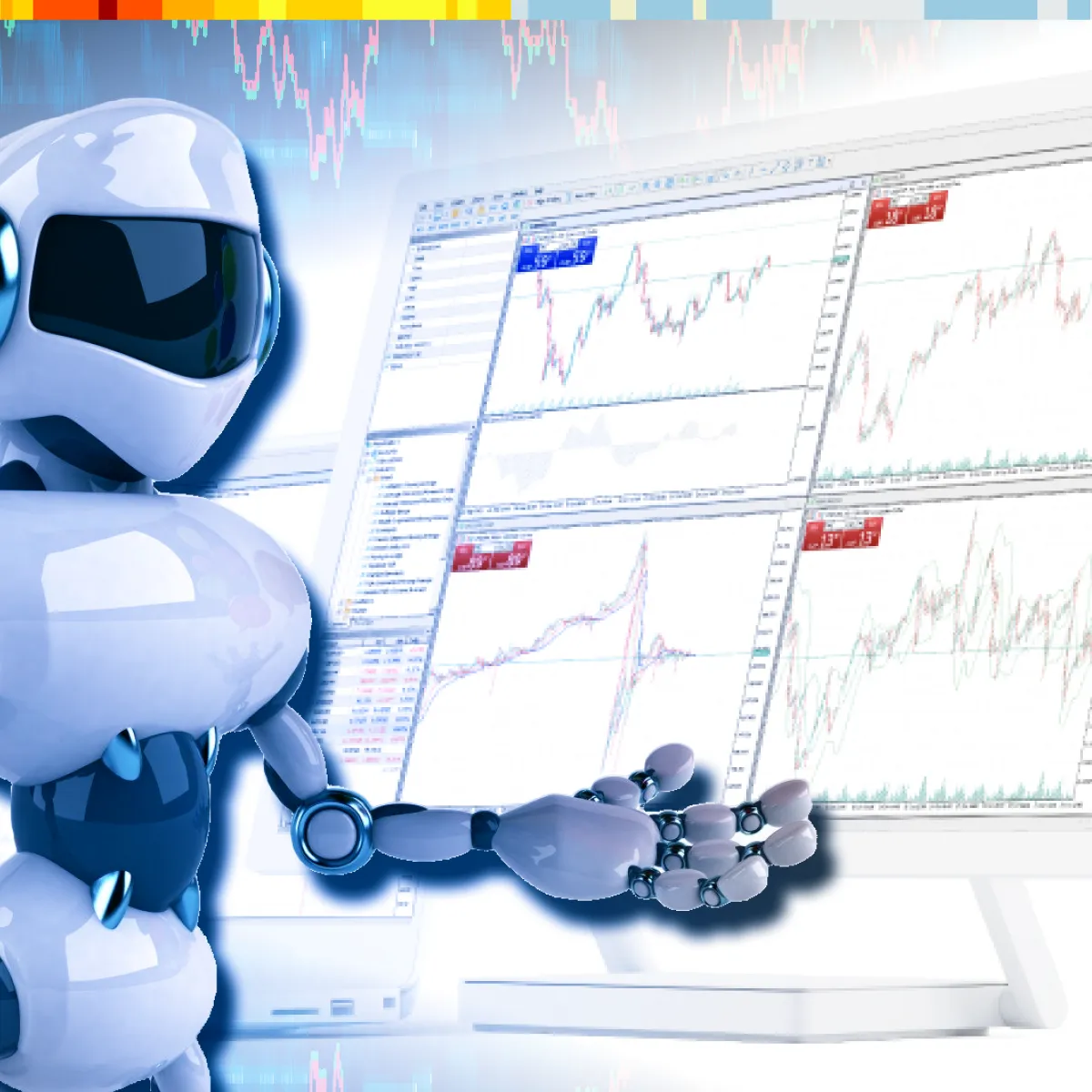
Expert Advisors (EAs) are algorithmic trading tools. They are available on MetaTrader platforms (MT4 and MT5). These EAs automate trading strategies based on predefined rules or technical indicators. They are particularly popular among forex and futures traders. Let’s check out some key features of MetaTrader EAs:
| Automated Trading | Customizable | Backtesting |
|
|
|
Now, let’s study an example:
- Say a trader sets up an EA to trade S&P 500 futures based on Fibonacci retracement levels.
- When the price reaches a retracement level (e.g., 61.8% or 38.2%), the EA automatically places a buy or sell order.
- The trade is executed with precision and without emotional interference.
Program your trading bots with MetaTrader EAs and back them up with real-time market data from our platform for better results.
How to Build a Trade Algo Bot
Building vs Buying a Trading Algo Bot
Traders generally choose between building their own algo bots or using prebuilt platforms. Building a bot provides full control over logic, data inputs, and risk management but requires technical expertise and ongoing maintenance. Prebuilt bots reduce setup time but limit flexibility and transparency.
Many experienced traders combine both approaches by using automation for execution while retaining manual control over strategy selection, deployment timing, and risk limits.
Building your own trade algo bot requires defining the logic behind your entries and exits, selecting the right data inputs, and writing a script that executes trades automatically. Many traders build bots using Python scripts due to its flexibility and access to financial libraries. Others use platform-specific languages such as MQL4 or MQL5 for MetaTrader. Regardless of the language, you must outline rules for risk, order size, and scenario handling so the bot operates reliably in live markets.
3. Zenbot
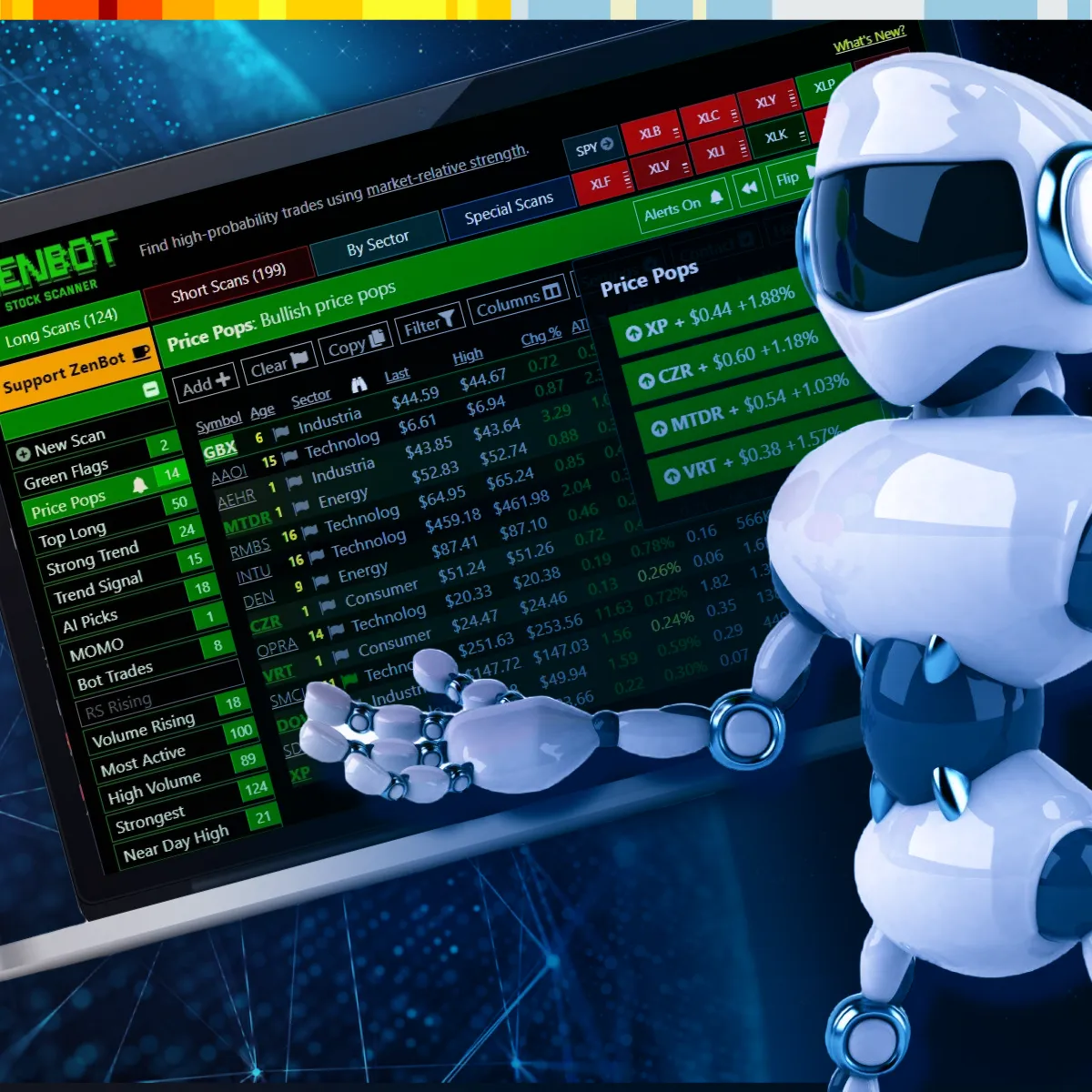
Zenbot is an open-source and lightweight algorithmic trading bot. It provides traders with flexibility and control over their trading strategies. This is built for both backtesting and live trading. It covers various markets, like cryptocurrencies, stocks, and other asset classes. Unlike some other trading bots, Zenbot is highly customizable. It is an ideal choice for traders who want full control over their automated trading strategies. Now, let’s look at some of Zenbot’s key features.
| Open-Source and Lightweight | Multi-Market Support | Backtesting Capabilities |
|
|
|
Now, let’s study an example:
- Say a cryptocurrency trader configures Zenbot.
- The bot will execute trades based on support and resistance levels.
- When the price of Bitcoin touches a support level, the bot automatically places a buy order.
- In contrast, when the price reaches a resistance level, it executes a sell order.
- This ensures that trades happen instantly, without manual intervention.
Quant Trading Bots and Algorithmic Finance Tools
Quant trading bots are designed to incorporate statistical, mathematical, or multi-factor models into automated trading. They are popular in algorithmic finance because they can process large datasets quickly and execute trades based on probabilities rather than emotion. These bots often use machine-readable data, volatility measures, or predictive signals. Whether traders use them for stocks, crypto, or futures, the goal is to let the bot reduce reaction time and enforce discipline.
Many quantitative trading systems also incorporate portfolio-level risk management rather than evaluating each trade independently. Position sizing, exposure limits, diversification, and volatility adjustments can all be automated, helping traders maintain consistency across multiple markets and strategies.
4. 3Commas
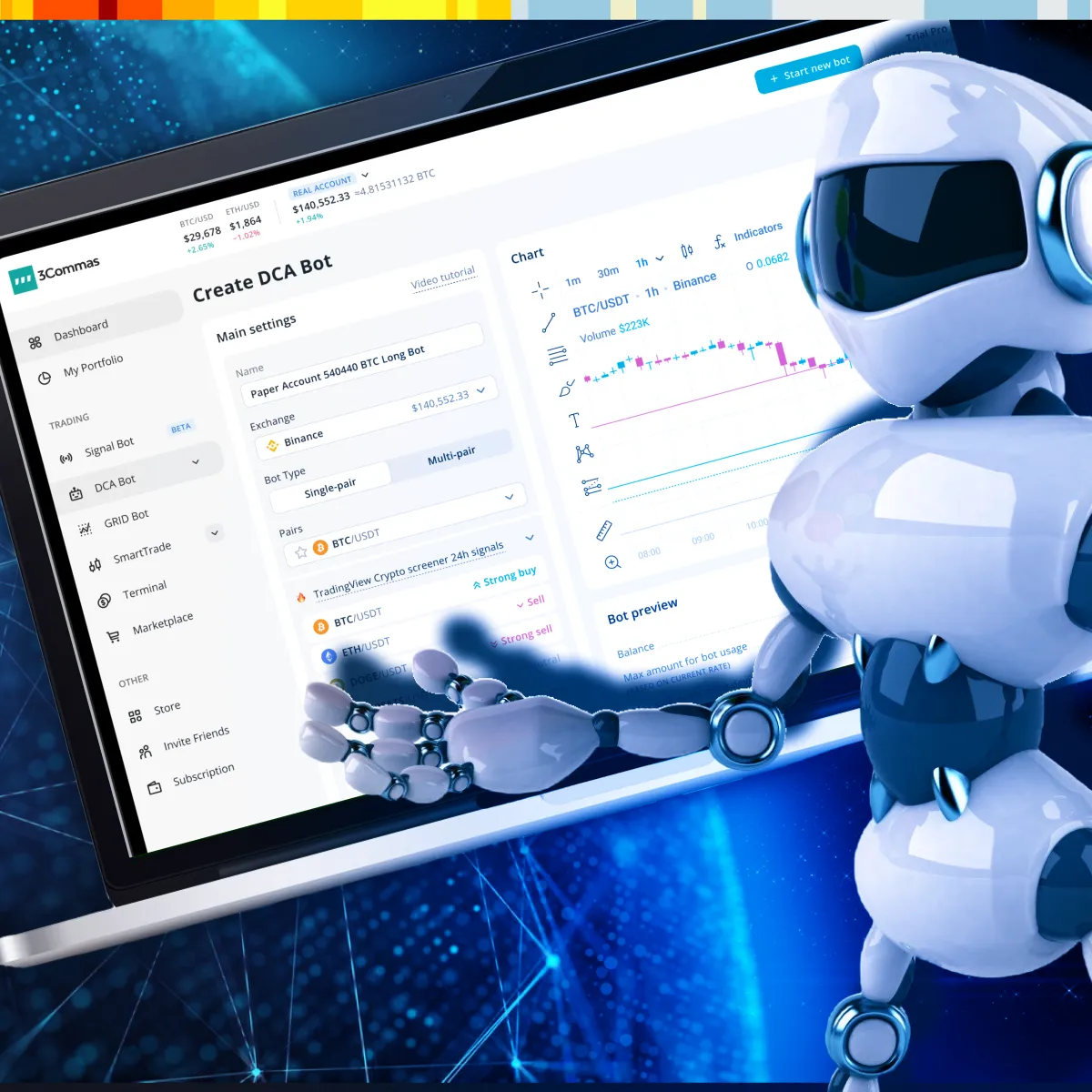
3Commas is a versatile trading platform. It provides access to advanced trading bots designed to automate strategies in both cryptocurrency and stock markets. It’s highly regarded for its user-friendly interface.
This bot allows traders to:
- Build and manage their trading bots
or
- Use pre-configured ones based on popular strategies
3Commas is particularly appealing to those who want to automate routine tasks like executing trades across multiple platforms. Let’s check out some key features of 3Commas:
| Smart trades | Cross-platform trading | Automatic strategy execution |
|
|
|
Furthermore, traders must note that “grid trading” is one of the most popular strategies on 3Commas. This strategy entails adding buy and sell orders at intervals above and below the current price. Traders using this strategy earn profits from small price movements in a volatile market.
For example,
- Say a trader is doing futures trading.
- They configure 3Commas to automatically buy when prices drop and sell when they rise within certain levels (grid).
- Now, based on the instructions, the bot would place orders at predetermined intervals (or “grids”) around the current price.
- By repeating this process within the grid’s range, the trader takes advantage of frequent and small fluctuations without manually placing orders.
5. Shrimpy
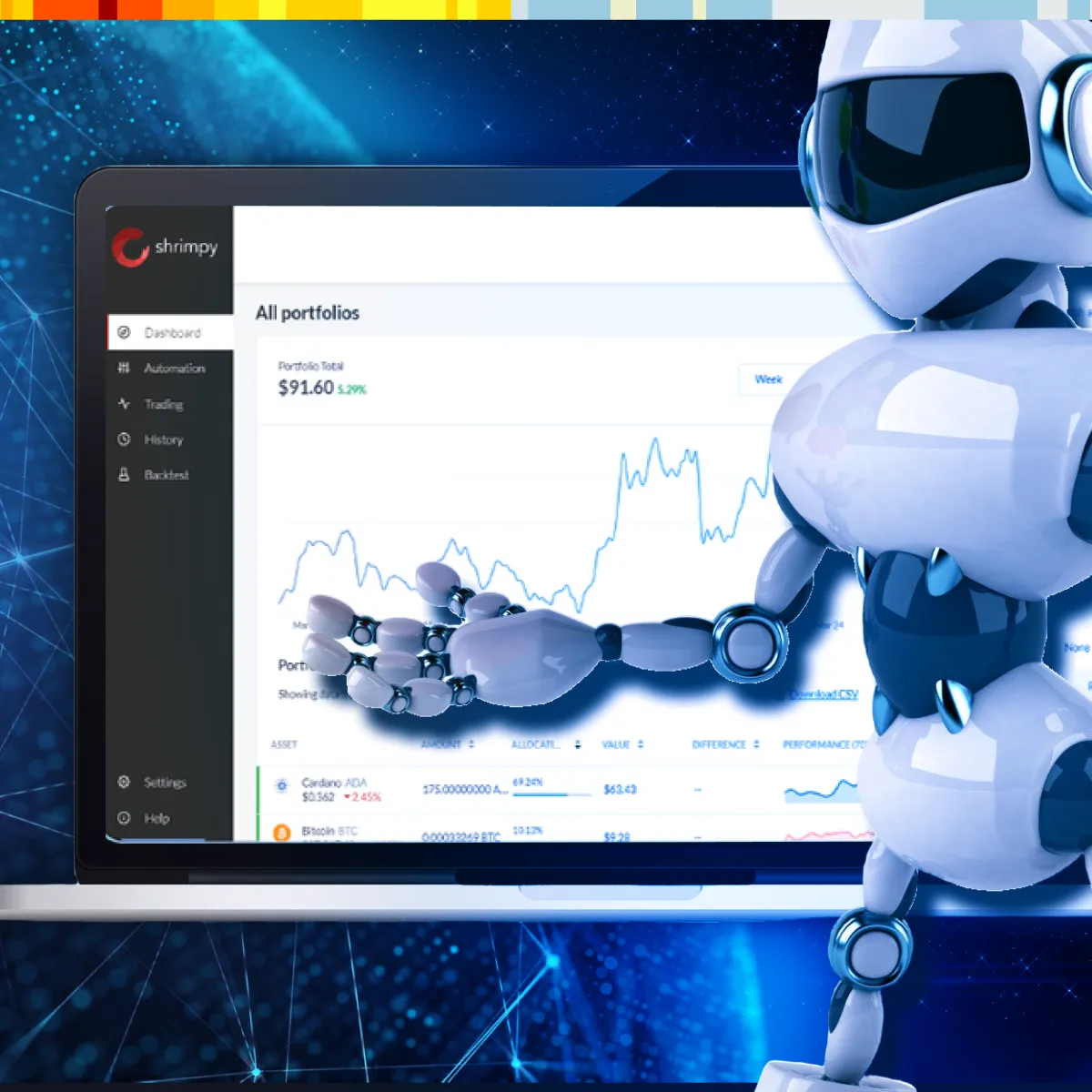
Shrimpy is a cryptocurrency trading platform. It is designed specifically to help traders automate portfolio management. It includes unique features like “rebalancing” and “strategy testing.” Shrimpy is an ideal tool for long-term investors who want to maintain and optimize their crypto portfolios across multiple exchanges. Let’s study some key features of Shrimpy:
| Portfolio management | Automated rebalancing | Backtesting |
|
|
|
It must be noted that one of the primary use cases for Shrimpy is automating portfolio rebalancing. Rebalancing one’s portfolio is important for maintaining the optimal asset allocation. For example,
- Say a trader’s target is to hold 50% Bitcoin and 50% Ethereum.
- However, due to price changes, Bitcoin’s share increases to 60%.
- Now, Shrimpy will automatically sell some Bitcoin and buy Ethereum to restore the balance.
Spot market-making bots with Tradermap
How to Start Algorithmic Trading for Beginners
For traders new to automation, the goal should not be building a complex high-frequency trading system immediately. Instead, begin with a simple strategy that already performs consistently when traded manually.
A typical progression looks like:
- Learn the trading strategy.
- Define objective entry and exit rules.
- Backtest the strategy using historical data.
- Automate execution.
- Monitor performance in simulation before deploying live.
Python remains one of the most popular programming languages for algorithmic trading because of its extensive financial libraries and active developer community. Platform-specific languages such as MQL4, MQL5, or Pine Script are also widely used depending on the trading environment.
The most successful automation projects usually begin with a profitable trading idea—not with code.
Historical Backtesting and Data Infrastructure
Before deploying any trading algorithm, traders should evaluate how it performs across different market conditions using historical data.
Backtesting allows traders to determine whether a strategy remains consistent across:
- trending markets
- ranging markets
- high volatility periods
- low liquidity environments
- changing market regimes
Reliable backtesting depends on accurate historical market data and realistic assumptions about slippage, commissions, and execution quality.
Some quantitative traders also incorporate machine learning techniques to improve model selection or optimize parameters. However, these approaches still require robust validation to avoid overfitting historical data.
Backtesting cannot predict future performance, but it remains one of the most important stages in developing any systematic trading strategy.
Crypto Trade Algo Bots vs Forex Algo Trading Bots
Crypto trade algo bots typically focus on fast-moving markets, liquidity fragmentation across exchanges, and 24/7 execution. Forex algo trading bots operate differently because they must handle macro events, session volatility shifts, and deep liquidity pools. While both rely on automation, crypto bots often emphasize exchange arbitrage and momentum logic, while forex bots lean more on technical models, economic releases, and volume-dependent strategies.
How Traders Identify Algorithmic and Market-Making Activity
Algorithmic and market-making activity leaves structural footprints in the order book and execution flow. Rather than trying to “detect bots” directly, traders analyze how liquidity appears, absorbs volume, or pulls away during price movement. This behavior often reflects automated execution rather than discretionary trading.
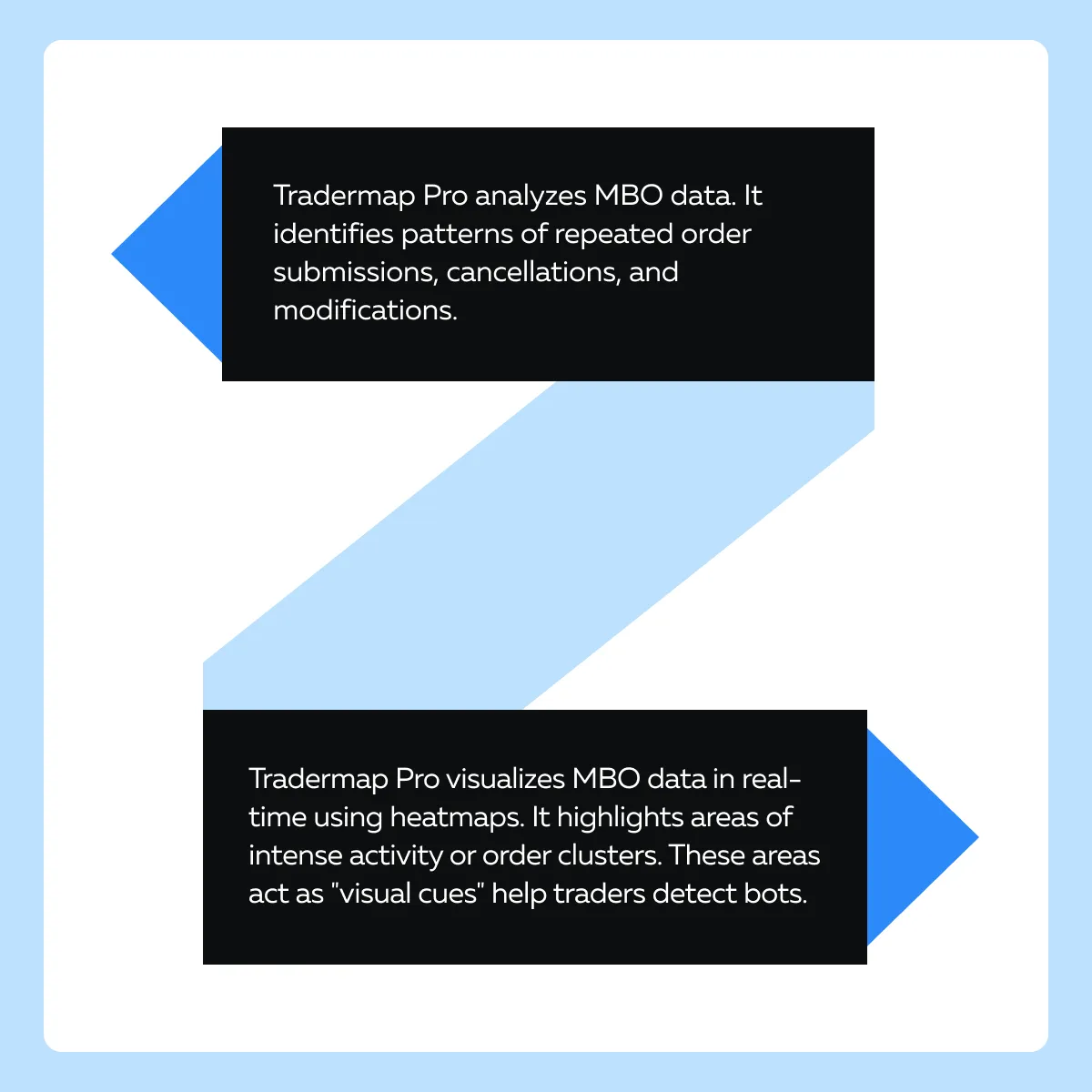
Also, Tradermap Pro creates heatmaps. These heatmaps highlight areas of significant market-making activity. By analyzing them, traders can easily spot bot-driven patterns that might otherwise be invisible. For more clarity, see the graphic below to learn how it works:
Get a clear view of market maker activity with Tradermap Pro. Start now! Apart from TraderMap Pro, we also offer its simplified version, “Tradermap Lite.” It is ideal for traders who want a more streamlined solution. This tool focuses on identifying market maker bot activity, specifically in futures markets, such as
- ES (S&P 500 Futures)
and
- NQ (Nasdaq 100 Futures).
While it offers fewer features, it is highly effective for traders who need a quick way to detect bots and focus on liquidity pockets. Discover how Tradermap Lite can help filter out market-making bots for a cleaner view of order flow. Test it out today!
Best Trade Algo Bots 2025: What Traders Look For
When traders search for the best trade algo bots 2025, they typically evaluate execution reliability, compatibility with their broker or exchange, customization options, and whether the bot can integrate with real-time data tools. Some bots excel at grids or scalping, while others are optimized for swing trading or arbitrage. The “best” bot varies by use case, which is why traders should identify the market they want to trade first. This helps determine whether they need a bot designed for crypto, futures, stocks, or forex.
Matching Algo Bots to Market Conditions
Not all trading environments favor automation. Algo bots tend to perform best in stable, liquid conditions where execution logic behaves predictably. During news events, volatility spikes, or regime shifts, manual intervention or reduced automation is often necessary.
Successful traders treat algo bots as execution tools, not autonomous decision-makers. They deploy bots selectively, adjust parameters as conditions change, and monitor performance continuously.
Highly automated strategies often perform best in liquid markets where execution quality remains consistent. During major economic announcements or periods of rapidly changing liquidity, some traders temporarily reduce automation or switch to manual execution until market conditions stabilize.
Pros & Cons of Using Algo Bots for Trading
Firstly, let’s talk about some pros. Algo bots execute trades much faster than human traders. They process large amounts of data and react almost instantly to market changes. These bots are especially beneficial in high-frequency trading, where even milliseconds matter. Some other pros of algo bots are:
- Reduced Emotion
-
-
- Trading bots eliminate the emotional component of trading decisions.
- Be aware that fear, greed, or hesitation can lead to poor trading or delayed decision-making.
- Bots rely solely on data and pre-set rules.
- Thus, they execute better deals and earn more returns.
-
- Consistency
-
- Bots strictly follow predefined algorithms consistently.
- They trade in a disciplined manner without deviation from the plan.
- This consistency is particularly helpful in following strategies like scalping, arbitrage, or grid trading.
Now, to give you a neutral view, let’s focus on some of its cons.
- Don’t Put Over-Reliance
- Placing complete reliance on bots without manual oversight can be dangerous.
- This risk increases even more during unforeseen market conditions.
- It must be noted that if the bot encounters an unexpected situation, it may not perform optimally.
- Bots Underperform During Market Volatility
- Bots often struggle in highly volatile markets.
- Unexpected changes in the mood of the market or catalytic events often lead to losses if the algorithm isn’t designed to adapt quickly to such changes.
Conclusion
Algo bots offer traders speedy and emotion-free decision-making. By automating trading strategies, bots even maintain discipline and consistency in execution. Some top trading bots are 3Commas, Zenbot, Shrimpy, and MetaTrader EAs. However, traders need to be cautious about over-relying on bots, especially in volatile markets where bots may not adapt well to sudden changes.
To optimize the effectiveness of algo bots, traders can integrate them with advanced market analysis tools like our platform Bookmap and our popular add-ons “Tradermap Pro” and “Tradermap Lite.” These tools easily detect market-making bots and provide insights into market liquidity and activity.
By using Tradermap Pro, traders can filter out large institutional orders and adjust their strategies accordingly. On the other hand, Tradermap Lite helps day traders focus on liquidity pockets by identifying and excluding artificial bot activity.
Are you ready to automate your trading? Try out Tradermap Pro today on our platform to gain a deeper insight into market makers’ activity in futures markets.
FAQ: Choosing and Using Trading Algo Bots
Are you looking to buy, build, or learn about trading bots?
Determining your goal is the first step. Whether you want educational material, a ready-made trading bot, or tools for custom scripting, identifying your objective helps narrow down the best solution.
Which market do you want to trade: stocks, crypto, or forex?
Each market behaves differently in terms of liquidity, volatility, and execution speed. These factors influence what type of automated trading system is most effective.
Are you looking for a specific trading strategy bot?
Trading bots can specialize in trend following, grid trading, arbitrage, market making, and many other strategies. The best choice depends on your preferred trading style and risk tolerance.
Can I use Python to build a trading bot?
Yes. Python is one of the most popular languages for building automated trading bots thanks to its extensive data-analysis libraries, clean syntax, and strong community support.
Are trading algo bots suitable for beginners?
Algo bots can be useful for beginners, but only when paired with a clear understanding of the underlying strategy. Automating a poorly defined approach often leads to losses faster, not better results.
How do traders backtest an algo trading strategy?
Backtesting involves running a strategy against historical market data to evaluate performance across different conditions. Reliable backtesting requires high-quality data and realistic assumptions about slippage and execution.
How can traders avoid overfitting trading algorithms?
Overfitting occurs when a strategy is tuned too closely to past data. Traders reduce this risk by testing strategies across multiple market conditions, limiting parameter complexity, and validating results on out-of-sample data.
Do algo bots work across all asset classes?
Algo bots can be used in stocks, futures, forex, and crypto, but each market has different liquidity structures, volatility profiles, and execution constraints that must be accounted for in the strategy design.
Are you focused on coding custom scripts or utilizing no-code platforms?
Both approaches have advantages. Developers often prefer custom scripting for maximum flexibility, while no-code platforms allow traders to automate strategies more quickly without extensive programming knowledge.
Which asset class such as futures, equities, or cryptocurrencies are you targeting?
The optimal trading bot depends heavily on the market being traded. Crypto bots often emphasize exchange connectivity and 24-hour markets, while futures and equities typically prioritize execution quality, liquidity analysis, and broker integration.
Do you need institutional low-latency execution infrastructure or retail tools?
Retail traders often prioritize usability and flexibility, while institutional firms may require FIX connectivity, colocated servers, and ultra-low-latency execution infrastructure.
Are you researching statistical arbitrage methods or trend-following strategies?
Algorithmic trading supports many different approaches, including trend following, mean reversion, statistical arbitrage, market making, and execution algorithms. The right choice depends on the trader’s objectives and the markets being traded.
Is your objective historical strategy backtesting or real-time live deployment?
Many traders begin with historical testing before moving into simulated trading and eventually live execution. Validating performance at each stage helps identify weaknesses before real capital is at risk.
Sign Up Now
Latest Articles