


See order flow more clearly in real time.
Compare plans to access deeper market visibility for order flow.
Education
February 12, 2026
What a “Finished Auction” Really Looks Like in Order Flow
What is the right way to interpret price swings in the market? They are a part of an “ongoing auction”. And in this auction, buyers and sellers negotiate value. Now, some of these auctions finish cleanly, while others pause midway and leave unfinished business behind.
How to spot this? Most traders use candles, indicators, or track momentum shifts. But these tools don’t answer one deep question:
- Has the market actually completed its work at this price?
This is where the concept of a “finished auction order flow” becomes highly important. A completed auction involves buyer and seller participation, price testing, and achieving a resolution. Want to understand in detail? In this article, you will learn how to recognize finished versus unfinished auctions using order flow and market profile context. By understanding these signals, you can avoid premature fades and spot weak highs and lows. Read this article till the end to frame better expectations for continuation or rotation in future sessions.
What an Auction Is Trying to Accomplish
Financial markets work like a “continuous auction”. Yes, both buyers and sellers keep placing orders at different prices. As a result, price fluctuates and try to find levels where both sides are willing to trade.
So, the goal is price movement? Nope! It is to establish an agreement between buyers and sellers. Be aware that price changes only to discover value. Let’s see how:
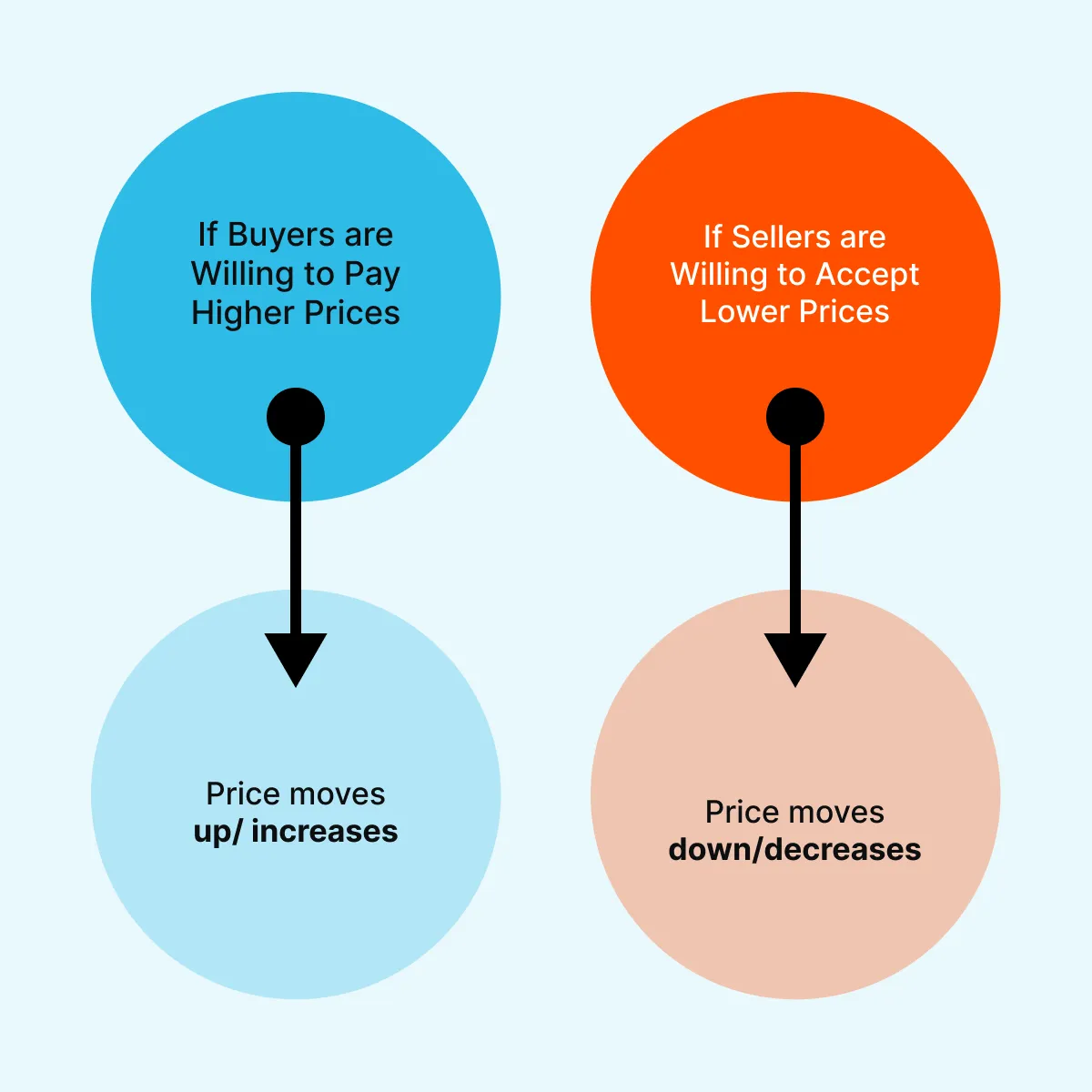
This discovery continues until enough trading happens at a certain level.
When Is an Auction Considered Complete?
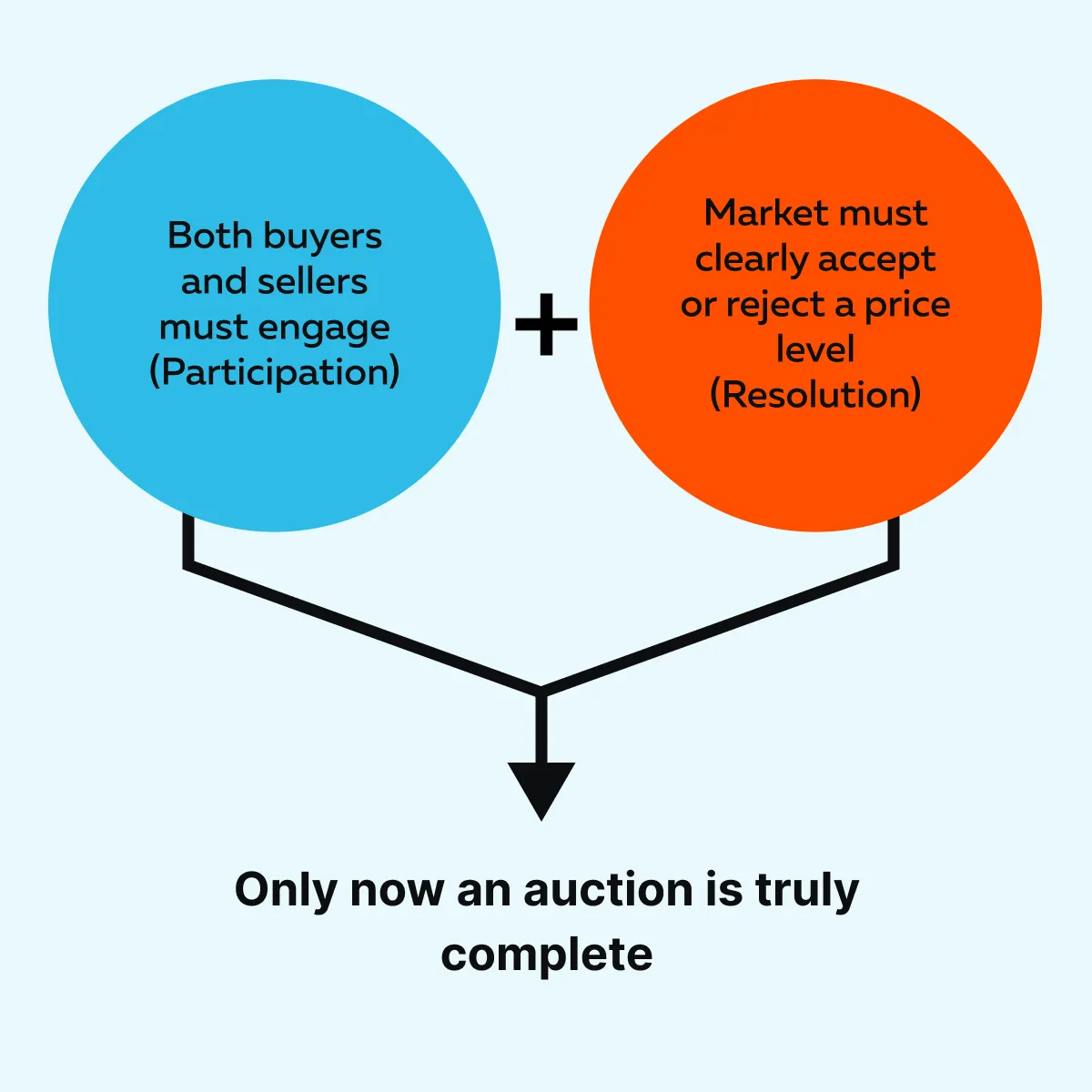
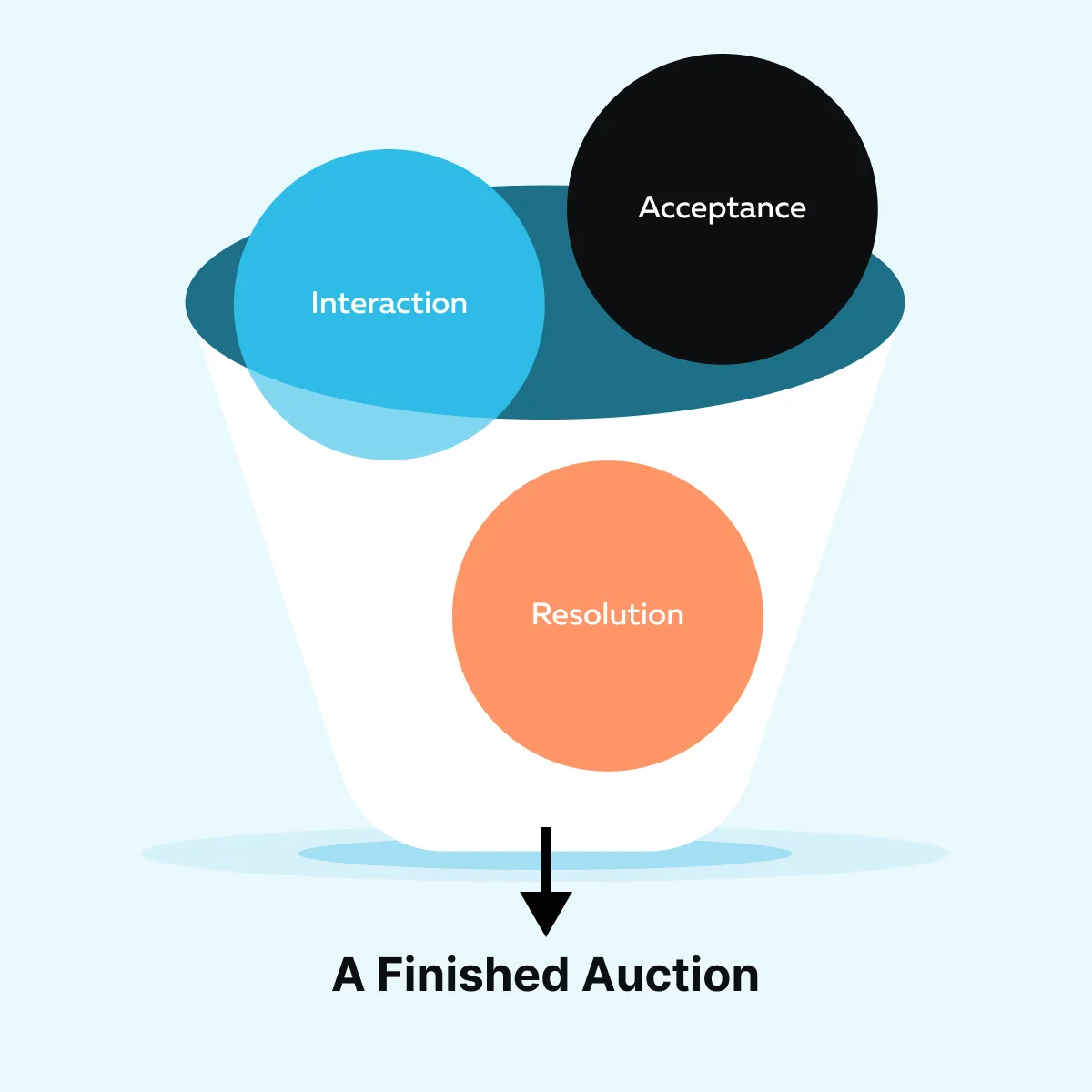
An auction is complete only when three things happen:
| Factor I: One Side Fully Tests a Price Area | Factor II: The Opposite Side Responds | Factor III: No Further Exploration is Needed |
|
or
|
|
Now, this is what traders refer to as “finished auction order flow”. It shows that the price has done its job of testing and confirming value.
Why Speed Alone Does Not Finish an Auction
It is worth mentioning that a “fast price move” does not mean the auction is complete. That’s because without enough time, volume, and two-sided participation, the price has not truly tested that area. Real completion requires interaction between buyers and sellers (not just momentum).
Why Most Traders Misidentify Finished Auctions
Do you know what most traders believe regarding auction completion? They believe that an auction is complete only when:
- Price shows a strong reversal candle,
- Momentum starts to fade, and
- Price stops making new highs or lows.
These signals are easy to spot, so they feel reliable. But in reality, they only point to a “temporary imbalance”. These signs do not indicate that an auction is complete. Let’s understand why:
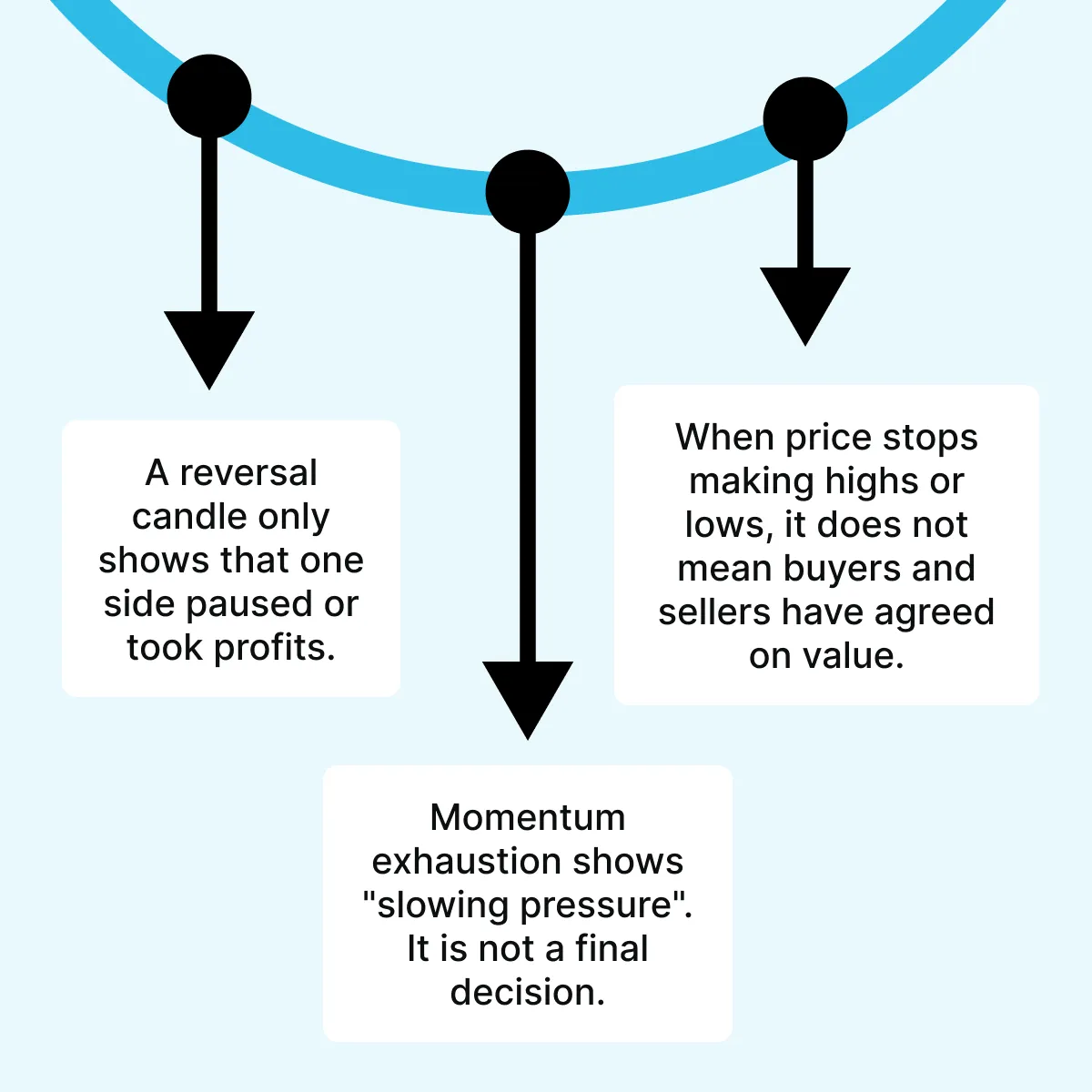
Always remember that without acceptance or rejection at a particular price level, the market has not completed its job of price discovery, which is why such areas remain risky!
Okay, and what is the cost of a wrong interpretation? When the auction is unfinished, the price usually continues in the same direction (once participation returns). As a result, traders get trapped by assuming the move is over when it is not.
Understand when the market has actually finished exploring price → Compare Packages
Structural Characteristics of a Finished Auction
A finished auction shows signs that the market has:
- Properly tested a price area, and
- Reached a decision.
Let’s have a look at the three primary characteristics of a finished auction:
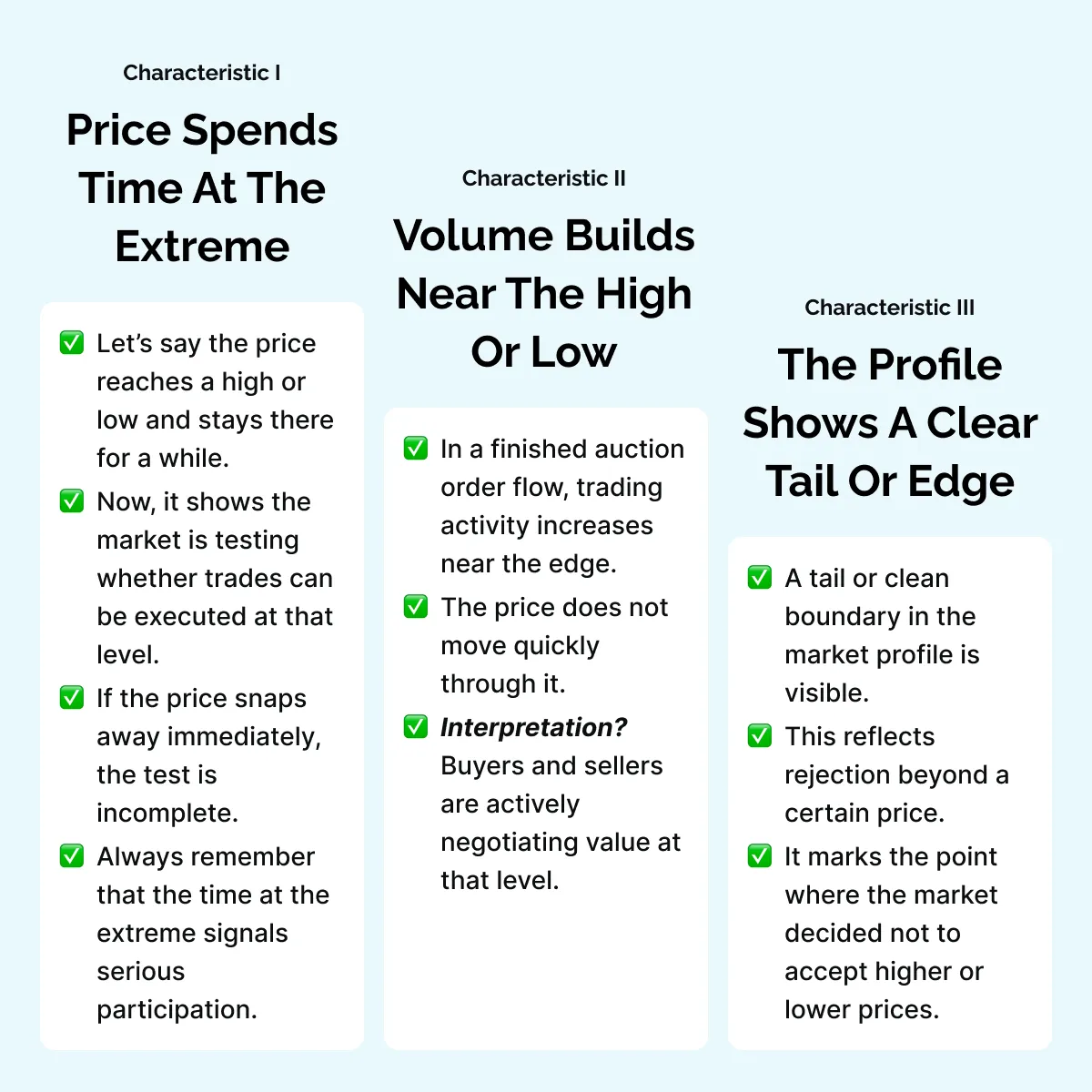
Additionally, after completion, any new push past that area does not hold. So, what should be your confirmation here? Auction already explored that zone and found no new acceptance.
Learn to distinguish real acceptance from temporary pauses → Compare Plans
Order Flow Signs That an Auction Has Finished
By analyzing order flow, you can check whether the market has truly completed its work. Let’s have a look at some order flow signs:
| Order Flow Sign | What You See | What It Means |
| Aggressive Activity Fails to Move Price | Buyers keep buying at the market (or sellers keep selling), but the price stops advancing. |
|
| Liquidity Absorbs Repeated Attempts | Large limit orders remain in place and continue to absorb trades. |
|
| Delta Flattens or Diverges at the Extreme | Aggressive volume continues, but the delta stops rising or starts to weaken. |
|
| Liquidity Builds on the Opposite Side | New resting orders appear against the move. |
|
When these signs appear together, they confirm that an auction order flow is complete. The market has:
- Tested the level,
- Opportunity is exhausted for the active side, and
- Value has been accepted.
Finished Auction vs. Temporary Exhaustion
For some traders, a slowdown = the auction is complete. But that’s not true! Usually, the markets pause before continuing. It is known as “temporary exhaustion”. The following signs are observed-
- The price pauses briefly, and
- Then liquidity pulls back in the same direction.
Additionally, aggressive volume is reduced, but it does not reverse. Price also spends little time at the high or low. Okay, so what do these pauses show? It indicates “hesitation” and not acceptance. In these cases, the market has not agreed on value. It has only stopped to gather energy before continuing exploration.
Finished Auctions and Market Profile Context
Market Profile also confirms whether an auction is complete. When an auction finishes properly, the profile usually shows clean tails with minimal overlap. This structuring tells you the price was clearly rejected beyond a certain level.
Moreover, you also see a gap between “value” and the “extreme”. It shows where trading was accepted and where it was rejected. Next, after the extreme is tested, the profile usually develops in a balanced way, which signals agreement.
In Contrast, Unfinished Auctions Leave Behind Thin Areas And Poor Structure.
Unfinished auctions represent several “weak zones”. They show that the price moved without enough participation. Usually, markets return to these areas later to complete the work.
This is why weak highs and weak lows happen when the market reaches a price but does not properly test it. The primary reason? There is not enough trading or participation at that level. As a result,
- The auction did not finish, and
- The market has unfinished work there.
Now, the price will eventually return to that level.
How Finished Auctions Influence the Next Session
A properly completed auction creates useful “reference points” for future sessions. These reference points are “finished highs and lows”. Usually, they act as strong support or resistance. Why? That’s because the market has already tested and rejected prices beyond them. Now, without new information, these levels limit further exploration.
In contrast, unfinished auctions behave differently. Usually, the market revisits those levels to test them again and finish the process.
Okay, so how can this knowledge help me? You can understand whether the next session is:
- More likely to continue in one direction,
or
- Rotate within a range.
Using Finished Auctions in Trade Planning
Finished auctions are not automatic trade signals. In practice, traders should avoid fading strong moves until there’s clear evidence that the auction has actually completed. Always remember that finished extremes work best only as “reference levels”. They are not instant entries.
Furthermore, it has been observed that reactions are usually stronger at completed levels than at weak or unfinished ones. To better understand the concept, let’s have a look at a real trading example related to a finished auction at the edge of balance.
Example: A Finished Auction Outside Balance
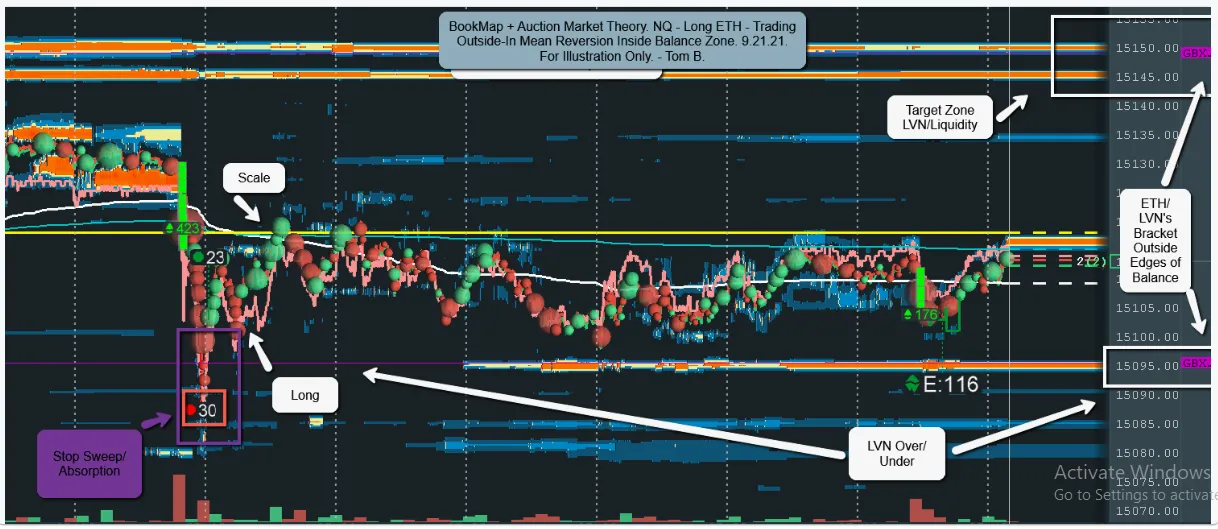
The above Bookmap chart shows the price trading outside a balance area and completing the auction near the edge (instead of immediately reversing). This distinction is critical because many traders expect instant rejection once the price leaves balance.
And that expectation is often wrong! Let’s understand in detail:
What Price is Doing Here
After moving outside the balance zone, the price does not snap back. Instead, it spends time near the extreme. You can see the price repeatedly interacting with liquidity at that level, which suggests the market is testing whether trades can happen there (not just pausing briefly).
Also, spending time near the extreme signals “acceptance”. It is not a sign of panic or exhaustion. Instead, it indicates that:
- Buyers and sellers are actively trading,
and
- Value is being negotiated.
What Order Flow Confirms
Order flow reveals what price alone cannot. In this example, you can observe these three things:
| Aggressive Activity Fails To Move Price Further | Liquidity Absorbs Repeated Attempts | Price Rotates Away After Acceptance |
|
|
|
Together, these signals confirm the completion of an auction order flow. Traders must not mistake this for a temporary slowdown.
Why This Bookmap Chart Is Important
A completed auction leaves behind a “reference level”, which can be observed and highlighted in the Bookmap charts. That level often holds in future tests unless new information enters the market.
So, the key takeaway?
When price completes its work at the edge of balance, and order flow confirms the finish, the resulting level becomes vital for future market behavior. Explore more real order flow examples → https://bookmap.com/insights
Conclusion
So now you know when a “finished auction” is formed. Let’s ask you a question – Is a finished auction defined by a candle pattern, momentum slowdown, or trader intuition? After reading this article, you will undoubtedly say a big NO.
That’s because it forms only after the market has:
- Tested a price area,
- Seen real participation from both sides, and
- Reached a clear decision.
Also, price must interact with liquidity (not rush through it). Order flow then shows whether effort is being absorbed and whether the market has resolved value.
So, what should your ideal approach be? Learn to identify the structural and order flow signs of completion. This lets you avoid fading moves too early and reduce the risk of trading unfinished auctions.
Want to make this easy? You can start using advanced real-time market analysis tools, like Bookmap. Using it, you can visualize real-time liquidity, participation, and finished auction order flow. This allows you to see when the market has truly explored a price level. See how auction completion appears through real liquidity behavior → Compare Packages.
FAQs
1. What defines a finished auction in trading?
A finished auction happens when:
- Price thoroughly tests a level, and
- Both buyers and sellers actively trade there.
The market then clearly accepts the price or rejects it and moves away. This process leaves several visible signs along with a “finished auction order flow” trail. Both show that value discovery at a particular price level is complete.
2. Why does price often revisit highs or lows?
Price returns to many highs or lows because the auction was not completed the first time. The market paused due to insufficient trading or acceptance. Now, since the value was not thoroughly tested, the price eventually returns to finish that work.
3. Can order flow confirm auction completion?
Yes, order flow shows:
- Whether aggressive trades stop moving the price,
- Whether liquidity absorbs pressure, and
- How delta behaves at extremes.
Okay, what do these signs show? These signals reveal if one side is exhausted and the other has accepted or defended value.
4. How does Bookmap help identify finished auctions?
Bookmap shows “real-time liquidity, volume, and aggressive activity” at price extremes. As a trader, you can easily observe on Bookmap:
- How price interacts with resting orders, and
- Whether pressure is absorbed.
This knowledge lets you better understand if the auction truly finished or only paused.
Sign Up Now
Latest Articles