


See when price moves through value without real acceptance.
Compare plans to track auction behavior and failed reactions as they develop.
Education
May 12, 2026
What It Means When Price Trades Through Value Without Reaction

If value were a “reliable barrier”, price would pause at every prior balance zone and markets would remain orderly. In practice, that rarely happens. There are sessions where price trades through value with intent and leaves previously active zones behind without any considerable response from market participants.
This behavior is not random. It shows a change in how participants assess price, which is usually influenced by factors such as new information, strong directional conviction, or changes in liquidity. As these factors come into play, earlier agreement loses influence, and the market moves to establish a new fair value.
This article explains what value represents, why reactions are expected at these zones, what happens when value fails, and how to read acceptance versus rejection to interpret real market conditions.
First, What “Value” Actually Means in Trading
Value in trading is usually mistaken for a fixed support or resistance level. In reality, it is not a “single price” but a “price zone” where the market previously agreed on a fair price. This agreement forms when both buyers and sellers actively participate without one side dominating.
As a result, the price spends time moving back and forth within a range. This behavior is known as “market value area” trading, where the market rotates rather than trends. Such value areas usually appear through these signs:
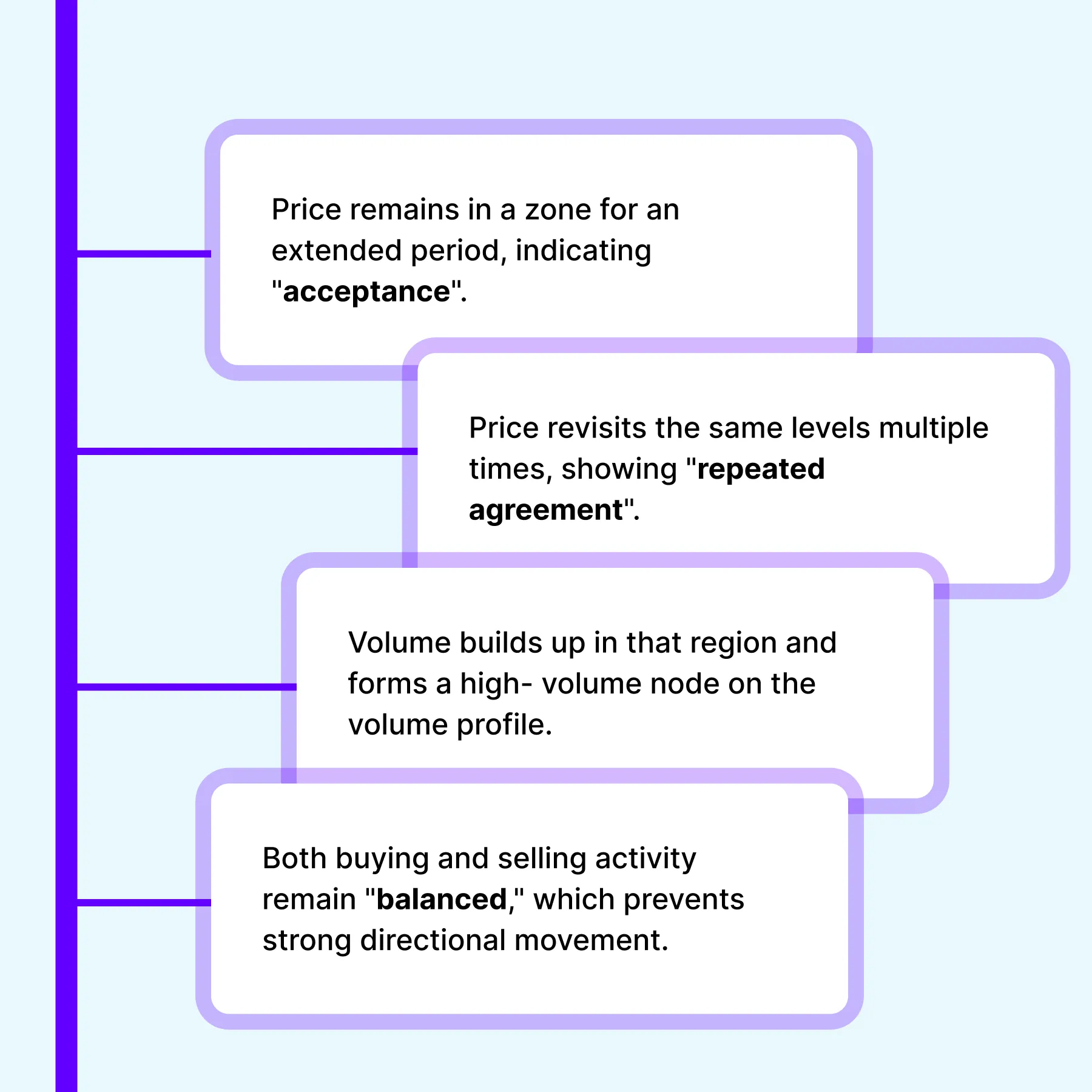
Some common examples of value include:
- Prior session’s value area
- A volume profile high-volume node
- A multi-hour balance range, or
- Any price zone that is repeatedly accepted during the trading session.
However, it is important to recognize that value reflects past agreement and not future certainty. When price trades through value without hesitation, it signals that the previous agreement is no longer valid. This is also why price moves through support without reaction in some cases.
In such situations, the expected “volume profile value rejection” does not occur, and the market shifts to find a new area of balance. Therefore, value should be treated as evidence of prior consensus, while remaining open to the possibility that the market may ignore it when conditions change.
Why Traders Expect Reaction at Value
There are several reasons why value areas attract attention. Note that these zones represent “prior agreement”, so they may influence how the price behaves when revisited. When price returns to value, the market usually responds in one of three ways:
| Market Behavior | What It Indicates |
| Buyers Defend the Area | Prior value is still accepted, and demand supports the price. |
| Sellers Reject Price | The market finds the price too high or too low and rejects it. |
| Price Pauses and Rotates | New transactions take place as the market reassesses fair value. |
Since these reactions occur frequently, a pattern forms. Over time, this leads to the belief that value should always produce a response. However, this assumption creates problems!
Markets do not react to past structure by default. A level matters only when current participants still recognize it as relevant. When that interest fades, the price trades through value with little resistance. This is a major reason why price ignores key levels at times.
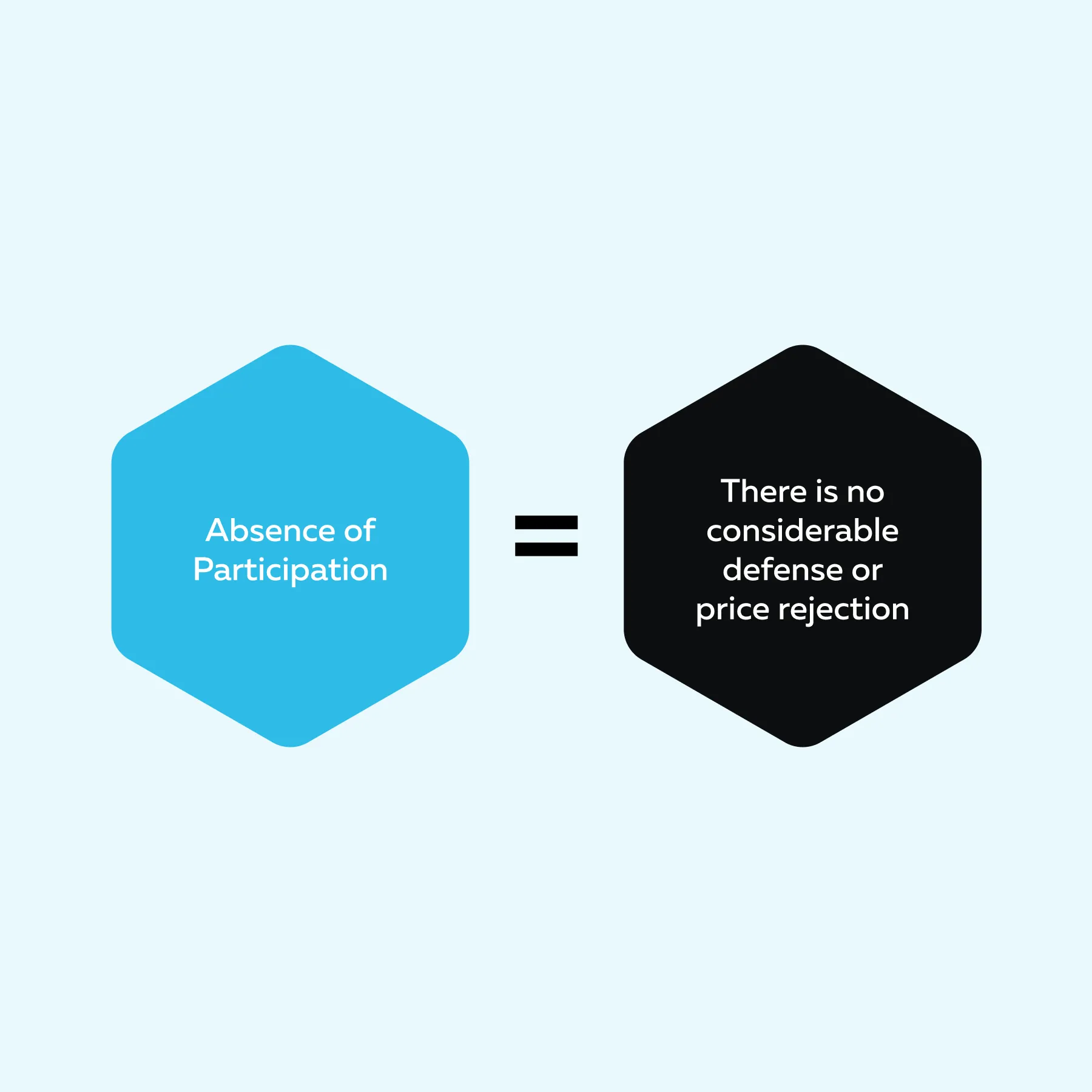
As a result, what once acted as support or resistance may fail to produce any reaction. In such conditions:
- The expected volume profile value rejection does not appear, and
- Price moves through support without reaction.
Traders must realize that value only reflects past agreement. It is “active participation” that determines whether it continues to hold. Read participation and liquidity around important price zones → Compare Packages
What It Means When Price Trades Straight Through Value
When price trades through value without hesitation, it signals a change in market behavior. Instead of rotating within a familiar range, the market moves forward with intent. This also leads to a change in how market participants view the fair price.
Now, it is worth mentioning that this behavior generally points to these three underlying conditions:
I) Previous Value Is No Longer Relevant
In some cases, earlier values lose importance because market conditions have changed. Expectations of market participants are altered due to these reasons:
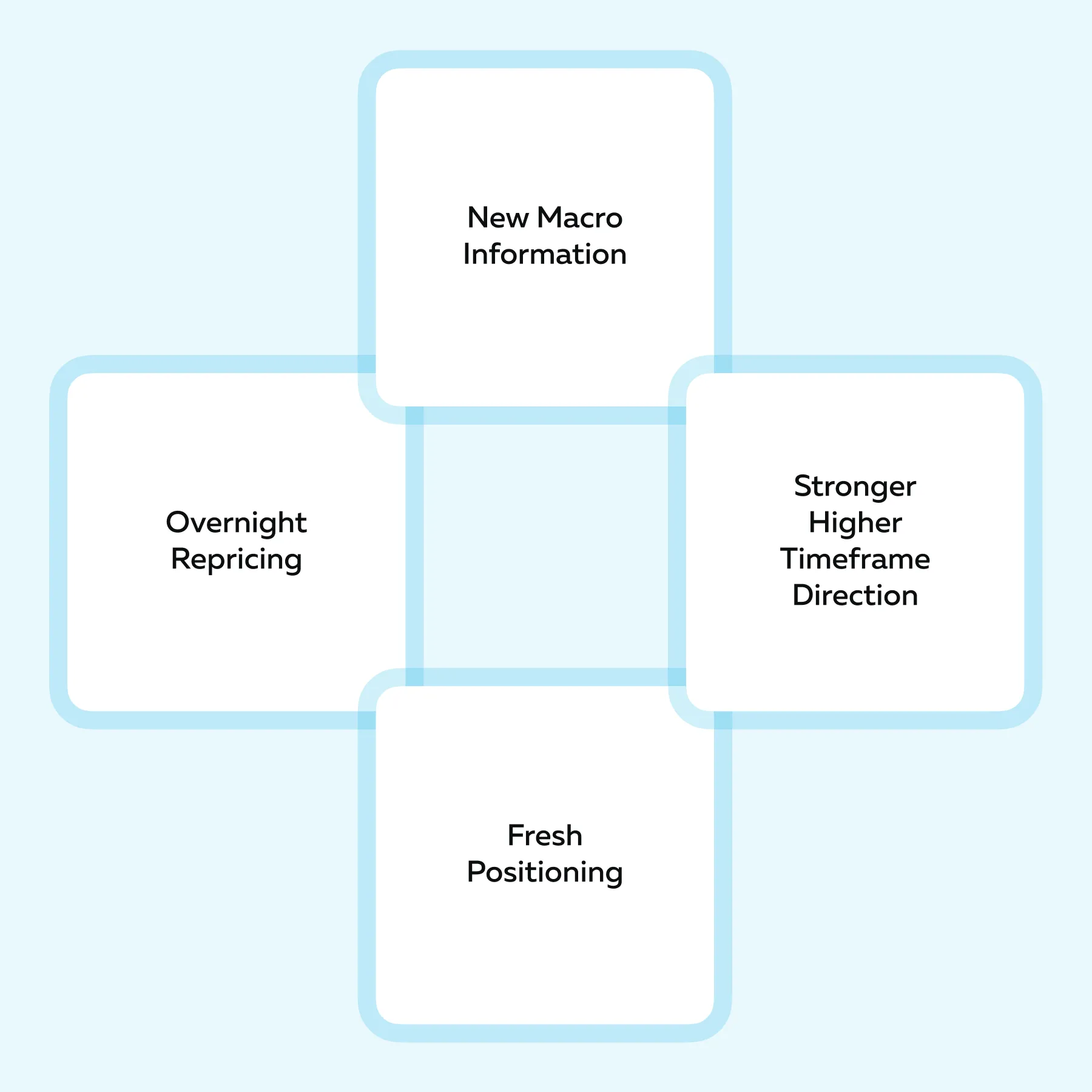
As a result, what was once considered fair value no longer attracts participation. Usually, such a situation is observed when the market no longer respects the prior balance. Understand why some key levels fail instantly → Compare Plans
II) One Side Is Dominating Participation
At other times, one side of the market takes clear control. Strong buying or selling pressure can overpower passive interest around prior value. When this happens, the expected reaction does not materialize. For example:
- Weak macro data triggers heavy selling.
- Price reaches the previous value area.
- Selling continues with strength, and earlier buyers do not defend the zone.
In such conditions, price moves through support without reaction, as the market actively reprices to a lower level.
III) Liquidity Is Thin or Pulling
In some situations, the level itself may still hold relevance, yet actual participation is missing. Visible orders may reduce or disappear before the price arrives. This creates the appearance of a “failed level”, although there was negligible real defense to begin with.
As a result, the expected volume profile value rejection does not occur. Also, the current market price ignores key levels because levels without active participation cannot influence the price. From this scenario, traders may make this observation:
- A level without participation is just a reference point from the past.
- It is not a force that can influence current market behavior.
Acceptance vs Rejection: The Real Question at Value
Most traders treat value as a fixed support or resistance area. However, a more accurate approach is to observe how the price behaves when it returns to that zone. The real question to be asked is not whether the level should hold, but whether the market accepts or rejects that price.
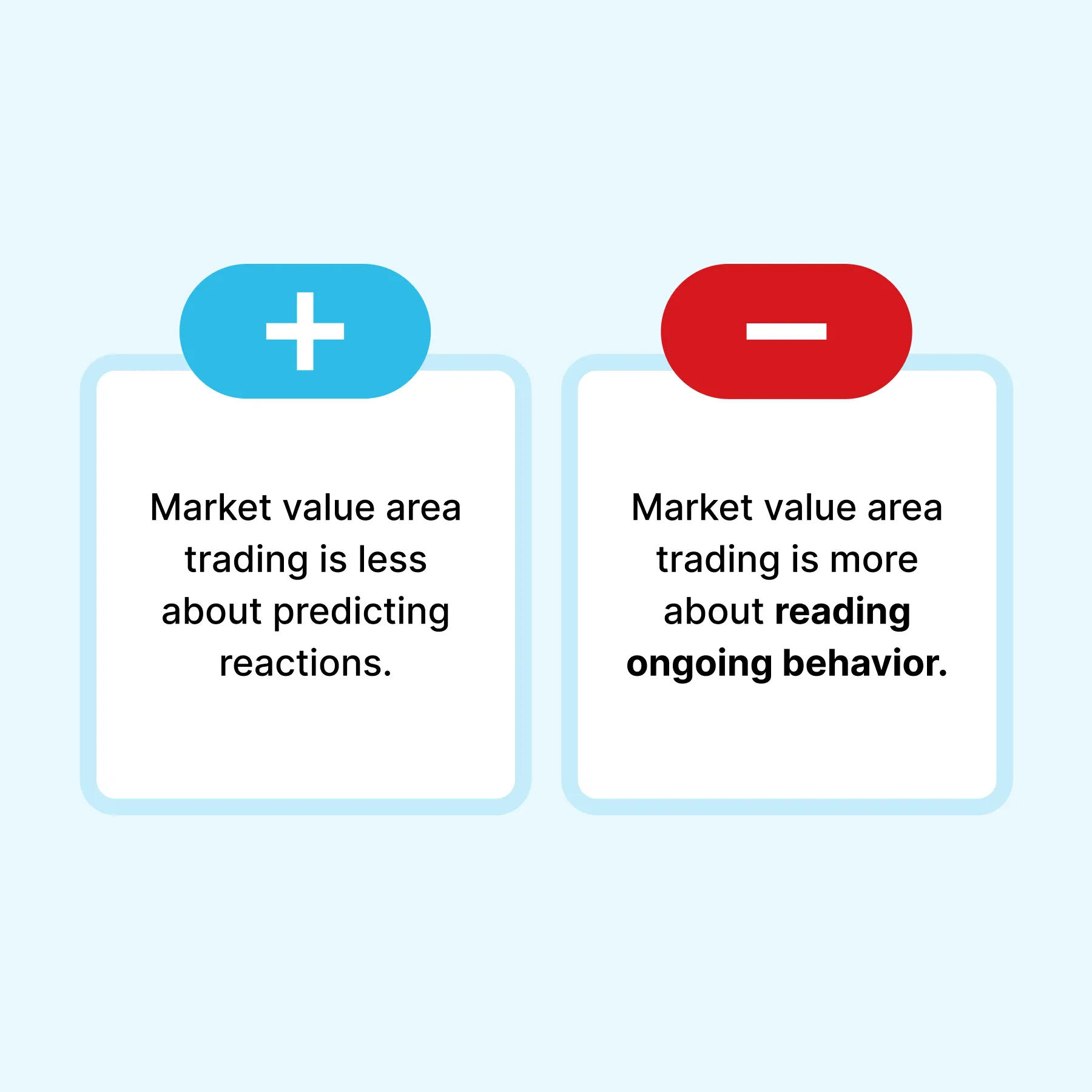
To better read the ongoing market behavior, traders may specifically look for the signs of acceptance and rejection:
Signs of Acceptance
Acceptance occurs when the market continues to agree with the prior value. This is visible through “regular balanced activity” where:
- Price spends time within the zone
- Volume builds (and may form a high-volume area)
- Rotation develops as the price moves back and forth
- Aggressive buying or selling slows down
- Two-sided participation returns
Together, these signals suggest that the area is still considered “fair”. In such cases, the market continues to operate within a familiar balance.
Signs of Rejection
On the other hand, rejection indicates that the market no longer agrees with that value. This appears through decisive and directional movement where:
- Price moves through the zone with speed
- One side remains in control with sustained aggression
- Pullbacks fail to hold and reverse
- No stable trading develops within the zone
Under these conditions, price trades through value without forming a balance. The expected volume profile value rejection within the area does not occur because rejection is already underway. This also explains what happens when the value area fails, as the market leaves the zone in search of a new fair price. See whether value is being defended or abandoned in real time → Compare Packages
Why Strong Trend Days Often Ignore Prior Value
Usually, “trend environments” behave differently from balanced markets. Instead of rotating within familiar ranges, price moves with direction and intent. As a result, price trades through value without the usual hesitation.
This happens because the market is no longer trying to confirm a fair price. Instead, it is in the process of discovering a new one. In such conditions:
- Earlier agreements lose importance, and
- Value area fails become visible through continued directional movement.
Now, several situations can trigger this type of behavior:
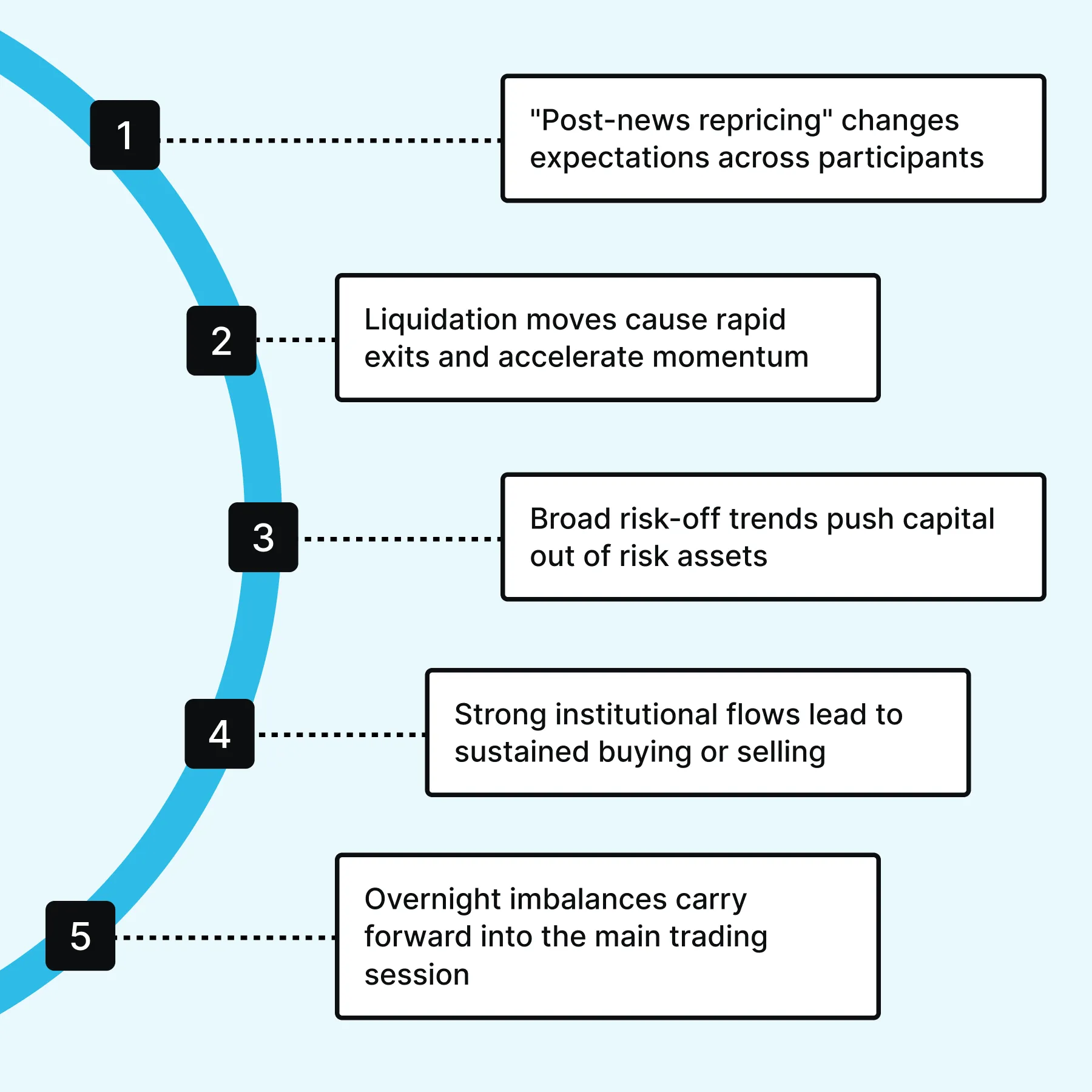
Due to these factors, participation becomes one-sided. This reduces the likelihood of balance and weakens the influence of prior value zones. Consequently, price moves through support without reaction, and the expected volume profile value rejection does not develop.
In these environments, the previous value serves only as a “reference point” rather than a barrier. Therefore, old value matters less when the market is actively repricing and moving toward a new area of agreement.
Real Trade Example: Price Moves Through Prior Value With Little Reaction
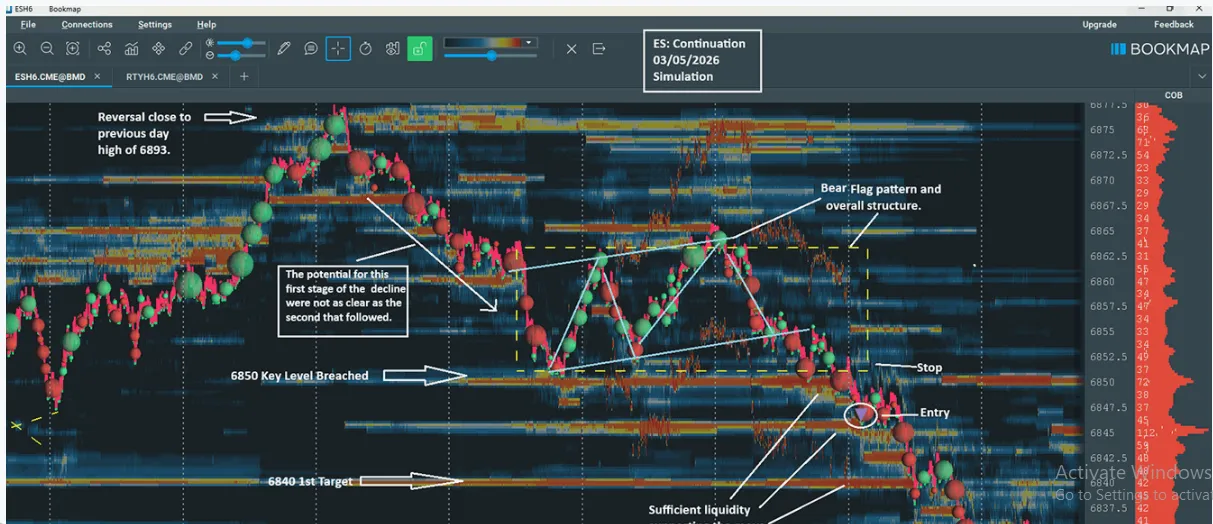
The above real-trade Bookmap example shows a bearish continuation environment where the market trends lower after breaking prior structure. The chart shows how the price behaves when the earlier value is no longer respected. Let’s understand in detail:
The Previous Day’s High Near 6897 Acts as an Initial Reference Point
Price approaches this level but fails to hold above it, leading to a reversal. This early rejection signals that buyers are not strong enough to maintain higher prices.
Gradually, as the decline develops, a bear flag structure forms. This pattern reflects a temporary pause within a broader downtrend. During this phase, there are attempts to move higher, but these attempts fail.
Additionally, the presence of “trapped volume” inside the consolidation shows that buyers entering the move are unable to push the price upward.
Once The Structure Breaks, The Move Accelerates
At this stage, price trades through value zones that previously showed active participation. However, these areas do not create any considerable support. As a result, price moves through support without reaction, and selling pressure remains dominant.
Furthermore, at the same time, liquidity on the bid side plays a different role. Instead of stopping the decline, it facilitates “continued selling” by providing counterparties for aggressive sellers. As a result, the market continues lower without forming a stable base.
In Response, the Market Ignores Key Price Levels
The market is no longer interested in prior agreement. Instead, it is in “active repricing mode,” and is continuously searching for a new lower value area. In this context, expected volume profile value rejection does not occur because there is no balanced participation to support it. Explore more real trade breakdowns here: https://bookmap.com/insights
Conclusion
When price trades through value without reaction, the message is clear: Prior agreement is no longer strong enough to influence current price. Usually, such a market situation happens when:
- New information changes fair value
- One side dominates participation, or
- Liquidity fails to defend the zone
As a result, when the value area fails, it becomes visible through continued directional movement and weak responses at key levels. In such conditions, price moves through support without reaction, and expected volume profile value rejection does not appear.
Therefore, value works best as context, not certainty. Market behavior at the level matters more than the level itself. See whether value is being defended or abandoned in real time → Compare Packages
FAQs
1. What does it mean when a price ignores a value area?
It shows the market no longer agrees with that price range. Either new information has changed expectations, or one side is in clear control. In such cases, price trades through value without slowing down. It ignores key levels and continues moving in the same direction.
2. Should value areas always act as support or resistance?
No, value areas are only “reference zones” based on past activity. They are not guaranteed turning points. If participation is weak, the price may move through support without reaction. Usually, this happens when the value area fails, as the market shifts away from the earlier agreement.
3. Why do trend days move through prior values so easily?
On trend days, the market is not balancing; it is only “repricing”. Strong directional participation pushes price forward, so prior value does not hold. As a result, price trades through value, and expected volume profile value rejection does not occur.
4. How to identify if a value is holding?
Realize that value holds when the market shows “acceptance”. This may happen when:
- More time is spent in the price zone
- Build-up of steady volume, and
- Occurrence of two-sided trades
If these signs are missing and price moves straight through, it indicates rejection rather than market value area trading.
Sign Up Now
Latest Articles