


See why today’s markets feel less forgiving to traders.
Compare plans to track volatility, liquidity changes, and faster rotations.
Market Analysis
May 6, 2026
Why Trading Feels Harder Than It Did Five Years Ago

Many traders who started five or ten years ago feel that markets have become more challenging. Strategies that once delivered consistent results now show mixed outcomes.
- Breakouts fail more often.
- Trends lose strength earlier, and
- Price movements seem sharper and less predictable.
But this shift is not random! It reflects real changes in how markets operate today. Over time, technology has advanced, and more participants have entered the market. As a result, liquidity behaves differently, and familiar setups no longer perform the same.
Consequently, trading has become harder than before for many participants. But at the same time, the market still offers profitable trading opportunities.
In this article, traders will learn how liquidity behaviour has changed, how participation affects price movement, and how to interpret the algorithmic trading impact on markets in today’s environment.
The Market Environment Has Changed
Why is trading harder now? In these modern times, several traders ask this question! It is worth mentioning that modern trading conditions have evolved. Many participants who built strategies in a different phase of the market might find today’s conditions harder.
Let’s check out the three primary reasons for this increase in difficulty:
| I) Increase in Algorithmic Trading | II) Advanced Institutional Execution | III) Widespread Availability of Market Knowledge |
|
|
|
Consequently, price movements that once developed gradually may now compress into shorter timeframes. Likewise, levels that previously held consistently may break, reverse, or fail with little warning.
Liquidity Now Moves More Dynamically
Alongside these structural changes, liquidity behaviour has altered. Earlier, large orders were visible and remained in place long enough for traders to react. This created a sense of stability around support and resistance zones.
However, the current environment operates differently. Liquidity is now highly responsive to changing conditions. Let’s see how:
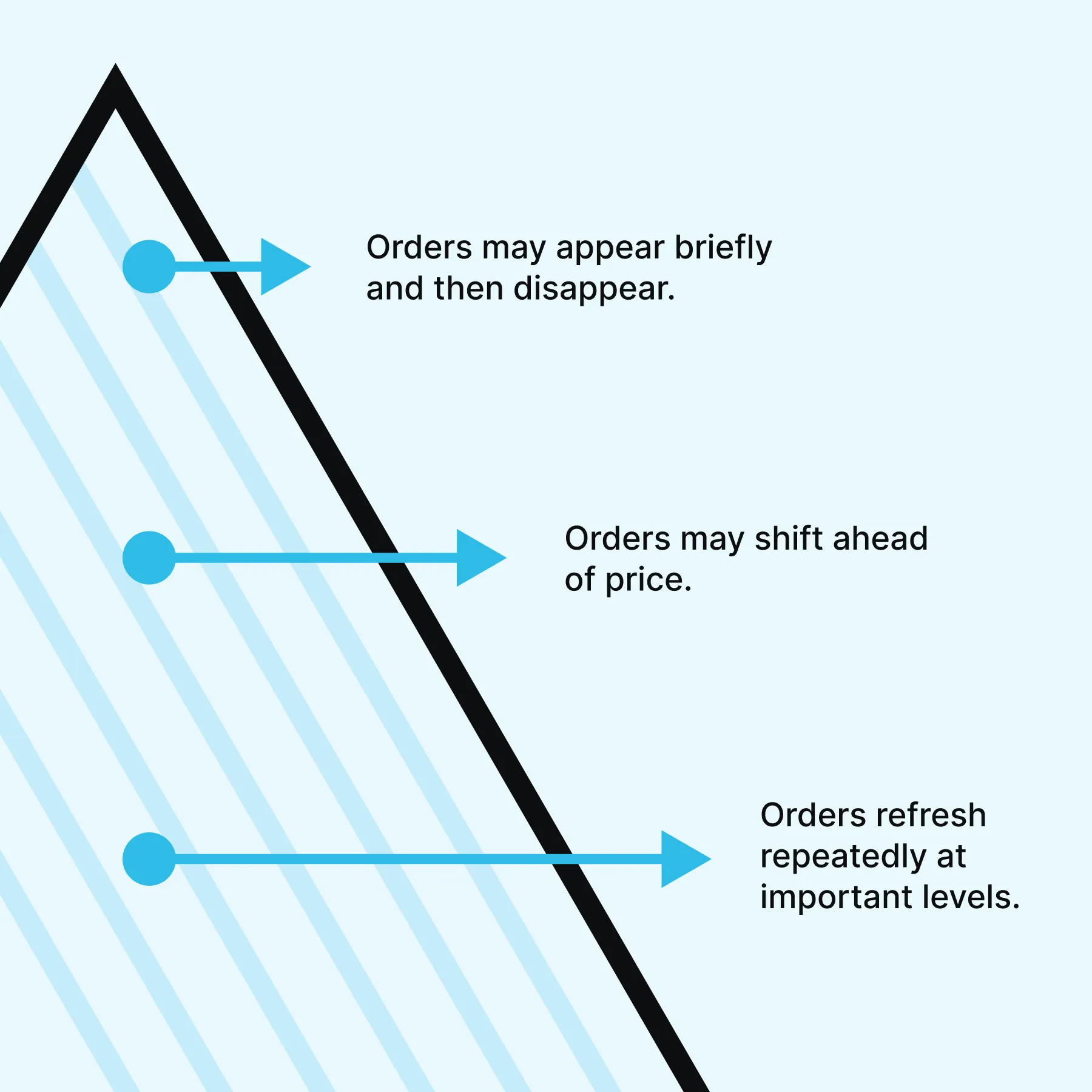
Due to this, static support and resistance levels have become less reliable. Price interaction with these levels now depends heavily on how liquidity behaves in real time. For example,
- Suppose the price approaches a resistance level that has held multiple times in the past.
- Aggressive buying pushes into that level.
- However, passive sellers still continue to supply liquidity by refreshing orders.
- As a result, instead of breaking higher, the price stalls and rotates lower.
Understand how modern market structure actually behaves → Compare Packages
Strategies Become Crowded Over Time
Realize that trading conditions become more competitive as widely used strategies gain popularity. This explains a major reason why trading is harder than before. A great difficulty is particularly visible in markets where similar methods are applied by a large number of participants.
Furthermore, as participation increases, behaviour around key price levels becomes more predictable to larger players. In turn, these participants begin to anticipate where entries, exits, and stop orders are likely to cluster. This pattern is commonly observed in “crowded trades,” where many positions are built around the same price zones.
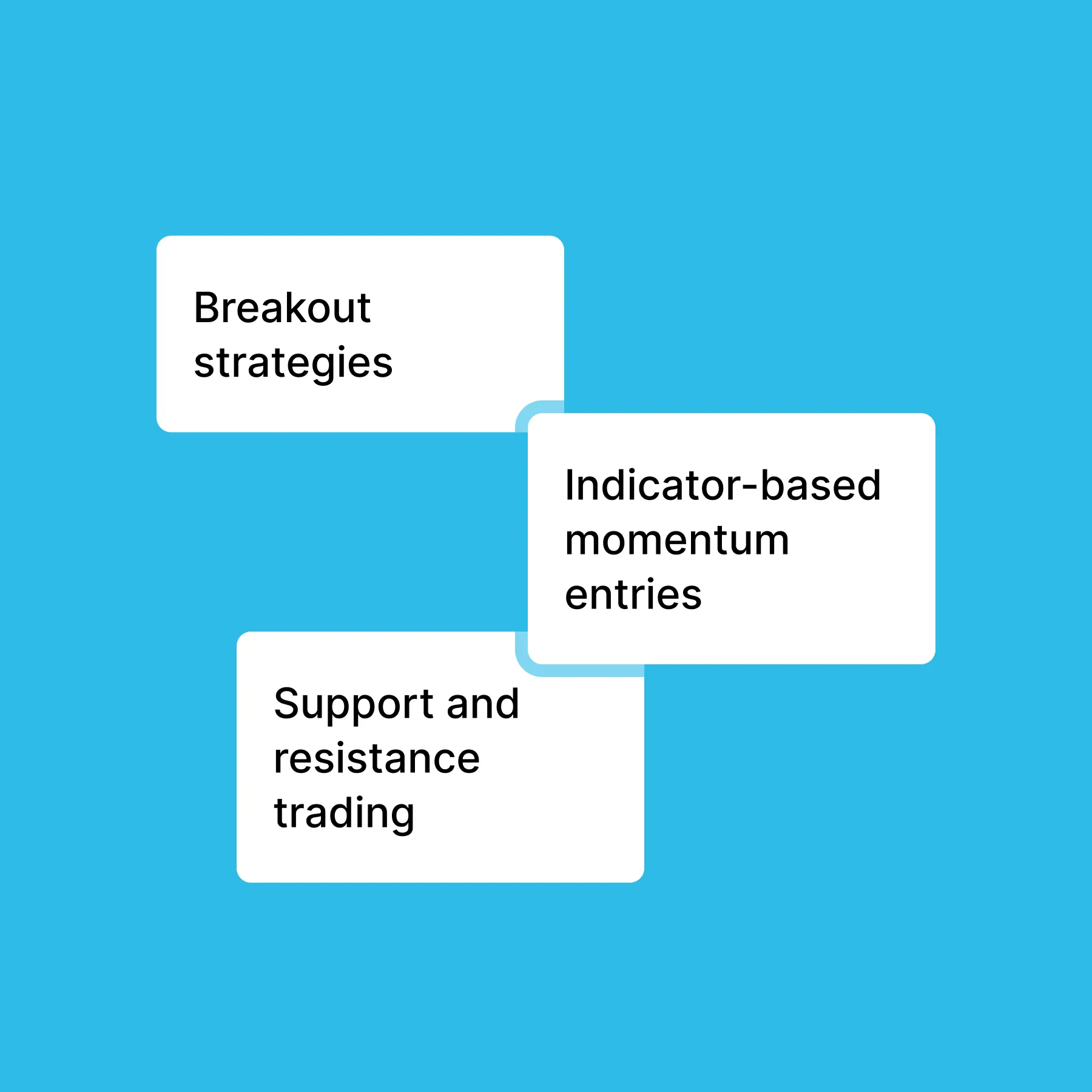
Next, as more orders accumulate at similar points, those areas begin to act as “liquidity pools” (rather than reliable entry zones). Consequently, price behaviour around these levels starts to change. Usually, this leads to the following three outcomes:
| A) False Breakouts | B) Shallow Continuation | C) Rapid Reversals |
|
|
|
Traders must realize that these outcomes occur because clusters of orders create targets for other participants looking for liquidity. As a result, what once appeared to be high-probability setups may no longer behave as expected.
Automation Has Accelerated Market Reactions
In today’s modern times, algorithms have increased the speed at which prices react to changes in order flow. Automated systems now play an important role in:
- Interpreting liquidity conditions, and
- Executing trades.
Due to this, market reactions are now based on how liquidity appears and disappears within the order book. This leads to several observable changes:
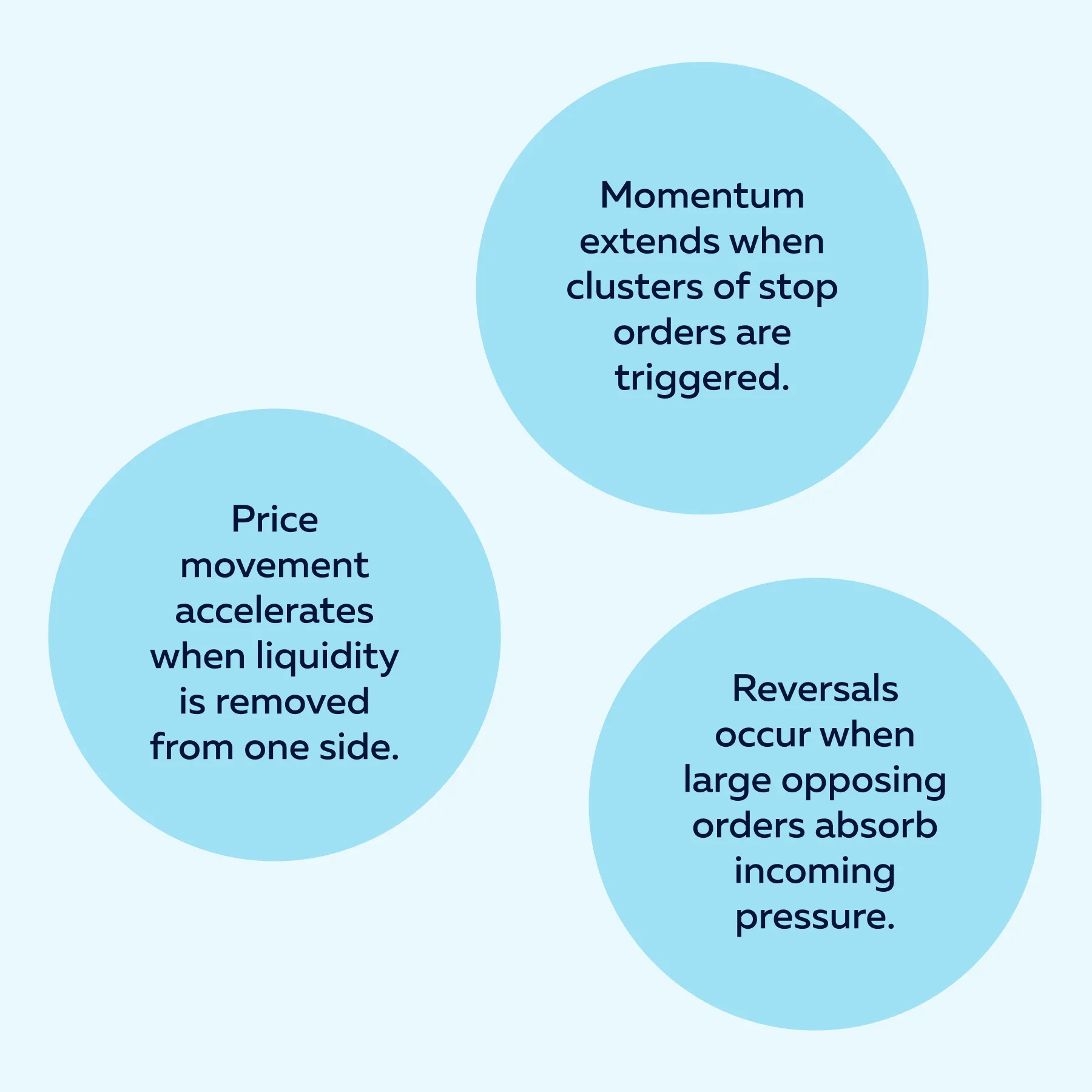
As a result, price movements can develop and resolve within shorter timeframes. Additionally, traditional patterns may occur differently than before.
Information Travels Much Faster Today
Another major shift is the speed at which information spreads. In earlier periods, market participants relied on “delayed updates,” which allowed prices to adjust over a longer duration. However, the current environment operates differently.
Market-moving information is now distributed almost instantly through multiple channels:
- Real-time financial news feeds
- Economic data releases
- Social media and trading communities
As a result, the price reacts almost immediately to new developments. Moves that once unfolded over hours may now be completed within minutes. See how liquidity and participation shape price movement → Compare Plans
More Participants Are Competing for the Same Opportunities
At the same time, participation in financial markets has increased. Retail involvement has significantly expanded due to:
- Easier access
- Lower transaction costs, and
- The availability of trading education
Alongside this, institutional firms continue to deploy advanced systems, further intensifying competition. This combination leads to more participants targeting the same price movements and setups.
Consequently, trades that once delivered consistent outcomes now face several challenges, such as:
- Quicker reactions around key levels
- Greater competition for available liquidity
- Reduced margins on similar setups
As a result, trading is harder than before, not due to manipulation, but because opportunities are shared among a larger and more capable group. In many cases, this results in crowded trades in markets, where multiple participants attempt to act on the same idea.
Why Some Traders Adapt While Others Struggle
Despite these changes, consistent performance remains achievable. The difference lies in how market participants respond to these changing market conditions. Those who “adapt” could change their approach as per the market structure changes.
Such an adjustment usually includes the following:
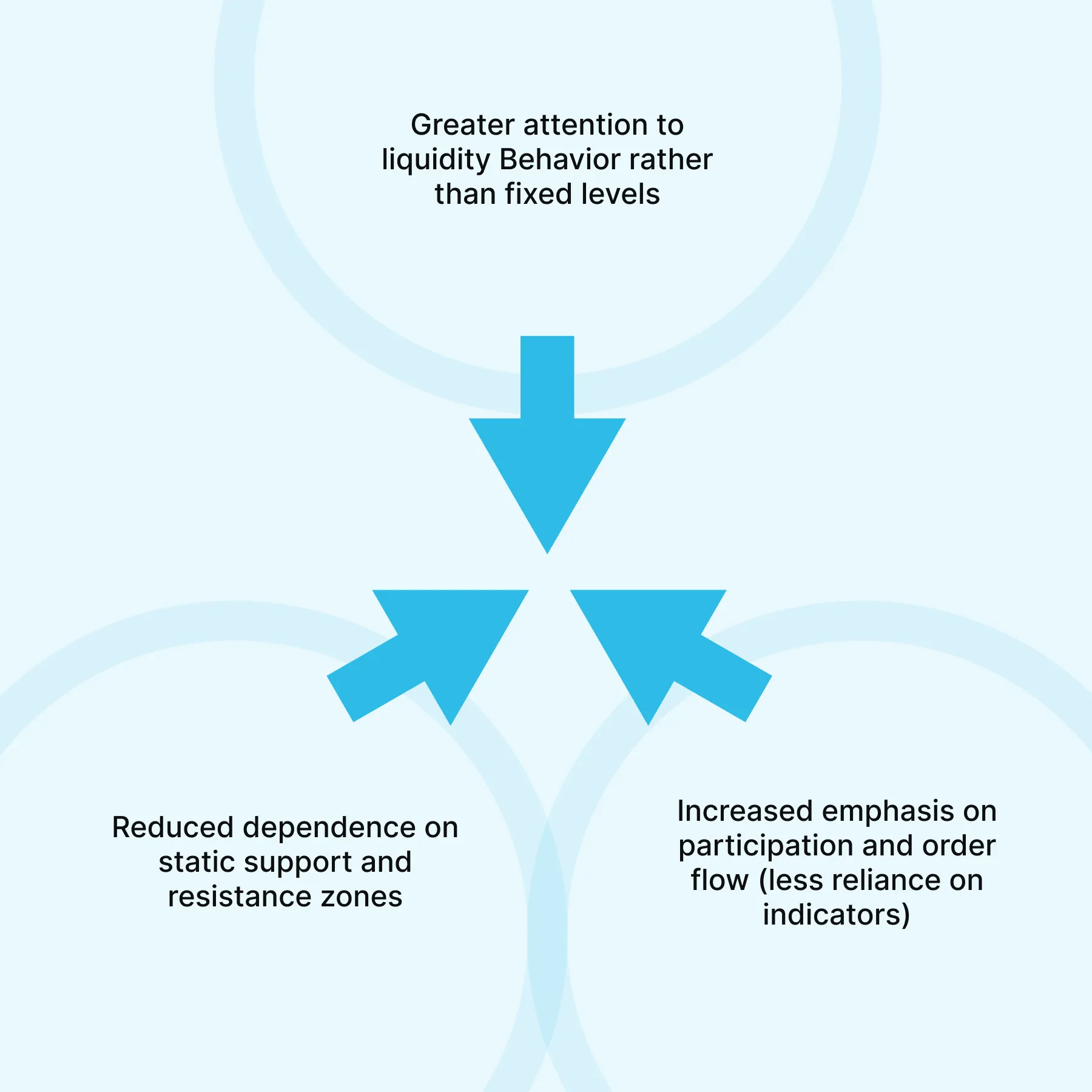
In contrast, strategies that remain unchanged may begin to lose effectiveness. Taken together, traders must understand that as structure changes, behaviour changes with it. Therefore, adaptation becomes highly important in dealing with the:
- Ongoing algorithmic trading impact on markets, and
- Increasing complexity of modern trading conditions.
What Traders Should Focus on Instead
As modern market structure changes continue to influence price behaviour, the “source of trading edge” has also changed. Nowadays, traditional methods (based only on indicators or fixed levels) fail to capture the underlying drivers of price movement.
That’s why most traders have started to trade based on market behaviour. It now reveals more insight through three key elements:
| I) Liquidity Behaviour | II) Participation | III) Market Structure |
|
|
|
Together, these elements offer a better view of how the market operates today (particularly in an environment influenced by the algorithms). Analyze the behavior behind today’s markets → Compare Packages
Real Trade Example: How Modern Market Structure Creates Difficult Conditions
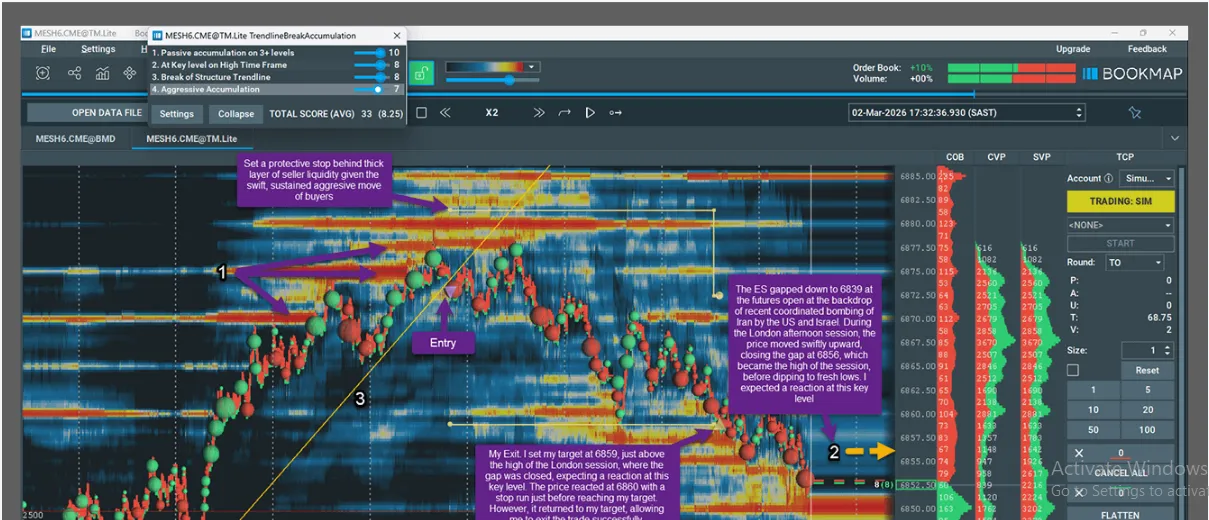
To further understand the concept, let’s study a Bookmap Insights Example. The above chart shows why trading is harder than before, particularly during high-impact sessions. The scenario covered in this example is related to ES futures activity, which follows a major overnight macro event (when the market opened with a significant gap).
Initially, the price moved upward during the London session (closing in on the gap). This upward move was due to “aggressive buying,” which can be seen in the image through:
- Clustered trade activity, and
- Rising price action
However, as prices approached higher levels, thick layers of liquidity began to appear above the market. These visible liquidity zones (highlighted in the image as bright horizontal bands) acted as resistance. At the same time, repeated attempts to push the price higher showed signs of weakening momentum. This indicates possible buyer exhaustion.
Let’s understand how the sequence occurred:
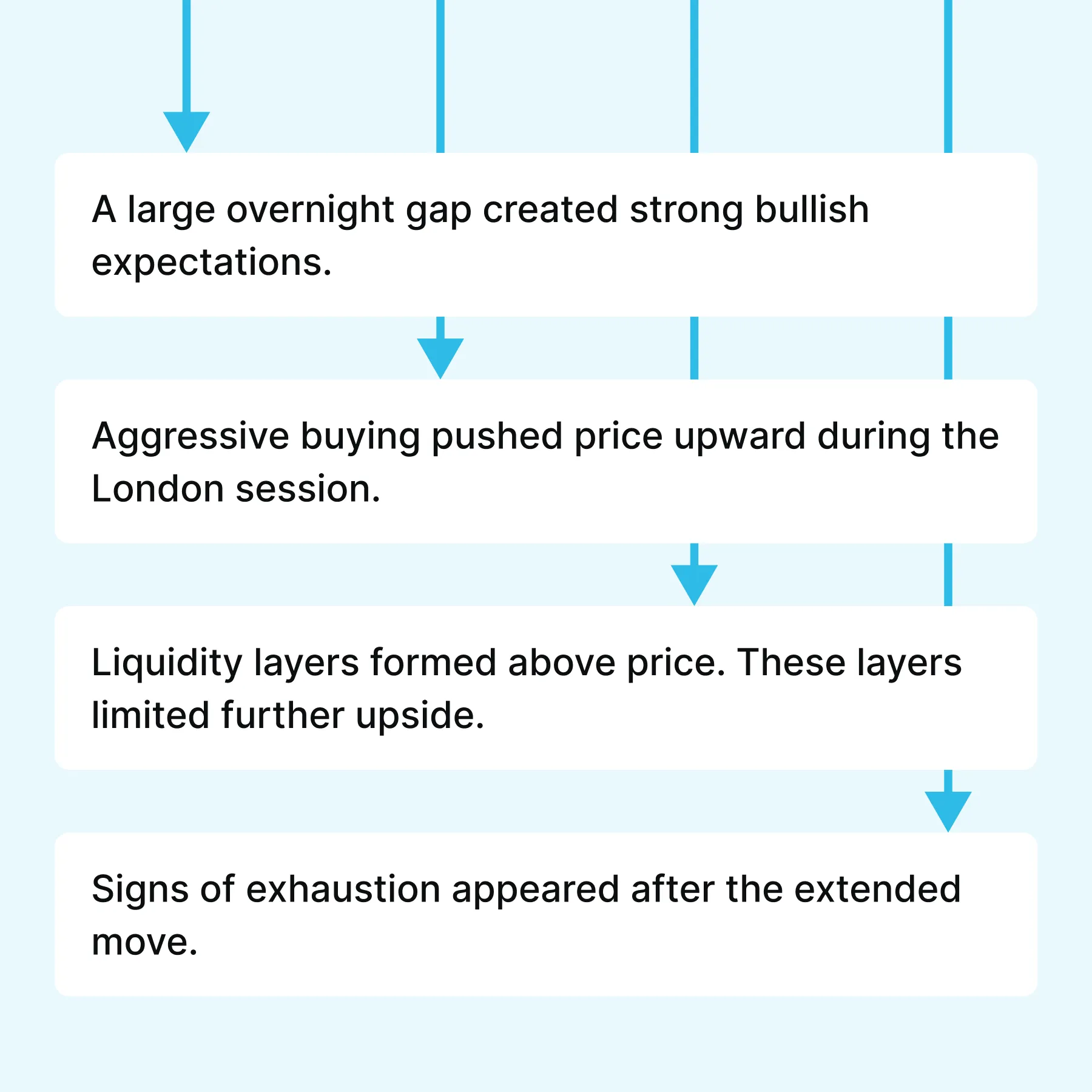
Now, based on this behaviour, a short-term reversal became likely. The entry occurred near 6872, where the price interacted with resistance and liquidity above. A protective stop was placed behind a dense layer of seller liquidity (it acted as a structural barrier).
Furthermore, the target was set near 6859, close to the prior session level where the gap had been filled. However, before reaching this level:
- Price reacted sharply, and
- Triggered a stop run
This move indicates the presence of crowded trades in markets, where clustered positions create liquidity targets. Most importantly, price later returned toward the same target area and allowed the trade to complete successfully.
Traders can find answers to why trading is harder than before from this Bookmap Insights example. They may realize that nowadays, price does not move in a linear or predictable manner. That’s largely due to:
- Liquidity changes
- Reaction of automated systems, and
- Participants are competing at around the same levels.
Explore more real trade breakdowns here: https://bookmap.com/insights
Conclusion
Trading may feel more challenging today! However, this difficulty does not mean markets have become unpredictable or impossible to trade. Instead, it only shows the ongoing modern market structure changes that are a result of technological advancement, increased participation, and the growing algorithmic trading impact on markets.
As a result, liquidity behaves differently, and information spreads almost instantly. Additionally, competition around the same setups has increased, which has led to more crowded trades in markets.
However, at the same time, markets continue to offer opportunities. The only difference lies in recognizing these changes. See how traders analyze liquidity and participation in real time → Compare Packages
FAQs
1. Why does trading feel harder than before?
Trading feels more difficult because markets have changed. Nowadays:
- Price reacts to information almost instantly, and
- More participants compete for the same setups
As a result, movements are less stable and familiar patterns do not behave the same way as earlier.
2. Did algorithmic trading make markets harder?
The algorithmic trading impact on markets has increased speed and competition. Today, price moves based on buying and selling activity, but much of this activity is hidden. This makes it harder to see why the price is moving.
In such automated environments, traders may try to study how orders interact in the market. This can allow them to see the liquidity behaviour.
3. Why do trading strategies stop working?
When many traders use the same trading method, it becomes predictable and crowded. In response, markets adjust and turn those setups into liquidity targets. As a result, strategies that once worked may begin to fail or produce inconsistent results.
4. Can retail traders still succeed in modern markets?
Yes, success is still possible despite modern market structure changes. Traders can still find opportunities if they “adapt” to changes in:
- Liquidity
- Participation, and
- Competition
Note that markets may still reward those who adjust their approach as conditions evolve rather than relying only on past methods.
Sign Up Now
Latest Articles