


Fix exits with clearer market context in real time.
Compare plans to manage trades beyond the entry using live structure.
Trading Basics
March 18, 2026
Why Your Entries Are Good But Your Exits Are Bad

A planned entry can start a profitable trade, yet the exit determines whether that profit is realized or lost. Many traders devote significant effort to identifying precise entry points. They study breakout levels, analyze support zones, and check confirmation signals.
However, once the trade begins to move, the same level of discipline disappears. As a result, exits become “reactive,” and even small price pauses trigger fear. At the same time, a strong move may create the hope that the price will continue indefinitely.
These reactions explain why many traders later question their exit decisions, even when the original entry idea was correct. This article examines the real reasons behind poor trade exits and explains why traders exit trades too early or too late. It also demonstrates how a structured trading exit strategy, based on market structure, participation, and liquidity, significantly improves trade exits and reduces bad exit decisions.
The Entry Gets Planned. The Exit Gets Improvised.

In many cases, market participants invest significant time refining entry conditions. Detailed attention is focused on:
- Breakout levels,
- Support and resistance zones, and
- Confirmation signals.
As a result, the entry side of a trade is usually better and more systematic. However, the same level of preparation is rarely applied to the exit. In many cases, a trading exit strategy is missing. Also, important questions remain undefined, such as:
- Where participation in the move is likely to slow,
- Where liquidity may absorb buying or selling pressure, and
- Where market structure signals that the trend is no longer valid.
Since these conditions are not defined in advance, exits become “reactive”. When price pauses or pulls back, the decision to exit often depends on short-term emotions rather than market structure. For example,
-
- Suppose a breakout occurs above a resistance level.
- The entry is planned with a defined stop-loss below the level.
- This reflects disciplined risk control.
- Later, the price begins to move upward as expected.
- However, no structural target or logical exit zone was defined beforehand.
- When the price pauses briefly, it is interpreted as a possible reversal.
- Consequently, the position is closed early.
- Price later resumes the upward movement and continues the trend.
Situations like this often lead traders to ask why they exit trades too early! In many cases, the problem does not originate from poor entries. Instead, it results from the absence of an “exit framework”.
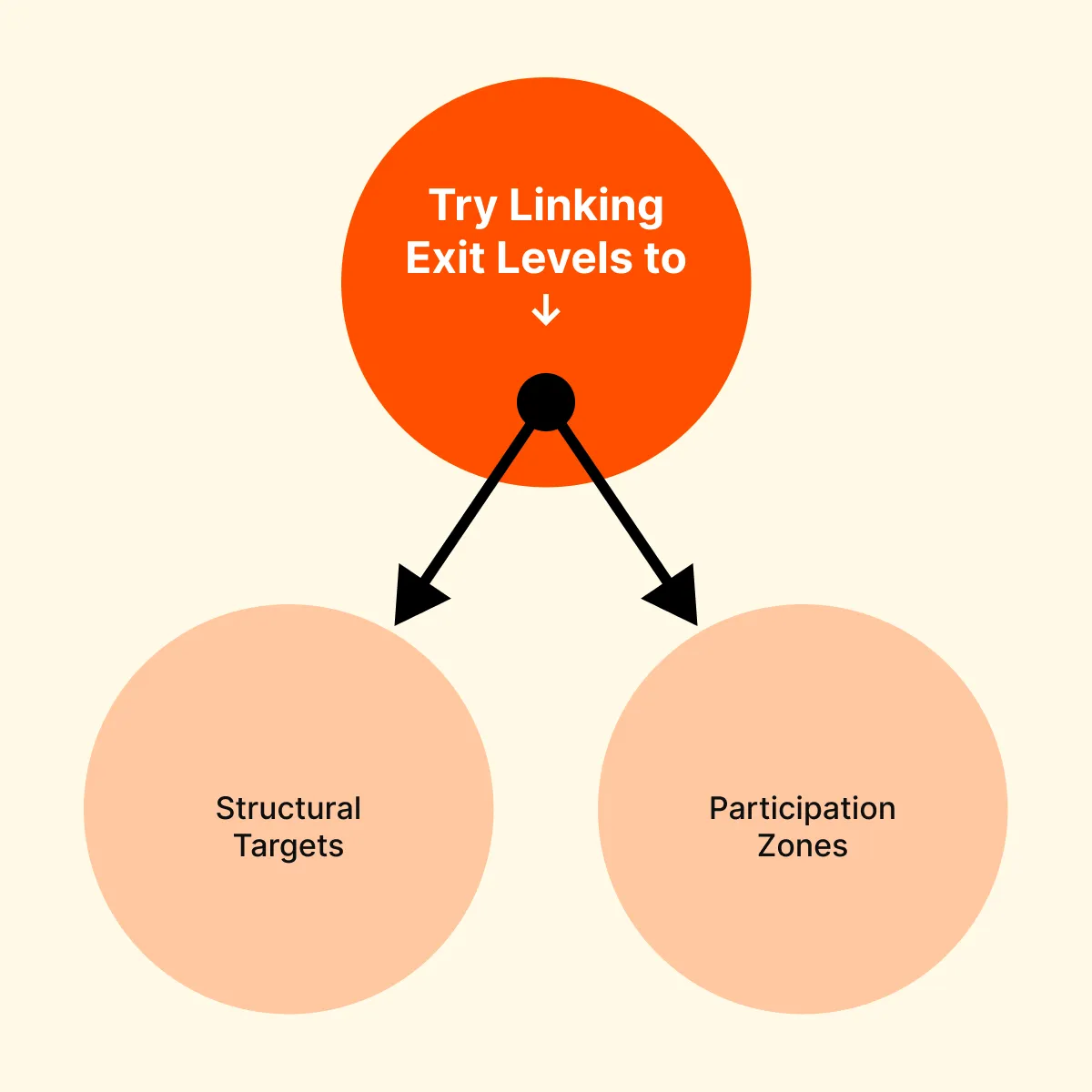
Through such a linking, the decision to close a trade becomes “rule-based” rather than emotional. See how structure can improve exit timing.
Why Traders Exit Too Early
Early exits in trading originate from uncertainty about whether the price move will continue. When continuation conditions are not defined, even a slight pause in price can appear to signal the beginning of a reversal. This uncertainty explains why traders exit trades too early, even when the overall trend remains intact.
This situation usually develops when a structured trading exit strategy is missing. In such cases, traders may identify a strong entry point. However, they fail to define:
- Where the move should logically progress, or
- Where it should weaken.
Several structural factors contribute to this behavior.
| Structural Factor | What It Means | How It Leads to Early or Bad Exits |
| No Clearly Defined Structural Objective |
|
|
| Participation Sustainability Not Evaluated |
|
|
| Minor Pullbacks Mistaken for Reversals |
|
|
For example,
- Suppose price breaks out from a compression range and begins a strong expansion.
- After two upward legs, a shallow pullback appears.
- There is limited selling pressure.
From a structural perspective, this pullback represents normal market behavior within a trend. However, if a structure-based target wasn’t defined beforehand, this pause can be interpreted as a weakness. As a result, the position is exited at the first sign of hesitation. Soon after, the market resumes upward movement and continues the expansion.
Situations like this demonstrate that early exits rarely result from incorrect entries. Instead, they result from the absence of “expectation modelling”.
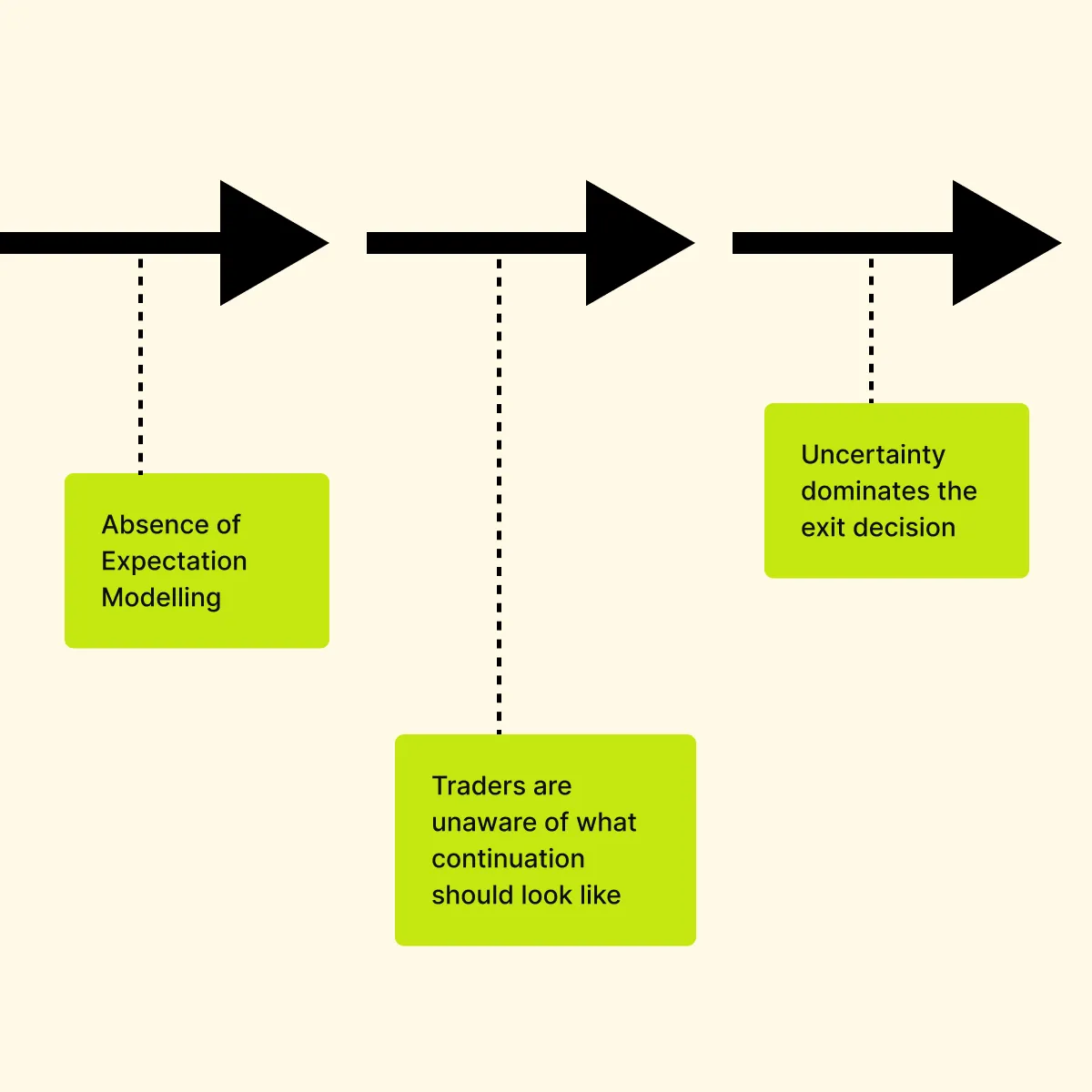
Therefore, discussions about how to improve trade exits usually begin by defining continuation expectations and structural targets in advance, which reduces the likelihood of poor exit trading decisions.
Why Traders Exit Too Late
Late exits in trading occur when decisions become tied to the highest unrealized profit. When a trade moves strongly in one direction, the expectation of continued expansion may dominate decision-making. As a result, positions remain open even when the market begins to show signs of weakening.
Instead of responding to structural changes, the exit decision becomes anchored to the expectation of continued trend expansion. However, participants must realize that markets rarely maintain directional movement without interruption.
To spot this, several structural signals must be observed. Usually, they appear before a trend slows or reverses. Some of the warning signals are outlined below:
| Warning Sign | What to Observe | What It May Indicate for the Trade |
| Volume Increases but Price Stalls |
|
|
| Aggressive Buying or Selling, but Range Compresses |
|
|
| Higher Highs Show Little Progress |
|
|
For example,
-
- Suppose price trends upward in a steady sequence of “higher highs” and “higher lows”.
- As the move approaches a major liquidity zone, buying aggression increases.
- However, despite this aggression, the price advances only slightly.
- This behavior indicates that liquidity is absorbing the incoming orders.
If these structural signals are overlooked, the position may remain open in anticipation of further continuation. Eventually, the accumulated absorption may lead to a sharp rotation lower. At that point, the exit occurs much later than intended. Understand participation before managing exits.
The Real Problem: No Defined Exit Framework

In many trading approaches, the entry side of a trade receives strong planning. Traders often enter positions with:
- Defined risk,
- A clear invalidation level, and
- A logical trigger for participation.
These elements create structure and discipline at the beginning of the trade. However, the same level of planning is usually missing on the exit side. Instead of following an exit strategy, many exit decisions are influenced by emotional reactions during the trade.
For example,
- A profitable trade may trigger the fear of losing accumulated gains.
- Hence, the position may be closed during a slight pause in price movement.
- In other cases, the opposite behavior reveals itself.
- Assume the trade moves vigorously in one direction.
- In this case, the expectation of further upside delays the exit (even when the market begins to weaken).
These reactions explain why most exits are conducted so poorly in trading. Usually, the exit decisions are not based on market structure but on short-term emotional responses to price fluctuations. Consequently, some trades are closed too early, while others remain open too long.
A Structured Exit Framework Prevents Early and Late Exit Errors
Such a framework typically includes several elements that guide the exit decision. Each element links exit timing to market structure and participation:
| Element | Explanation | Importance |
| Structural Target |
|
|
| Participation Monitoring |
|
|
| Liquidity Behavior |
|
|
| Stop Management Rules |
|
or
|
Without these elements, exit decisions become reactive. As a result, even small price fluctuations may trigger early exits. For traders looking to develop a repeatable edge, additional guidance is readily available at the Bookmap Bruce Pilot Program.
Structural Exit Planning: A Better Approach
Notably, when exit decisions are linked to market structure:
- The timing of exits becomes more consistent, and
- The instances of bad exits while trading decrease.
While doing exit planning, traders may follow these steps:
Step 1: Define the Objective Before Entry

Ideally, a 100% clear objective should exist before the trade begins. The target should come from market structure rather than profit expectations. For example, in a “breakout trade”, the objective could be:
- The next higher-timeframe liquidity cluster,
- A measured move projection, or
- The filling of a prior imbalance.
These areas often act as natural zones where price expansion may slow. In contrast, when a “rotational trade” is considered, the objective is different because in such market conditions, the price may:
- Rotate back toward value, or
- Travel toward the opposite side of the range.
In both situations, the target is defined by structure. This type of planning reduces confusion about why traders exit trades too early, since the trade already has a logical endpoint.
Step 2: Monitor Participation During the Trade

Once the trade is active, participation provides information about whether continuation remains intact. Here is an example of how participation can be monitored under two different market conditions:
| Market Condition | What Happens in the Market | Volume Behavior | Price Behavior | What It Indicates |
| Healthy Trend Continuation |
|
|
|
|
| Weakening Trend / Participation Contraction |
|
|
|
|
Step 3: Watch Liquidity at Target Zones

As the price approaches the planned target, liquidity may begin to accumulate near the target level. In some cases, absorption appears. Here, market participants may observe that:
- Incoming orders are repeatedly absorbed without strong price expansion, and
- At the same time, the trading range may compress.
These signals indicate that the move is losing momentum. Under such conditions, partial exits may become appropriate.
Step 4: Separate Trade Management From P&L
A disciplined trading exit strategy separates trade management from unrealized profit. When exit decisions depend on “open profit” rather than market structure, timing becomes inconsistent. As a result, many traders later question:
- Why are exits poorly carried out in trading, even after identifying strong entries?
Realize that exits are more stable when they are tied to a market structure. Traders analyze these two different structural conditions in the following manner:
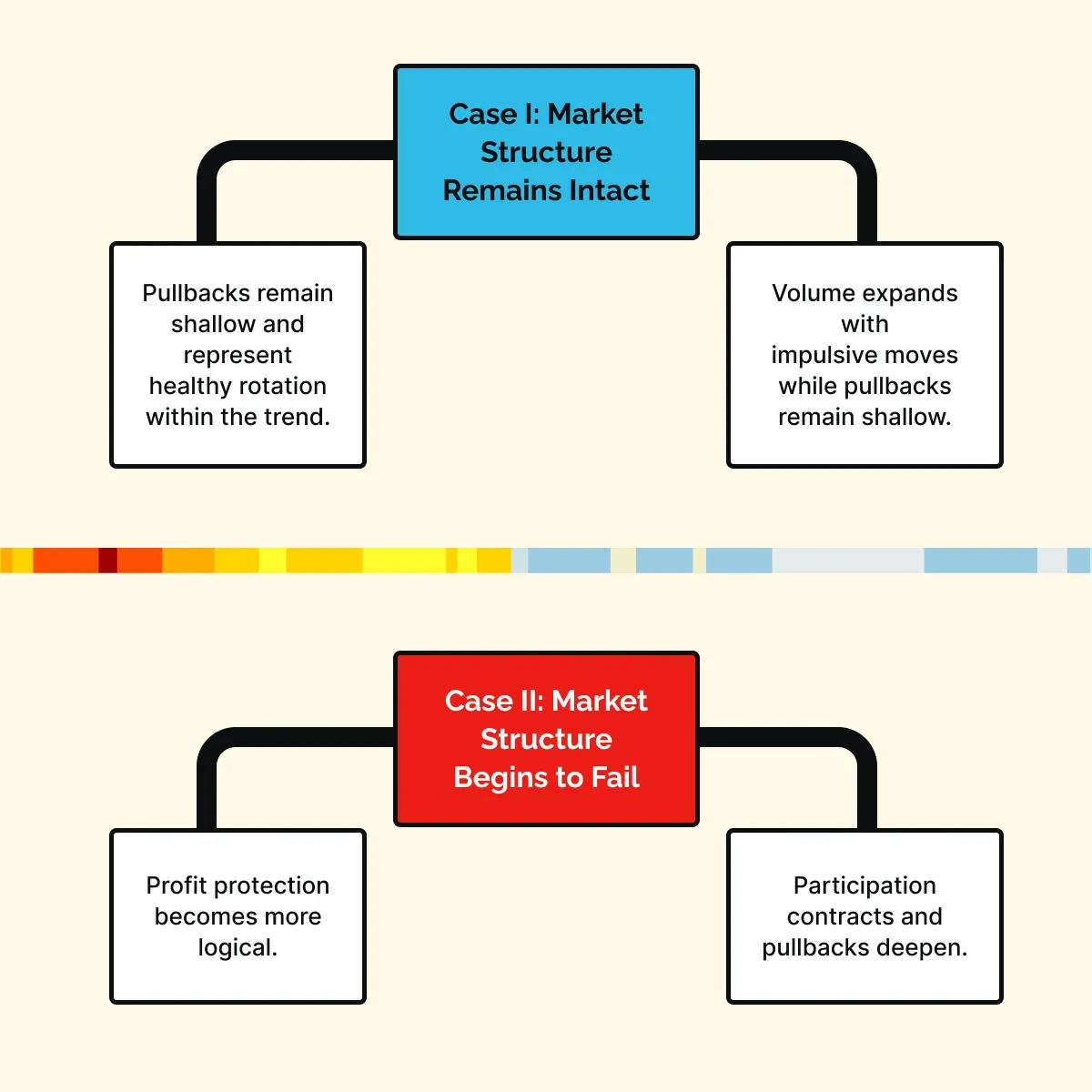
The following is a real trade example representing structured exits (from Bookmap’s Insights).
Real Trade Example Related to Structured Exit
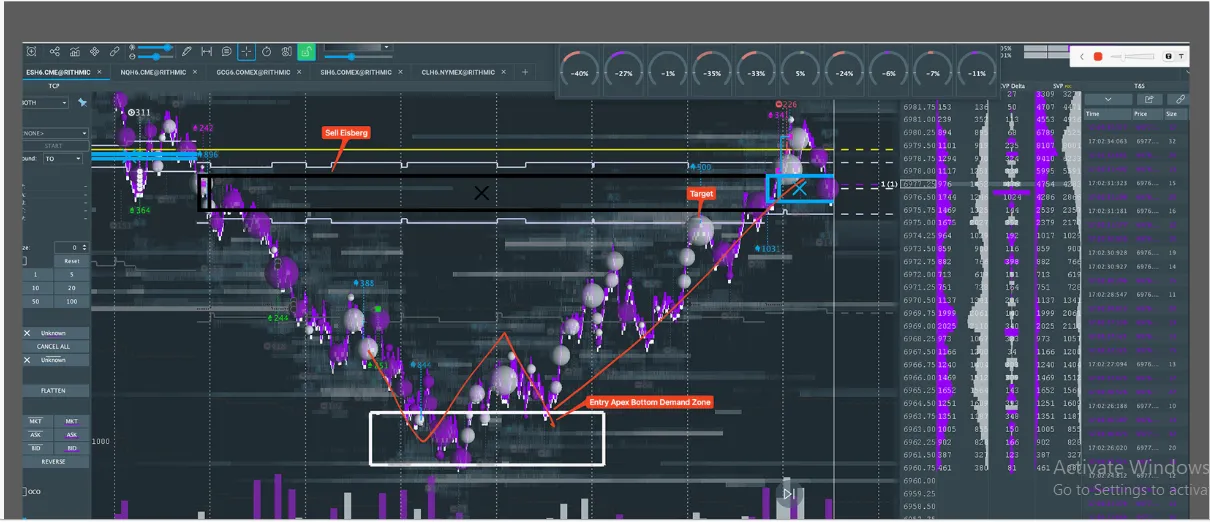
In the above session, intense selling pressure appeared earlier in the day. But gradually:
- Price began to show acceptance near the lows, and
- Absorption developed.
These events suggested that sellers were no longer in complete control. Consequently, an entry formed at the “Apex Bottom” demand zone, near the prior settlement area. This area represents structural support rather than a random price level. Next, confirmation developed in stages as follows:
| Stage | What Happened in the Market |
| Liquidity Shift |
|
| Aggressor Participation |
|
| Predefined Target Logic |
|
Lastly, as the price approached the target area, liquidity behavior and participation aligned with the expected structural objective. This behavior confirmed that the trade had reached its logical destination. As a result, the exit was based on market structure, not on unrealized profit. To explore more real trade breakdowns, visit Bookmap Insights.
Conclusion
Lousy exits in trading are rarely caused solely by emotions. In most cases, they happen because traders do not plan their exits properly. Many traders spend time analysing the market to find the right entry point, but forget to define where and how they will exit the trade.
Without a clear exit plan, it becomes difficult to protect profits or limit losses. Just like entries, exits also require structure and discipline. Market participants should set targets, monitor market participation, and pay attention to liquidity levels near those targets.
When exits are planned with the same care as entries, trading outcomes improve significantly. Explore tools that clarify liquidity at target levels.
FAQ
1. Why do I always exit right before the price continues?
This usually happens when traders mistake minor pullbacks for a complete trend reversal. Note that markets often pause or retrace slightly before continuing in the same direction.
Thus, if traders do not try to spot “continuation signals” before entering a trade, they may exit too early and miss the larger move.
2. Why do I give back profits so often?
Giving back profits happens when traders ignore early warning signs that the market momentum is weakening. For example:
- Price may stop moving strongly, or
- Start trading in a narrow range.
Recognising these signs early may allow participants to protect their profits (instead of waiting until the move fully reverses).
3. Should exits be fixed targets?
Fixed point targets are not always recommended due to high market uncertainty. Instead, exits should be based on market structure, such as:
- Support and resistance levels, or
- Areas where liquidity is expected.
This approach makes exits more logical and aligned with actual market behaviour.
4. How can I improve exits immediately?
Trade exits can improve when an exit plan is developed, along with a “profit target” and “risk level”. Next, during the trade, attention should be given to market participation and momentum rather than reacting to every slight price fluctuation. Such an approach reduces emotional reactions during temporary pauses in price movement.
Sign Up Now
Latest Articles