


See the futures setups traders are watching right now.
Compare plans to track developing structure, liquidity, and momentum shifts.
Market Analysis
May 28, 2026
2026 Futures Setups Traders Are Watching Right Now

The best futures setups in 2026 and strong trading opportunities stem from repeated market behavior rather than mere price prediction. Markets change headlines every day, but the same structures continue appearing across ES, NQ, crude oil, gold, and Treasury futures, such as balance breakouts, pullback continuations, failed volatility spikes, or reversal moves after emotional reactions.
However, some breakouts fail immediately, while others continue trending for hours. Therefore, most traders now aim to recognize whether a move has real acceptance behind it.
This article explains the best futures setups 2026 markets are producing. This includes ES balance breakouts, NQ continuation pullbacks, and crude oil headline reactions. The article also covers gold defensive breakouts, Treasury reversals, volatility collapses, and the common traits strong setups usually share.
Setup 1: ES Balance Breakouts That Need Real Participation
One of the most discussed futures setups traders are watching now involves “balance breakouts” in ES futures. In many sessions, ES spends hours trading inside a tight range before attempting a directional move. As a result, traders pay close attention to how the price behaves near the edge of that range.
Let’s see how this process happens:
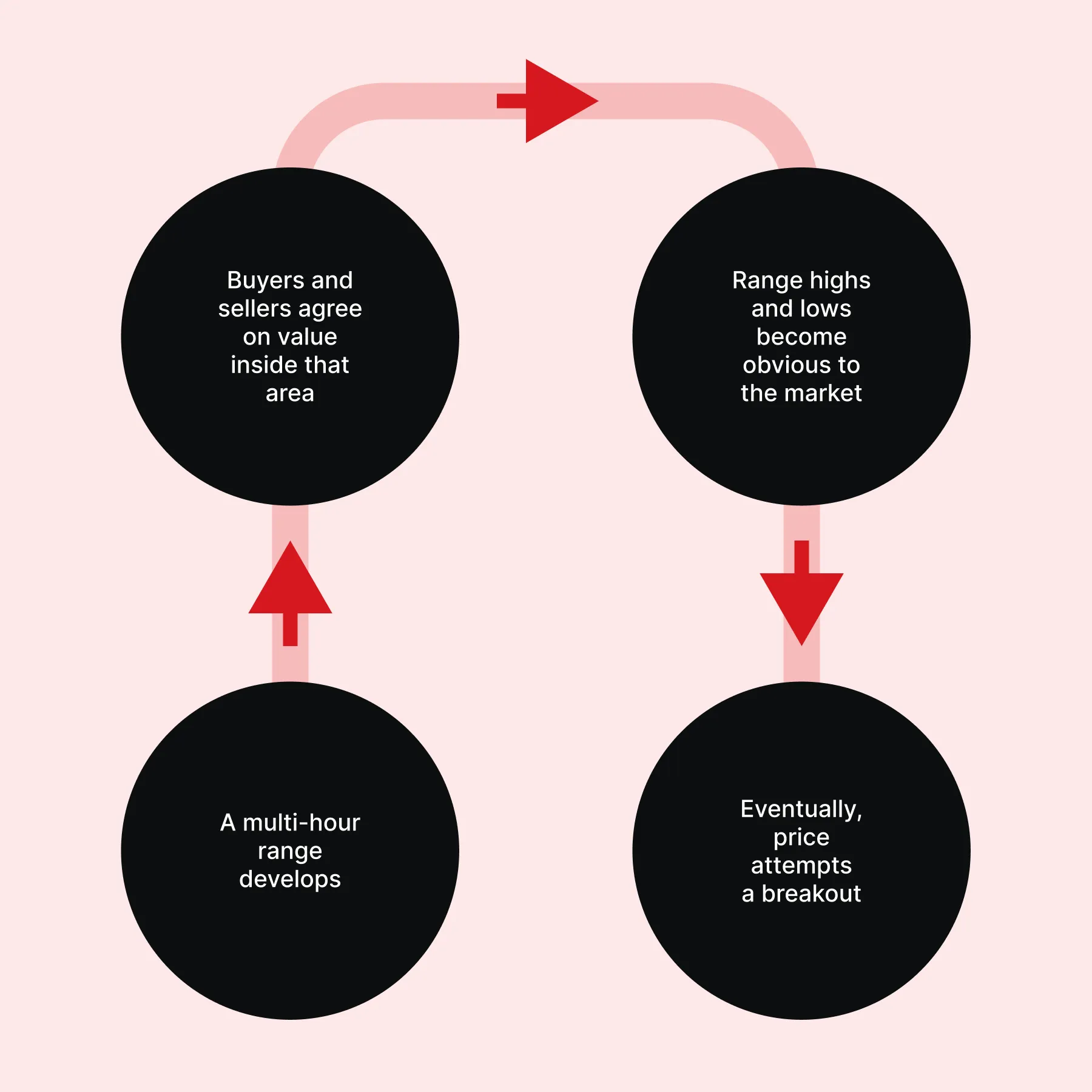
However, not every breakout becomes a strong trend. In many cases, the price briefly moves outside the range and then falls back inside. Most traders interpret this as weak participation rather than genuine conviction.
Therefore, traders look for confirmation before treating the move as one of the best futures setups 2026 markets are offering. Some signs of a stronger ES futures setup today include:
| Positive Confirmation | What It Suggests |
| Volume expands during breakout. | More participants support the move. |
| Liquidity pulls away ahead of price. | The resistance above becomes thinner. |
| Pullback holds outside old range. | Buyers defend new territory. |
| Broader index sentiment supports a move. | Strength is not isolated. |
However, certain behaviors signal that the setup is losing conviction:
| Weakness Signals | What It Suggests |
| Price re-enters the range immediately. | The breakout lacked commitment. |
| Volume remains light. | Participation is weak. |
| Heavy sell liquidity absorbs buying. | Sellers still have the edge. |
| Price returns to the midpoint. | Balance conditions remain active. |
For example,
- Suppose ES trades between 5280 and 5294 for two hours.
- If price breaks above 5294, pulls back to 5292, and then continues higher, the breakout carries stronger acceptance.
- In contrast, a brief move to 5295 followed by immediate rejection may reflect a failed auction rather than a sustained directional move.
See where liquidity is building in today’s futures markets → Compare Packages
Setup 2: NQ Pullback Continuations in AI / Mega-Cap Driven Momentum
Another major futures market opportunity now comes from the NQ pullback continuation. Since the Nasdaq remains heavily influenced by large-cap technology and AI-driven sentiment, strong trends can continue longer than many traders expect. Because of that, traders now prefer “continuation setups” over aggressive reversal attempts.
The structure behind an NQ futures breakout setup usually follows this sequence:
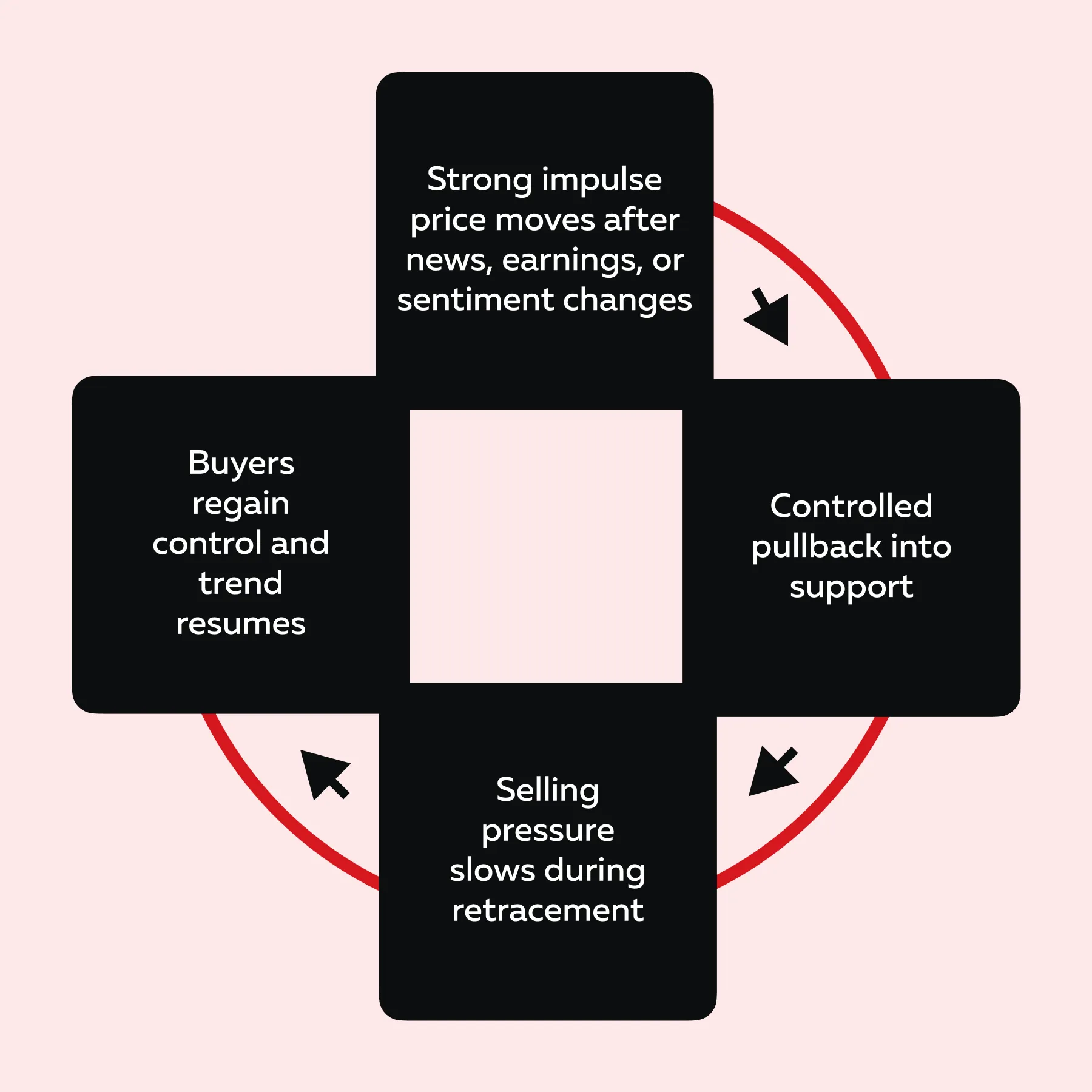
Additionally, some common pullback areas include:
- Prior breakout zones
- VWAP
- Liquidity shelves
- Short-term consolidation levels
This setup attracts attention because NQ can maintain momentum when major technology stocks continue leading broader market sentiment. As a result, repeated attempts to fade strength usually struggle during strong trend conditions.
To confirm continuation strength, several traders monitor the following factors:
| Confirmation Factor | Market Interpretation |
| Pullback volume declines. | Sellers lack aggression. |
| Bid support appears near retracement. | Buyers remain active. |
| Price reclaims short-term highs. | Momentum returns. |
| Risk sentiment stays positive. | The broader environment supports continuation. |
For example, NQ may rally 120 points after strong earnings-related sentiment. Later, the price retraces 35 points into a prior breakout zone. If selling pressure weakens and buyers begin reclaiming structure highs, continuation may become more likely.
In many cases, this produces a better trading setup than chasing the initial impulse candle after the first breakout move.
Setup 3: Crude Oil Headline Spikes That Need Acceptance
Futures market opportunities now also come from crude oil reactions to:
- Geopolitical events,
- Supply concerns, and
- Changing demand expectations.
In 2026, oil prices may move sharply after major headlines. However, not every spike becomes a lasting trend. As a result, traders separate two different situations:
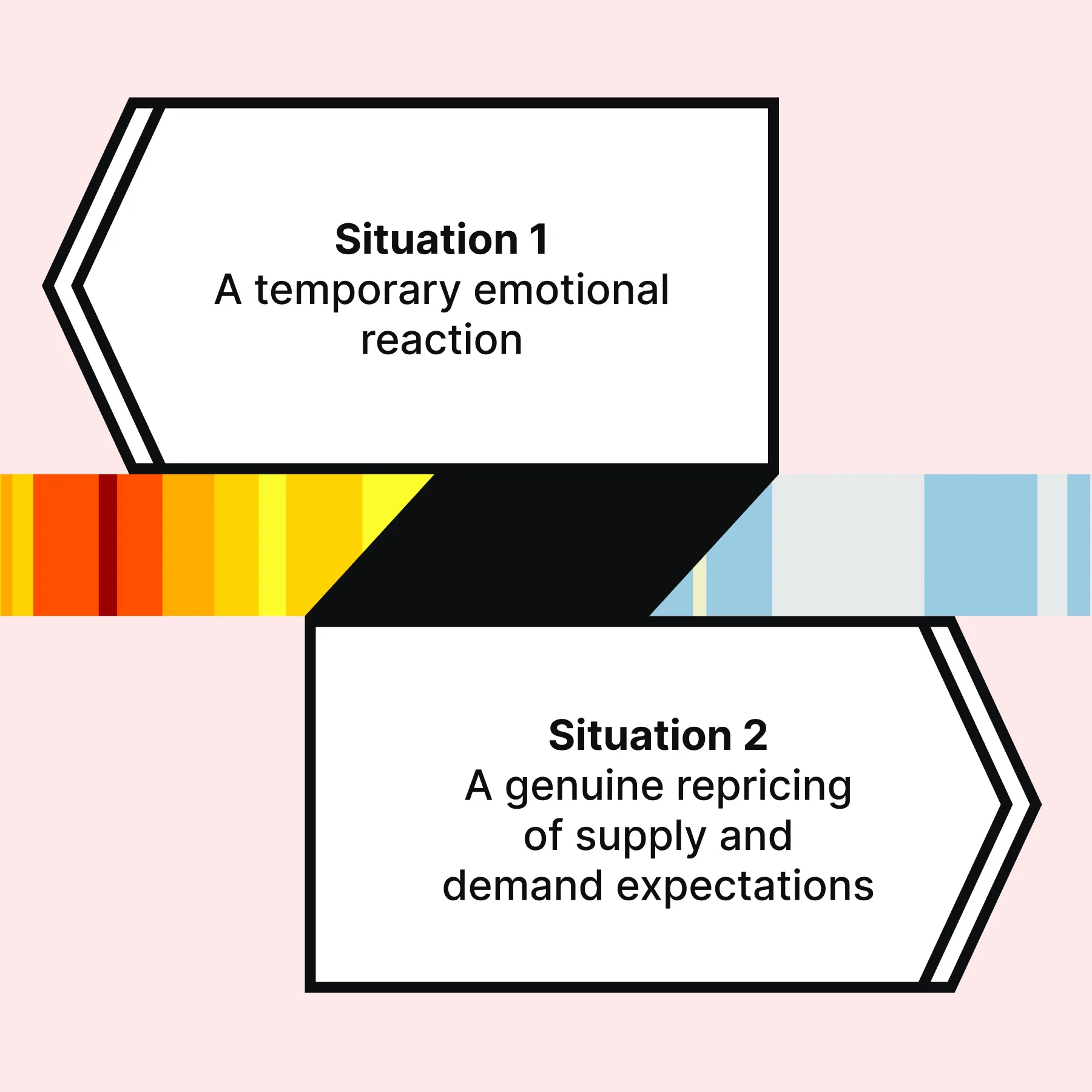
On the basis of these interpretations, traders practice the following trading setups:
Continuation Setup
In some cases, oil spikes higher after supply disruption news and then continues building acceptance above the new price area. This kind of event usually includes:
- Strong headline-driven rally
- Pullbacks staying supported
- Active trading volume at higher prices
- Buyers continue to defend the move
When price holds gains for an extended period, the market signals that participants accept the higher valuation rather than treating it as temporary panic.
Fade Setup
In other situations, crude oil rallies sharply after a headline but fails to maintain those gains. This often includes:
- Violent initial spike
- Selling pressure returning soon after
- Liquidity normalizing
- Price rotating back lower
In these cases, the market may be rejecting the “emotional repricing”. For example, suppose CL may jump $2 after geopolitical news. Now, if the price remains near the highs for 30 to 60 minutes and continues trading actively there, continuation becomes more credible.
However, if most of the move disappears shortly afterward, the spike may represent short-term panic rather than sustained conviction. Therefore, many of the best futures setups in 2026 markets depend less on the first move and more on whether the price can maintain acceptance afterward.
Setup 4: Gold Breakouts During Risk-Off Rotation
In 2026, gold continues reacting strongly to geopolitical stress, unstable rate expectations, and volatility across global markets. Thus, several traders are now watching gold futures levels in today’s periods of macro uncertainty and defensive positioning.
As uncertainty rises, gold usually transitions from consolidation into breakout conditions. This structure usually develops in different stages:
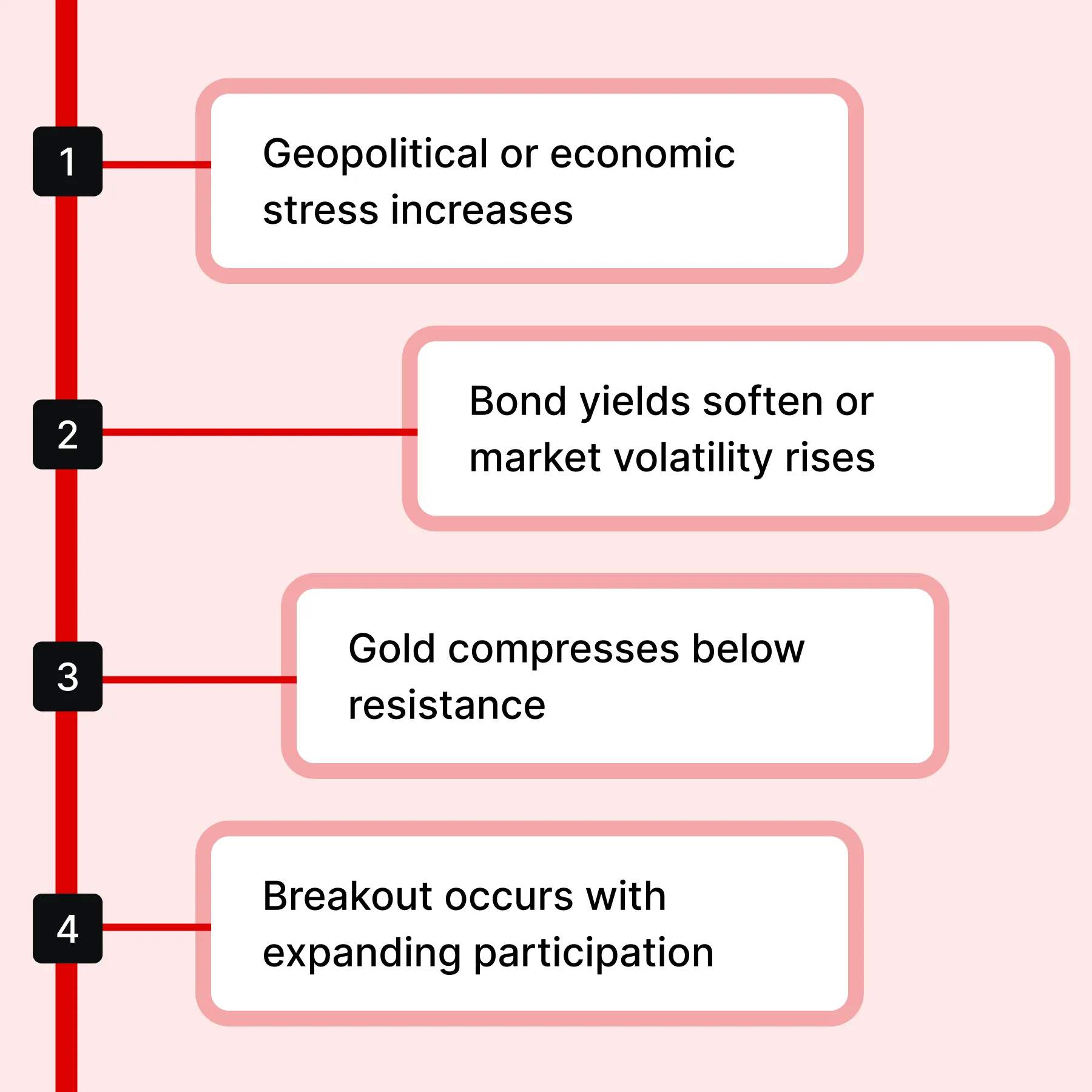
However, the breakout itself is only part of the story. Traders also monitor whether the market continues accepting higher prices after the initial move. The several factors analyzed to confirm the strength are:
| Confirmation Factor | What It Suggests |
| Breakout holds after pullback | Buyers continue supporting higher prices |
| Bonds support defensive narrative | Macro conditions remain aligned |
| USD weakens | Gold receives additional support |
| Volume expands above the breakout zone | Participation remains broad |
For example, gold may break above multi-day resistance during rising geopolitical tension. If pullbacks hold above the prior breakout area and trading activity remains strong, continuation becomes more credible.
In contrast, a one-bar spike that immediately retraces may signal “temporary emotion” rather than sustained demand.
Setup 5: Treasury Futures Reversal Moves After Overreaction
Treasury futures continue reacting aggressively to inflation reports, economic data, and central bank commentary in 2026. Consequently, sharp initial reactions could create reversal opportunities once the market reassesses the broader implications.
This trading setup develops because the first interpretation of economic data is not always the final interpretation. For more clarity, let’s check out a common market scenario that usually appears after the release of inflation data:
- CPI comes in hotter than expected
- Bonds sell off initially
- Yields spike higher
- Markets later reassess growth risks
- Treasury futures recover sharply
In contrast, an opposite structure can also appear if weak economic data initially supports bonds. In response, treasury prices could rally, and inflation concerns may later dominate. As a result, the rally fades.
Thus, traders may note that Treasury markets are usually the first area where broader macro narratives get challenged. Some futures market opportunities can emerge not from the first headline reaction, but from the market’s deeper reassessment after volatility settles.
Setup 6: Buying the Dip on Higher Time Frames
A futures setup traders are watching now is related to “higher timeframe dip buying” (instead of constant breakout chasing). In 2026, strong market trends in ES and NQ continue attracting buyers during pullbacks. This behavior appears most clearly in:
- ES during strong macro-driven trends
- NQ during AI and mega-cap momentum
- Equity indices holding near highs despite volatility
As a result, many traders now treat pullbacks as “pauses” within an existing trend rather than immediate signs of weakness.
What “Buying the Dip” Actually Means in Practice
A dip-buy setup does not mean buying after a red candle. Instead, it is related to stronger setups that usually develop inside an already established trend. Such a trading structure usually includes:
- A clear higher timeframe uptrend
- Pullback into an important support area
- Selling pressure is slowing during the retracement
- Buyers returning near key levels
These support areas may include prior breakout zones, VWAP, liquidity shelves, and even previous consolidation areas. Realize that the main idea behind this setup is that the market is pausing and not fully reversing.
Therefore, many of the best futures setups for 2026 markets are developed after controlled pullbacks rather than aggressive countertrend moves.
What Traders Are Looking For
When markets retrace inside a strong trend, traders study whether selling pressure remains controlled or starts expanding aggressively. Several signs usually support a healthier dip-buy trade:
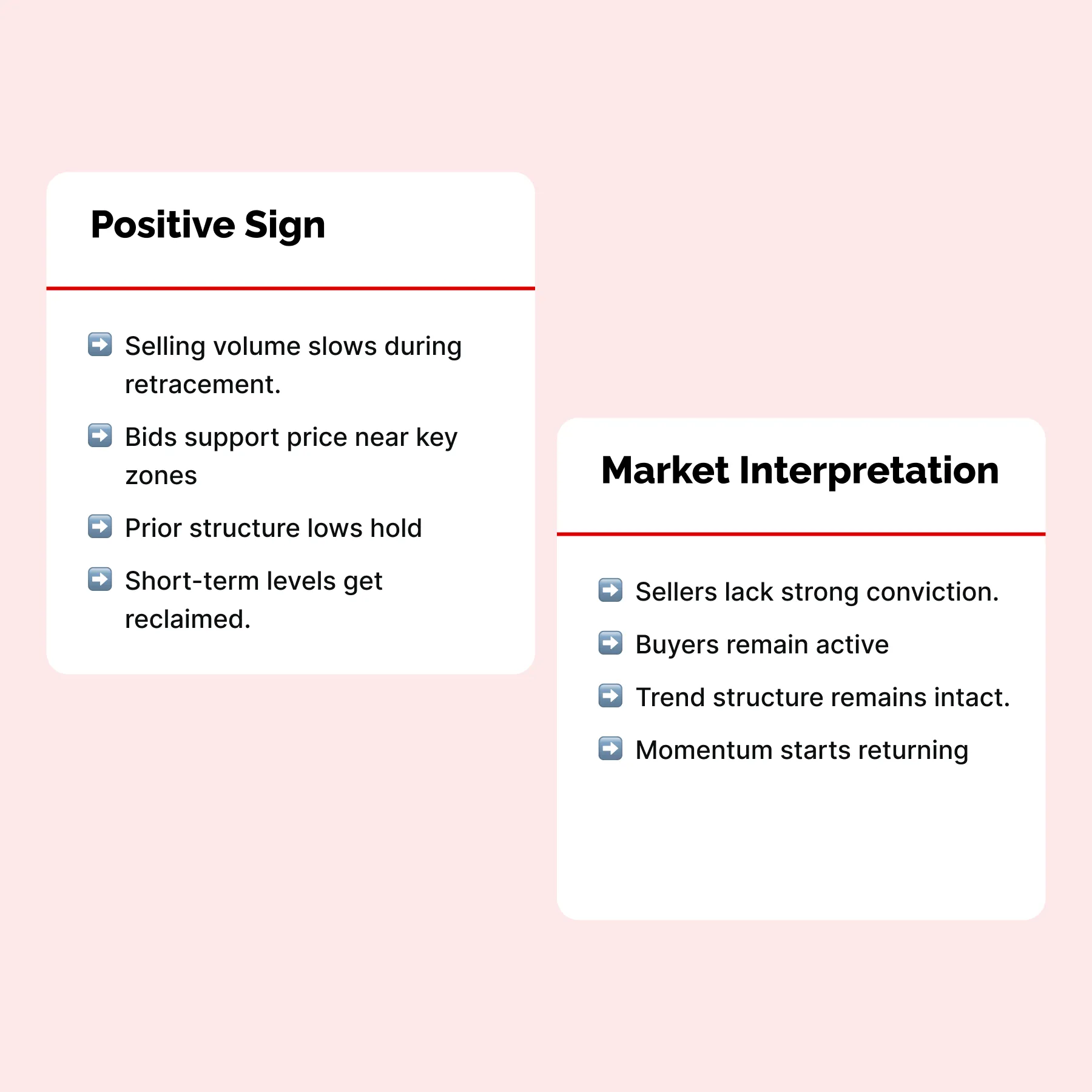
This behavior is common in an ES futures setup today when the price pulls back toward prior breakout zones after strong directional movement. Similarly, an NQ futures breakout setup may include a sharp rally, followed by a controlled retracement where selling activity gradually weakens before momentum resumes higher.
However, not every pullback becomes a continuation opportunity.
If price falls aggressively with expanding sell volume, the market may be shifting from a temporary retracement into weakness. In those situations, the pullback reflects a stronger distribution rather than healthy trend continuation.
Setup 7: Volatility Spikes That Collapse Quickly
Another major category among futures setups that traders are watching now involves sudden volatility spikes followed by sharp normalization. In 2026, markets continue reacting aggressively to:
- Headlines
- Economic data
- Geopolitical developments, and
- Positioning imbalances.
As a result, price can move sharply within minutes before stabilizing or partially reversing.
The Typical Sequence
Most volatility-driven setups follow a similar pattern:
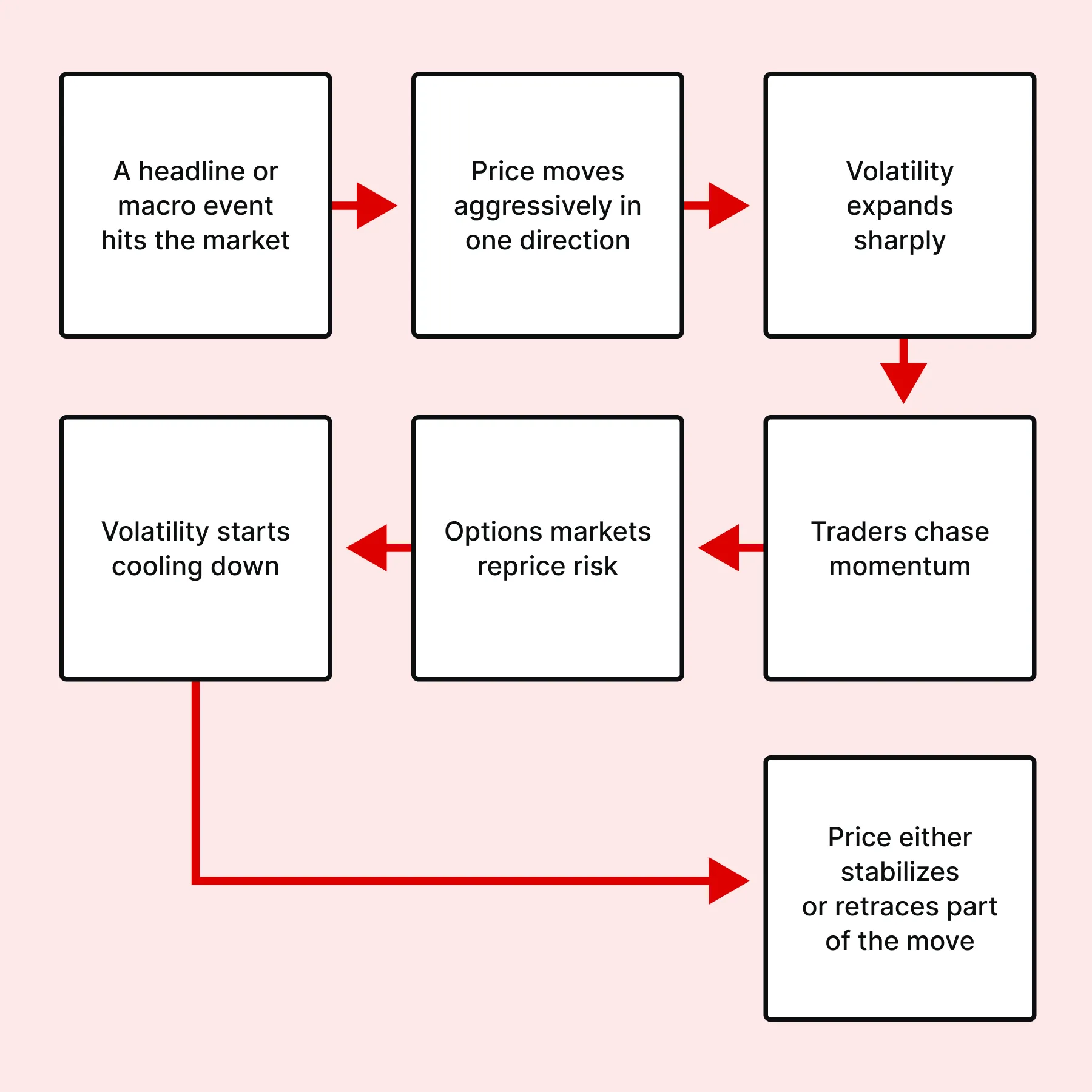
This behavior could create short-term futures market opportunities across indices, commodities, and rates markets. For example,
- Suppose an ES futures setup today begins with a major economic release.
- It triggers a sharp breakout.
- However, once the initial reaction settles, price drifts back toward earlier levels (may happen if participation weakens).
Why These Moves Collapse
Many volatility spikes fail to sustain because the first reaction is often “emotional” rather than balanced. Let’s check out the several trading conditions that contribute to this behavior:
| Market Condition | Impact on Price |
| Thin liquidity during the headline release | Price swings become exaggerated |
| Emotional positioning | Traders chase direction aggressively |
| Stop-loss clusters trigger | Momentum extends temporarily |
| Pricing adjusts before broad participation returns | The move becomes unstable |
Consequently, markets often “overshoot” during the initial reaction. Later, once the shock gets absorbed, trading conditions begin normalizing as follows:
- Liquidity returns
- Price movement slows
- Two-way participation improves
- Markets rotate back toward equilibrium
This is why some of the best futures setups 2026 come after the initial spike rather than during the first emotional move. Track real-time futures setups beyond chart patterns → Compare Plans
The Role of Options Traders
Options positioning also plays an important role in these setups. Usually, after sharp volatility expansion:
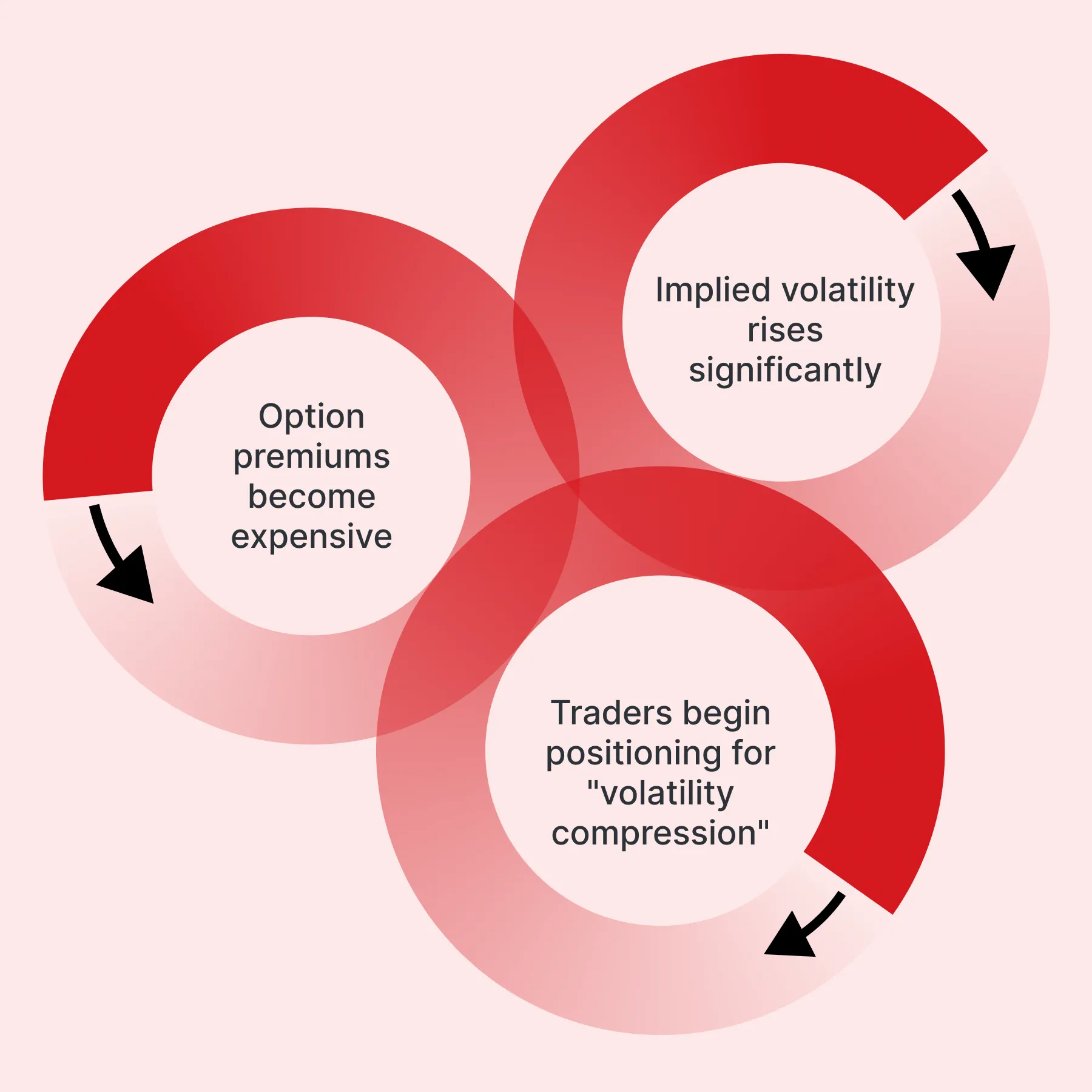
Later, as volatility expectations cool, markets often experience lower implied volatility and slower price movement. Also, there is a visible partial retracement of exaggerated moves. Therefore, many headline-driven spikes fail to continue trending once options markets begin pricing in normalization.
What Traders Are Watching
Instead of reacting only to the first move, traders may study how the market behaves after the initial expansion. Let’s check out the several factors that determine whether the move can continue:
| Observation | Market Interpretation |
| Price holds near highs or lows. | Momentum remains supported. |
| Volume stays elevated. | Participation continues. |
| Liquidity rebuilds slowly. | Trend pressure may persist. |
| Momentum stalls quickly. | The move may be losing conviction. |
Traders may note that as momentum fades after the spike, the market could transition into:
- Mean reversion conditions,
- Fade setups,
- Structured pullbacks, and
- Equilibrium rotations.
As a result, many futures market opportunities now come not from chasing volatility expansion, but from observing whether the market can maintain acceptance after the emotional reaction fades.
What All Good Futures Setups Have in Common Right Now
Across ES, NQ, crude oil, gold, and Treasury futures, many of the futures setups traders are watching now share the same core characteristics. Although each market behaves differently, strong setups usually develop around:
- Market Structure,
- Participation, and
- Confirmation.
First, the market may show a common pattern or sequence before the price move begins. This may include a:
- Breakout level,
- Pullback zone,
- Balance area, or
- Reversal structure.
As a result, traders can identify where buyers and sellers are likely to become “active”. Second, stronger setups usually have a “catalyst” behind them. That catalyst may come from:
- Economic data,
- Earnings sentiment,
- Geopolitical headlines,
- Interest rate expectations, and
- Supply or demand shifts.
In addition, the best futures setups for 2026 show expanding participation. This can be checked through higher trading volume, sustained activity after the initial move, and broader market confirmation. Furthermore,
- Strong setups may hold gains after a breakout or reversal. If the price immediately falls back into the prior range, the move may lose credibility.
- Good setups usually have “invalidation points”. This defines whether the market is accepting or rejecting the move.
For more clarity, let’s check out some common traits of strong vs. weak setups:
| Strong Setups | Weak Setups |
| Clear market structure | Random mid-range entries |
| Strong catalyst or macro context | No clear reason behind the move |
| Expanding participation | Weak volume and liquidity |
| Acceptance after breakout | Immediate rejection |
| Defined invalidation levels | Chasing extended moves |
| Alignment with broader market flow | Trading against the dominant trend |
Therefore, many futures market opportunities now depend less on predicting direction and more on reading whether the market is accepting price after the move begins.
Mistakes Traders Make Chasing “What’s Hot Right Now”
Many traders read articles about futures setups with the expectation of finding exact buy or sell signals. However, strong setup analysis is usually not about predicting one immediate trade. The larger goal is recognizing recurring market conditions.
For example, markets repeatedly show patterns such as:
- Balance breakouts with strong participation,
- Headline-driven spikes that fail after emotional reactions,
- Pullbacks that continue trending markets, and
- Reversal setups where second reactions matter more than the first move.
As a result, the real value comes from learning how markets behave under certain conditions rather than treating every setup article as a direct trading instruction. Therefore, many of the best futures setups of 2026 can be identified by reading context, liquidity, participation, and confirmation.
To understand better, let’s study a Bookmap Insights Example related to the ES reversal setup.
Real Trade Example: ES Reversal Setup With Patience, Structure, and Aggressive Confirmation
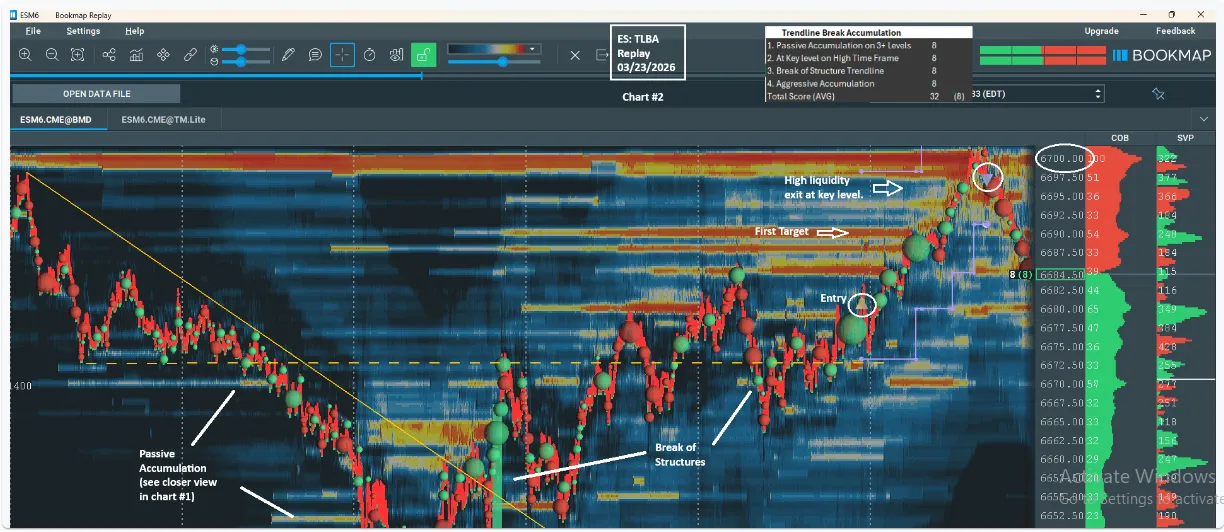
The above Bookmap Insights Example is related to an ES futures setup built around reversal confirmation. At the beginning of the chart, ES remains in a strong sell-off. Price continues making lower highs and lower lows while aggressive selling pressure controls the session. In many cases, traders attempt to buy these declines too early as the price appears stretched.
What Changed in This Setup Later
Several important developments appear before the reversal gains credibility:
| Observation on the Chart | Market Meaning |
| Passive accumulation appears near lows. | Larger buyers begin absorbing the selling. |
| Downtrend structure begins weakening. | Sellers lose directional control. |
| Break of structure occurs. | Market stops making lower highs. |
| Aggressive buying enters after confirmation. | Buyers begin reclaiming momentum. |
| Price holds higher during pullbacks. | Reversal gains acceptance. |
The major change occurs after the market stops accelerating lower. Instead of continued aggressive selling, the chart begins showing absorption and stabilization near important areas. After that:
- Buyers reclaim short-term structure levels, and
- Participation expands on the upside
This is highly important because many reversal setups fail when buying activity lacks follow-through. The latter rally toward higher liquidity zones confirms that the market moved from panic selling into “accepted repricing”.
Explore more real futures trade breakdowns here: https://bookmap.com/insights
Conclusion
The futures setups traders are watching now in 2026 are not built around random indicators or isolated price moves. Instead, many of the strongest setups come from recurring market behavior that appears across ES, NQ, crude oil, gold, and Treasury futures, such as:
- Balance breakouts,
- Continuation pullbacks,
- Headline-driven oil reactions, and
- Defensive gold rallies.
All these recurring market behaviors reflect the same underlying principle: markets move best when participation supports the move. That is why many of the best futures setups in 2026 markets involve liquidity, volume expansion, and price acceptance after the initial breakout or reversal. In contrast, weak setups may lack participation and fail shortly after the first move.
Traders may also realize that markets constantly change headlines and narratives. However, price behavior and trader positioning continue to repeat across different conditions. Understand the order flow behind current futures moves → Compare Packages
FAQs
1. What futures market has the best setups right now?
The best futures setups for 2026 may depend on current volatility and macro themes. ES and NQ could remain “active” because of equity momentum, while crude oil may react strongly to geopolitical and supply news. Besides, Gold and Treasury futures can also attract attention during uncertainty and rate-related market changes.
2. Are breakout setups working in 2026?
Breakout setups may continue working in 2026, particularly when supported by:
- Strong participation,
- Expanding volume, and
- Price acceptance after the move.
Notably, several failed breakouts occur when the price moves outside a range but cannot maintain momentum or attract continued buying or selling interest.
3. Why are crude oil futures so active now?
Oil futures trading setup activity remains elevated because crude oil reacts heavily to:
- Geopolitical developments,
- Supply disruptions,
- Production decisions, and
- Demand expectations.
As a result, headline-driven volatility could continue to create large intraday moves and short-term repricing across energy markets.
4. Should traders focus on one futures market or many?
Many traders develop stronger market awareness by specializing in one or two futures products instead of chasing every active market. ES, NQ, crude oil, gold, and Treasury futures each behave differently, so repeated observation may matter more than watching too many markets at once.
Sign Up Now
Latest Articles