


See beta weighting more clearly in real time.
Compare plans to access deeper market visibility for beta weighting.
Market Analysis
January 22, 2026
Beta Weighting: What It Really Tells You About Market Exposure

Are you confident your portfolio is truly balanced and genuinely protected from market swings? You might hold a mix of tech stocks, ETFs, and options contracts. Your holdings appear diversified, right? But that’s not how the market sees it. The market doesn’t care how many tickers you own. Instead, it only cares about how all your positions move together.
If most of your holdings react the same way when the S&P 500 moves, you’re not diversified. Rather, you’re just holding different versions of the same market risk. In other words, despite holding multiple securities, your portfolio may behave like a single, concentrated bet. How can you correct this? That’s where beta weighting steps in.
In this article, you’ll learn what beta weighting is, how to calculate it, and why it matters in futures and options trading. Also, you will see how advanced market analysis tools like Bookmap make it easier to track and visualize correlated assets. Let’s begin.
What Is Beta Weighting and Why Does It Matter
To understand beta weighting, you first need to know what beta means. Beta measures how much a stock or asset usually moves compared to a benchmark like the S&P 500 (SPX). Let’s see what its different values signal:
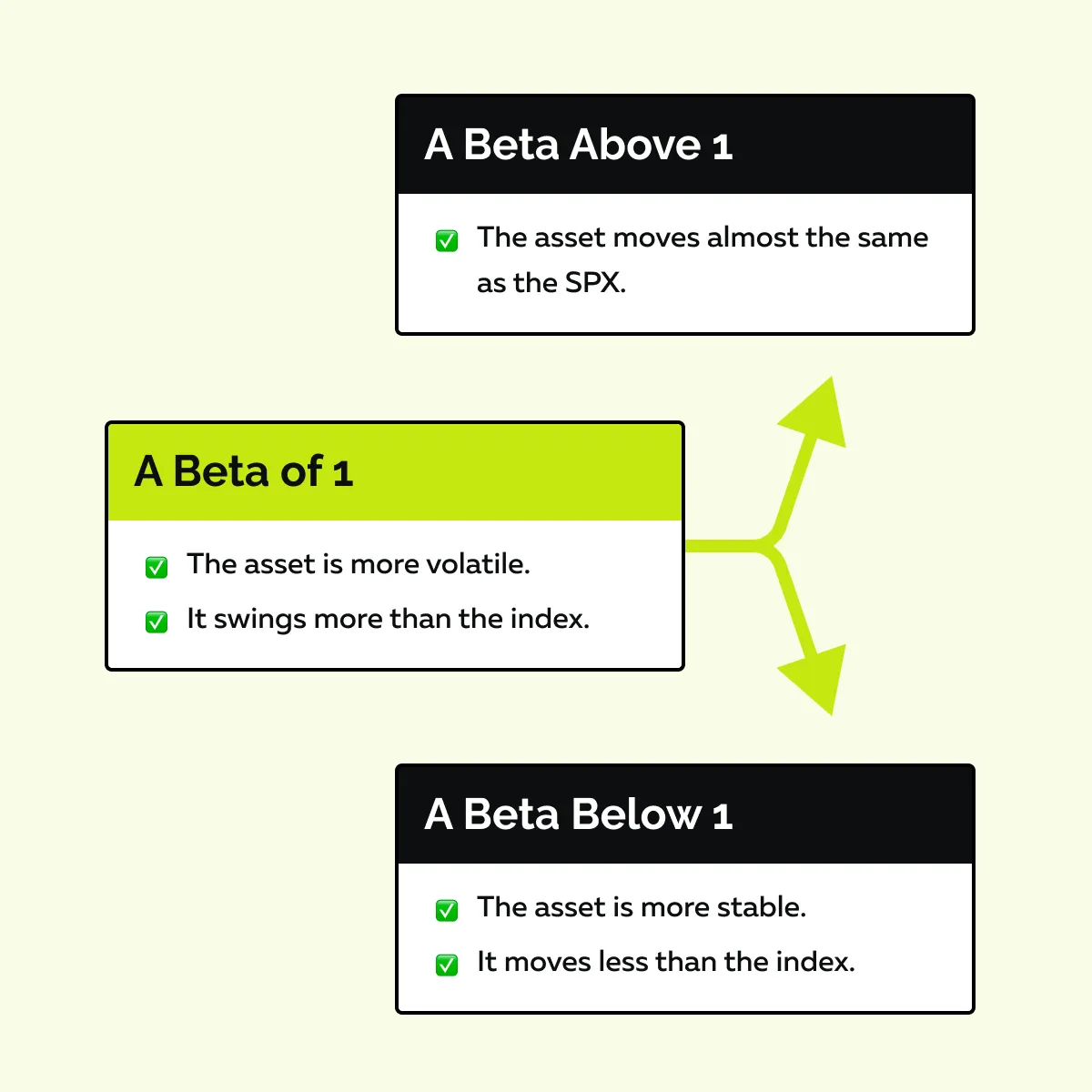
Now, “beta weighting” converts all your trades—stocks, options, or futures—into one common measurement based on a big market index like the S&P 500 (SPX) or E-mini futures (ES). So instead of seeing “100 shares of TSLA” and “2 NQ contracts” as separate things, beta weighting shows how they together behave compared to the market. It’s like converting different currencies into one! This way, you know your total market exposure in one clear number.
Why Is Beta Weighting Important for You?
You might hold a variety of stocks, ETFs, or options. They all move differently in response to market conditions. Additionally, you might also trade across multiple markets like NQ, ES, or SPY.
Now, without beta weighting, your portfolio may appear balanced but still be tilted toward one direction (let’s say too bullish or too bearish). That’s because without beta weighting, you only see position sizes and ignore how sensitive each trade is to the market. For example,
- A 100-share position in AAPL doesn’t behave the same as 100 shares of KO.
- One moves more in line with the market (higher beta), while the other moves less in line with it.
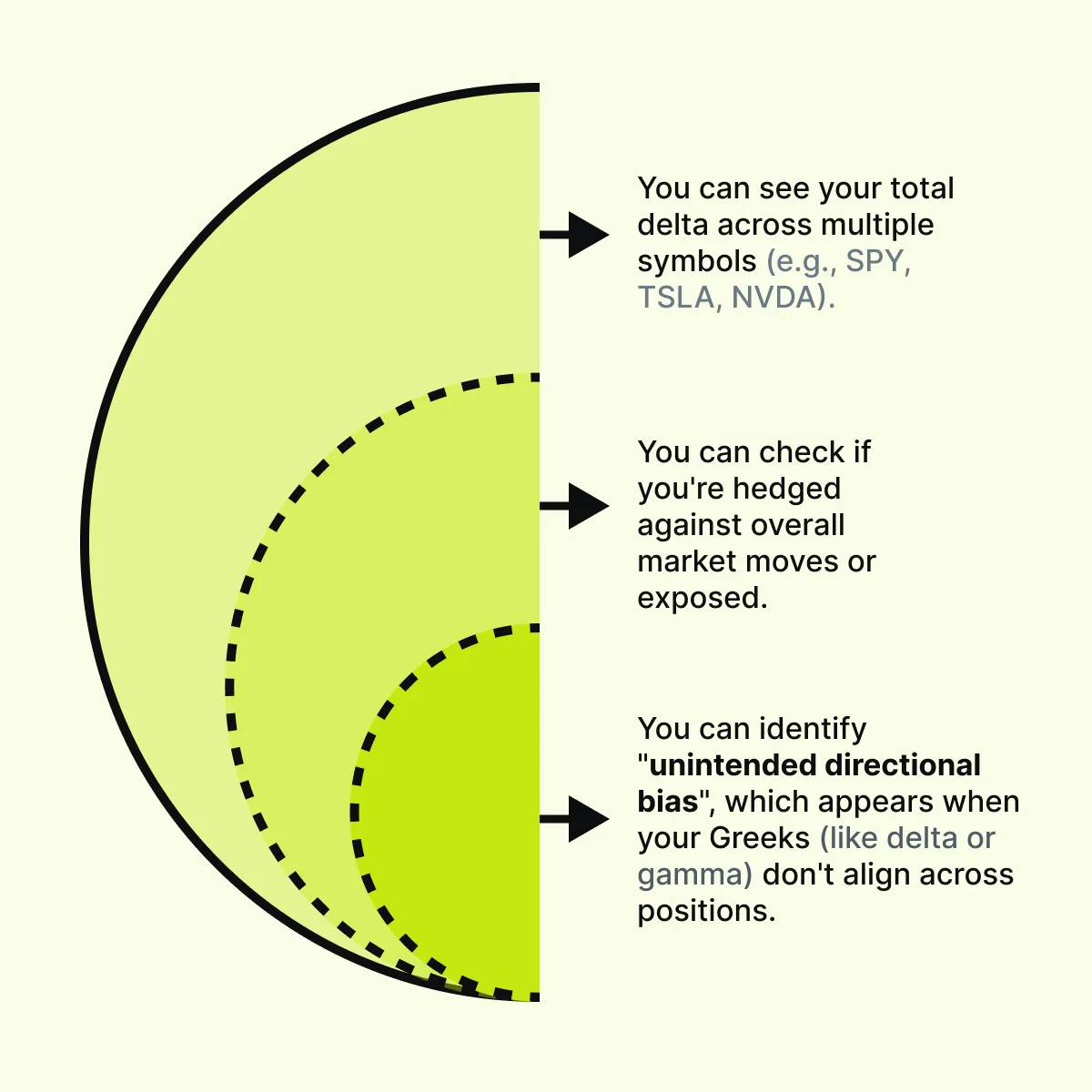
Beta weighting addresses this issue by translating every position into a common market scale, usually the S&P 500 (SPX) or E-mini (ES). So, instead of just counting shares or contracts, you see how much each trade contributes to your total market exposure. In this way, Beta weighting will enable you to do the following:
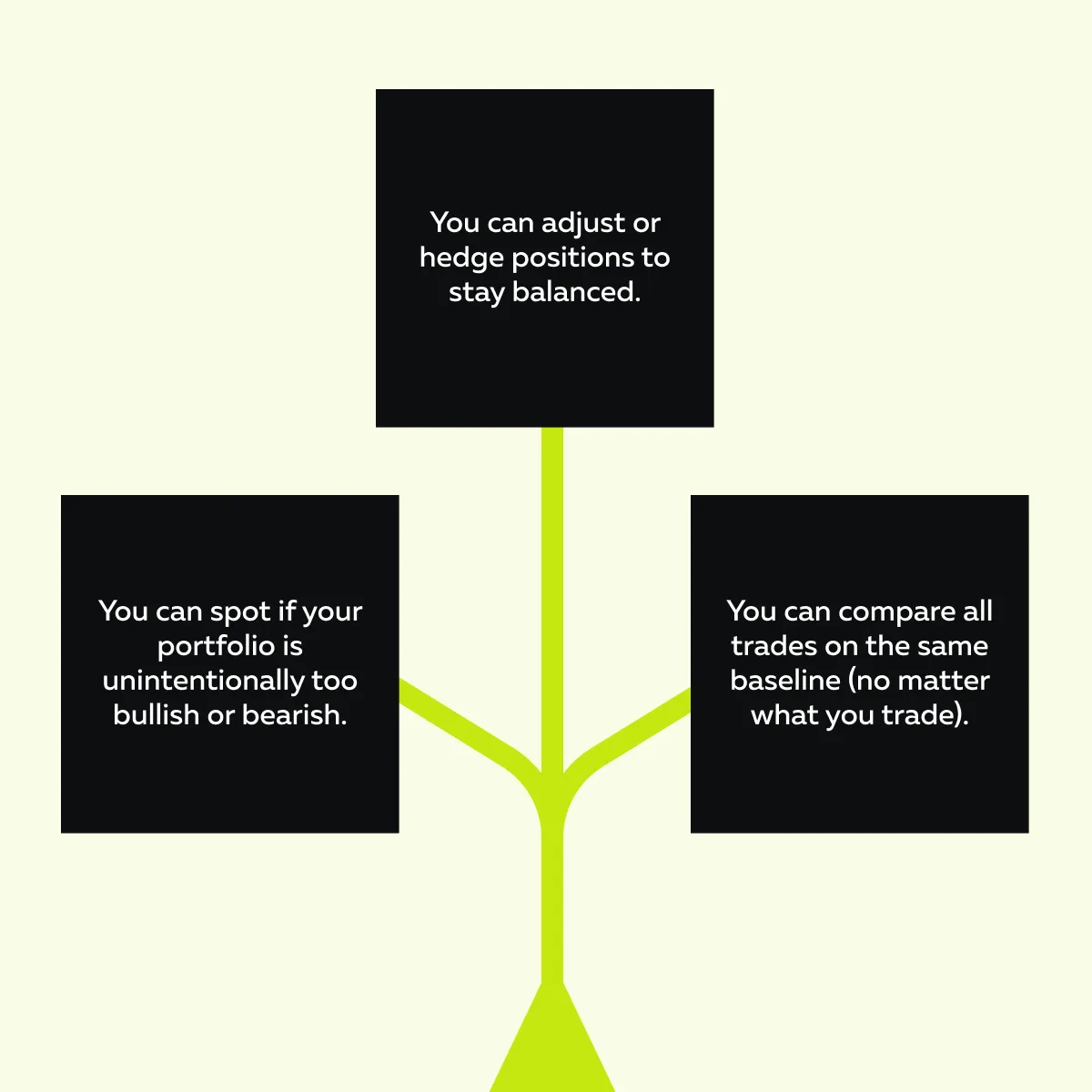
Therefore, beta weighting in options or futures trading is a way to see how your entire portfolio reacts to market moves, rather than just individual trades.
How to Calculate Beta-Weighted Exposure
Most trading platforms, such as Thinkorswim or Interactive Brokers, can automatically calculate beta weighting. However, it is always better to know the manual process behind it.
But before moving on to its calculation, firstly, understand that beta-weighted exposure tells you how sensitive your entire portfolio is to movements in a benchmark like the S&P 500 (SPX). It answers a simple question:
“If the SPX moves up 1%, how much would my portfolio gain or lose?”
Now, let’s check out three steps in which you can calculate beta-weighted exposure:
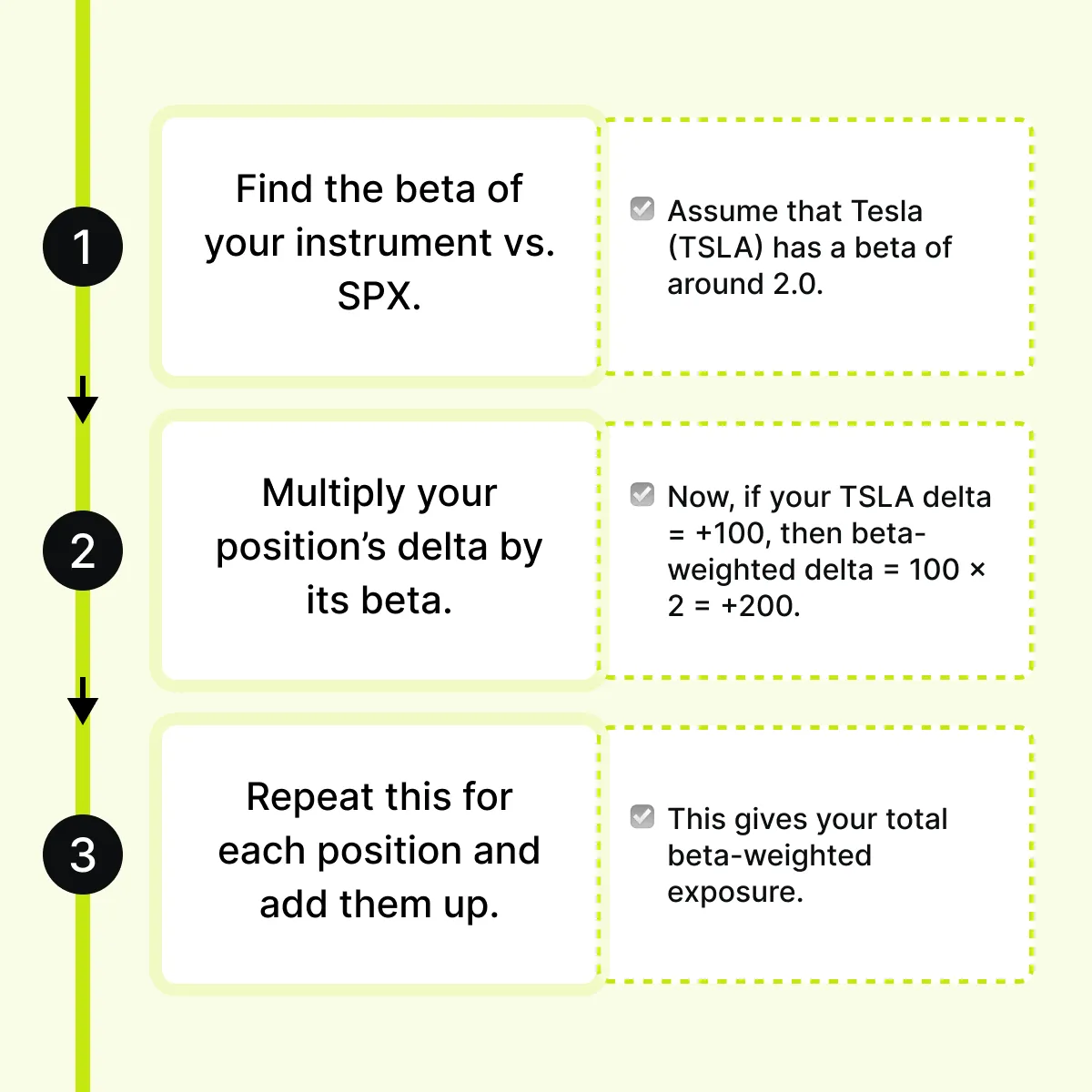
For more clarity, let’s study an example related to a “beta-neutral portfolio”. Assume that your portfolio has the SPY positions as tabulated below:
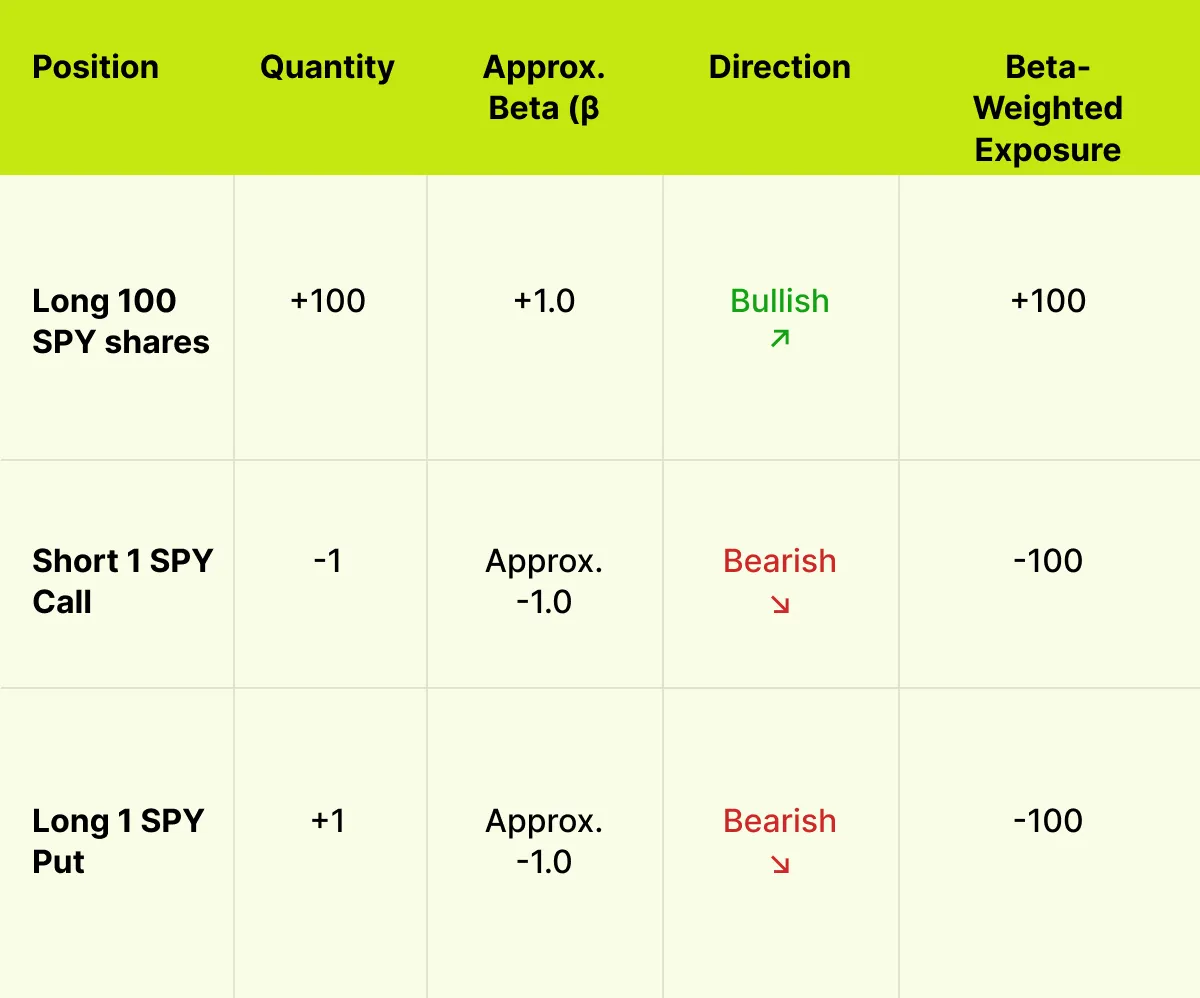
So, your Total Beta-Weighted Exposure = +100 – 100 – 100 = -100
Interpretation? Your short options offset your long stock exposure. The portfolio is roughly beta-neutral, so large SPX moves should have a limited effect on your net P/L.
How Does This Calculation Help You?
By learning how to calculate beta-weighted exposure, you can:
- See your true market bias (bullish, bearish, or neutral).
- Compare different assets (like stocks, options, or futures) on the same scale.
- Build better hedges in futures trading or options trading.
Already exposed to ES? Beta weighting helps you manage risk more intelligently →
Why This Matters for Futures and Options Traders
If you trade futures or options, beta weighting can completely change how you see risk and exposure in your portfolio. Many traders believe that trading across multiple contracts, such as ES (S&P 500), NQ (Nasdaq), and YM (Dow Jones), gives them diversification. However, without beta weighting, that assumption can be misleading! Let’s learn why:
In Futures Trading
Each futures contract behaves differently because every index has its own beta and volatility level. For example:
- NQ (Nasdaq) has a higher beta than ES. It moves more aggressively when the market shifts.
- RTY (Russell 2000) can also have a larger impact on your overall portfolio because of its higher beta and price swings.
So, 1 NQ contract does not equal 1 ES contract in terms of exposure. By using beta weighting in futures trading, you can adjust your positions to make them comparable. By doing so, you can avoid unknowingly taking on amplified market exposure.
In Options Trading
For options traders, too, beta weighting is equally important. It helps you in the following manner:
How to Use Bookmap for Tracking Correlated Assets?
Several traders use Bookmap, a real-time market analysis tool, to visually track how correlated markets behave. Let’s understand how to effectively utilize Bookmap to track correlated assets step-by-step. Follow the following steps if you want to apply it with beta weighting or while trading multiple symbols like SPY, TSLA, or NQ.
Step I: Load Multiple Correlated Symbols
- Start by opening SPY (or QQQ, ES, NQ) in one panel.
- Open your target stock or instrument (say TSLA or AMD) in another tab.
- This lets you see how they move together.
- Usually, when SPY starts trending or rejecting a level, correlated assets often follow.
Step II: Use the Heatmap to Track Liquidity Behavior
- The heatmap in Bookmap shows where big limit orders (liquidity) are sitting.
- Interpretation – The darker the color, the larger the order.
- Now, if those large orders in SPY disappear, it can mean institutions are backing off from support or resistance levels.
- This is often an early warning that momentum could shift across other correlated assets.
Step III: Watch for Cross-Market Reactions
- Bookmap enables you to align charts by time.
- When SPY breaks a key level, you should note whether your stock reacts within seconds.
- This allows you to confirm how strongly correlated your instrument is to the index.
- Based on this knowledge, you can then adjust your beta-weighted exposure accordingly.
Step IV: Combine with Volume and Order Flow Data
- Use Bookmap’s volume dots + iceberg detection tools to track aggressive buying or selling.
- Let’s say you notice large aggressive selling on SPY and NQ.
- However, the intensity of your stock is much lower.
- Now, this means momentum may catch up soon.
Monitor correlated instruments like SPY and QQQ in parallel to spot divergences →
Mistakes Traders Make Without Beta Weighting

Many traders skip beta weighting. Why? They assume their portfolios are “diversified.” But that’s often an illusion. Without understanding portfolio beta, you might be taking on far more market risk than you realize. Below are some common mistakes traders make:
1. Overexposure Disguised as Diversification
You might think holding three different tech stocks means you’re spreading your risk. However, if all three (let’s say, AAPL, MSFT, and NVDA) move in sync with QQQ or ES, you’re not at all diversified. You’re simply stacking exposure to the same high-beta sector.
2. Poor Hedging
Ever seen someone try to hedge a TSLA position by buying SPY puts?. That’s a classic mistake! While both are linked to the broader market, TSLA’s beta is much higher than SPY’s.
That means “one SPY put” won’t fully offset your losses if TSLA drops sharply. Beta weighting vs delta allows you to adjust your hedge correctly by comparing true exposure instead of just looking at contract size.
Use Bookmap to time entries on your high-beta trades with greater precision →
3. Misjudging Volatility
Some traders open what seems like a “small” position in a high-beta stock, such as NVDA or COIN. Reason? They assume that if the dollar amount is small, the risk must be small too.
But high-beta stocks move much more sharply than the market. Even a 1% move in the S&P 500 might cause a 3 to 4% move in these stocks. So, even a small trade can behave like a much larger one in terms of profit or loss swings. Thus, when you know your beta-weighted exposure, you are aware of the real risk behind every trade.
So, What Did You Learn? The Key Takeaway
Beta weighting makes all your trades “speak the same language.” It helps you see when you’re:
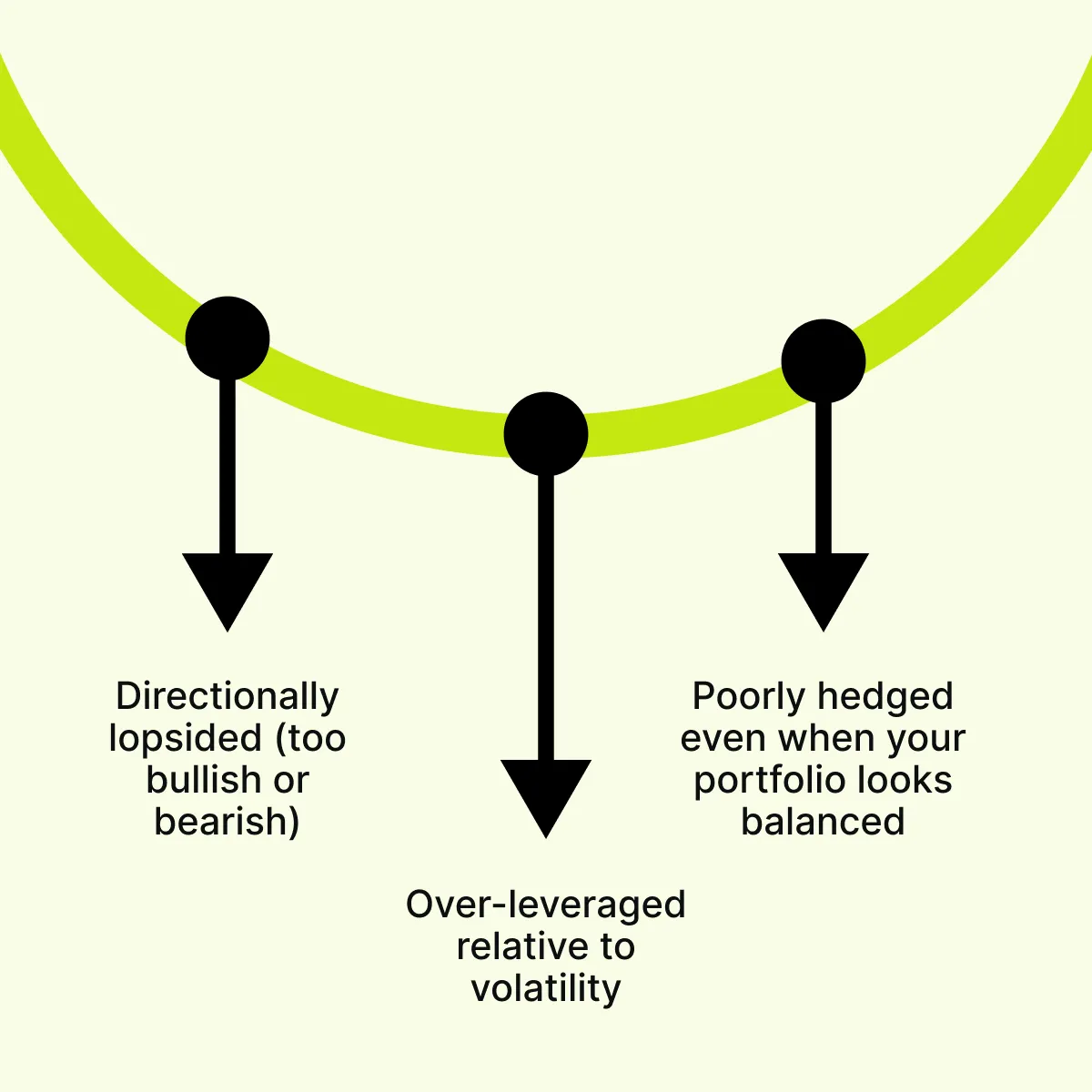
In this way, beta weighting in options and futures trading can turn a mixed portfolio into a measurable risk profile. Visualize how correlated assets behave with Bookmap’s real-time heatmap →
Strategy Tips: How to Apply Beta Weighting in Practice
Do you trade intraday, swing, or options? By applying beta weighting, you can control exposure and better manage your risk. Let’s see how different traders can apply beta weighting in real trading:
Intraday Traders
If you scalp or day trade, keep an eye on how your active positions move compared to:
- ES (S&P 500 futures)
or
- NQ (Nasdaq futures).
Next, don’t assume your stock or crypto pair is moving independently. That’s because most assets have some correlation to the broader market. Ideally, you should watch for beta-weighted exposure as it lets you spot when your “isolated” trade is actually following the index.
Swing Traders
If you hold trades for days or weeks, beta weighting can keep your portfolio beta stable. It ensures your account doesn’t overreact to every:
or
- Big market move.
Furthermore, always remember that a portfolio that looks balanced by “position size” might still be highly sensitive to the S&P 500. Through beta weighting, you can know about that hidden tilt.
Options Traders
Track your beta-weighted delta (instead of just raw delta), before key events like:
- CPI,
- FOMC, or
- Earnings.
This tracking gives a 100% clearer picture of your true market exposure. For example,
- Let’s say two option positions have the same delta of +50.
- Now, that means each position should gain about the same amount if its own underlying stock moves up $1.
- But not all stocks move the same way as the overall market.
- Some positions (like TSLA or NVDA) have a higher beta.
- They move more than the S&P 500 (SPX).
- In contrast, other positions (like KO or JNJ) have a lower beta, and they move less.
So, when you “beta-weight” those two options, the TSLA position will show higher market exposure than the KO position, even though both have the same delta.
For Hedging
Always beta-adjust your hedge. If your long positions are in high-beta stocks like NVDA or TSLA, a basic SPY hedge might not be enough. You’ll need a larger or higher-beta hedge, such as using NQ futures to offset the real exposure. This is a key difference between simple hedging and beta weighting in futures trading.
How to Use Bookmap While Applying Beta Weighting?
If you trade with Bookmap, load SPY and QQQ alongside your main instrument. Watch how liquidity and order flow behave across correlated markets. Now, if liquidity starts disappearing in SPY, that’s often a warning sign, even for your specific stock or perpetual contract.
Conclusion
Now, based on this read, answer this question: Is Beta weighting just for portfolio managers? You will certainly say a big NO! By now, you understand that beta weighting is a must for any trader who wants a complete, 100% view of their market exposure.
Using beta weighting, you can compare all your trades to one common market, such as the S&P 500 (SPX) or E-mini futures (ES). This lets you see your portfolio in one simple view. Also, you understand:
- What direction you’re actually betting on (bullish or bearish),
- How much total market risk you’re taking.-, and
- Whether your trades are really balanced or tilted one way.
In short, beta weighting shows if your portfolio is truly as safe and diversified as you think, or if you’re unknowingly overexposed to risk in one direction.
Want to visualize how correlated markets move in real time? With Bookmap, you can see where big traders are buying or selling in real time. Also, you can watch how money moves across different markets, whether it’s SPY, NQ, or a stock like TSLA.
Start using beta weighting in your daily process to protect your edge. → Learn more about how Bookmap can help visualize correlated market behavior.
FAQs
1. What is beta weighting in trading?
Beta weighting shows how your positions move compared to a benchmark like the S&P 500 (SPX) or E-mini futures (ES). It converts all trades into one common scale so you can:
- See your real market exposure.
and
- Check whether your portfolio is balanced or leaning bullish or bearish.
2. How is beta weighting different from delta?
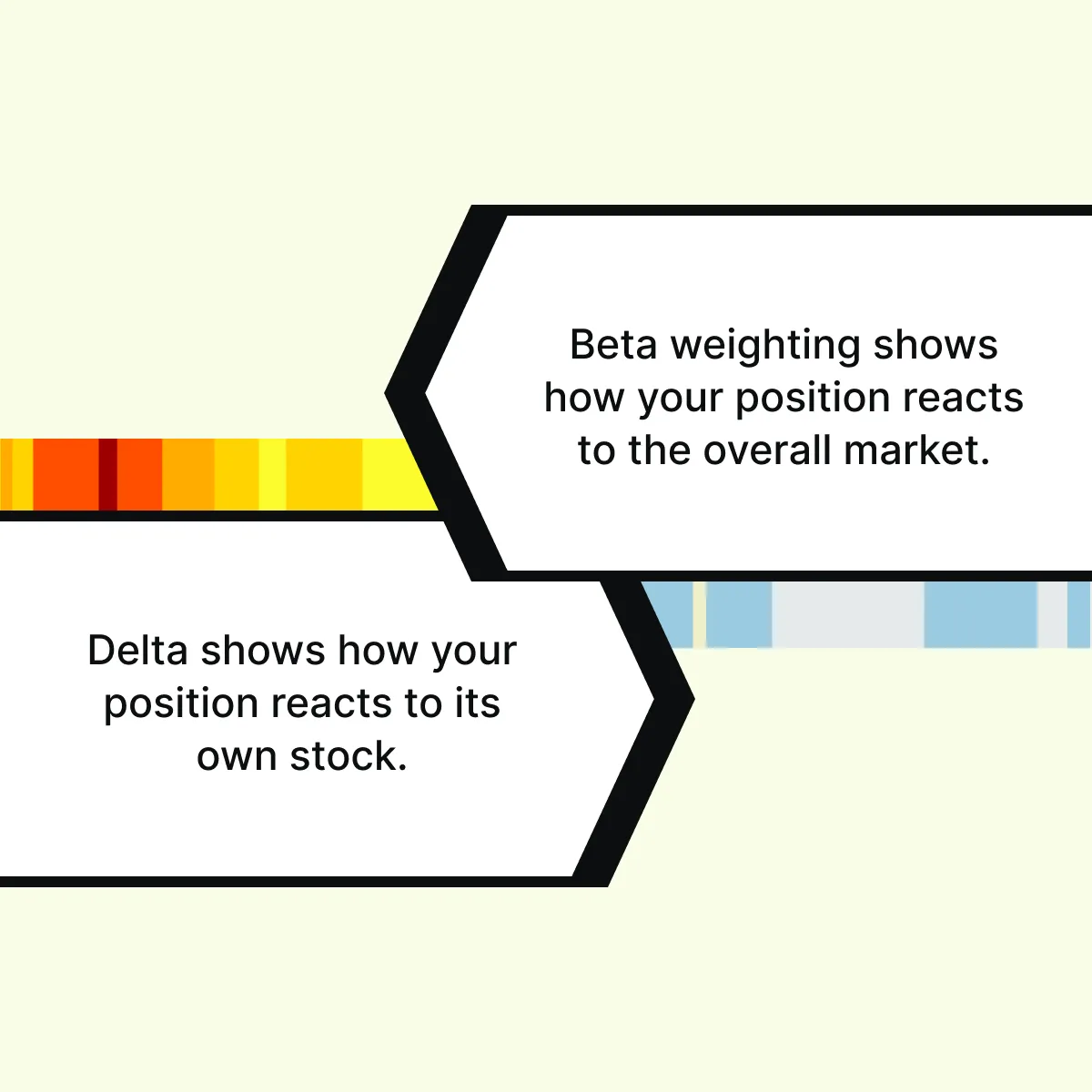
Delta shows how much your trade will change if its own stock moves (e.g., how your TSLA option reacts when TSLA moves $1).
On the other hand, Beta weighting takes that delta and adjusts it based on how much the stock moves compared to the whole market. This tells you how your trade would react if the overall market (like the S&P 500) moves and not just the individual stock.
3. Do futures traders need to beta weight?
Yes! Different futures contracts like ES, NQ, or RTY don’t carry the same risk. Beta weighting in futures trading allows you to compare and balance those positions properly. By doing so, you know if you’re truly diversified or just overexposed to one side of the market.
4. How do I beta-weight a portfolio manually?
To start with, you can find each position’s beta. Then, multiply it by the delta, and lastly, add up all those values. The total gives you your beta-weighted delta. It estimates how your entire portfolio might react if the market (like SPX) moves by 1%.
5. Is beta weighting useful for crypto traders?
Yes, it’s useful even though crypto assets don’t use standard beta values. That’s because you can still use beta weighting to compare how one coin moves versus another. For example, observing how ETH moves in relation to BTC lets you adjust your position sizes to better manage volatility and exposure.
Sign Up Now
Latest Articles