


See probabilistic trading more clearly in real time.
Compare plans to access deeper market visibility for probabilistic trading.
Trading Basics
January 14, 2026
Would You Still Take That Trade If It Were a Coin Toss? How to Think in Probabilities, Not Predictions

Most new traders try to be “right” on every trade. They chase high win rates and fear losses. The side effects of this mindset? It leads to hesitation, second-guessing, or over-analysis, and emotional trading.
Always remember that markets are complex adaptive systems. They are inherently unpredictable in the short term. Okay, so what’s a smarter approach? The real edge comes from probabilistic trading! In this style, each trade is just one event in a long series, and success is measured by win rate vs risk-reward ratio. Here, you trade with a positive expected outcome repeatedly.
Read this article to learn how to define a clear playbook, execute trades confidently, and review results using Bookmap. You’ll also learn to stay disciplined and make decisions driven by data instead of emotions.
Why Prediction Is a Dangerous Mindset
Do you know how most traders fall into a trap? They try to predict what the market will do next! Most new traders focus on being “right” instead of making probabilistic trading decisions.
Is it something relatable? This mindset is dangerous! Realize that markets behave more like a casino than a math equation. You can have an edge, but there is no certainty.
The Ill-Effects of Prediction!
When you think prediction equals control, you start to:
- Hesitate,
- Overanalyze, and
- Get emotionally tied to every trade.
However, markets are complex adaptive systems! That’s because:
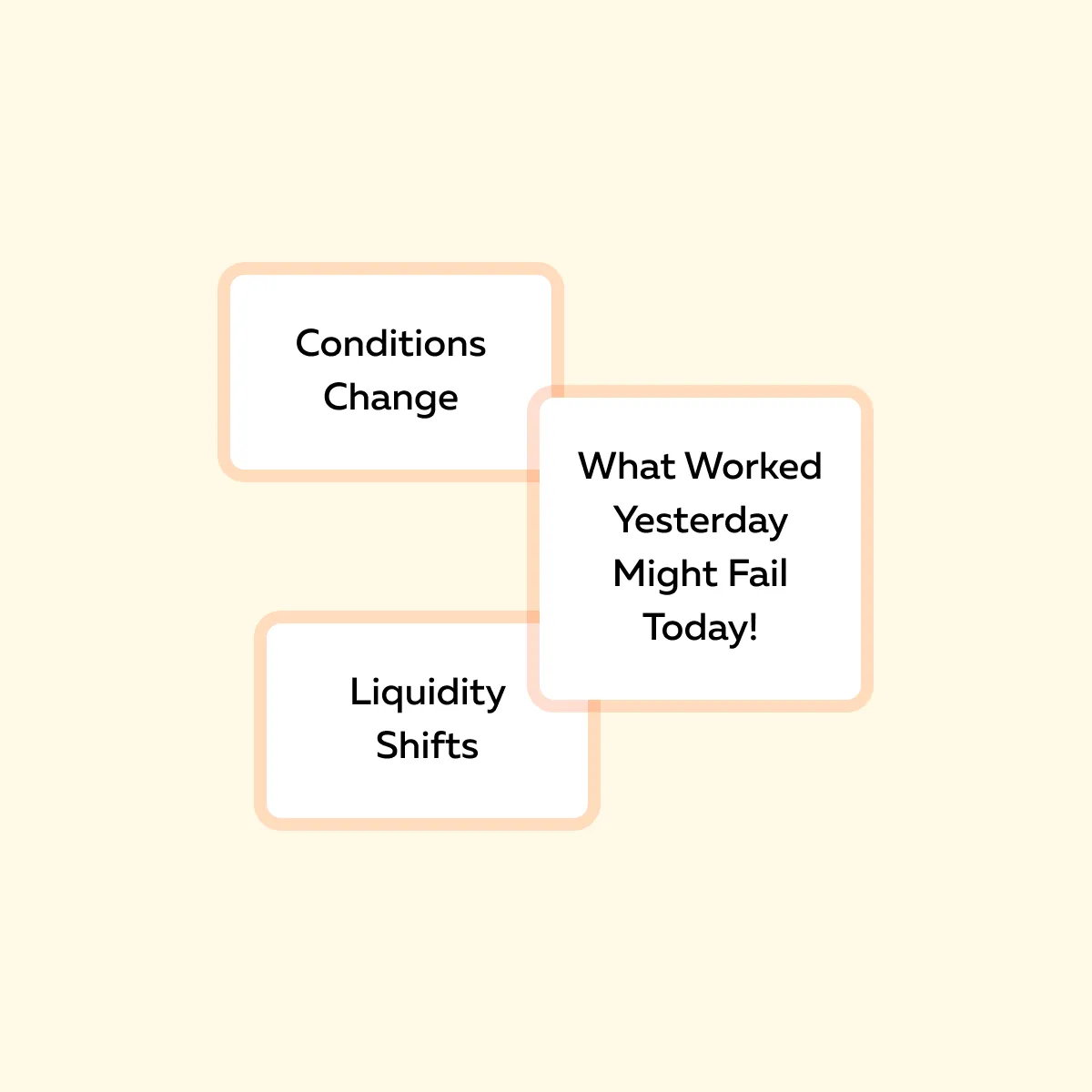
Due to this dynamic nature, even if each trade has the same mathematical chance of winning, the actual results will differ from trade to trade, just like flipping a coin! You might get several heads or tails in a row. However, after many flips, the overall ratio should reflect the actual probability. In trading, a “coin toss trading strategy” illustrates that:
- Individual trades are uncertain.
and
- Short-term results can feel random.
So, Where Does the Trading Edge Comes From?
The trading edge never comes from predicting each outcome correctly. Instead, it is a combination of the following:
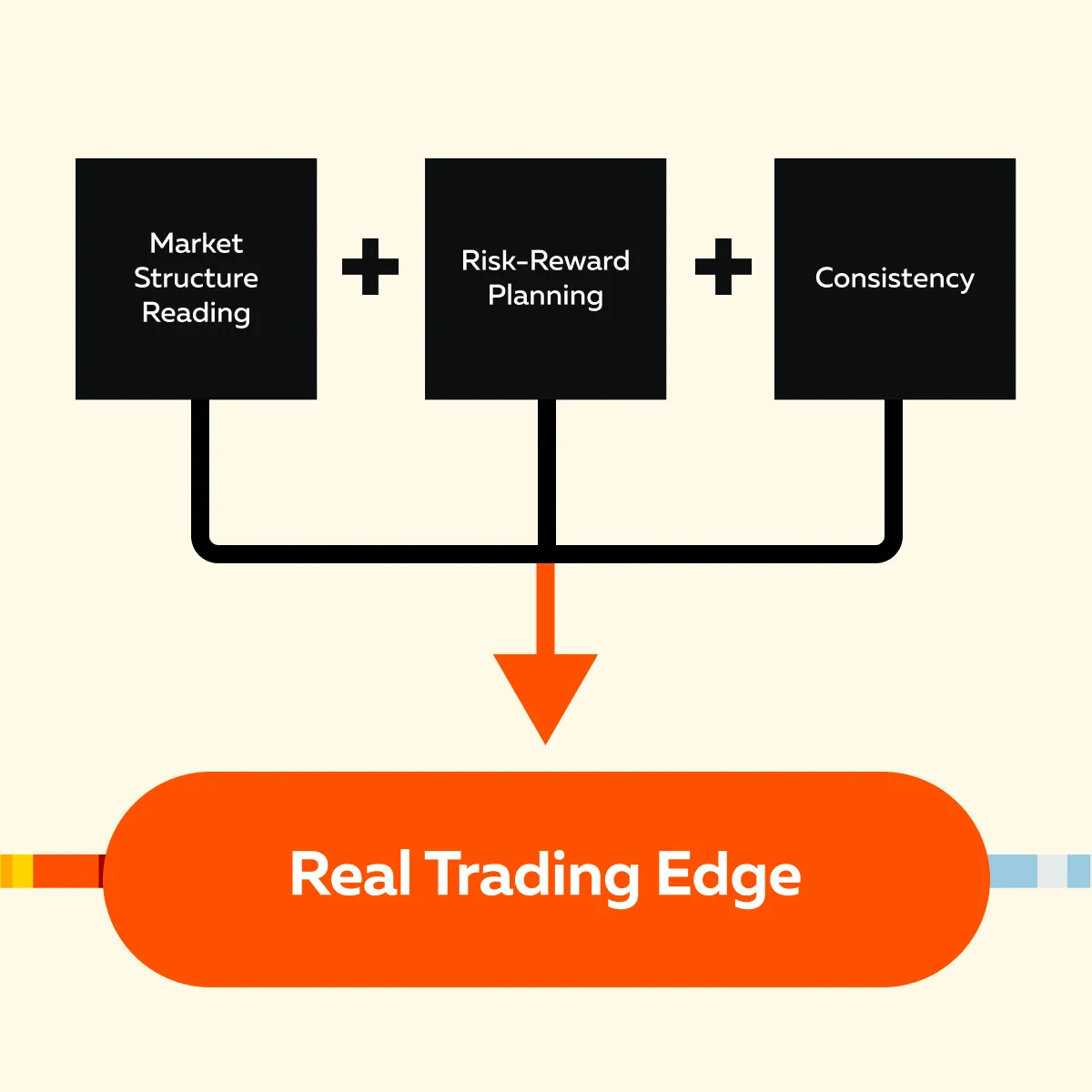
So, in this way, by doing probabilistic trading, you can focus on long-term math and not on single wins or losses.
Thinking Like a Casino: What Matters Is the Math
Doing Trading = Running a Casino! A casino never knows who will win the next hand, but it knows the math works in its favor over many hands. Now, this same principle applies to probabilistic trading. The focus isn’t on winning every trade but on letting your edge play out over time. Such an approach separates luck from logic!
In Probabilistic Trading, Your Edge is Built on Numbers!
Trading edge is a product of your win rate multiplied by your average risk-reward ratio. For example:
- Suppose your win rate is 40%.
- This means you win 4 out of 10 trades.
- Assume that your average profit is twice your average loss (2:1).
- So, if you risk $100, a winning trade makes $200.
- Now, over 10 trades:
- Wins: 4 × $200 = $800
- Losses: 6 × $100 = $600
- Net profit = $800 − $600 = $200
So, even though you lose more trades than you win, the risk-reward math ensures you are profitable in the long run. As a trader, you must focus on win rate vs risk-reward rather than just trying to win every trade. To trade better, ask yourself this before entering a position – “Would I still take this trade if it were just one of a hundred, and I knew the math favored me in the long run?”
Now, that’s how you start trading like a casino!
Win Rate Isn’t the Whole Story
Many new traders think success means having a high win rate. They avoid losses and look for strategies that almost always win. However, that mindset can backfire! Strategies with high win rates (such as scalping for small profits) hide large risks. When they fail, one big loss can wipe out many small gains.
Studies show that some of the most consistent traders win only 30 to 50% of the time. Don’t want to be in the negative half? Develop this mindset:
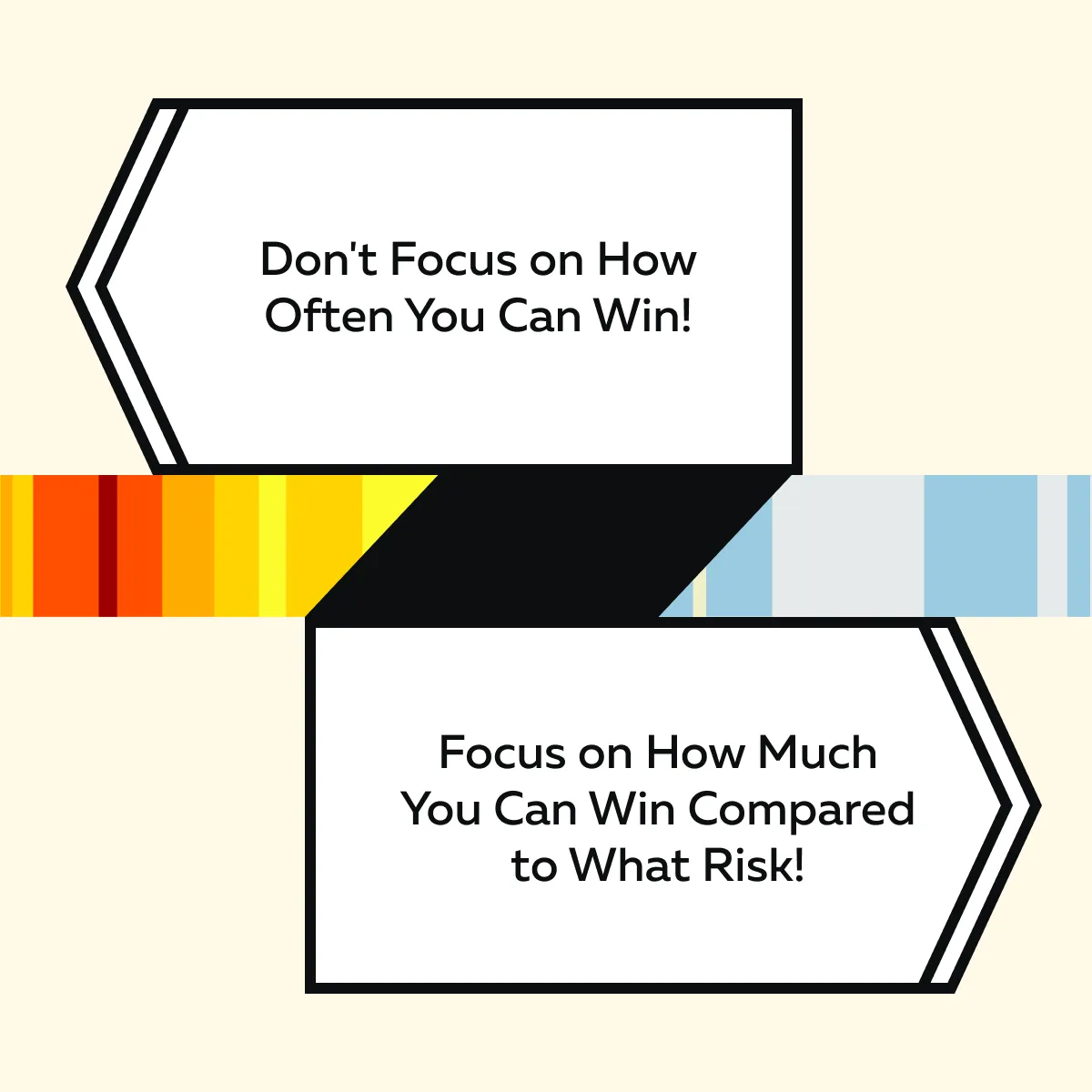
Let’s understand better through a scenario related to probabilistic trading:
Mr. A is a probabilistic trader who risks $100 per trade (1R = $100). Below are his five latest trades:
| Trade | Outcome | Reward-to-Risk | Profit/Loss | Account Balance |
| 1 | Loss | 1:1 | −$100 | −$100 |
| 2 | Loss | 1:1 | −$100 | −$200 |
| 3 | Loss | 1:1 | −$100 | −$300 |
| 4 | Win | 2:1 | +$200 | −$100 |
| 5 | Win | 3:1 | +$300 | +$200 |
From the above table, you can observe how a few losses (first three trades) can be overcome by trades with higher reward-to-risk (last two trades). What this shows:
- Losing streaks happen even with a good strategy.
- One or two big winners can recover losses and add profit.
So, always focus on risk management and follow your edge. Don’t try to avoid every loss! That’s the reality of trading like a casino. Losses aren’t proof you’re doing it wrong. Instead, they’re just the business cost of playing a mathematical game!
Trade what you see, not what you think will happen — Bookmap shows how the auction unfolds.
Probabilistic Thinking in Action: How to Shift Your Approach
By now, it must be clear to you that to trade with a real edge, you must think in probabilities, not predictions. But what exactly is probabilistic trading? It means focusing on:
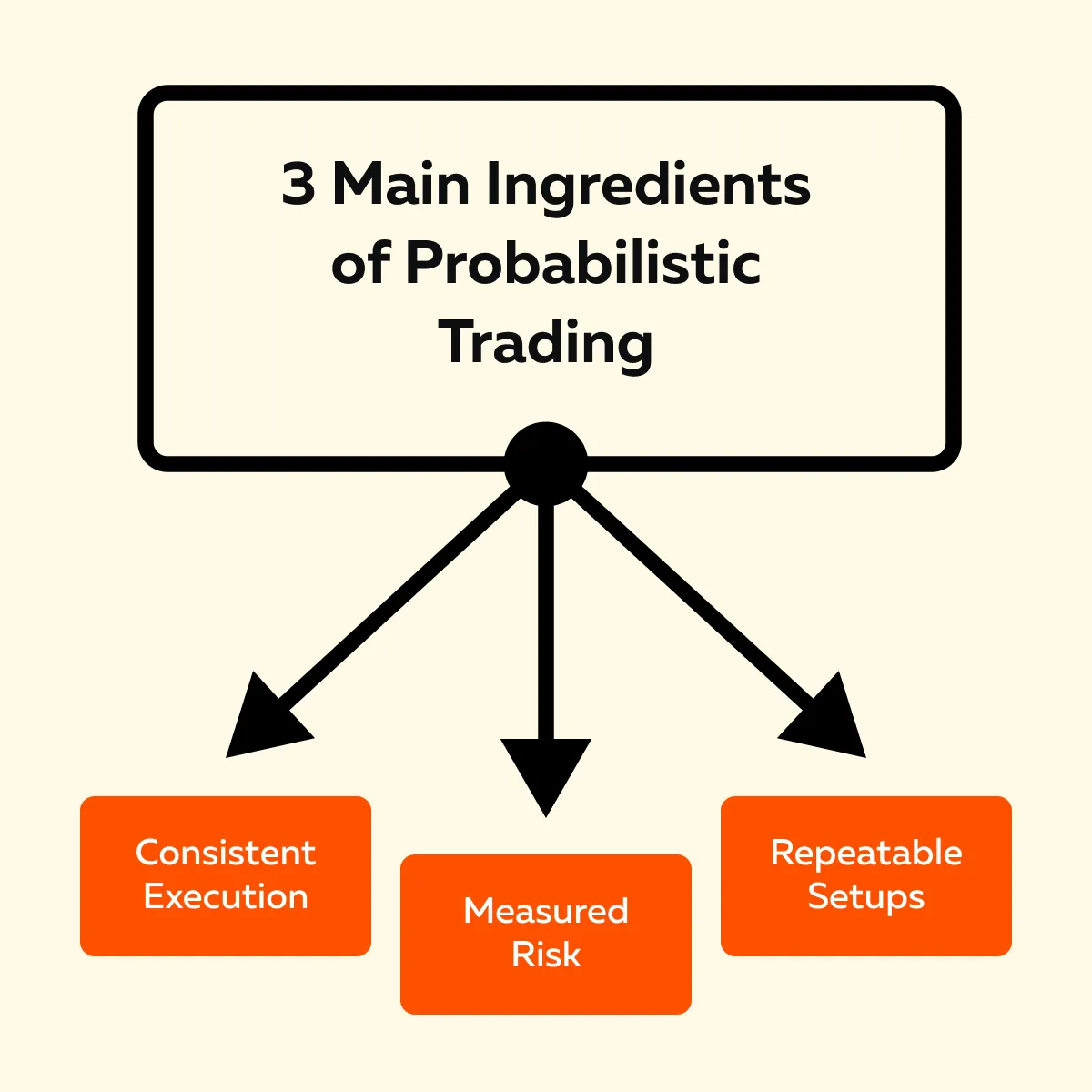
In this approach, your goal is to make many good bets, not perfect ones, and let the numbers work over time. Let’s see how you can shift your approach:
Define Your Playbook
A playbook is a short list of repeatable setups. You consistently trade these setups over and over when market conditions match. Each setup is a recipe! Let’s see what it all contains:
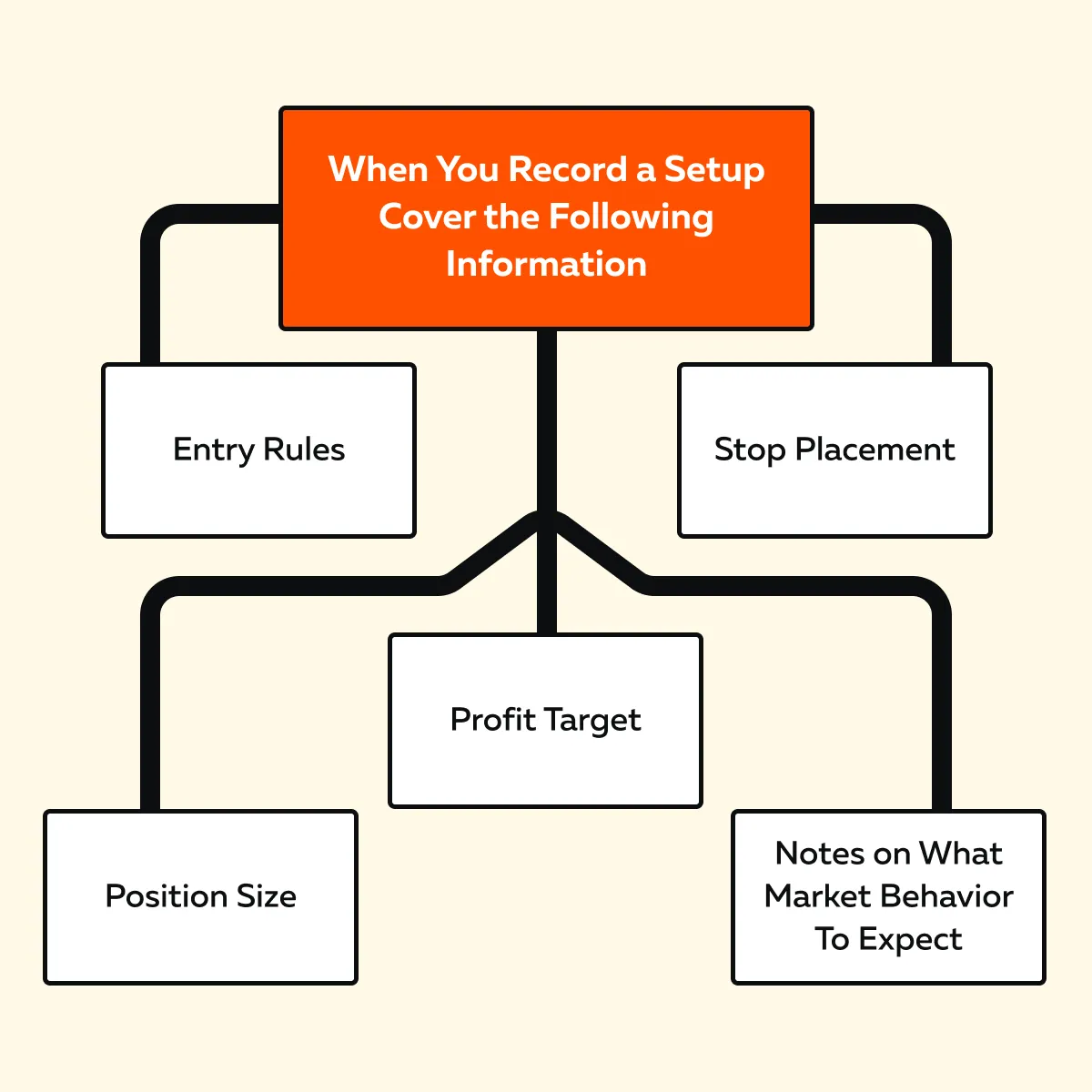
Okay, but how is a playbook helpful? It allows you to measure win rate vs. risk-reward and compute expected edge. This promotes “repeatability”.
How to Use Bookmap to Define and Validate Setups
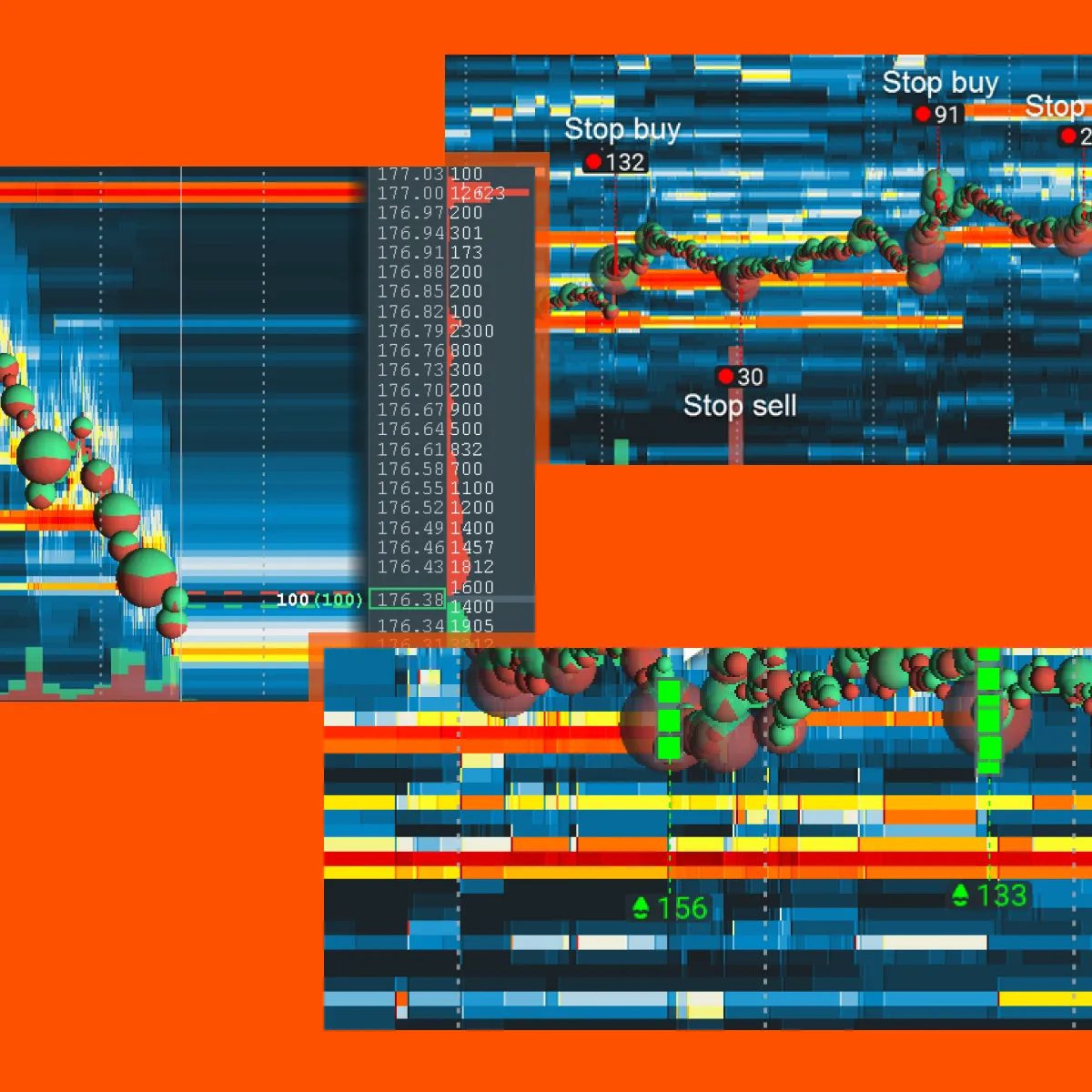
You can use the Bookmap’s replay mode to gather examples. Tag each replay where you see the setup. Furthermore, you can watch for behavioral fingerprints as follows:
| a) Absorption | b) Stop Runs | c) Volume Clustering |
| Large resting orders are repeatedly present, but the price fails to move through. | Sudden sweep of resting orders followed by reversal. | Heavy traded volume at a price, then quick rejection. |
You can even save screenshots + short clips of the Bookmap view for each tagged example. These build the “what it looks like” gallery for a setup. See how real traders manage uncertainty with Bookmap’s replay and volume tools.
Take the Trade If It Fits — Regardless of Outcome
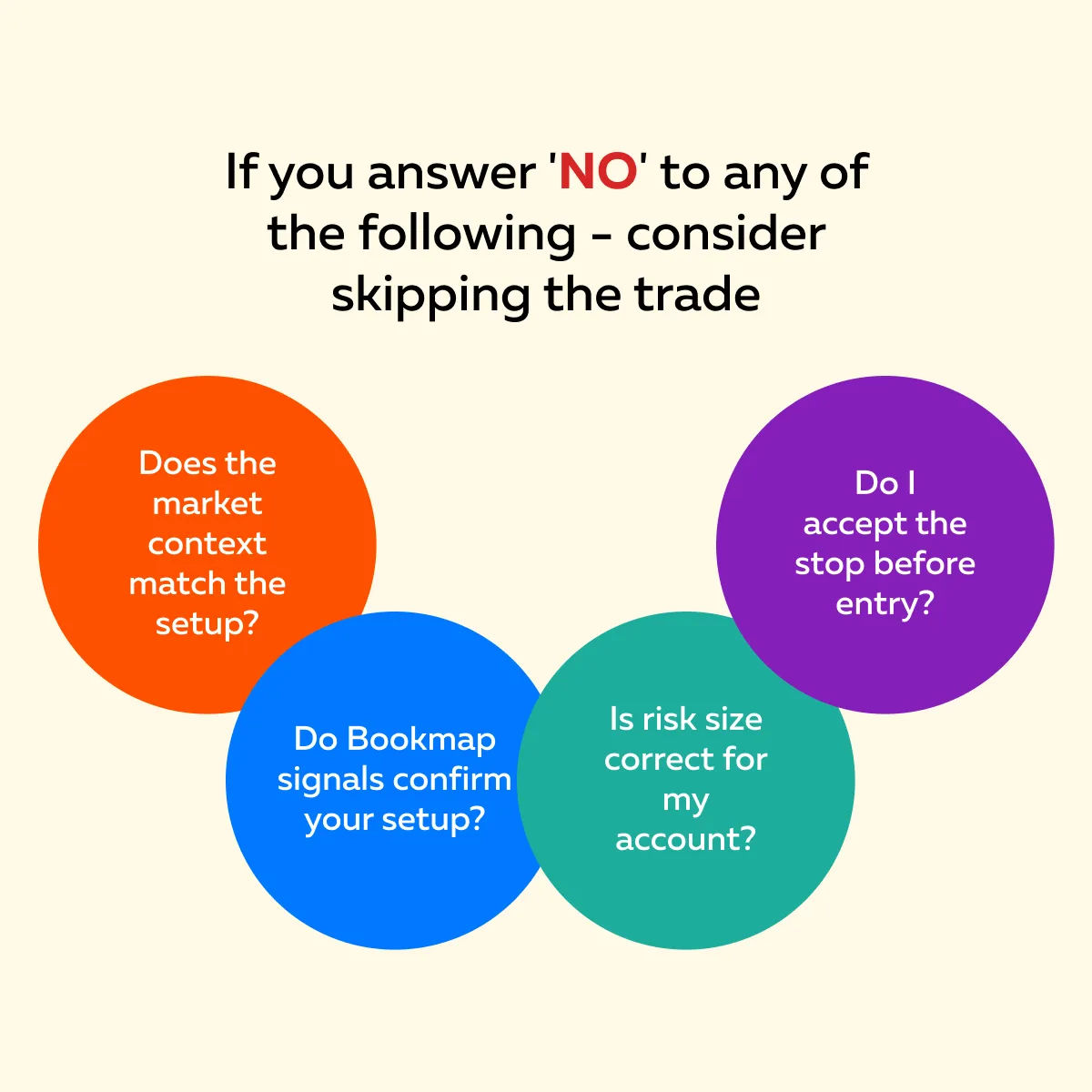
Once your setup matches the conditions in your playbook, take the trade without hesitation. Don’t wait for “extra confirmation,” as it usually means fear (not logic). Remember that every trade has uncertainty, and even the best setups can lose. That’s part of probabilistic trading!
Your goal isn’t to win every time but to execute consistently. This way, your win rate vs risk-reward edge can be implemented across many trades. Follow this decision checklist before each trade:
Use Data to Review — Not Emotions
After trading, don’t judge results by wins or losses! Instead,
- Review the trade with Bookmap’s replay or saved screenshots.
- Check whether you followed your plan.
- Ask if your entry, exit, and risk matched the setup rules.
Gradually, this “data-based reflection” builds discipline and removes emotional bias. That’s how you develop a casino mindset, which is focused on process and not on single outcomes.
How to Journal (Data First and Emotions Later)
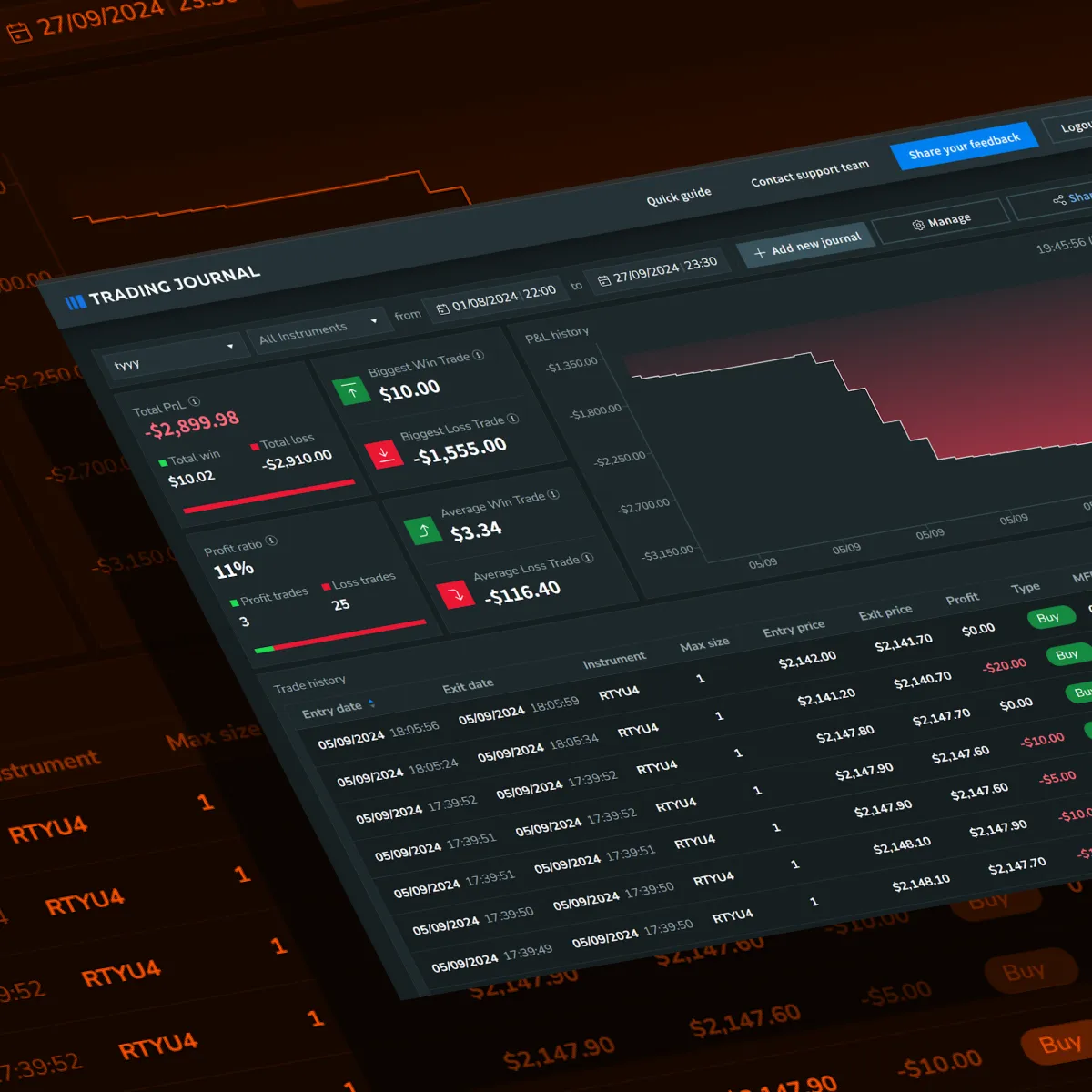
As a trader, you may also create a journal where you record every trade with these fields:
-
- Timestamp, instrument, setup name
- Entry price, stop, target, R risk.
- Bookmap signals observed (absorption, sweep, volume cluster).
- Outcome:
- Win/loss
- P/L in R.
- Decision Checklist:
- Did the setup meet the rules? – Yes/No.
- A short note on what changed vs. expectation.
Lastly, keep analysing the journal weekly. Ask yourself – Did I follow the setup rules? If it is a YES, but the results are poor, adjust your edge or R: R.
What Tools Can (and Can’t) Do for You
Trading tools cannot replace good judgment. Real-time market analysis platforms like Bookmap can let you see:
- How the market auction happens in real time,
- Where big players are absorbing orders,
- Where traders are chasing price, and
- Where liquidity is stacked.
This platform allows you to read market structure and understand market behavior.
But Even the Best Tools Can’t Remove Uncertainty!
Understand that markets move in a probabilistic way. You might have a clear view of liquidity, yet the outcome of any trade remains unknown. That’s why in probabilistic trading, you just try to make informed bets and not perfect predictions.
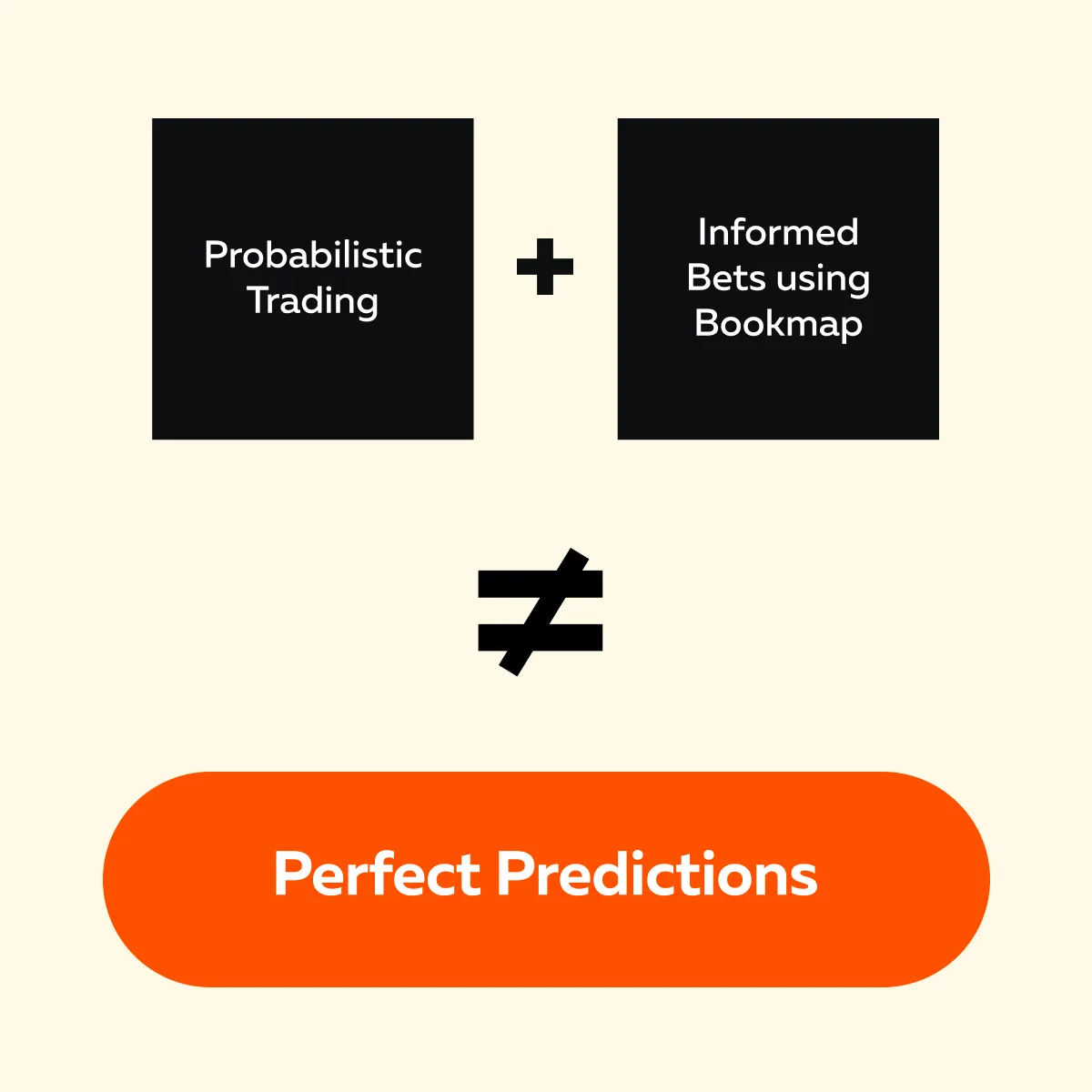
Furthermore, you can use Bookmap-like tools to spot repeatable patterns + understand context. But you cannot use them to guess where the price will go next! That’s because you can never outsmart randomness.
Conclusion
Till now, you must have understood that a shift from “prediction” to “probability” is one of the biggest mindset upgrades any trader can make. That’s because the market isn’t about being right every time. Instead, it’s about playing your edge with consistency.
As a trader, stop asking, “Will this trade win?” and start asking, “Does this trade fit my edge?”. It’s a small change, but this is what separates emotional guessing from probabilistic trading. Additionally, focus on:
- Your developed trading process,
- Win rate vs risk-reward, and
- Disciplined execution.
By doing so, you begin trading like a casino! Each trade becomes just one event in a long series. Now, to sharpen that edge further, you can start using Bookmap. It allows you to see real-time liquidity, absorption, and volume behavior. Start thinking like a pro: visualize volume and liquidity in real time with Bookmap.
FAQs
1. Isn’t it better to only take high-confidence trades?
Not always! Confidence is just a feeling—not evidence. Try to practice probabilistic trading, where you don’t wait for “perfect certainty”, and instead take trades that match your tested setup.
Remember that each valid trade adds to your edge, even when it results in a loss.
2. How do I know if I have an edge?
You can track your setup over many trades using a journal or backtest. If your win rate vs risk-reward shows consistent profit across dozens of trades, that’s your edge. It’s proven by numbers and not mere opinions.
3. How can I stay disciplined during losses?
Losses are a normal part of trading. It does not mean your strategy is failing. Even in a casino, the house loses some hands. However, casino players remain patient as their edge does show up over many plays.
In trading, the same principle applies! Individual losses happen, but the strength of your trading plan and risk-reward management technique determines long-term success. Thus, to stay disciplined, you should try to:
- Execute your setups correctly,
- Stick to your rules, and
- Review trades using data instead of emotions.
This builds consistency and a true probabilistic trading mindset.
4. What’s the best way to review trades?
Use Bookmap’s replay or screenshots to study what really happened. Through such a Bookmap-assisted review, you can:
- Understand market context,
- Gauge liquidity, and
- Review your decision process.
While reviewing your trades, always ask yourself – Did I follow my setup and manage risk correctly? This allows you to build discipline and improve your trading approach.
Sign Up Now
Latest Articles