


See market structure more clearly in real time.
Compare plans to access deeper market visibility for market structure.
Market Structure
March 5, 2026
5 Key Market Structure Shifts Traders Must Know in 2026
In earlier market conditions, price movement alone was often sufficient to interpret market intent. A breakout typically signaled an opportunity, so market participants would enter and wait for a follow-through. In 2026, however, such an approach fails more often than it works.
The rising failure rate of such strategies cannot be blamed on a broken market. Instead, it reflects a fundamental shift in market structure.
Today’s modern market structure:
- Spends more time in balance,
- Changes value multiple times a day, and
- Moves the price on thinner or fluctuating liquidity.
As a result, clean candles and price changes no longer guarantee real participation, which is the reality of market behavior in 2026. Hopefully, the preceding fact has now hinted at why many market participants always feel chopped up, late, or confused despite using “correct” setups.
The article delves into the five major shifts in market structure. Besides, it discusses what still works and how execution and expectations need to be adjusted for trading in 2026.
Shift 1: Balance Occupies More of the Trading Day
Price now spends more time moving sideways than trending strongly.
In a modern market structure, buyers and sellers agree on value for longer periods during the session. When compared with older markets, prices usually move quickly to find the next area of interest.
The reasons why this happens include:

In 2026, the market doesn’t need to travel far to find a buyer or seller. Liquidity is usually available on tap. As a result, market structure trading today is more about long rotations within a well-defined range than about fast directional moves.
This shift does not eliminate trading opportunities. It makes them more selective. In 2026, many breakout attempts happen inside the balance. Commonly observed behavior includes:
- Price pushing slightly above a high or below a low, which triggers entries.
- A subsequent rotation back toward the middle of the range.
This knowledge is crucial for execution. That’s because if a trader expects an immediate follow-through, they will get trapped. For example, assume-
- The price breaks above a morning high.
- Then, for a while, it trades briefly higher.
- Lastly, it returns to the midpoint of the range.
This behavior can repeat several times before a genuine expansion occurs later.
Shift 2: Continuation Requires Expanding Participation, Not Just Price Movement
Price fluctuation is no longer enough to prove strength.
In 2026, there are various reasons for prices to fluctuate/ move, such as:
- thin liquidity,
- high-frequency algorithms, and
- temporary order imbalance.
These moves might look convincing. They may feature clean candles, fast momentum, and clear technical breaks. However, those signs don’t always reflect meaningful commitment.
This is a major change. Today, continuation depends less on how far the price moved and more on how many participants followed that move. In other words:
- Price movement remains necessary, but
- Participation is what confirms it.
What’s ironic is that this is often misinterpreted. Strong candles or apparent breakouts are often assumed to signal intent. It’s worth noting that in market structure trading, price can travel a long distance even with little volume when liquidity is low.
In the absence of “expanding participation,” such moves are fragile and prone to reversal.
How to Know a Price Will Hold?
For a move to hold, the price should be supported by the following factors:
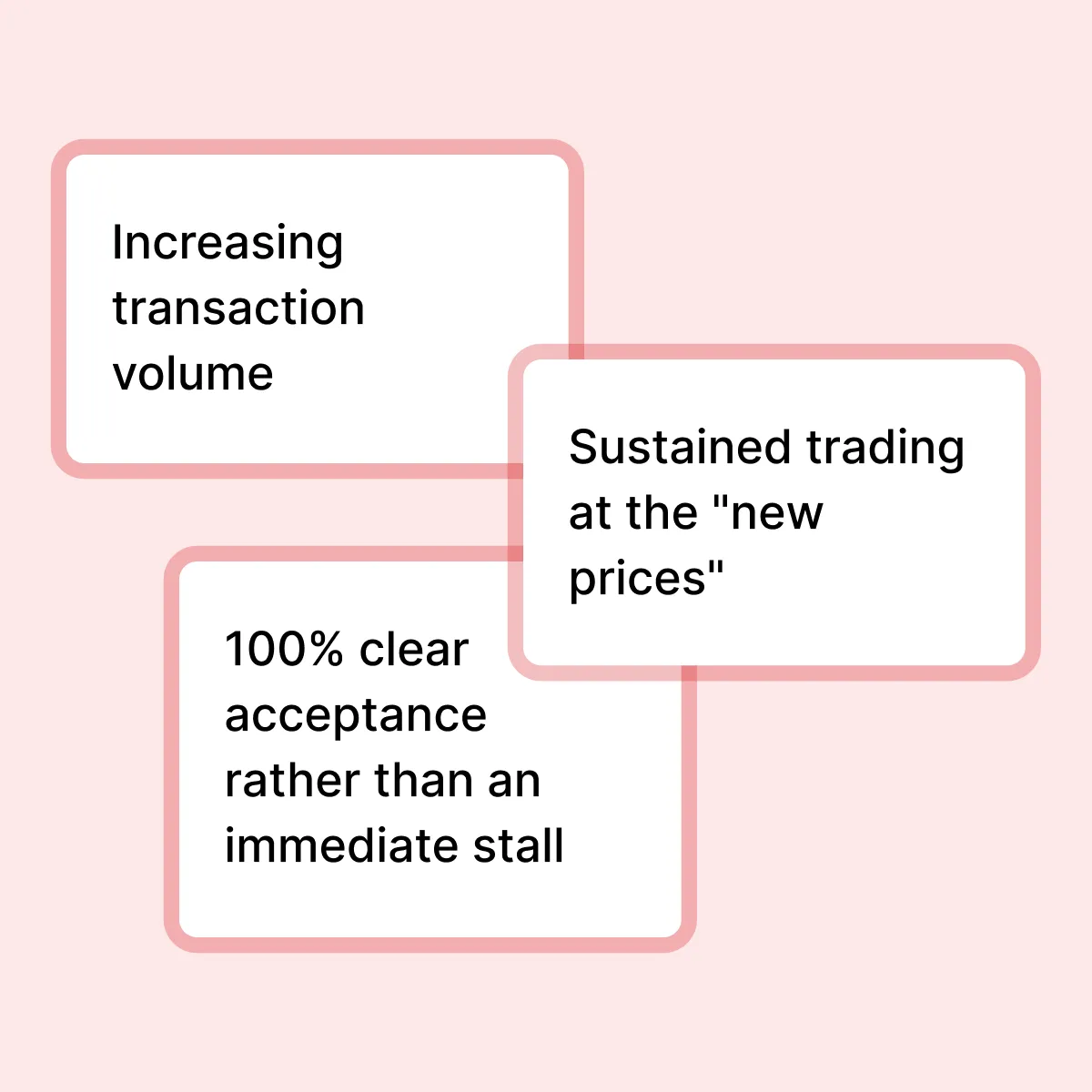
When this backing is missing, the price usually pauses, reverses, or rotates back once liquidity returns. For more clarity, here is an example:
- Price breaks above resistance.
- It prints a clean breakout candle.
- However, volume stays light, and trading doesn’t build at higher levels.
- Soon, large resting orders appear.
- As a result, the price stalls and fails.
- The problem wasn’t a breakout; instead, it was the lack of participation.
Shift 3: Value Migrates Intraday More Frequently
Value is no longer fixed for the entire session.
Earlier, markets formed a value area near the open, and that level stayed relevant most of the day. But in 2026, the dynamic has changed. The following conditions are now common:
- Value shifts multiple times within a single session.
- This behavior occurs as participants react to:
- Order flow,
- News, and
- Positional adjustments.
- As a result, acceptance levels are constantly being re-evaluated.
Note that when new information enters the market, such as economic data or a sudden surge in institutional activity, the price may move to a new area. In that area, the price can trade actively and build volume. As a result, this process establishes a new value area, while the earlier one becomes less relevant.
Why Is This Important for Traders in 2026?
Anchoring analysis to “morning value” and treating it as a permanent context can lead to misreads. A setup that made sense near the open may no longer be valid by midday if acceptance has clearly shifted.
From an execution point of view, trades planned around earlier value can fail simply because the market has repriced. For example,
- Assume value forms near the open.
- After a data release, price trades higher.
- Volume clusters elsewhere, and a new value area develops.
The impact is that those who keep referring to the original value might misunderstand rotations and continuations. Understand how modern market structure affects execution.
Shift 4: Liquidity Is More Mobile and Less Obvious

Liquidity does not behave the way many traders expect.
Earlier, large buy or sell orders used to sit visibly at key price levels for long periods. This visibility made support and resistance appear reliable. But market behavior trends in 2026 show that liquidity is far more dynamic.
Instead of resting and defending levels, liquidity now refreshes, pulls, and repositions in the market. Also, algorithms adjust orders in real time. As a result, static support and resistance levels are “less dependable” in today’s markets.
In 2026, there is a Gap Between Expectation and Reality.
Usually, traders expect liquidity to sit at:
- Obvious levels,
and
- Stop price.
In the real world, liquidity may step aside as the price approaches, allowing it to move through the level. Now, once the price trades beyond it, liquidity reappears at a better price.
This behavior impacts execution as stops and targets placed at obvious highs, lows, or textbook levels are more exposed. These areas are “easy to reach and easy to exploit” when liquidity is mobile. Here is an example:
-
- When a large bid appears below the market.
- Market participants go long, assuming strong support.
- But as the price moves down, the bid suddenly pulls.
- As a result, the price trades lower and starts triggering stops.
- A few ticks below, the bid reappears, and the price stabilizes.
- It traps early longs.
In 2026, reliance on static levels is increasingly ineffective. Instead, more emphasis is required on real-time participation and price acceptance.
Shift 5: Speed and Data Resolution Influence Outcomes

Today’s markets update faster.
What is visible to the market, and when it becomes visible, directly influences “trade execution quality”. It is not about clicking buttons faster; instead, it’s about access to higher-resolution data. Transactions now happen in rapid bursts. As a result,
- Liquidity refreshes or pulls within milliseconds,
and
- Absorption or exhaustion can be completed very quickly.
Execution remains one step behind when data is:
- Delayed,
- Overly aggregated, or
- Refreshed infrequently.
When operating with low-quality data, traders may believe they are reacting in real time. But in practice, they are merely responding to conditions that already played out. By the time aggression becomes obvious on their screen, the opportunity tied to it may already be gone.
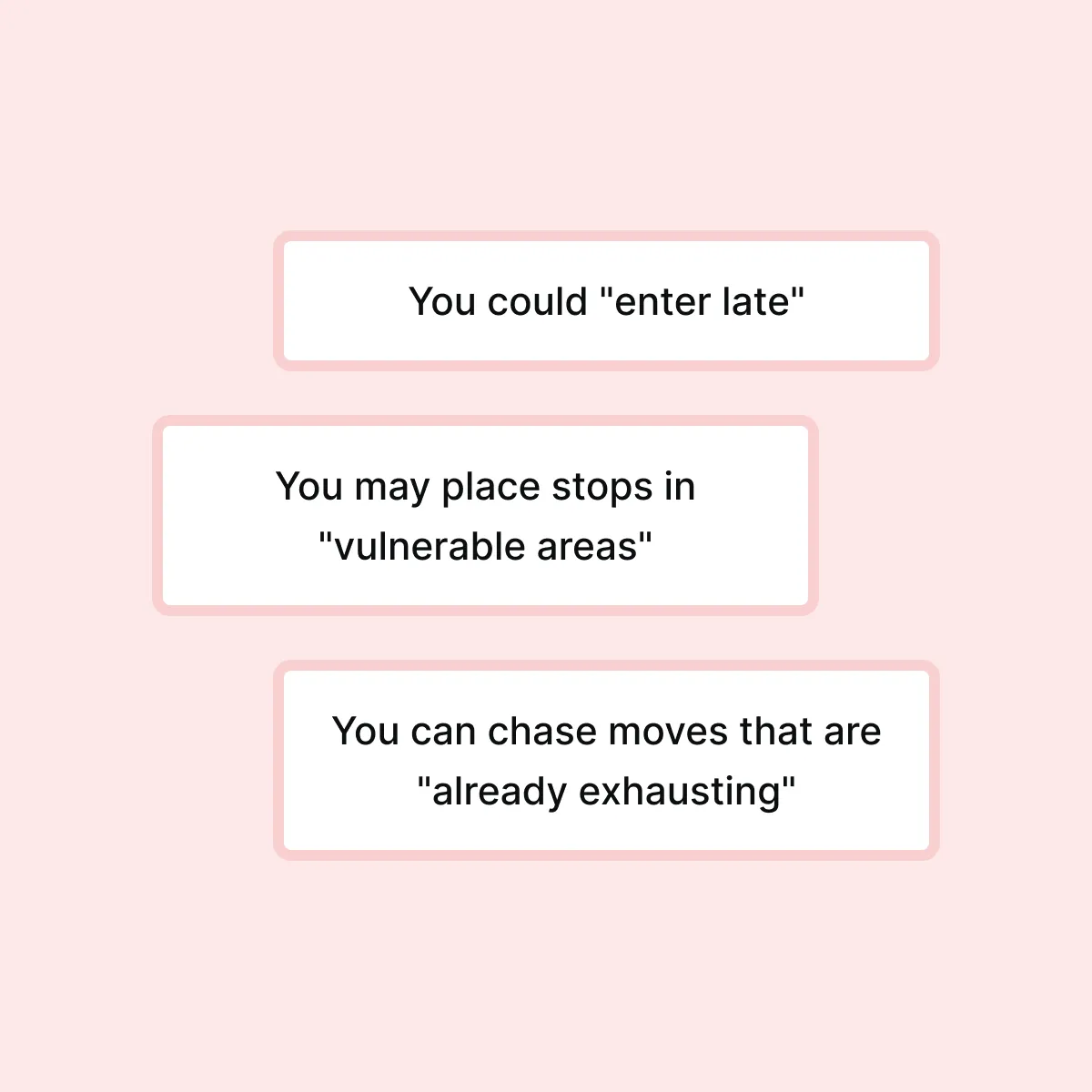
The following issues can be created due to this:
See how liquidity and participation shape today’s markets.
Execution Impact: Why Fast, High-Quality Data Matters
In a modern market structure, execution quality depends heavily on the quality and speed of data. In 2026, effective execution requires visibility into what is happening now, rather than what occurred moments earlier.
High-quality data that updates instantaneously makes it possible to assess whether:
- Participation is still expanding or already slowing,
- Liquidity is holding or starting to absorb pressure, or
- Price is being accepted at new levels or beginning to stall.
These signals show whether a move has real continuation potential in market structure trading. Without this knowledge, “execution becomes reactive”. This fact holds since traders are forced to respond to price after conditions have already changed, rather than acting while the opportunity is still valid.
For more clarity, here is an example:
-
- A trader enters a long position as buying volume appears to increase.
- However, their data feed updates too slowly.
- It does not show that selling absorption actually completed moments earlier.
- By the time the trader acts, the price has stalled and reversed.
There was nothing wrong with the trade idea, but the timing was faulty. The information arrived too late to execute it properly.
How These Shifts Change Trade Planning
Some traders may have trading strategies that used to work in older market conditions. However, they might no longer work the same way in 2026. The following changes are required:
| Change Required | Meaning | Importance |
| Wait Longer For Confirmation |
|
|
| Adjust Expectations |
|
|
| Trade Less, Trade Better |
|
|
| Update Context Continuously |
|
|
A trader’s edge is a product of:
- Patience,
- Context awareness, and
- Alignment with participation.
A strategy built for an older market structure will struggle unless it adapts to today’s realities.
What Has Not Changed
Though today’s market has undergone several structural changes, its core mechanics remain unchanged. The following foundational elements continue to operate as they always have:
| Core Market Mechanics | Meaning |
| Participation | Price still moves when more buyers or sellers actively trade. |
| Liquidity | Liquidity still allows prices to move smoothly without sharp jumps. |
| Acceptance | When the market agrees on a price, it still trades there for some time. |
| Rejection | When the market disagrees with a price, it still moves quickly away from it. |
Hence, the foundation remains intact in 2026. Changes are visible only in the speed, frequency, and visibility of these interactions. In modern markets, the following conditions are commonly observed:
- Participation builds and fades faster,
- Liquidity appears and disappears more quickly, and
- Acceptance and rejection can form and dissolve within minutes instead of hours.
This behavior contributes to the perception that markets are more challenging to read. However, the underlying rules are still unchanged. Market interpretation improves by avoiding outdated assumptions and focusing instead on the following:
- Read participation,
- Track liquidity, and
- Recognize acceptance in real time.
In 2026, the market still speaks the same language that traders have to listen to more closely!
Conclusion
Markets in 2026 aren’t necessarily more complex to read. They are just a different beast altogether. The biggest challenge today is not complexity, but outdated assumptions.
The modern market structure of 2026 only rewards those who understand how:
- Balance lasts longer,
- Participation confirms moves,
- Liquidity behaves dynamically, and
- Value shifts intraday.
These are basic trading fundamentals that must be observed to succeed in 2026. Furthermore, traders should adapt their execution, timing, and expectations to these shifts in market structure to reduce their frustration and improve consistency.
Those who continue to trade the way markets behaved years ago will feel chopped up, late, or confused. Not because they lack skill, but because the environment has changed.
Adapting to market structure trading today is a baseline requirement for staying relevant. Explore tools designed to analyze evolving market behavior.
FAQs
Have markets become more random in 2026?
No, the markets are not random. Price still responds to participation and liquidity. What has changed in market behavior in 2026 is how structure plays out. Current conditions commonly reflect the following:
- Balance lasts longer,
- Value changes more often, and
- Moves resolve differently.
The underlying logic remains intact. Nowadays, patterns are developing in new ways.
Why do breakouts fail more often now?
Earlier, the price moving past a level guaranteed commitment. But that’s not true in a modern market structure. Nowadays, many breakouts occur on:
- Thin liquidity,
or
- Short-term imbalances.
Without expanding participation and acceptance, these moves usually stall or reverse, which makes breakout failures more common in market-structure trading.
Do trends still occur?
Yes, trends still exist. However, in today’s market, they usually form later. Nowadays,
- Markets rotate first,
- Build participation,
- And only then expand.
Clear confirmation is more important than speed. Chasing early movement increases execution risk.
What is the biggest adjustment traders must make?
It is “expectation management”. In 2026, traders must:
- Stop reacting to price alone,
and
- Wait for participation to confirm moves.
When traders are aware of how market trading has evolved, they can align their entries with real market strength rather than reacting to early signals.
Can older strategies still work?
Yes, but only if adapted. Trading strategies developed for older conditions must adapt to the modern market structure, which includes making updates for:
- Slower follow-throughs,
- Mobile liquidity, and
- Shifting value.
Without these updates, execution quality is likely to deteriorate.
Sign Up Now
Latest Articles