


See the market as a live negotiation between buyers and sellers.
Compare plans to track liquidity, acceptance, and order flow as the auction develops.
Education
August 25, 2026
Every Trade Is an Auction: Understanding the Market’s Negotiation Process
A market decides prices through constant negotiation. Every trade represents an agreement between a buyer and a seller, while every price change reflects the market’s search for a level where both sides are willing to transact.
This continuous process forms the foundation of Auction Market Theory. It is a framework that explains why markets trend, consolidate, and revisit certain price levels over time. Instead of treating price action as a collection of random candlestick patterns, it views the market as an “ongoing auction” where value is constantly tested and redefined.
In this article, traders will learn the core principles of Auction Market Theory, including fair value, price discovery, market acceptance, and rejection. Also, it will be explained how auctions begin and end, and how order flow tools such as Bookmap reveal the auction as it unfolds.
Markets Exist to Discover Fair Value
One of the main ideas behind auction market theory is that every market auction exists to discover fair value trading conditions. Fair value does not mean the “correct” price or the true worth of an asset. Instead, it is a temporary price level where enough buyers and sellers agree to trade, allowing transactions to take place with ease.
However, fair value never remains fixed. As new information enters the market, sentiment changes, or different participants become active. As a result, the process of price discovery continues throughout every trading session. The market keeps testing different price levels until it finds another area where buying and selling activity increases.
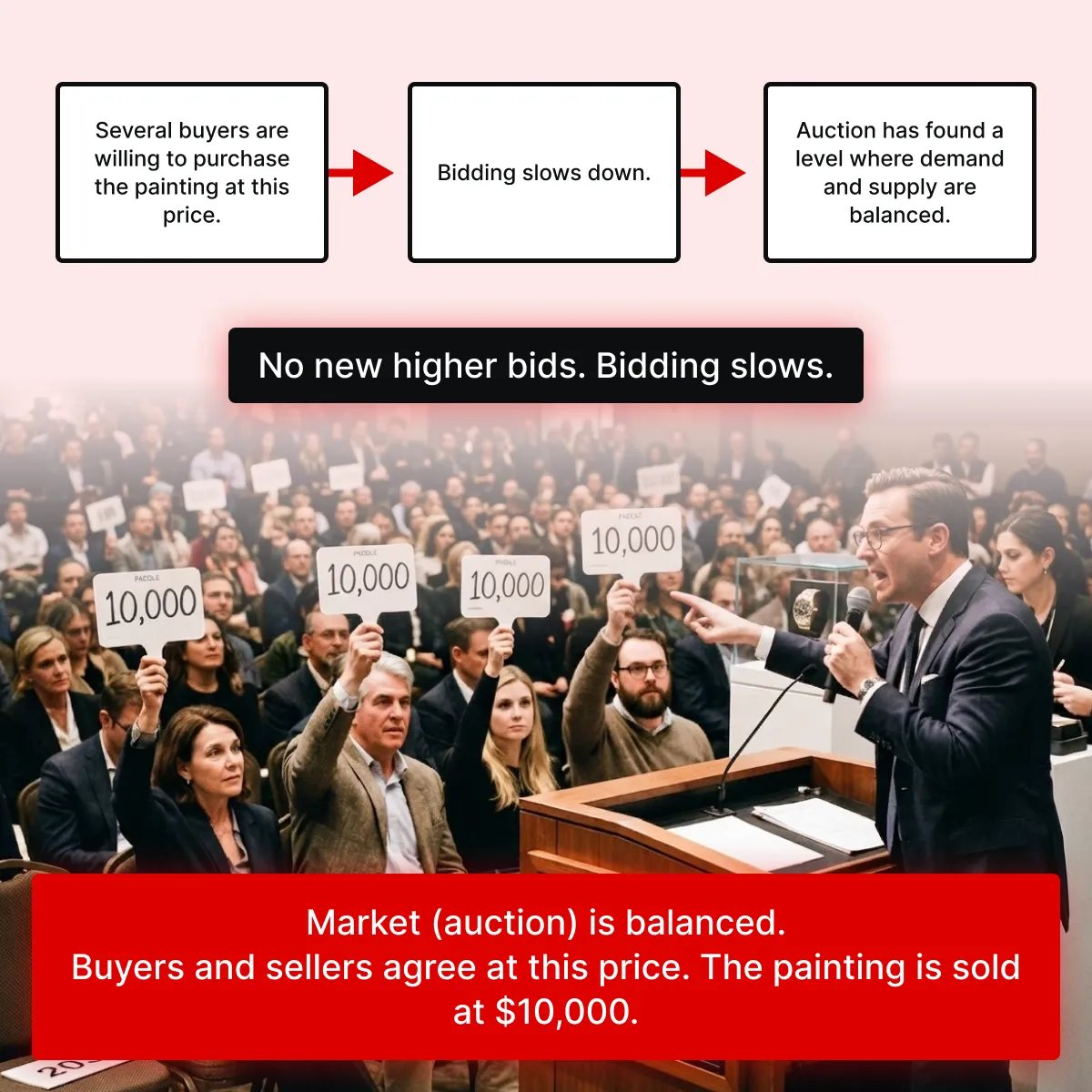
- Suppose several buyers are willing to purchase a painting at a particular price.
- The bidding “slows” once agreement is reached.
- This gradual inactivity happens because the auction has found a level where demand and supply are balanced.
On the other hand, if very few participants show interest, the auctioneer raises or lowers the asking price until more buyers and sellers join the auction.
Financial Markets Operate in The Same Way

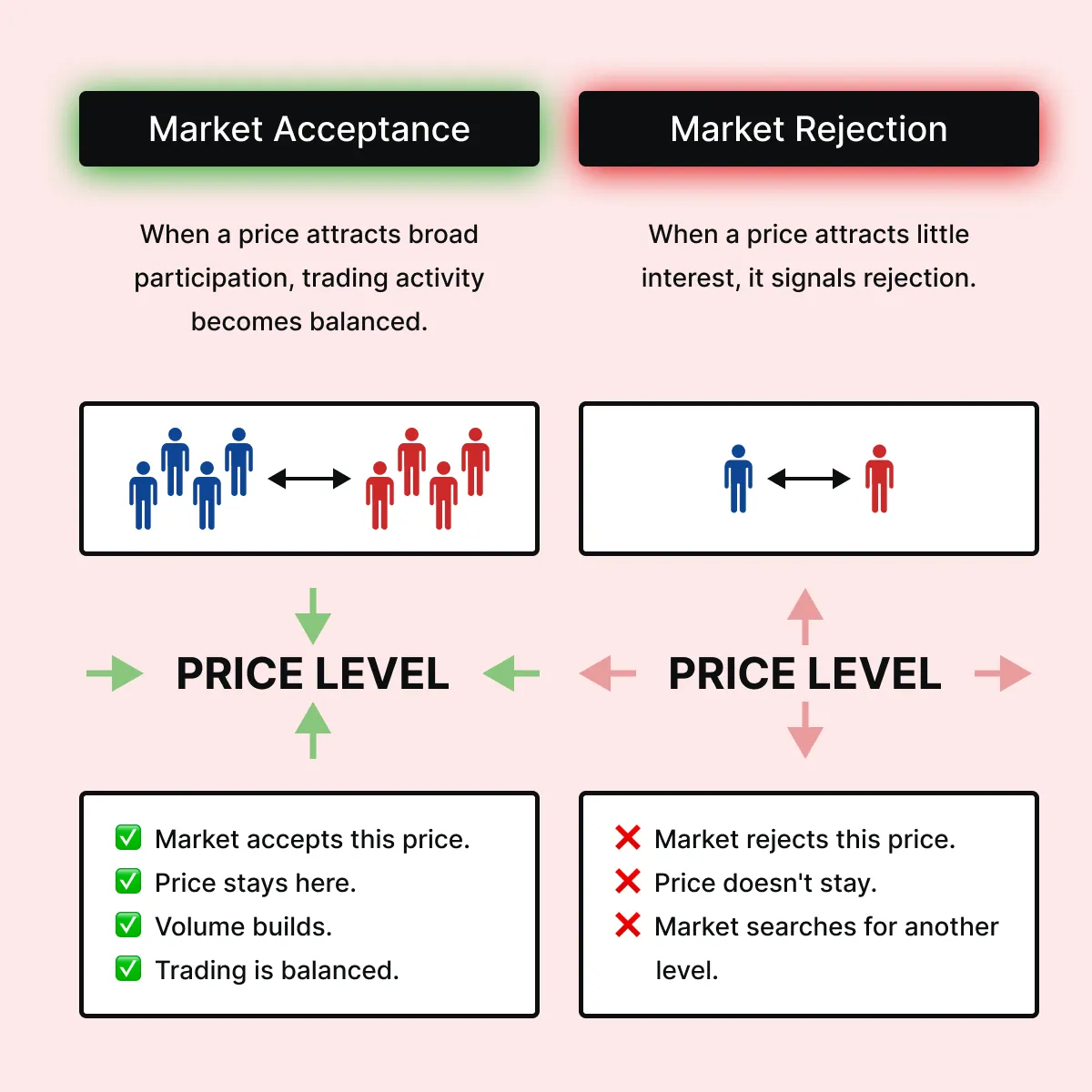
When a price attracts broad participation, it reflects market acceptance, and trading activity becomes balanced. Conversely, when a price attracts little interest, it signals market rejection, encouraging the market to search for another level.
Therefore, price movement is not random. According to auction market theory explained, it represents the market’s continuous search for balance through ongoing price discovery.
Every Price Move Is the Result of Acceptance or Rejection
According to auction market theory, every price movement reflects the market’s response to a particular price level. If buyers and sellers continue trading comfortably at the same price, it represents “market acceptance”. As a result:
- Price spends more time in that area
- Trading volume increases, and
- Participation remains steady.
However, when buyers or sellers lose interest, or when an imbalance between supply and demand appears, it represents a “market rejection”. Since fewer transactions take place at that level, the market continues its price discovery process by testing other prices where participation can increase again.
This principle also explains many common chart patterns. For example, trading ranges usually represent periods of market acceptance, where buyers and sellers broadly agree on value. In contrast, strong breakouts usually begin after the market rejects a previous value area and starts searching for a new one.
Likewise, sharp directional moves occur because agreement between buyers and sellers has disappeared (this does not happen because the price is attempting to move in a particular direction). From the perspective of auction market theory, every move in the market reflects an ongoing search for a price level where buyers and sellers are willing to transact again.
Why Time Matters Just as Much as Price
Many traders pay close attention to where the price trades. However, auction market theory also considers how long the price remains at a particular level because time provides valuable information about market activity.
When the market spends a significant amount of time at one price, buyers and sellers continue exchanging inventory without either side taking clear control. As a result, trading volume usually builds, and the market shows market acceptance at that level. This period of negotiation plays an important role in price discovery because it helps establish a temporary area of fair value trading.
In contrast, when a price passes through an area with very little time spent there, it often indicates market rejection. Since limited trading takes place at those prices, the market continues searching for another level where participation is stronger. Watch buyers and sellers negotiate every price level with Bookmap.
Other Common Market Behaviors
This relationship between time, volume, and acceptance also explains several common market behaviors. For example,
- Consolidation represents an important stage of price discovery because buyers and sellers continue negotiating value.
- Similarly, strong directional moves frequently pass through areas with low participation, where little agreement exists.
- Meanwhile, markets often return to price levels that previously attracted significant trading because those areas have already shown meaningful buyer and seller interest.
What Ends an Auction?
No market auction remains balanced forever. Over time, the existing balance begins to break down because of the following factors:
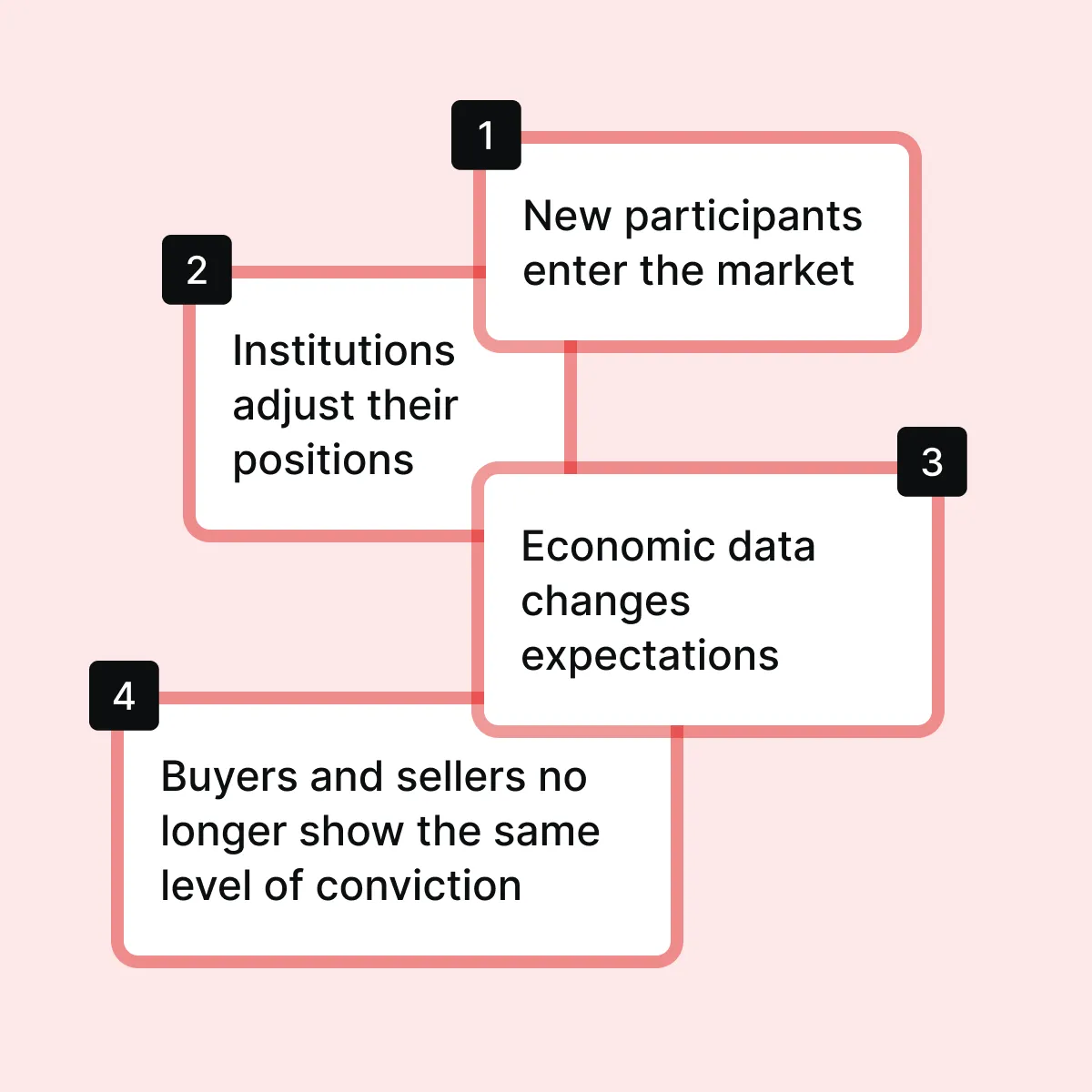
According to auction market theory, these changes lead to market rejection of the current value area. Since the previous level no longer attracts enough participation, the market resumes its price discovery process in search of a new area where buyers and sellers are willing to trade.
The Formation of Trends
This process also explains how trends develop. As per general industry understanding, a trend starts forming when the existing auction is no longer accepted, and the market moves toward a different level of fair value trading.
Later, once strong participation returns and agreement begins to form again, prices slow down, and consolidation appears. Therefore, trends and consolidations are not separate market conditions. Instead, as per auction market theory, both are “natural stages” of the same auction process, where the market continuously moves between searching for value and establishing a new area of balance.
Seeing the Auction Instead of Just the Candles
Traditional price charts show the final result of a market auction, but they do not reveal how buyers and sellers reached that outcome. In contrast, order flow trading examines the activity taking place while the auction is still developing.
This approach includes several pieces of information:
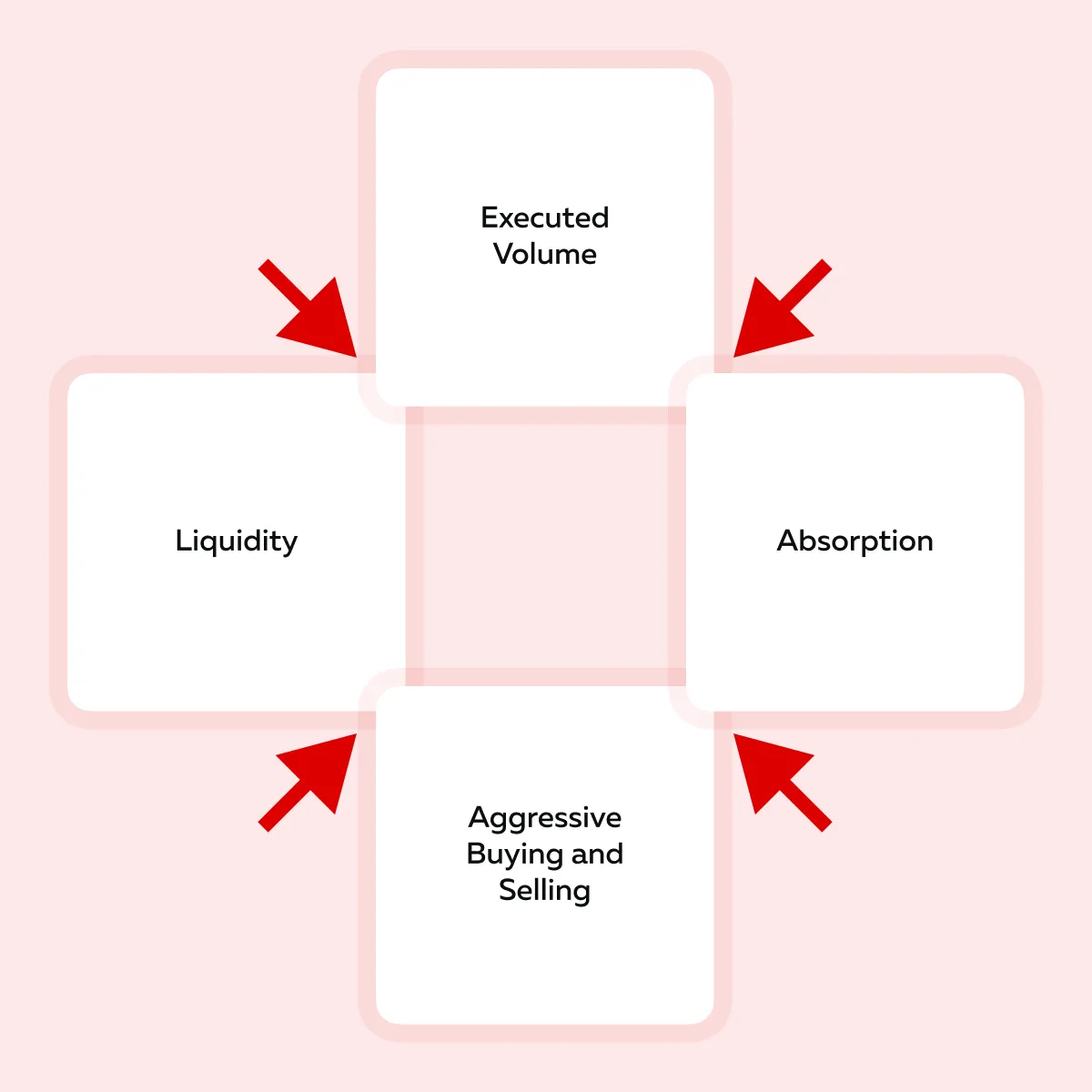
Together, these elements reveal how buyers and sellers interact during the ongoing price discovery process. For example, instead of only seeing a breakout candle, order flow trading may show whether:
- Buyers are becoming more aggressive
- Available liquidity is being removed, or
- Sellers are absorbing incoming buy orders
As a result, market participants gain a clearer view of why market acceptance or market rejection is taking place at a particular price level. This additional information provides a deeper explanation of market behavior than price alone.
Therefore, Bookmap fits naturally within auction market theory because it visualizes the interactions that drive the auction, rather than only displaying the final price movement after the auction has already unfolded. See the market’s auction unfold in real time with Bookmap’s liquidity and order flow visualization.
Thinking Like an Auction Analyst Instead of a Pattern Trader
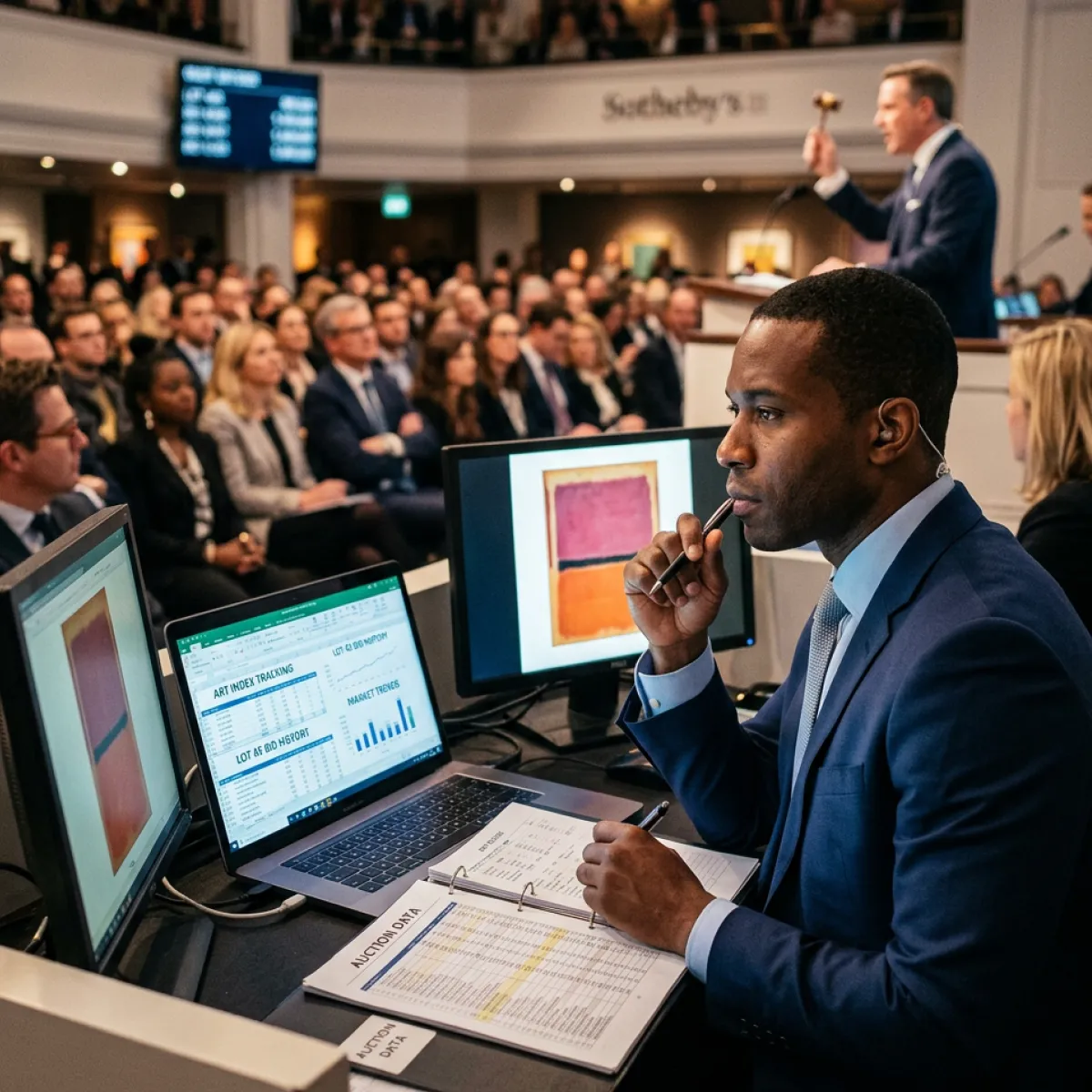
Many traders begin their analysis by asking whether a price level is support, resistance, or bullish. However, auction market theory places greater importance on observing how the market behaves before reaching a conclusion.
Instead of relying only on chart patterns, the analysis shifts toward the following questions:
- Whether the market is showing market acceptance at the current price
- Whether participation is increasing or decreasing
- Whether buyers are becoming more aggressive
- Whether liquidity is supporting or resisting price movement, and
- Whether the market auction has established a balance or is continuing its price discovery process.
This approach places market behavior ahead of prediction. Rather than assuming what price should do next, the analysis follows the evidence created by buyers, sellers, and liquidity. As a result, decisions are based on the current state of the auction instead of isolated chart patterns. This technique may provide a more complete view of market conditions through order flow trading.
Conclusion
Every price chart tells the story of a market auction. Some price levels attract buyers and sellers for a long time because the market has reached “acceptance” and trading remains balanced. In contrast, other prices are “rejected” because “participation declines”. Such a rejection prompts the market to continue its price discovery process in search of a new area of fair value trading.
This perspective changes the way market behavior is interpreted. Instead of viewing support, resistance, trends, and consolidations as separate events, auction market theory explains them as different stages of the same continuous auction process.
Traders may understand that each price movement reflects a changing agreement between buyers and sellers. Thus, auction market theory offers a better approach to market analysis and explains why prices move, how value develops, and what leads to changing market conditions over time. Price is only the result. Bookmap helps you understand the negotiation behind it.
FAQs
1. What is Auction Market Theory?
Auction Market Theory explains that financial markets work like an ongoing auction. Buyers and sellers continuously negotiate prices by placing orders and completing trades. The market keeps testing different price levels until it finds one where both sides are willing to transact. This process continues throughout the trading session as market conditions and participation change.
2. What does fair value mean in trading?
In trading, fair value is the price area where buyers and sellers temporarily agree to trade in large numbers. It does not represent the true value of an asset or a permanent price. Instead, it is a “temporary balance” that changes whenever new information, changing sentiment, or new market participants influence buying and selling activity.
3. Why does price sometimes move quickly through certain levels?
As per general market understanding, price usually moves sharply through some levels because considerably fewer buyers or sellers are interested in trading there. With “limited participation”, the market does not remain at those prices for long.
Instead, it continues searching until it reaches a price level where more trading activity and stronger agreement between buyers and sellers can develop.
4. How do trends relate to the auction process?
A trend usually begins when the market no longer accepts its current price area. As buyers or sellers become more dominant, the market moves toward a new value area. The trend continues while this search is in progress. It may slow or end only when buyers and sellers begin reaching an agreement at a new price level.
5. How does Bookmap help traders understand the market auction?
Bookmap helps traders see how the market auction develops in real time. Instead of showing only completed candlesticks, Bookmap additionally displays:
- Real-time liquidity
- Executed trades, and
- Order flow
This allows traders to observe where buyers and sellers are active and how they are responding at different prices. Also, traders can determine whether the market is accepting or rejecting a particular price level.
Sign Up Now
Latest Articles