


See when market price moves away from fair value.
Compare plans to track acceptance, liquidity, and order flow as value develops in real time.
Education
September 11, 2026
The Difference Between Fair Value and Market Price
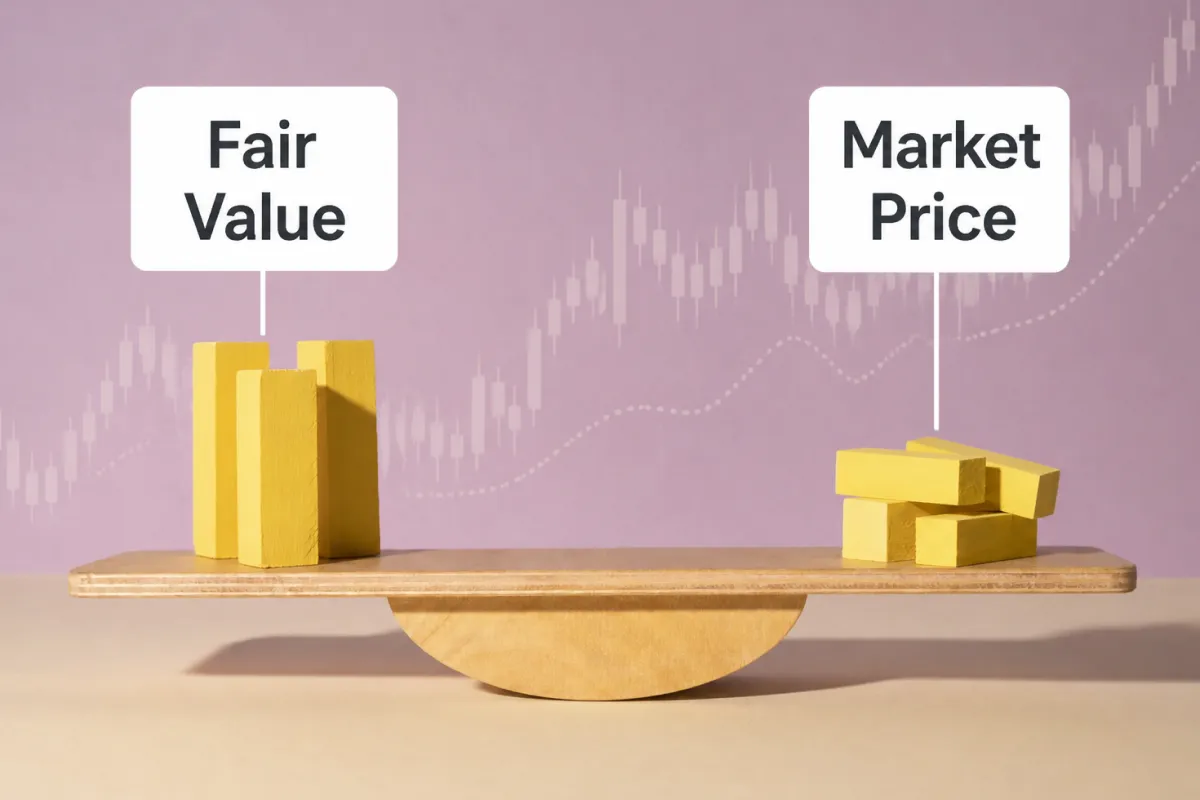
Many traders assume that a stock’s current price is the same as its value. For example, if a stock is trading at $210, it is easy to believe that $210 is exactly what it is worth. However, markets do not work that way.
The market price only shows the level where the latest buyer and seller agreed to complete a trade. It does not always represent “fair value”, which develops as market participants continuously respond to new information, changing liquidity, and changes in supply and demand. As a result, prices may remain close to fair value at times, while at other times they may move away as the market searches for a new area of agreement through the price discovery process.
Recognizing the difference between fair value vs market price changes the way market behavior is interpreted. In this perspective, trends, consolidations, breakouts, and reversals are no longer seen as isolated price movements. Instead, they become part of the continuous auction through which markets discover and redefine value.
Read this article to learn how fair value vs market price differs, how markets discover value through continuous auctions, and why this perspective can improve the interpretation of price movements.
Price Is Simply the Last Trade, Fair Value Is Something Much Bigger
One of the biggest misconceptions in trading is assuming that market price and fair value mean the same thing. Although they are closely connected, they represent different aspects of how markets operate. Let’s learn how they differ:
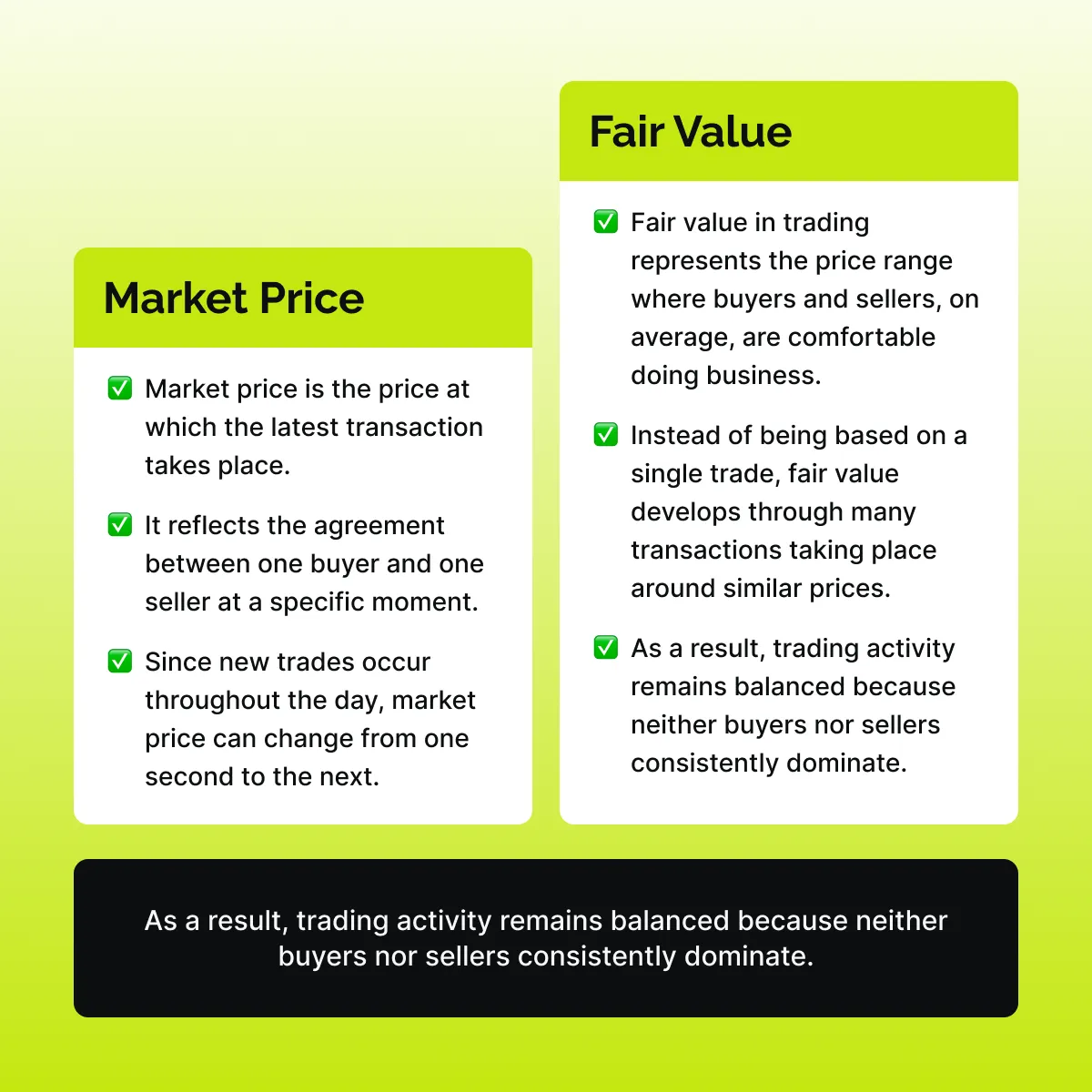
A simple example is the sale of a used car.
- One buyer may pay more because the purchase is urgent, while another may negotiate a lower price a few days later.
- However, neither transaction alone defines the car’s true value.
- Instead, its value becomes clear after many similar sales occur within a comparable price range.
Markets follow the same principle. Therefore, fair value trading is based on the idea that value emerges over time through repeated buying and selling, whereas price reflects only the most recent agreement. This process is closely linked to price discovery, where continuous market activity reveals the level that participants broadly accept.
Consequently, a short-term rise or fall in price does not always indicate that the market’s overall perception of value has changed. Price may move away from fair value for a period, but lasting changes in value generally develop only after sustained trading at new price levels.
Markets Operate Like Continuous Auctions
Financial markets do not move randomly. Instead, they operate as “continuous auctions” where buyers and sellers negotiate prices through every trade. This idea forms the foundation of auction market theory.
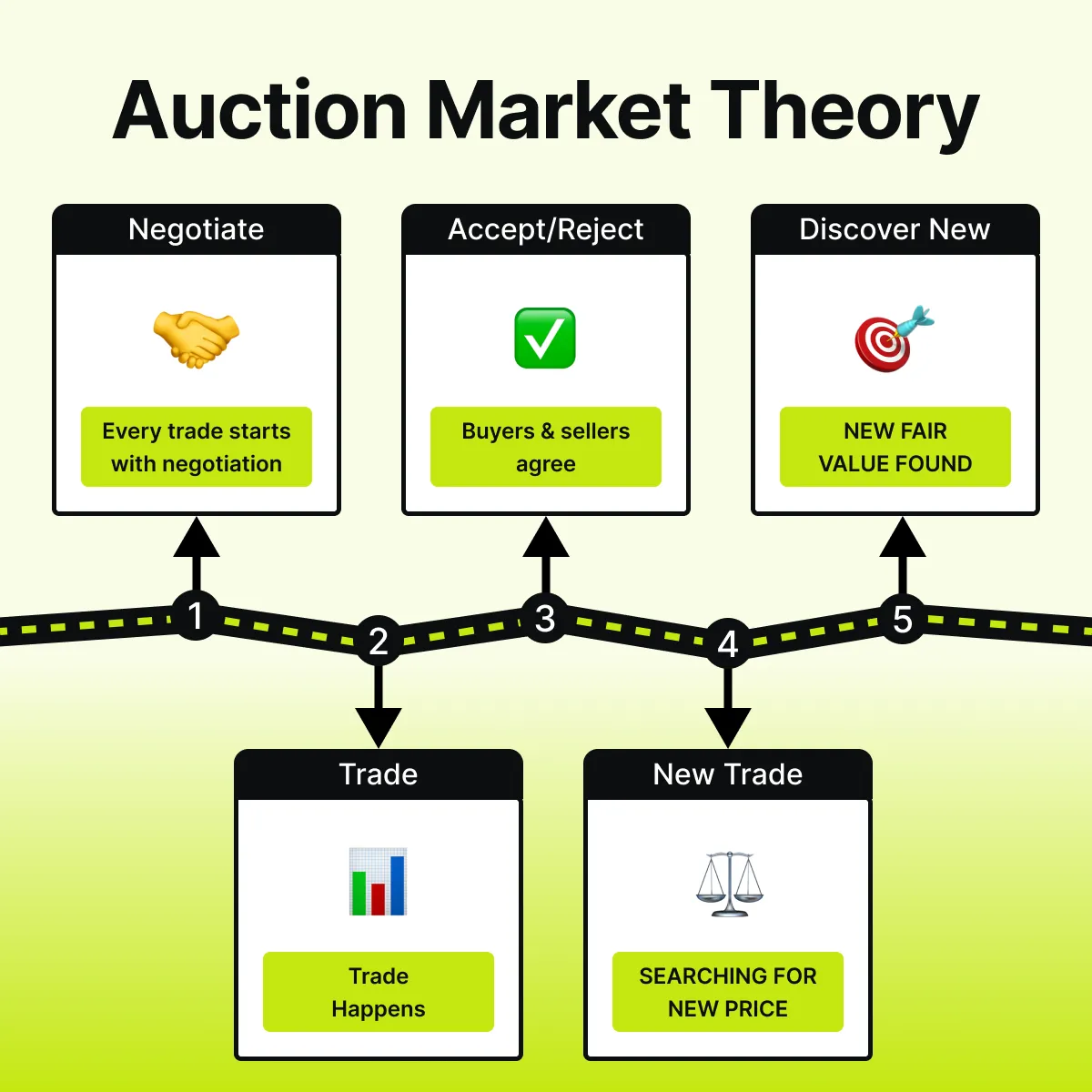
Each transaction takes place only when a buyer is willing to pay a certain price and a seller agrees to accept it. If many participants continue trading at that level, the market accepts that price and business continues there.
However, if buyers become less willing to pay, sellers may reduce their asking prices. On the other hand, if sellers become scarce, buyers may bid higher to complete trades. As a result, market prices keep adjusting based on supply and demand. To understand better, let’s read an analogy:
- Suppose an auctioneer is selling a painting.
- If several bidders continue increasing their offers, the auction moves to higher prices.
- However, once bidding slows or stops, the auction either pauses or shifts to a lower price where new buyers are willing to participate.
Financial markets follow the same principle, except this process happens continuously throughout the trading session. This process also introduces two important concepts:
| I) Acceptance | II) Rejection |
|
|
Therefore, every price move is based on an auction process. It is a result of the market’s attempt to discover a price where trading can continue with broad participation.
Fair Value Isn’t Fixed – It Changes as New Information Enters the Market
A common misconception in trading is that fair value is a fixed price that the market will eventually return to. In reality, what is fair value is an area that changes as new information becomes available.
For example,
- After a major earnings announcement, an interest rate decision, or an unexpected geopolitical event, market participants reassess what an asset is worth.
- As a result, the price range that was considered fair value earlier may no longer reflect the balance between buyers and sellers.
The same process takes place throughout every trading session. As institutions place large orders, liquidity changes, or buying and selling pressure shifts, the market continuously adjusts its view of value. Therefore, fair value trading is based on the idea that value develops through ongoing market activity rather than remaining at a single price.
Some common factors that can change fair value are:
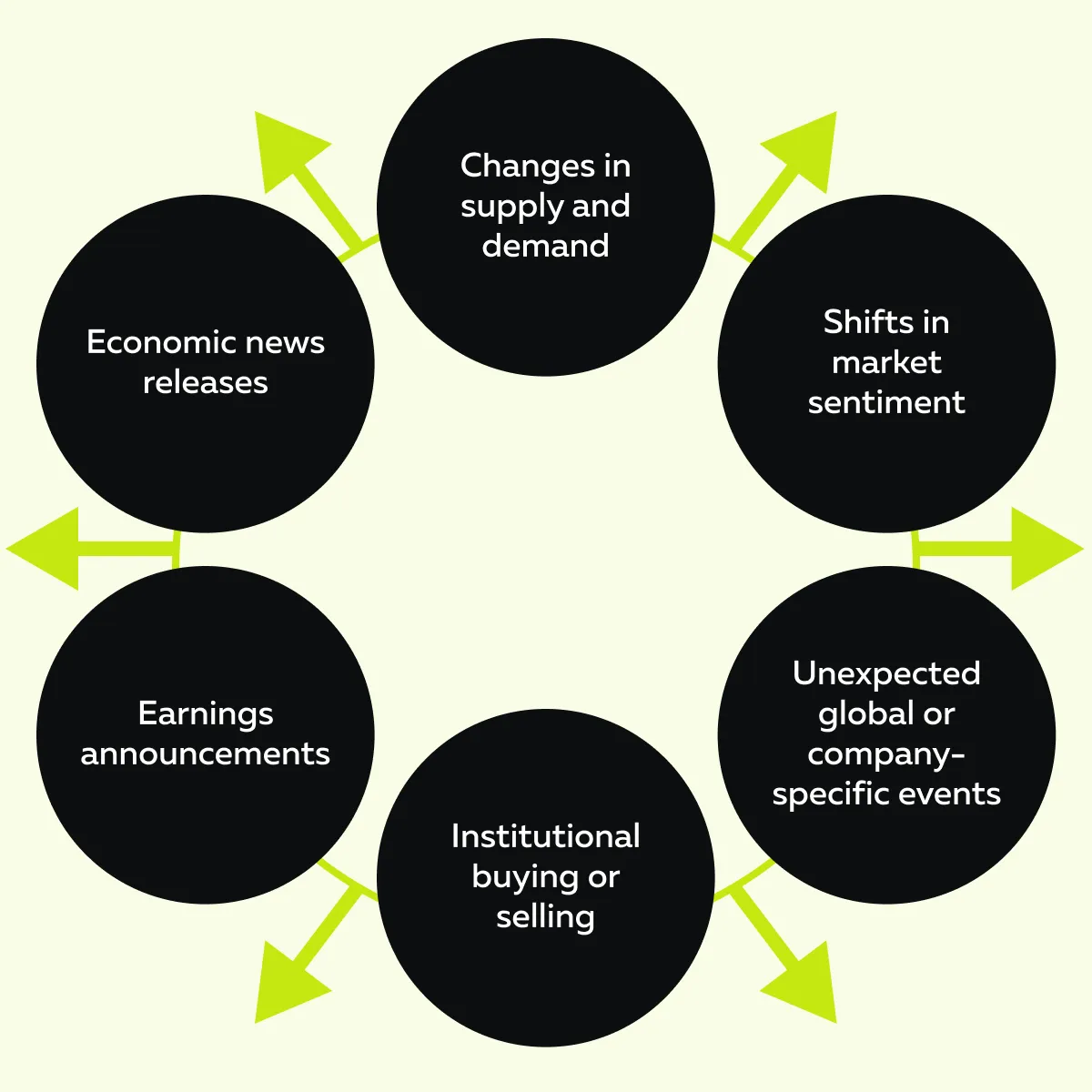
Consequently, fair value vs market price should not be viewed as a comparison between a fixed value and a moving price. While market price reflects the latest transaction, fair value changes as new information influences the price discovery process.
Therefore, fair value is not a destination the market is trying to revisit. Instead, it is a value area that is continuously negotiated and redefined through ongoing buying and selling activity. Price tells you where the market traded. Order flow helps explain why. Learn more with Bookmap.
Why Markets Move Away From Fair Value Before Finding It Again
A common question in trading is: Why do markets sometimes move far away from fair value if they are always searching for it? The answer lies in how the auction market theory explains market behavior.
Markets do not know where fair value exists in advance. Instead, they discover it through continuous buying and selling. When buyers become more aggressive than sellers, prices move higher to test whether market participants are willing to trade at those levels. Let’s understand how this happens:
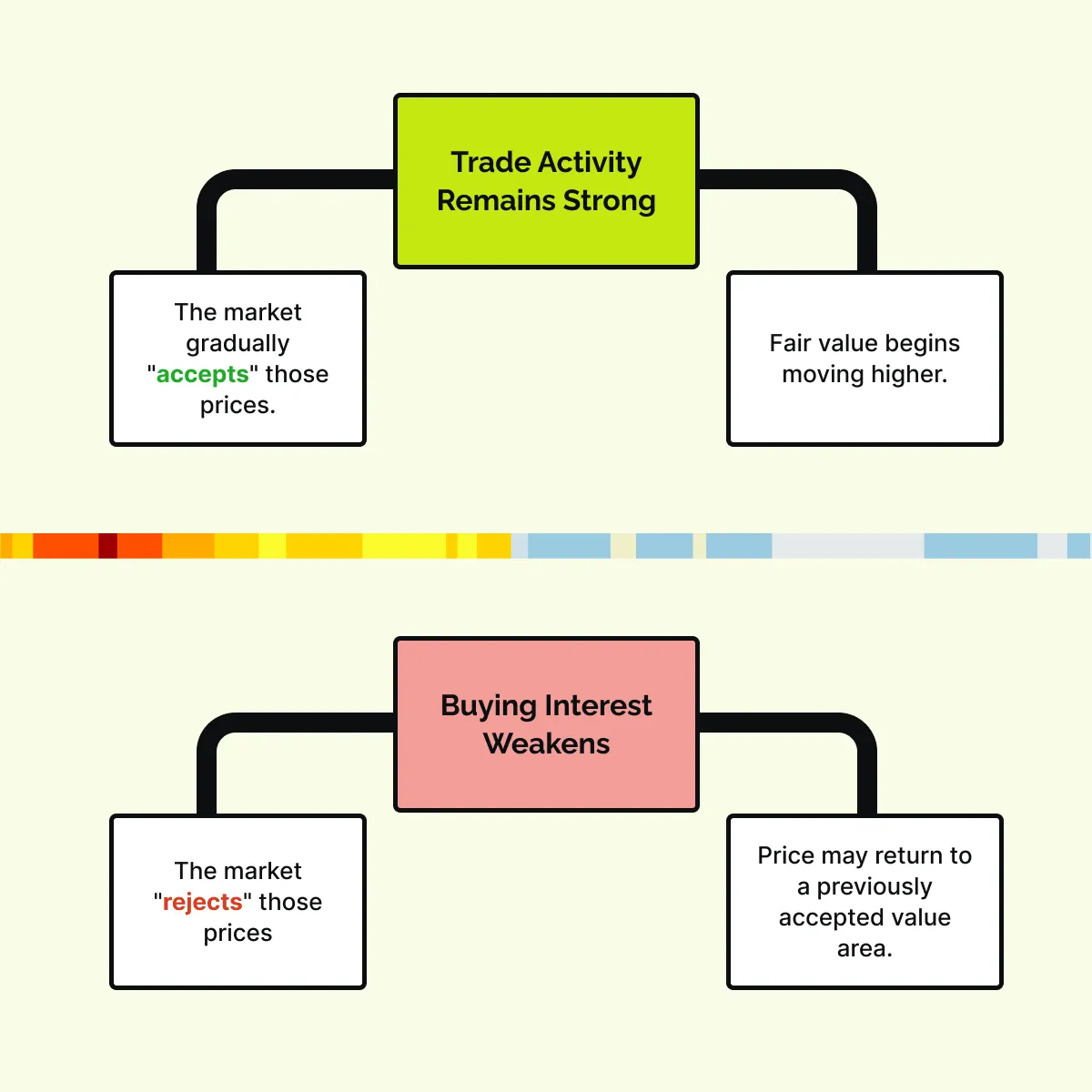
This process is part of price discovery. Rather than moving randomly, markets continuously test different price levels to answer one question: Will buyers and sellers continue doing business here? The outcome determines what happens next:
| If the Answer is ‘YES’ | If the Answer is ‘NO’ |
|
|
This behavior can be seen in many situations. For example:
- A strong earnings report may lead buyers to accept higher prices immediately. It may cause the fair value to shift upward.
- A breakout may fail if there are not enough buyers willing to trade at higher prices. This may lead the market back to an earlier value area.
Traders may also realize that in a “balanced market”, price may move back and forth around the same range. This usually happens because neither buyers nor sellers have enough conviction to establish a new value area.
How Professional Traders Think About Value Differently
One of the biggest differences between new and experienced traders is the way they interpret market behavior. Many beginners mainly concentrate on price direction by asking questions such as:
- Will price move higher?
- Will price move lower?
- Is this the right level to buy?
In contrast, experienced traders usually evaluate how the market is responding to current prices. Their questions are more closely linked to auction market theory and the price discovery process. For example, they assess:
- Is the market accepting these prices?
- Is fair value shifting higher or lower?
- Are buyers becoming more aggressive than sellers?
- Is this move attracting broad participation, or is trading activity becoming weaker?
This difference in approach is important because price movement alone does not always reflect a change in value. A market may trade at higher prices for a short period without establishing a new fair value. Similarly, prices may temporarily fall below the current value area before buyers return and trading activity stabilizes.
Therefore, fair value trading is based on observing how the market responds to different price levels instead of assuming that every move will continue in the same direction. This also highlights the difference between fair value vs market price.
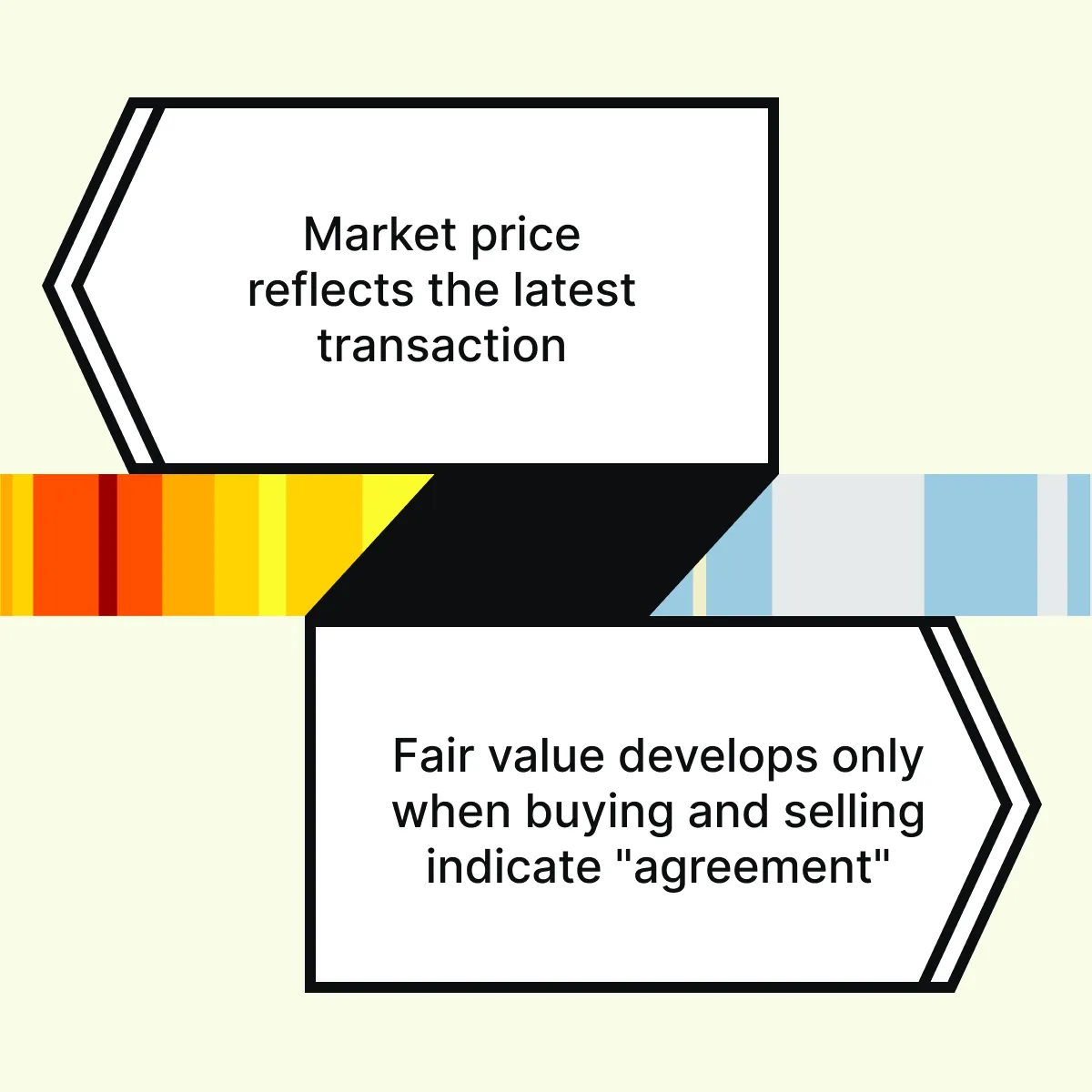
Thus, most experienced traders pay close attention to whether the market accepts or rejects a price level, since that response reveals how value is evolving over time. See how professional traders combine market structure with real-time liquidity using Bookmap.
Order Flow Helps Traders See Value Developing in Real Time
Traditional price charts show where trades have already taken place. However, they do not always explain how buyers and sellers reached those prices. This is where order flow adds another layer of information by revealing how the market is negotiating value as trading takes place.
For example, two markets may be trading at exactly the same market price, yet the activity behind that price can be very different. Let’s see how:
| One Market May Show the Following: | Another Market May Show the Following: |
|
|
Although the market price is identical in both cases, the market’s acceptance of that price is different. Consequently, the price discovery process may lead to very different outcomes.
- In the first case, the market may begin accepting higher prices and allow fair value to shift upward.
- In the second case, the market may reject those prices and search for another value area.
This is where Bookmap becomes valuable. Instead of showing only the result of the auction, it displays liquidity, order flow, and participant behavior in real time. As a result, traders can observe whether a price level is:
- Gaining acceptance
- Facing rejection, or
- Transitioning toward a new area of fair value
This additional context also makes the difference between fair value vs market price much clearer, since price alone does not always reveal how value is developing.
Conclusion
Many traders spend years analyzing price movements without examining the process that creates those prices. Realize that market price is merely the latest agreement between a buyer and a seller. In contrast, fair value develops through continuous buying and selling as market participants respond to new information, changing liquidity, and shifts in supply and demand.
This distinction changes the way market behavior is interpreted. Based on this perspective:
- A consolidation is no longer just a sideways price movement; it represents an area where the market has found acceptance and business continues with broad participation.
- Similarly, a breakout is not merely a move beyond resistance. Instead, it can signal the price discovery process as the market tests whether a new area of fair value can be established.
- Likewise, a reversal may indicate that previously accepted prices are no longer attracting enough buying or selling interest to sustain the auction.
Viewed through the lens of auction market theory, markets are not simply moving from one price to another. Instead, they are continuously negotiating value. Once this perspective is established, concepts such as VWAP, Volume Profile, liquidity, and order flow become easier to interpret. Understanding where value is developing becomes much easier when you can see liquidity and order flow in real time. Compare Bookmap packages.
FAQs
1. What is the difference between fair value and market price?
Market price is the price at which the latest trade takes place between a buyer and a seller. It can change with every new transaction.
Fair value, however, is not a single price. It is the price range where the market is comfortable trading because buyers and sellers generally agree on an asset’s value.
2. Does market price always reflect fair value?
No, market price can move above or below fair value for short periods. This usually happens when news, large orders, or changes in supply and demand create an imbalance between buyers and sellers.
As trading continues, the market tests different price levels to determine where participants are willing to keep doing business.
- If a new price level gains broad acceptance, fair value shifts.
- If not, the market continues searching for another value area.
3. Why do traders say markets are searching for fair value?
Markets operate like continuous auctions where buyers and sellers constantly negotiate prices. Every new trade helps the market decide whether a price is widely accepted or should change. This process is called price discovery.
- If many participants continue trading at a certain level, that area becomes fair value.
- If interest disappears, the market moves to another price level in search of broader agreement.
Therefore, markets are always discovering where fair value exists at that moment.
4. How do professional traders identify fair value?
Professional traders do not depend on a single indicator to identify fair value. Instead, they study several factors together, such as:
- Price action
- Trading volume
- VWAP
- Volume Profile
- Liquidity, and
- Order flow
These tools reveal where significant trading activity is taking place and whether buyers and sellers are accepting or rejecting current prices. Rather than treating fair value as a fixed number, experienced traders view it as a price area that changes as market conditions evolve.
5. How does order flow help traders understand fair value?
Order flow shows how buyers and sellers behave while trades are taking place. Unlike a regular price chart, which only displays completed trades, order flow shows:
- Whether buyers are becoming more aggressive
- Whether sellers are absorbing demand
- Where large orders are entering the market
This information explains whether a price level is gaining acceptance or facing rejection. As a result, traders can better assess when fair value is developing or breaking down as the market continues its auction process.
Sign Up Now
Latest Articles