


Separate market noise from information that matters.
Compare plans to focus on liquidity, order flow, and market behavior that adds useful context.
Trading Basics
August 25, 2026
The Difference Between Information and Useful Information

Trading advantage does not come from finding more information, but from knowing what to ignore. Modern financial markets generate an endless stream of trading information through charts, news, social media, economic data, AI tools, and expert opinions.
At first glance, this appears to be an advantage. However, more information does not always lead to better trading decision-making. Instead, excessive inputs can create confusion, conflicting opinions, and unnecessary market noise.
Therefore, several successful traders rely on a structured trading process that filters information instead of collecting everything available. The real challenge is not accessing data but separating valuable evidence from distractions.
Read this article to learn how trading information overload affects decisions, why context matters more than volume, and how confirmation bias influences judgment. Lastly, traders may learn how a structured information filter can support more consistent market analysis.
More Information Doesn’t Automatically Create Better Decisions

Many traders believe that more trading information leads to better trading decision-making. However, if that were always true, traders today would consistently outperform those who traded twenty years ago. That has not happened because access to information has improved, but the human brain still has limits in how much it can process at one time.
Today, the amount of available market analysis is enormous. Traders receive a constant stream of updates.
As a result, many traders experience “trading information overload”, where too much data creates confusion instead of clarity. Consequently, decision quality declines when every source is monitored at the same time. Rather than building confidence, excessive market noise can create:
- Doubt
- Conflicting opinions, and
- Analysis paralysis
This challenge is closely linked to trading psychology, as too much information makes it difficult to maintain a consistent view of the market. For example,
- Suppose a trader reads five different market opinions before placing a trade.
- They only find that each one suggests a different direction.
- Similarly, a bullish view may change to bearish after seeing a new post online.
In other cases, additional indicators are added to charts because each claims to provide better confirmation. However, these extra signals may only complicate the trading process instead of improving decisions.
Not All Information Has Equal Value
Ideally, each piece of trading information should be judged by one simple question:
- Does this help make a better trading decision?
Traders may realize that useful information is relevant to the trading process and supports the trading strategy. In contrast, information becomes “market noise” when it cannot influence the current decision or only strengthens existing emotions without adding evidence.
Let’s understand better through two different example scenarios:
| Scenario I: When is it Market Noise | Scenario II: When is it Useful Information |
|
|
Therefore, successful market analysis depends less on the amount of information collected and more on the quality of the information used. A “selective approach” may reduce trading information overload and separate useful facts from unnecessary opinions. The best trading decisions come from better context, not more information.
The Most Valuable Information Comes From the Market Itself
Many traders spend more time following other traders than observing the market itself. Although research, news, and educational content all have value, the market remains the most objective source of trading information.
This is because price, liquidity, volume, market participation, and order flow reflect actual buying and selling activity rather than personal opinions. Unlike forecasts or commentary, these factors show what market participants are doing with real capital.
At the same time, it is also important to distinguish between predictive information and observational information. Let’s see how they differ:
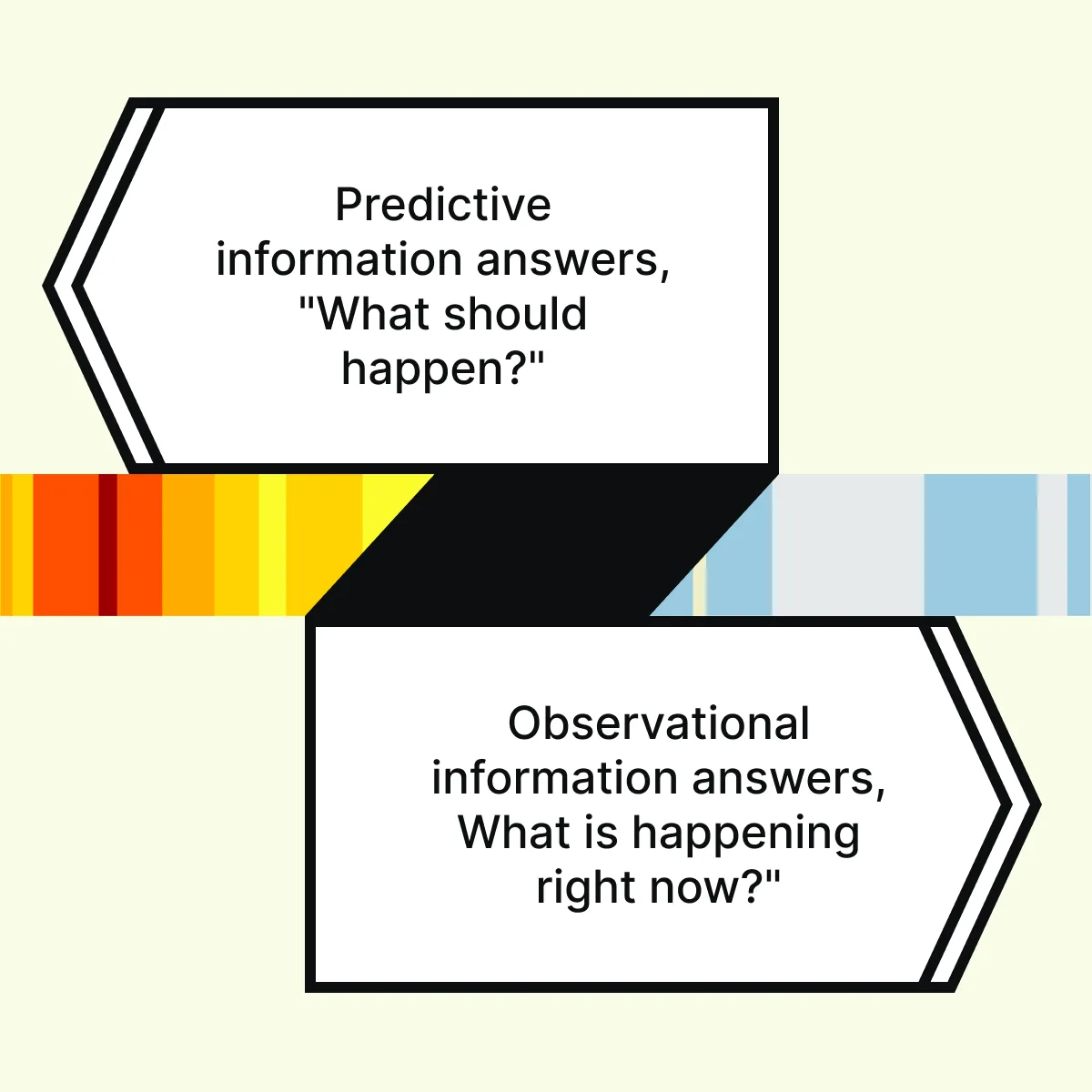
This distinction plays an important role in market analysis, as observations are based on current market behavior instead of expectations. Therefore, many experienced traders place greater importance on evidence from the market than on outside opinions.
Such an approach reduces the impact of market noise and supports a more consistent trading process. It can also avoid trading information overload caused by conflicting forecasts.
Confirmation Bias Makes Information Even More Dangerous
The biggest risk is not the amount of trading information available. Instead, the greater risk is selecting only the information that supports an existing market view. This behavior is known as “confirmation bias”.
As per general market understanding, confirmation bias occurs when traders begin searching for evidence that supports a position they have already chosen. For example,
- Suppose a trader looks for bullish news after buying an asset.
- They ignore liquidity or order flow that challenges the trade.
- Instead, they follow analysts who always share the same market view.
- Alternatively, they may ask AI tools questions that reinforce existing beliefs instead of testing them.
As a result, important market evidence may be ignored, and opinions that support the trade receive more attention. This can increase the impact of market noise and make market analysis less objective.
Therefore, experienced traders usually look for information that could invalidate a trade idea instead of only confirming it. This approach supports a more balanced trading process and reduces decisions influenced by emotions rather than evidence.
See liquidity, order flow, and market structure instead of relying solely on headlines and opinions.
Building Your Own Information Filter
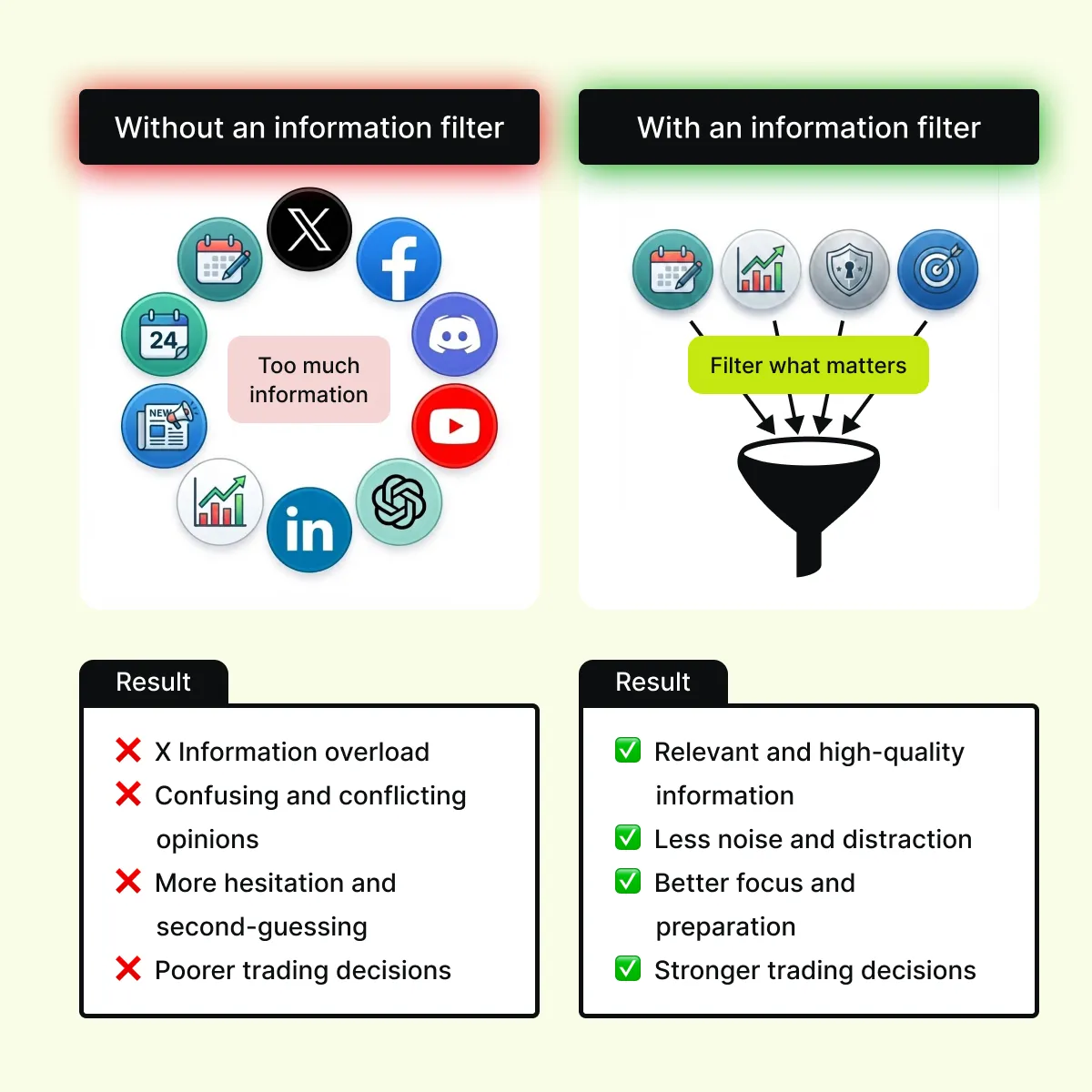
Professional traders rarely consume every piece of trading information available. Instead, they limit their attention to information that matches their trading style and supports their trading process.
This approach begins with an information framework before the trading session starts. For example,
- Many traders review only the scheduled economic events that are relevant to their market.
- They may also identify important technical or liquidity levels in advance or monitor a small number of trusted information sources.
- On the basis of information gathered, they may define the exact confirmation needed before entering a trade.
As a result, time is spent on preparation instead of searching for new information throughout the session. This reduces trading information overload and limits the influence of unnecessary market noise on trading decision-making.
Why Context Always Beats Raw Information
The real value of trading information depends on the “market context”. Therefore, the same data can lead to different outcomes under different market conditions. For example,
- Suppose a high trading volume may signal strong buying interest in one situation but indicate buyer exhaustion in another.
- Similarly, a news headline may extend an existing trend in one market while having little or no impact in another.
These differences usually depend on market structure, liquidity, participant positioning, and overall market behavior. As a result, market analysis requires “context” rather than isolated data.
Now, this is where Bookmap adds value. Instead of relying only on forecasts or outside opinions, as market activity develops, Bookmap allows traders to:
- Observe liquidity
- Executed volume, and
- Order flow
This provides evidence of what market participants are actually doing, which supports more informed trading decision-making. Ultimately, successful traders do not stand out because they consume more trading information. Instead, they become better at separating useful information from market noise.
Conclusion
Modern financial markets do not suffer from a lack of trading information. Instead, the bigger challenge is dealing with “trading information overload”. Every day, traders have access to news, charts, social media, AI tools, and expert opinions.
However, collecting more information does not always improve trading decision-making. What matters is identifying the information that is relevant, timely, and supported by actual market activity.
A structured trading process may help separate useful evidence from market noise and prevent unnecessary confusion. Traders may note that consistent results come from making better judgments and not from consuming more content. In the end, the quality of information matters far more than the quantity. Reduce noise and focus on what the market is actually showing with Bookmap.
FAQs
1. Can too much information make someone a worse trader?
Trading information overload can reduce the quality of trading decision-making. “Analysis paralysis” is common among traders who consume too many opinions, charts, news updates, and social media posts.
More trading information is valuable only when it adds relevant evidence and does not increase confusion through unnecessary market noise.
2. What is useful information in trading?
Useful trading information:
- Is relevant to the current market
- Can support the trading strategy, and
- Can influence a trading decision
It should help confirm or challenge a trade idea through evidence instead of opinions. Some common pieces of useful trading information are price action, liquidity, order flow, volume, and important economic events that affect the market being traded.
Traders may note that “good” market analysis depends on selecting information that has real value instead of collecting as much information as possible.
3. Should traders ignore financial news?
Generally, financial news is considered an important source of trading information. It provides context for market activity. However, not every headline has the same value. Some news events have a major impact on prices, while others create only temporary market noise.
Therefore, experienced traders usually pay attention to news that is relevant to their market, trading style, and current trading session instead of reacting to every headline.
4. How can traders reduce information overload?
Traders can reduce trading information overload by using a structured trading process before the market opens. This may include:
- Reviewing only important economic events
- Marking key technical or liquidity levels
- Following a limited number of trusted information sources, and
- Defining the confirmation required before entering a trade
This approach may potentially improve trading decision-making because attention remains on relevant market evidence instead of constant streams of new information.
5. How does Bookmap help traders focus on useful information?
Bookmap helps traders observe “market-generated” information instead of relying only on forecasts or outside opinions. The tool displays real-time liquidity, executed volume, and order flow, which reflect the actions of market participants.
This gives valuable context for market analysis and supports trading decision-making based on actual buying and selling activity.
Sign Up Now
Latest Articles